
News
With billions in loans, China is rebuilding Nigeria’s railway network from scratch

By Bruno Teles
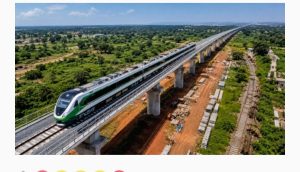
With billions in loans, China is rebuilding Nigeria’s railway network from scratch, abandoning the British colonial tracks that have turned to scrap and creating a corridor of over 1,300 km to take the load off the roads of Africa’s largest economy.
China leads the reconstruction of Nigeria’s railway network with billions in loans from Exim Bank and works by the state-owned CCECC.
The project abandons the old British colonial gauge and builds the Lagos-Kano Railway, a corridor of over 1,300 kilometers to remove cargo from the roads of Africa’s largest economy.
In June 2021, China, through the state-owned China Civil Engineering Construction Corporation (CCECC) and with major financing from the country’s Export-Import Bank (Exim Bank), delivered and inaugurated for operation the standard gauge railway between Lagos and Ibadan, in southwestern Nigeria, the most visible milestone of a project that reconstructs from scratch the railway network of Africa’s largest economy. The section, about 156 kilometers long, cost approximately 1.5 billion dollars, financed by a 1.3 billion dollar loan from China’s Exim Bank and another 200 million dollars from the Nigerian government, and is part of the Lagos-Kano corridor, over 1,300 kilometers long, which aims to remove a large part of the cargo from the roads in a country with over 230 million inhabitants.
The context explains the urgency. The railway network inherited from the British colonial period was built in the early 20th century with the aim of extracting raw materials from the interior to the ports, and not to integrate cities or sustain a modern industrial economy. Over the decades and with the deterioration of the old tracks, cargo transport almost entirely migrated to the highways, and today more than 90% of freight in Nigeria circulates by road. It is in this gap that China entered, not to patch up the old system, but to replace it with a completely new standard gauge network.
*Why Nigeria’s colonial* *railway network became scrap*
China reconstructs Nigeria’s railway network with Exim Bank loans and builds the Lagos-Kano corridor of over 1,300 km to remove cargo from the roads.
Nigeria’s original railway was born with an extraction logic.
Built by the British to transport products like cocoa, peanuts, and minerals from inland regions to coastal ports, it was never intended to connect large cities in a balanced way nor to support industrial growth or high passenger demand.
Technically, the entire network depended on the so-called Cape gauge, 1,067 millimeters wide, narrower than the modern international standard, which limited speed and load capacity.
China modernizes the oldest metro line in Mexico City, taking on the renovation of 18.83 km, 20 stations, new trains, signaling, and maintenance for 19 years in one of the most crowded systems in Latin America.
São Paulo purchased 44 Chinese trains for R$ 3.1 billion and deployed them on the Blue, Green, and Red metro lines, accelerated the expansion of the Green Line 2, and made CRRC a central piece in the largest railway renovation in the capital in decades.
The Union will invest R$ 3.6 billion to revive the Malha Oeste, a 1,625 km abandoned railway that connects Corumbá to São Paulo, in a concession project recently approved by ANTT that promises to reconnect the Midwest to the Port of Santos and the borders with Bolivia and Paraguay.
Five cities in the North of Santa Catarina may once again be connected by passenger train after 35 years, in an effort that brings together municipal associations, the Joinville Chamber, and CIMU to reactivate the EF-485 and reduce the number of cars on the BR-280 and BR-116 highways.
After independence, instead of a complete modernization, the system faced years of underinvestment, reduced maintenance, and aging equipment. In the early 2000s, Nigeria still had more than 3,500 kilometers of lines on paper, but only a fraction remained operational, with slow and inconsistent service. As the railway network weakened, roads took the lead, creating the current logistical bottleneck that the partnership with China is trying to resolve.
*How China entered the railway reconstruction of Nigeria*
China reconstructs Nigeria’s railway network with loans from Exim Bank and builds the Lagos-Kano corridor of over 1,300 km to remove cargo from roads.
China has positioned itself in recent decades as the world’s largest infrastructure builder, exporting projects across Asia, Africa, and parts of Europe, mainly through the Belt and Road Initiative.
Nigeria fits into this strategy: it is the most populous country in Africa, has one of the largest economies on the continent, and occupies a key position in West Africa, with access to Atlantic shipping routes. For Beijing, investing there means operating in a market with long-term infrastructure demand and gaining regional influence.
On the Nigerian side, the priority was to find a partner capable of financing and executing large projects quickly. Traditional options, such as multilateral institutions and Western development programs, usually come with long timelines and stricter conditions. China offered a different model: loans through the Exim Bank, generally linked to the hiring of Chinese contractors, which reduces the interval between planning and execution and delivers the project as a complete package, from financing to construction.
The new standard gauge that replaces the old tracks
The most important technical change begins with the track itself. The new network is being built to a standard gauge of 1,435 millimeters wide, the same standard used in modern railway systems around the world. This difference from the old Cape gauge of 1,067 millimeters allows trains to run faster, carry heavier loads, and operate more efficiently over long distances, three decisive factors for a country of continental dimensions like Nigeria.
But the track width is just part of the plan. The larger goal is to connect the country’s main economic zones through a structured network, linking coastal ports to inland cities, integrating industrial hubs, and creating reliable corridors for passengers and cargo. Instead of isolated lines, each section is developed as part of a broader system because a railway only becomes truly effective when it functions as a connected corridor, not as loose segments on the map. This is the leap that China is helping Nigeria to make.
The Abuja-Kaduna line, the country’s first standard gauge railway
China reconstrói a malha ferroviária da Nigéria com empréstimos do Exim Bank e ergue o corredor Lagos-Kano de mais de 1.300 km para tirar carga das estradas.
The first clear sign of this transformation was the Abuja-Kaduna railway, about 186 kilometers long, which connects the capital, Abuja, to the urban and industrial hub of Kaduna in the north.
Construction began around 2011 and the line was officially inaugurated in July 2016, becoming Nigeria’s first modern standard gauge railway. The cost was around 874 to 876 million dollars, with 500 million coming from a concessional loan from China’s Exim Bank and the rest financed by the Nigerian government.
Technically, the line introduced standard gauge infrastructure on a scale in the country, with trains operating at speeds of up to about 120 kilometers per hour. Quickly, the Abuja-Kaduna became one of Nigeria’s busiest passenger railways, with trains operating near maximum capacity and consistently high demand, as well as supporting freight transport. The success of this first line paved the way for subsequent sections of the project led by China.
The Lagos-Ibadan line and the connection with the busiest port
The second major milestone was the Lagos-Ibadan railway, about 156 kilometers long, which connects Lagos, the main economic center and busiest port city in the country, to Ibadan, one of the largest cities in southwestern Nigeria. Construction began in 2017 and the line was inaugurated in June 2021, also executed by CCECC. Passenger trains on this route can reach speeds of up to about 150 kilometers per hour under normal operating conditions.
The most significant impact, however, is on freight. The Lagos-Ibadan line connects directly to the Lagos port area via branches, allowing containers to travel by train to the interior instead of relying solely on trucks. Since Lagos handles a significant portion of Nigeria’s imports, moving cargo out of the port faster reduces congestion within the terminal and on surrounding highways, where trucks can wait days to access the terminals. This logistical relief is one of the main arguments for the partnership with China.
The Lagos-Kano Megacorridor and National Integration
The two completed lines are pieces of a much larger project: the Lagos-Kano corridor, considered the backbone of the entire network. The logic is to link sections starting from Lagos, the main port and economic center, moving inland to Ibadan, then north to Abuja, and finally to Kano, one of the largest commercial centers in northern Nigeria. In total, the corridor extends over 1,340 kilometers when fully connected.
Development occurs in phases. The Lagos-Ibadan section is already operational, the Abuja-Kaduna line forms another crucial section in the middle of the country, and the remaining link between Kaduna and Kano is under construction, with works aimed at closing the last gap. When all segments are connected, Nigeria will have a continuous standard-gauge railway linking its busiest port to commercial centers inland, integrating the southern coastal economy with northern markets. It is the realization of the long-term plan designed by China in conjunction with the Nigerian government.
The Financial Risks of the Chinese Loan Model
Despite the logistical benefits, the model raises legitimate concerns. Loans from the Exim Bank are often tied to hiring Chinese contractors and, in some cases, to guarantee clauses that direct revenues from the projects themselves to overseas accounts controlled by the lender, to ensure debt repayment. This format speeds up the execution of works but imposes long-term financial commitments on Nigeria that need to be closely monitored.
There is also a history of delays and difficulties. The original contract for the Lagos-Kano corridor was signed back in 2006 but was stalled for years due to a lack of funding from the Nigerian counterpart, later being divided into segments. The devaluation of the local currency, the need for land expropriation, and even theft of railway materials delayed sections of the work. This context fuels the debate on whether the partnership with China is building the foundation for Nigeria’s long-term growth or creating a debt burden that may weigh in the future.
The railway reconstruction in Nigeria is one of the clearest examples of how China exports infrastructure capability to Africa, combining financing, engineering, and execution in a single package. For Nigeria, the logistical gain is real and measurable: faster trains, cargo leaving ports more swiftly, and previously isolated regions beginning to integrate. The big open question is the balance between this advancement and the long-term financial cost, in a country that needs to turn tracks into sustainable economic development.
Do you think that China is helping Nigeria build a solid foundation for growth, or that this loan model could become a debt trap in the future? Should Brazil seek similar partnerships to unlock its own railways? Leave your comment, share your thoughts on China’s role in global infrastructure, and share the article with those who follow geopolitics, logistics, and transport investments.

The United States government has insisted that Nigeria should retain its Country of Particular Concern, CPC, designation, saying the country has not done enough to protect Christians from attacks.
Assistant Secretary of State for African Affairs, Frank Garcia, made this statement on Thursday during a congressional hearing on violence in Nigeria.
Garcia was responding to questions from US Congressman Riley Moore, who asked about the government’s efforts to dismantle militia strongholds and kidnapping camps in the Middle Belt, particularly in Benue and Plateau states.
Moore also raised concerns over the exclusion of the states from the forest guard initiative and delays in deploying 1,000 approved guards to Plateau.
“Before you answer that, we cannot take this CPC designation off of this country. They have not done enough,” Moore said.
Garcia acknowledged the lack of progress, but said Nigeria was taking steps to address the concerns, although they had yet to produce results.
He said the country’s security capacity was still being developed and that deployments were not happening fast enough.
“Unfortunately, the violence has not stopped,” Garcia added, citing continued attacks in Kaduna and Plateau states.
He said the US had provided police training and equipment, expanded intelligence sharing and worked with Nigerian financial institutions to disrupt terrorist financing.
Garcia added that Washington would continue diplomatic engagements and security cooperation to protect vulnerable communities and ensure accountability.
However, the Nigerian government has consistently rejected claims of a “Christian genocide” or targeted religious persecution, maintaining that insecurity affects Nigerians of all faiths.

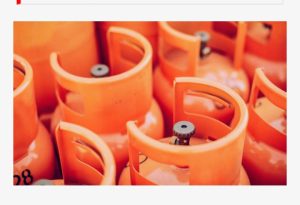
Liquefied Petroleum Gas, commonly known as cooking gas, has risen significantly, forcing Nigerians to spend more to purchase the product.
The increase comes as depot owners and retailers raised their prices over the past two days.
StockGap increased its depot price by N25 to N1,440 per kilogram. Nigerian Independent Petroleum Company Limited, NIPCO, Mobil (now 11 Plc) and Ardova, on the other hand, sold the product at N1,400 and N1,390 per kilogram, respectively.
Similarly, LPG retail outlets, including Raniol, Juda Oil and Nigerian National Petroleum Company Limited, NNPC, outlets in Abuja and its environs, now dispense cooking gas at between N1,550 and N1,600 per kilogram, up from N1,400 and N1,500.
Micro-LPG dealers sell the product for between N1,700 and N1,800 per kilogram, depending on the location in Abuja.
Earlier, NIPCO’s spokesperson, Taofeek Lawal, had exclusively told DAILY POST that LPG prices could increase further between November and January next year.
The latest price increase means that Nigerians who previously spent N17,500 to refill a 12.5kg cylinder at N1,400 per kilogram will now pay N20,000 at the new rate of N1,600 per kilogram, representing an additional N2,500.
News
2027: Tinubu Must Withdraw ‘All Is Fair in Politics’ Remark, Embrace Peaceful Coexistence — ADC-PCC
The African Democratic Congress Presidential Campaign Council (ADC-PCC) has called on President Bola Ahmed Tinubu to publicly retract his controversial “All Is Fair in Politics” remark, warning that such rhetoric fuels political division, emboldens thugs and poses a grave threat to the nation’s peace and stability.
The ADC-PCC also expressed concern over what it described as the President’s disturbing silence on the conduct of some APC governors and party chieftains who have openly made inflammatory statements and allegedly encouraged political violence.
In a statement signed by its Director of Media and Publicity, Kola Ologbondiyan, the ADC-PCC urged President Tinubu to rise above partisan interests and demonstrate the statesmanship expected of a national leader, citing former President Goodluck Jonathan’s unequivocal declaration that no presidential ambition was worth the blood of any Nigerian.
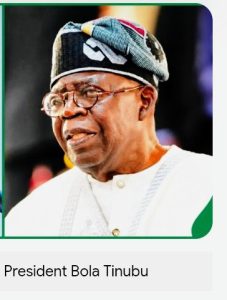
The Council described as shocking the President’s failure to condemn the growing wave of political violence, noting that, through his spokesman, Mr. Bayo Onanuga, the Presidency had instead chosen to caution opposition parties while shielding those allegedly responsible for violence within the ruling APC.
“President Tinubu cannot claim to desire peace when his own words provide cover for violence.
“‘All Is Fair in Politics’ is not the language of a Head of State. It is the language of political desperation and an open licence for thuggery, ballot snatching, intimidation and bloodshed.
“From Edo to Cross River, Gombe to Lagos, and Kebbi to Kaduna, Nigerians have witnessed attacks on opposition gatherings, destruction of campaign materials and the brutalisation of innocent supporters, allegedly by APC-sponsored thugs.
“Yet, Mr. President has not considered it necessary to call his governors and party members to order.
“Instead, the Presidency has resorted to diversionary tactics, blaming victims and preaching restraint to the opposition while members of the ruling party are accused of unleashing violence across the country,” the statement said.
The ADC-PCC challenged President Tinubu to explain why his condemnation of political violence appears directed at the opposition rather than members of his own party.
It asked: “Why has Mr. President refused to condemn APC governors who openly threaten opposition supporters? Why has he remained silent over public incitement by officials of his party? Why is his anger always directed at the opposition and never at those within his own political fold?”
The Council maintained that the ADC remains committed to peaceful, issue-based political engagement, insisting that its campaign is focused on addressing the country’s pressing challenges, including hunger, insecurity, unemployment, corruption and what it described as the failures of the Tinubu administration.
It accused the APC of resorting to violence because it had little to offer Nigerians in terms of credible solutions to the country’s problems.
Consequently, the ADC-PCC demanded that President Tinubu immediately and publicly withdraw his “All Is Fair in Politics” remark, condemn and call to order APC governors and party officials accused of inciting violence, and direct security agencies to protect all Nigerians impartially rather than allow them to become instruments of intimidation and oppression against opposition parties.
” Nigeria belongs to all of us. No political ambition is worth the blood of any Nigerian.
“If former President Goodluck Jonathan could make that profound declaration in 2015, President Tinubu has no excuse not to say so and demonstrate the sincerity of his commitment to peace in 2026.
“The ADC will not be intimidated. We will continue to campaign peacefully, and in 2027, Nigerians will have the opportunity to vote for competence, integrity and a new beginning,” the statement added.


-
News5 days ago
IGP Disu decorates 29 senior police officers with new ranks….charges them on professionalism, integrity,others
-
News4 days ago
Airstrikes kill 40 ISWAP terrorists in Borno
-
News4 days ago
We finally received CTC Of Lifu’s Judgement, without Atiku, Other Candidates Names Mentioned—Senator Melaye
-
News4 days ago
2026 U-17 WWC: Tinubu rewards each Flamingos player with ₦100m
-
News5 days ago
How Federal High Court Chief judge is beign blackmailed with EFCC, CCB- ADC Campaign Council
-
News2 days ago
Crowd Shouts ‘Bamayi’ at Tinubu, pelt convoy in Abuja
-
News5 days ago
Oil slump opens door to cheaper petrol for Nigerians …as Brent hits lowest since August
-
News5 days ago
Oil price fall: We ‘ll take appropriate action against marketers, petrol stations over unfair practices- FCCPC