

News
We ‘Ve Done Well- Gbajabiamila


….. Lists Successes, Challenges of 9th House
The Speaker of the House of Representatives Rep. Femi Gbajabiamila has highlighted some of the achievements recorded by the 9th House in its legislative agenda, with six months to the end of the tenure, insisting that they have done well despite enormous challenges
Gbajabiamila said the 9th House has done a lot, which was a clear departure from what obtained in the past, adding that “the last four years have been a period of consequential interventions and essential reforms that lay the foundation for future growth and prosperity. We must acknowledge this and draw lessons to guide us in the future.”
Gbajabiamila spoke when he delivered a paper titled ‘Delivering on our contract with Nigerians: Implementing the Legislative Agenda of the 9th House of Representatives – Progress, Challenges and the Way Forward’ at the Second Edition of the Distinguished Parliamentarian Lecture Series organized by the National Institute for Legislative and Democratic Studies (NILDS) in Abuja on Monday.
He said the 9th House has been an unusually productive parliament despite the limitations imposed by the Covid-19 pandemic.
“We have taken legislative action to address longstanding challenges of governance and economics in our country. We have passed landmark legislation to fix our oil and gas industry, reform the police and reorganise the corporate administration system in our country.
“We have considered and passed meaningful legislation impacting all areas of our national life. Some of these bills are the Police Service Commission Act (Repeal and Re-enactment) Bill, the Electric Power Sector Reform Act (Amendment) Bill, and the Deep Offshore and Inland Basin Production Sharing Contracts Act (Amendment) Bill, amongst others.
“We passed a slate of bills to reform the aviation sector and clean up our airports so that these critical national assets can be properly administered to the best expectations of the Nigerian people. We have reformed the annual budget process of the Federal Government. We have used the appropriations process and the power of parliament over the public purse to pursue community and constituency development across the country.
“We have invested in primary, secondary, and tertiary education infrastructure. We have provided ICT training centres to facilitate learning and enhance educational outcomes. There is virtually no constituency in the country that hasn’t benefited from significant investment to improve primary healthcare, rehabilitate classrooms and schools, and provide community roads,” Gbajabiamila said.
In the area of critical interventions, Gbajabiamila said the House intervened to help resolve outstanding issues between the Academic Staff Union of Universities (ASUU) and the Federal Government “so our young people could return to their academic pursuits after an extended period of industrial action by the union.
“Since then, the House of Representatives has worked to address the issues that led to the strike. We are currently working on the 2023 Appropriation Bill, which includes the sum of N170 billion to provide a level of increment in the welfare package of university lecturers. The Bill also includes an additional N300bn in revitalisation funds to improve the infrastructure and operations of federal universities.”
Furthermore, Gbajabiamila said, the House convened the Accountant General of the Federation (AGF), the Academic Staff Union of Universities (ASUU) and other stakeholders to facilitate the adoption of elements of the University Transparency and Accountability Solution (UTAS) into the Integrated Payroll and Personnel Information System (IPPIS).
“This effort is being supervised by the Chairman of the House Committee on Tertiary Education, Rep. Aminu Suleiman. Now, these issues are the fundamentals that have been at the heart of the perennial agitation by the union.
Having addressed those, we are now motivated to focus on addressing the issues of funding, education standard, and student and staff welfare that are necessary to build twenty-first century tertiary institutions worthy of their name.
“This is the reason why just a few weeks ago, we convened a National Summit on Tertiary Education Reform (NSTER) that brought stakeholders together for two days to conduct a holistic review of the tertiary education sector in the country and make recommendations for necessary action to improve the sector. This and other interventions in the education sector are a critical component of our Legislative Agenda commitments to strengthening human capital development by providing access to quality education opportunities across the country.”
By outlining some of the many achievements of the 9th House, the Speaker said it was not his intention to take a victory lap of any kind.
“Our system of policing and the judiciary, our infrastructure and public services, and so many areas of our national life still fall far short of our best aspirations. We have made improvements to our electoral laws to enable far-reaching reforms to improve the process through which we elect political leaders. Yet, we still need to improve the internal process of nominations within the political parties.
“The amendment of the Police Act 2020 put in place a new system for reporting, investigating and sanctioning abuses of police power, yet such incidents persist across the country. Though much has been done, much yet remains to do to deliver our people from the degradations of poverty and lack, protect them from the machinations of criminals and terrorists, and reform our politics and government to better reflect the best of who we are and be more responsive to the obligation to be a catalyst of national development.”
Gbajabiamila said, “the biggest challenge of implementation we have encountered with the Legislative Agenda is one that often imperils reform efforts worldwide: the refusal to embrace change. Both consciously and otherwise, there usually is institutional resistance to fundamental changes in policy and processes in the public sector. This is compounded by the number of constituencies whose interests, concerns and expectations must be factored in and managed.
“We have three hundred and sixty members in the House of Representatives from nearly a dozen political parties. We have the National Assembly Service Commission (NASC) as the parliamentary civil service with thousands of personnel, a multitude of political and policy aides, and so many other interested parties, many of whom may be used to doing things differently. Time and careful management are indispensable components of successful reform in arenas like this.
“Then you have the issue of competing objectives. How do you set a Legislative Agenda that adequately captures the priorities of constituents in Surulere, Nnewi, Daura, Gubio, Ogoja and Wase at the same time? How do you assure the members representing these diverse constituencies that the priorities of their constituents won’t get lost in a streamlined, collaborative, and coordinated approach to legislative policymaking? How do you bring the Senate and the Executive along when you have managed to ensure that the House is committed to the same priorities and rowing in one accord to the same destination?”
Going forward, Gbajabiamila said the House of Representatives, in its future iterations, should continue the agenda-setting, prioritisation, monitoring and evaluation model of legislative policymaking embodied in the Legislative Agenda of the 9th House.
He noted that the Committee on Monitoring and Implementation of the Legislative Agenda should become, in the new parliament, a standing committee fully funded to serve as the in-house think tank, policy coordinator and delivery unit of the House.
“We need to adopt a new system of vetting legislative proposals for quality control and compliance with legislative agenda priorities. Amendments to the Standing Orders of the House will be required to achieve this.”
“The design of future Legislative Agendas needs to be more collaborative to aid implementation. Efforts must be made ab-initio to harmonise competing priorities of the various interests and stakeholder groups and align the different arms of government towards the same goals.
“Whatever the political settlement that emerges after the 2023 general elections, all concerned must recognise that government cannot afford to be at cross-purposes with itself. This doesn’t mean that we must all agree on what needs to be done and the process of getting things done. But we must make concerted efforts to identify areas of agreement and work on those together whilst seeking accommodations in other areas that allow us to advance little by little.”

The United States government has insisted that Nigeria should retain its Country of Particular Concern, CPC, designation, saying the country has not done enough to protect Christians from attacks.
Assistant Secretary of State for African Affairs, Frank Garcia, made this statement on Thursday during a congressional hearing on violence in Nigeria.
Garcia was responding to questions from US Congressman Riley Moore, who asked about the government’s efforts to dismantle militia strongholds and kidnapping camps in the Middle Belt, particularly in Benue and Plateau states.
Moore also raised concerns over the exclusion of the states from the forest guard initiative and delays in deploying 1,000 approved guards to Plateau.
“Before you answer that, we cannot take this CPC designation off of this country. They have not done enough,” Moore said.
Garcia acknowledged the lack of progress, but said Nigeria was taking steps to address the concerns, although they had yet to produce results.
He said the country’s security capacity was still being developed and that deployments were not happening fast enough.
“Unfortunately, the violence has not stopped,” Garcia added, citing continued attacks in Kaduna and Plateau states.
He said the US had provided police training and equipment, expanded intelligence sharing and worked with Nigerian financial institutions to disrupt terrorist financing.
Garcia added that Washington would continue diplomatic engagements and security cooperation to protect vulnerable communities and ensure accountability.
However, the Nigerian government has consistently rejected claims of a “Christian genocide” or targeted religious persecution, maintaining that insecurity affects Nigerians of all faiths.


Liquefied Petroleum Gas, commonly known as cooking gas, has risen significantly, forcing Nigerians to spend more to purchase the product.
The increase comes as depot owners and retailers raised their prices over the past two days.
StockGap increased its depot price by N25 to N1,440 per kilogram. Nigerian Independent Petroleum Company Limited, NIPCO, Mobil (now 11 Plc) and Ardova, on the other hand, sold the product at N1,400 and N1,390 per kilogram, respectively.
Similarly, LPG retail outlets, including Raniol, Juda Oil and Nigerian National Petroleum Company Limited, NNPC, outlets in Abuja and its environs, now dispense cooking gas at between N1,550 and N1,600 per kilogram, up from N1,400 and N1,500.
Micro-LPG dealers sell the product for between N1,700 and N1,800 per kilogram, depending on the location in Abuja.
Earlier, NIPCO’s spokesperson, Taofeek Lawal, had exclusively told DAILY POST that LPG prices could increase further between November and January next year.
The latest price increase means that Nigerians who previously spent N17,500 to refill a 12.5kg cylinder at N1,400 per kilogram will now pay N20,000 at the new rate of N1,600 per kilogram, representing an additional N2,500.
News
2027: Tinubu Must Withdraw ‘All Is Fair in Politics’ Remark, Embrace Peaceful Coexistence — ADC-PCC
The African Democratic Congress Presidential Campaign Council (ADC-PCC) has called on President Bola Ahmed Tinubu to publicly retract his controversial “All Is Fair in Politics” remark, warning that such rhetoric fuels political division, emboldens thugs and poses a grave threat to the nation’s peace and stability.
The ADC-PCC also expressed concern over what it described as the President’s disturbing silence on the conduct of some APC governors and party chieftains who have openly made inflammatory statements and allegedly encouraged political violence.
In a statement signed by its Director of Media and Publicity, Kola Ologbondiyan, the ADC-PCC urged President Tinubu to rise above partisan interests and demonstrate the statesmanship expected of a national leader, citing former President Goodluck Jonathan’s unequivocal declaration that no presidential ambition was worth the blood of any Nigerian.
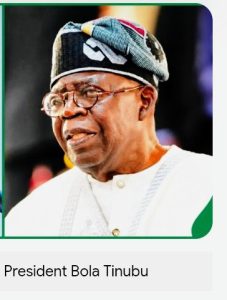
The Council described as shocking the President’s failure to condemn the growing wave of political violence, noting that, through his spokesman, Mr. Bayo Onanuga, the Presidency had instead chosen to caution opposition parties while shielding those allegedly responsible for violence within the ruling APC.
“President Tinubu cannot claim to desire peace when his own words provide cover for violence.
“‘All Is Fair in Politics’ is not the language of a Head of State. It is the language of political desperation and an open licence for thuggery, ballot snatching, intimidation and bloodshed.
“From Edo to Cross River, Gombe to Lagos, and Kebbi to Kaduna, Nigerians have witnessed attacks on opposition gatherings, destruction of campaign materials and the brutalisation of innocent supporters, allegedly by APC-sponsored thugs.
“Yet, Mr. President has not considered it necessary to call his governors and party members to order.
“Instead, the Presidency has resorted to diversionary tactics, blaming victims and preaching restraint to the opposition while members of the ruling party are accused of unleashing violence across the country,” the statement said.
The ADC-PCC challenged President Tinubu to explain why his condemnation of political violence appears directed at the opposition rather than members of his own party.
It asked: “Why has Mr. President refused to condemn APC governors who openly threaten opposition supporters? Why has he remained silent over public incitement by officials of his party? Why is his anger always directed at the opposition and never at those within his own political fold?”
The Council maintained that the ADC remains committed to peaceful, issue-based political engagement, insisting that its campaign is focused on addressing the country’s pressing challenges, including hunger, insecurity, unemployment, corruption and what it described as the failures of the Tinubu administration.
It accused the APC of resorting to violence because it had little to offer Nigerians in terms of credible solutions to the country’s problems.
Consequently, the ADC-PCC demanded that President Tinubu immediately and publicly withdraw his “All Is Fair in Politics” remark, condemn and call to order APC governors and party officials accused of inciting violence, and direct security agencies to protect all Nigerians impartially rather than allow them to become instruments of intimidation and oppression against opposition parties.
” Nigeria belongs to all of us. No political ambition is worth the blood of any Nigerian.
“If former President Goodluck Jonathan could make that profound declaration in 2015, President Tinubu has no excuse not to say so and demonstrate the sincerity of his commitment to peace in 2026.
“The ADC will not be intimidated. We will continue to campaign peacefully, and in 2027, Nigerians will have the opportunity to vote for competence, integrity and a new beginning,” the statement added.





-
News5 days ago
IGP Disu decorates 29 senior police officers with new ranks….charges them on professionalism, integrity,others
-
News4 days ago
Airstrikes kill 40 ISWAP terrorists in Borno
-
News4 days ago
We finally received CTC Of Lifu’s Judgement, without Atiku, Other Candidates Names Mentioned—Senator Melaye
-
News4 days ago
2026 U-17 WWC: Tinubu rewards each Flamingos player with ₦100m
-
News5 days ago
How Federal High Court Chief judge is beign blackmailed with EFCC, CCB- ADC Campaign Council
-
News2 days ago
Crowd Shouts ‘Bamayi’ at Tinubu, pelt convoy in Abuja
-
News5 days ago
Oil slump opens door to cheaper petrol for Nigerians …as Brent hits lowest since August
-
News4 days ago
2027: APC sacks kindergarteen Campaign Spokespersons…..Yari, Alake, Idris, now to speak for council