

News
VALIDITY OR OTHERWISE OF THE NBC/GCB’S MANDATORY CONTINUING PROFESSIONAL DEVELOPMENT PROGRAMME

BY PROF. MIKE OZEKHOME, SAN, CON, OFR, LL.D*

Introduction
The last may not have been heard of the somewhat controversial Continuing Professional Development (CPD) Programme which the Nigerian Bar Association (NBA) appears determined to institutionalize, notwithstanding the resistance of not a few members of the Association whose voices have obviously been drowned. The pushback has however persisted despite the recent endorsement of the programme by the General Council of the Bar (GCB) which has thrown its considerable weight behind the on-going implementation of the Programme.
Laudable as the Programme undoubtedly is however, lingering questions persist about the legal capacity of the GCB to enact the relevant enabling statutory provisions concerning the CPD. Such cannot be swept under the carpet, dismissed with a wave of the hand or wished away simply because of the programme’s salutariness and honest intendment. No. That would be ostrich-like and unbecoming of our noble profession whose members pride themselves as being the sentinels and guard-rails in the larger polity regarding adherence to the rule of law and due process in carrying out things. We should start the cleansing and self-deodorisation from home by embracing abandonment of self-introspection and examination.
Nagging Questions
Are there inherent flaws or defects in the CPD’s statutory provisions which might impinge on its validity or rob it of legitimacy? Can the GCB validly regulate the right of a lawyer who has been duly called to the Bar and is up-to-date in the payment of his practising fees as and when due, as the CPD provisions of the Legal Practitioners Rules of Professional Conduct has done? As between the National Assembly and the GCB, which body is constitutionally competent to make the CPD provisions? To the extent that Section 12(4) of the Legal Practitioners Act simply empowers the General Council of the Bar to “make rules on professional conduct in the legal profession”, can it be extended to include the power to prescribe a course of study, the successful completion of which is a prerequisite for a lawyer’s competence or qualification to continue to practice?
Having regards to Item 49 of its Exclusive Legislative List of the Constitution which empowers only the Assembly (in) to regulate “professional occupations as may be designated by (it)”, did the GCB not act in excess of its constitutional powers by enacting Rule 11 of the Rules of Professional Conduct for Legal Practitioners, 2023 (RPC), which contains the CPD prescriptions? We shall attempt some answers starting with the latter.
“11 —(I) A lawyer who wishes to carry on practice as a legal practitioner shall participate in and satisfy the requirements of the mandatory Continuing Professional Development (CPD) Programme operated by the Nigerian Bar Association.
(2) The activities in which a lawyer is required to participate for the purpose of the CPD Programme of the Nigerian Bar Association shall include—
a) attendance and participation in accredited courses;
b) lectures, seminars, workshops and conferences law approved by the Nigerian Bar Association.
c) writing on the law and its practice in books or journals and Newspapers approved by the Nigerian Bar Association.
d) (d) study towards professional qualifications approved by the Nigerian Bar Association: and
e) (e) other approved means of acquiring legal professional knowledge and experience.
(3) A lawyer shall be certified as having satisfied the requirement of the CPD Programme if and only if during the relevant year he earns the number of credit hours of participation in the programme which is required under the rules or guidelines made by the Nigerian Bar Association.
(4) Except as may be provided in the rules or guidelines of the Nigerian Bar Association, the number of credit hours required for each year shall be as follows—
a) for lawyers from Admission up to 5 years – 24 hours ;
8b) for lawyers just over five years up to ten years – 18 hours; and
c) for lawyers above ten years – 12 hours.
(5) The Nigerian Bar Association shall establish a Continuing Professional Development Department in its office for the operation of the Programme.
(6) The Nigerian Bar Association shall make rules or guideline for regulating the operation of the CPD Programme and such rules or guideline may provide for—
a) the number of credit hours of participation required of a legal practitioner;
b) the types of activities and studies that are acceptable for earning the credit;
c) persons that may be exempted from the requirements of the Programme; and
d) other matters which in its opinion are necessary for the proper operation of the Programme”
As for the power of the GCB to make rules regulating the conduct of lawyers (vide section 12(4) of the LPA), professional conduct has been defined as “the way, from an ethical point of view, a person behaves professionally towards clients, the employer, other colleagues, citizens in general, the community, the professional group, the environment, other species, and future generations”. See (https://www.igi-global.com/dictionary/professional-conduct/23716). By this definition it is surely far-fetched to conclude that the GCB possess the requisite statutory mandate to regulate or prescribe a course of study of continuing professional development which is the subject of section 11 of the RPC. However, that is not all as we shall see below.
The Legal Regime
The Exclusive Legislative list of the Constitution empowers the National Assembly (NASS) as the sole body responsible for regulating all professions in Nigeria (including, of course, Law). Section 8(2) of the Legal Practitioners Act (LPA) provides, inter alia, that “No legal practitioner shall be accorded the right of audience in any Court in Nigeria in any year unless he has paid to the Registrar in respect of that year, a practice fee as may be prescribed time to time in accordance with the provisions of the section”.
The Registrar referred to in the above section l is the Chief Registrar of the Supreme Court (Section 24 of the LPA). From the foregoing, it is clear that the provisions of Rule 11(1) of the RPC which purports to make participation in the CPD a condition precedent to be satisfied by a lawyer before he or she can continue “to carry on practice as a legal practitioner” are at odds and definitely contrary to the provisions of section 8(2) of the LPA which simply make the payment of annual practising fees the sole criterion to practise as a Barrister.
Resolving the Conflict
In the above circumstances, the obvious question to be answered is, which as between the provisions of the LPA and RPC supersede the other and which ought to prevail? The answer is, it is submitted, quite obvious: the latter, the LPA, supersedes. This is because it is trite that a subsidiary instrument such as the RPC derives its force legitimacy and validity from its principal or enabling statute and cannot therefore derogate from or contradict same: See THE GOVERNOR OF OYO STATE & ORS. V. OBA OLOLADE FOLAYAN (1995) LLJR-SC; PRINCE BURAIMOH OLANREWAJU V. ALHAJI AMODU OLALEYE OYEYEMI & ORS (2000) JELR 43846 (CA) and KENNEDY v INEC (CA/PH/EPT/350/2007) [2009] NGCA 1 (18 January 2009).Surely, the tail cannot wag the dog, nor can the agent be mightier than the principal.
The Doctrine of Covering the Field
Furthermore, under the doctrine of covering the field, where the National Assembly has enacted a law in respect of a particular matter, no subordinate legislative body can make any other law which has the effect of overriding a law validly enacted by the National Assembly. See HON. MIN. OF JUSTICE & AGF VS. AG OF LAGOS (2013) ALLFWLR Pt.704 pg. 1 and ISHOLA vs. AJIBOYE (1994) 6 NWLR pt. 352 pg.506@ 573D, where the Supreme Court respectively held with great erudition as follows:
-“(the) doctrine of covering the field postulates that where a federal Constitution or a federal enactment has already covered a particular legislative field, no State or even Local Government Law can be enacted to cover the same field already covered by the Constitution or the federal enactment”;
-“The Constitution is supreme not only when another law is in consistent with it but also when (that other) law seeks to complete with it in an area already covered by the Constitution”.
The Supremacy of the Constitution
The supremacy of the Constitution has severally been emphasized by the appellate courts. For instance in UDEOGU V FEDERAL REPUBLIC OF NIGERIA & ORS. (SC. 264/2012) [2016] NGSC 29 (17 March 2016), the court struck down a conflicting section of the Administration of Criminal Justice Act. Similarly in INSPECTOR-GENERAL OF POLICE V. ALL NIGERIA PEOPLES PARTY AND ORS (2007) AHRLR 179 (NGCA 2007), the court held that the provisions of the Public Order Act requiring a police permit for rallies is unconstitutional and void. Again in ATTORNEY-GENERAL OF LAGOS STATE VS THE ATTORNEY GENERAL OF THE FEDERATION (2003) 35 E-WRN / 01 (SC), the court declared the Federal Government’s withholding of federal allocations to Lagos State unconstitutional.
*Conclusion*
The NBA/GCB’s Continuing Professional Development (CPD) Programme as laudable and salutary as it is suffers from the inherent legislative deficiency and incapacity of the GCB to enact same. Having regard to the combined enabling statutory provisions, it is submitted that only the National Assembly has the sole capacity to legislate on those items. We must look inwards and tell ourselves this home truth, lest we be admonished with the popular cliche, “physician heal thyself” when another aggrieved legal practitioner challenges its validity.
Section 12(4) of the Legal Practitioners Act simply empowers the General Council of the Bar to “make rules on professional conduct in the legal profession”. No more. Can this be extended to include the powers to prescribe a course of study, the successful completion of which is a prerequisite for a lawyer’s competence or qualification to continue to practise? Conduct is defined by the definition preferred by the Oxford Dictionary is simply “the manner in which a person behaves, especially in a particular place of situation”. This is precisely what the General Council of the Bar was empowered to do- prescribe rules of professional conduct of behavior in the Legal profession; not to prescribe a compulsory course of study. The latter is clearly ultra vires its powers.

The United States government has insisted that Nigeria should retain its Country of Particular Concern, CPC, designation, saying the country has not done enough to protect Christians from attacks.
Assistant Secretary of State for African Affairs, Frank Garcia, made this statement on Thursday during a congressional hearing on violence in Nigeria.
Garcia was responding to questions from US Congressman Riley Moore, who asked about the government’s efforts to dismantle militia strongholds and kidnapping camps in the Middle Belt, particularly in Benue and Plateau states.
Moore also raised concerns over the exclusion of the states from the forest guard initiative and delays in deploying 1,000 approved guards to Plateau.
“Before you answer that, we cannot take this CPC designation off of this country. They have not done enough,” Moore said.
Garcia acknowledged the lack of progress, but said Nigeria was taking steps to address the concerns, although they had yet to produce results.
He said the country’s security capacity was still being developed and that deployments were not happening fast enough.
“Unfortunately, the violence has not stopped,” Garcia added, citing continued attacks in Kaduna and Plateau states.
He said the US had provided police training and equipment, expanded intelligence sharing and worked with Nigerian financial institutions to disrupt terrorist financing.
Garcia added that Washington would continue diplomatic engagements and security cooperation to protect vulnerable communities and ensure accountability.
However, the Nigerian government has consistently rejected claims of a “Christian genocide” or targeted religious persecution, maintaining that insecurity affects Nigerians of all faiths.


Liquefied Petroleum Gas, commonly known as cooking gas, has risen significantly, forcing Nigerians to spend more to purchase the product.
The increase comes as depot owners and retailers raised their prices over the past two days.
StockGap increased its depot price by N25 to N1,440 per kilogram. Nigerian Independent Petroleum Company Limited, NIPCO, Mobil (now 11 Plc) and Ardova, on the other hand, sold the product at N1,400 and N1,390 per kilogram, respectively.
Similarly, LPG retail outlets, including Raniol, Juda Oil and Nigerian National Petroleum Company Limited, NNPC, outlets in Abuja and its environs, now dispense cooking gas at between N1,550 and N1,600 per kilogram, up from N1,400 and N1,500.
Micro-LPG dealers sell the product for between N1,700 and N1,800 per kilogram, depending on the location in Abuja.
Earlier, NIPCO’s spokesperson, Taofeek Lawal, had exclusively told DAILY POST that LPG prices could increase further between November and January next year.
The latest price increase means that Nigerians who previously spent N17,500 to refill a 12.5kg cylinder at N1,400 per kilogram will now pay N20,000 at the new rate of N1,600 per kilogram, representing an additional N2,500.
News
2027: Tinubu Must Withdraw ‘All Is Fair in Politics’ Remark, Embrace Peaceful Coexistence — ADC-PCC
The African Democratic Congress Presidential Campaign Council (ADC-PCC) has called on President Bola Ahmed Tinubu to publicly retract his controversial “All Is Fair in Politics” remark, warning that such rhetoric fuels political division, emboldens thugs and poses a grave threat to the nation’s peace and stability.
The ADC-PCC also expressed concern over what it described as the President’s disturbing silence on the conduct of some APC governors and party chieftains who have openly made inflammatory statements and allegedly encouraged political violence.
In a statement signed by its Director of Media and Publicity, Kola Ologbondiyan, the ADC-PCC urged President Tinubu to rise above partisan interests and demonstrate the statesmanship expected of a national leader, citing former President Goodluck Jonathan’s unequivocal declaration that no presidential ambition was worth the blood of any Nigerian.
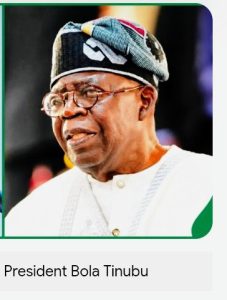
The Council described as shocking the President’s failure to condemn the growing wave of political violence, noting that, through his spokesman, Mr. Bayo Onanuga, the Presidency had instead chosen to caution opposition parties while shielding those allegedly responsible for violence within the ruling APC.
“President Tinubu cannot claim to desire peace when his own words provide cover for violence.
“‘All Is Fair in Politics’ is not the language of a Head of State. It is the language of political desperation and an open licence for thuggery, ballot snatching, intimidation and bloodshed.
“From Edo to Cross River, Gombe to Lagos, and Kebbi to Kaduna, Nigerians have witnessed attacks on opposition gatherings, destruction of campaign materials and the brutalisation of innocent supporters, allegedly by APC-sponsored thugs.
“Yet, Mr. President has not considered it necessary to call his governors and party members to order.
“Instead, the Presidency has resorted to diversionary tactics, blaming victims and preaching restraint to the opposition while members of the ruling party are accused of unleashing violence across the country,” the statement said.
The ADC-PCC challenged President Tinubu to explain why his condemnation of political violence appears directed at the opposition rather than members of his own party.
It asked: “Why has Mr. President refused to condemn APC governors who openly threaten opposition supporters? Why has he remained silent over public incitement by officials of his party? Why is his anger always directed at the opposition and never at those within his own political fold?”
The Council maintained that the ADC remains committed to peaceful, issue-based political engagement, insisting that its campaign is focused on addressing the country’s pressing challenges, including hunger, insecurity, unemployment, corruption and what it described as the failures of the Tinubu administration.
It accused the APC of resorting to violence because it had little to offer Nigerians in terms of credible solutions to the country’s problems.
Consequently, the ADC-PCC demanded that President Tinubu immediately and publicly withdraw his “All Is Fair in Politics” remark, condemn and call to order APC governors and party officials accused of inciting violence, and direct security agencies to protect all Nigerians impartially rather than allow them to become instruments of intimidation and oppression against opposition parties.
” Nigeria belongs to all of us. No political ambition is worth the blood of any Nigerian.
“If former President Goodluck Jonathan could make that profound declaration in 2015, President Tinubu has no excuse not to say so and demonstrate the sincerity of his commitment to peace in 2026.
“The ADC will not be intimidated. We will continue to campaign peacefully, and in 2027, Nigerians will have the opportunity to vote for competence, integrity and a new beginning,” the statement added.





-
News5 days ago
IGP Disu decorates 29 senior police officers with new ranks….charges them on professionalism, integrity,others
-
News4 days ago
Airstrikes kill 40 ISWAP terrorists in Borno
-
News4 days ago
We finally received CTC Of Lifu’s Judgement, without Atiku, Other Candidates Names Mentioned—Senator Melaye
-
News4 days ago
2026 U-17 WWC: Tinubu rewards each Flamingos player with ₦100m
-
News5 days ago
How Federal High Court Chief judge is beign blackmailed with EFCC, CCB- ADC Campaign Council
-
News2 days ago
Crowd Shouts ‘Bamayi’ at Tinubu, pelt convoy in Abuja
-
News5 days ago
Oil slump opens door to cheaper petrol for Nigerians …as Brent hits lowest since August
-
News4 days ago
2027: APC sacks kindergarteen Campaign Spokespersons…..Yari, Alake, Idris, now to speak for council