
News
The Endangered North: From Sardauna’s Dream to a Region Searching for Its Soul

By Emmah Uhieneh

There was a time when Northern Nigeria stood not merely as a geographical expression, but as an idea, a vision, and a movement. It was a region united by purpose, driven by leadership, and inspired by a collective ambition to uplift its people. The North of Sir Ahmadu Bello, the Sardauna of Sokoto, and Sir Abubakar Tafawa Balewa was not perfect, but it possessed something increasingly scarce today: a sense of mission.
The generation of leaders that built the foundations of modern Northern Nigeria understood that power was meaningful only when deployed for development. They believed that leadership was a sacred trust and that the prosperity of the people was the ultimate measure of success. Their politics revolved around education, agriculture, infrastructure, unity, and integration. Their vision transcended personal ambition.
The Sardauna travelled tirelessly across the vast Northern Region, encouraging Western education without abandoning cultural identity. He established institutions, promoted agricultural development, expanded opportunities, and sought to ensure that no section of the North was left behind. Tafawa Balewa carried the same spirit of moderation, nation-building, and unity. Together, they envisioned a North that would be politically relevant, economically productive, socially progressive, and fully integrated into a prosperous Nigerian federation.
They saw the North as one family.
Today, one cannot help but ask: what happened to that dream?
The North remains Nigeria’s largest demographic bloc. It possesses the largest expanse of arable land, abundant mineral resources, enormous livestock potential, strategic international borders, and a youthful population capable of transforming not only the region but the entire nation. By every objective measure, Northern Nigeria should be one of Africa’s most prosperous regions.
Yet, paradoxically, it remains one of its most challenged.
The tragedy of contemporary Northern Nigeria is not the absence of resources. It is the absence of collective purpose.
Where previous generations pursued regional development, many contemporary actors pursue personal enrichment. Where earlier leaders sought unity, today’s political class often thrives on division. Where statesmen once sacrificed personal comfort for the advancement of society, many now view public office as an avenue for accumulation and influence.
The consequences are visible everywhere.
A region that once supplied the nation with thriving textile industries now watches many of its factories lie silent. The famous groundnut pyramids have become historical photographs. Agricultural potential remains largely underutilized. Millions of young people wander without employment or hope. Vast mineral deposits remain buried beneath the soil while poverty flourishes above it.
Yet another uncomfortable question confronts the North.
For a region that has produced countless ministers, governors, military officers, diplomats, academics, technocrats, and influential political figures since independence, what tangible legacy has that influence left behind for the ordinary Northerner?
Northern Nigeria has never lacked access to power. Indeed, no region can claim to have exercised greater influence over Nigeria’s political trajectory. The North has produced presidents, heads of state, speakers, military rulers, chief justices, service chiefs, and influential policymakers. It has occupied strategic positions at the centre for decades.
But where are the enduring monuments of that influence?
Where are the industries established by those who benefited from public trust? Where are the manufacturing clusters that should have transformed the regional economy? Where are the industrial estates, innovation hubs, modern agricultural processing zones, and technology centres that ought to have emerged from decades of political dominance?
Today, when conversations about Northern economic success arise, only a handful of names consistently command universal recognition. Men like Aliko Dangote and Abdulsamad Rabiu stand as examples of what Northern enterprise can achieve. Their investments have created jobs, built industries, generated wealth, and projected Nigeria onto the global economic stage.
But where are the others?
For every politician who accumulated power, influence, and privilege, what corresponding investment was made in the future of the region? For every office occupied, what institution was built? For every election won, what economic transformation followed?
These are not questions of envy. They are questions of accountability.
The North envisioned by the Sardauna and Balewa was never meant to be sustained by political influence alone. Their dream was far more ambitious. They envisioned a North that would combine political relevance with economic greatness; a North that would educate its children, industrialize its economy, modernize its agriculture, and compete with the best regions in Africa and beyond.
Political influence was never supposed to be the destination.
It was supposed to be the vehicle for development.
Somewhere along the journey, however, many among the elite appeared to mistake access to power for achievement itself.
Consequently, a dangerous culture of entitlement gradually replaced a culture of productivity. Public office increasingly became an end rather than a means. Political calculations displaced developmental thinking. Power-sharing arrangements became more important than wealth creation. The struggle for positions overshadowed the struggle for progress.
Meanwhile, the ordinary people—the talakawa, the farmers, traders, artisans, and the millions of vulnerable children scattered across the region—continued to bear the burden of underdevelopment.
Millions remain trapped in poverty.
Schools remain inadequate.
Hospitals remain overstretched.
Industries remain scarce.
Young people continue to search for opportunities that should have existed within their own communities.
Perhaps even more troubling is the fragmentation of the Northern identity itself.
Religion, which should serve as a force for moral guidance and social cohesion, has increasingly become a tool for division and manipulation in certain quarters. Ethnic suspicions have deepened. Political rivalries have replaced regional solidarity. Communities that once coexisted peacefully now find themselves separated by distrust and fear.
The North that once spoke with a common voice increasingly speaks in competing dialects of self-interest.
The region has become vulnerable to betrayal not only from external forces but from within. Sycophancy has replaced constructive criticism. Truth is often sacrificed on the altar of political loyalty. Mediocrity is rewarded while competence is viewed with suspicion.
Many who should challenge leadership failures choose instead to applaud them.
Many who should defend the people negotiate their suffering.
Many who should speak truth to power have become comfortable companions of power.
The result is a dangerous cycle where poor governance produces poverty, poverty produces desperation, desperation fuels insecurity, and insecurity further destroys opportunities for development.
Banditry, insurgency, kidnapping, communal conflicts, and criminality flourish where governance is weak and hope is absent. No society can sustainably prosper when its young people are denied education, employment, and a meaningful future.
Beyond politics lies an even deeper crisis—a moral and intellectual crisis.
The North once produced leaders, scholars, administrators, diplomats, military officers, academics, and entrepreneurs who commanded respect across Nigeria and beyond. Today, too many public conversations are dominated by misinformation, emotional manipulation, and ideological rigidity.
Some religious leaders, who ought to be agents of enlightenment and moral renewal, have become more concerned with expanding influence, preserving followership, and defending doctrinal positions than confronting the realities of poverty, ignorance, insecurity, and underdevelopment. Rather than inspiring productivity, critical thinking, and peaceful coexistence, some have become entangled in narratives that deepen dependency and division.
The consequence is a generation increasingly disconnected from the values that built the North’s historical greatness.
Perhaps the most painful reality is that many seem to have become comfortable with the condition of the region. There is insufficient urgency. Too little outrage. Too little determination to radically redirect the North toward the future.
A region that once demonstrated remarkable political reflexes now often appears slow to respond to the developmental emergencies unfolding around it.
The conversations that should dominate public discourse—education, industrialization, innovation, agricultural modernization, healthcare, and job creation—are too often overshadowed by calculations about power, succession, appointments, and political alignments.
One is therefore compelled to ask:
If the Sardauna were to walk through Northern Nigeria today, would he recognize the region he worked tirelessly to build?
If Tafawa Balewa were to return and witness the poverty amidst abundance, the insecurity amidst potential, the divisions amidst shared history, and the suffering of millions despite decades of political influence, what would he say?
Would they celebrate the progress made?
Or would they mourn the opportunities squandered?
Would they be proud that the region they laboured to uplift has become a model of development?
Or would they feel profound disappointment that a North blessed with immense human and natural resources has yet to translate those blessings into prosperity for its people?
These questions may be uncomfortable, but they are necessary.
For no society can move forward until it is willing to honestly confront the distance between what it once aspired to become and what it has actually become.
Yet, despite everything, hope remains.
The North still possesses enormous strengths. Its population remains its greatest asset. Its agricultural potential is unmatched. Its mineral wealth is substantial. Its strategic location provides access to regional markets across West and Central Africa. Its entrepreneurial culture remains vibrant despite adversity.
What is required is not another summit, another slogan, or another political coalition.
What is required is a return to purpose.
A return to the philosophy that guided the Sardauna—that development must be intentional, inclusive, and people-centred.
A return to leadership that values service above self-enrichment.
A return to education as the foundation of progress.
A return to empathy for the ordinary citizen.
A return to the belief that the success of one community strengthens the entire region.
The North cannot continue to romanticize its glorious past while neglecting the responsibilities required to build its future.
History is important, but history alone cannot educate children, secure communities, create industries, or provide opportunities.
The greatest tribute Northern Nigeria can pay to the Sardauna and Tafawa Balewa is not endless remembrance.
It is renewal.
The real question confronting the North today is not whether it possesses the resources to prosper.
It does.
The question is whether it still possesses the courage, honesty, unity, selflessness, and leadership necessary to transform those resources into collective prosperity.
Until that question is answered, the dream of the Sardauna and Balewa will remain unfinished—a powerful vision waiting for a new generation courageous enough to revive it.
And perhaps that is the greatest tragedy of all: that a region once regarded as the anchor of Nigeria now finds itself searching for the very soul that once made it great.
The United States government has insisted that Nigeria should retain its Country of Particular Concern, CPC, designation, saying the country has not done enough to protect Christians from attacks.
Assistant Secretary of State for African Affairs, Frank Garcia, made this statement on Thursday during a congressional hearing on violence in Nigeria.
Garcia was responding to questions from US Congressman Riley Moore, who asked about the government’s efforts to dismantle militia strongholds and kidnapping camps in the Middle Belt, particularly in Benue and Plateau states.
Moore also raised concerns over the exclusion of the states from the forest guard initiative and delays in deploying 1,000 approved guards to Plateau.
“Before you answer that, we cannot take this CPC designation off of this country. They have not done enough,” Moore said.
Garcia acknowledged the lack of progress, but said Nigeria was taking steps to address the concerns, although they had yet to produce results.
He said the country’s security capacity was still being developed and that deployments were not happening fast enough.
“Unfortunately, the violence has not stopped,” Garcia added, citing continued attacks in Kaduna and Plateau states.
He said the US had provided police training and equipment, expanded intelligence sharing and worked with Nigerian financial institutions to disrupt terrorist financing.
Garcia added that Washington would continue diplomatic engagements and security cooperation to protect vulnerable communities and ensure accountability.
However, the Nigerian government has consistently rejected claims of a “Christian genocide” or targeted religious persecution, maintaining that insecurity affects Nigerians of all faiths.


Liquefied Petroleum Gas, commonly known as cooking gas, has risen significantly, forcing Nigerians to spend more to purchase the product.
The increase comes as depot owners and retailers raised their prices over the past two days.
StockGap increased its depot price by N25 to N1,440 per kilogram. Nigerian Independent Petroleum Company Limited, NIPCO, Mobil (now 11 Plc) and Ardova, on the other hand, sold the product at N1,400 and N1,390 per kilogram, respectively.
Similarly, LPG retail outlets, including Raniol, Juda Oil and Nigerian National Petroleum Company Limited, NNPC, outlets in Abuja and its environs, now dispense cooking gas at between N1,550 and N1,600 per kilogram, up from N1,400 and N1,500.
Micro-LPG dealers sell the product for between N1,700 and N1,800 per kilogram, depending on the location in Abuja.
Earlier, NIPCO’s spokesperson, Taofeek Lawal, had exclusively told DAILY POST that LPG prices could increase further between November and January next year.
The latest price increase means that Nigerians who previously spent N17,500 to refill a 12.5kg cylinder at N1,400 per kilogram will now pay N20,000 at the new rate of N1,600 per kilogram, representing an additional N2,500.
News
2027: Tinubu Must Withdraw ‘All Is Fair in Politics’ Remark, Embrace Peaceful Coexistence — ADC-PCC
The African Democratic Congress Presidential Campaign Council (ADC-PCC) has called on President Bola Ahmed Tinubu to publicly retract his controversial “All Is Fair in Politics” remark, warning that such rhetoric fuels political division, emboldens thugs and poses a grave threat to the nation’s peace and stability.
The ADC-PCC also expressed concern over what it described as the President’s disturbing silence on the conduct of some APC governors and party chieftains who have openly made inflammatory statements and allegedly encouraged political violence.
In a statement signed by its Director of Media and Publicity, Kola Ologbondiyan, the ADC-PCC urged President Tinubu to rise above partisan interests and demonstrate the statesmanship expected of a national leader, citing former President Goodluck Jonathan’s unequivocal declaration that no presidential ambition was worth the blood of any Nigerian.
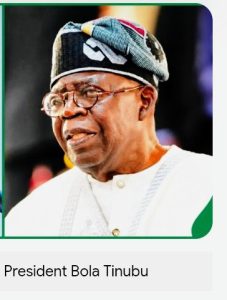
The Council described as shocking the President’s failure to condemn the growing wave of political violence, noting that, through his spokesman, Mr. Bayo Onanuga, the Presidency had instead chosen to caution opposition parties while shielding those allegedly responsible for violence within the ruling APC.
“President Tinubu cannot claim to desire peace when his own words provide cover for violence.
“‘All Is Fair in Politics’ is not the language of a Head of State. It is the language of political desperation and an open licence for thuggery, ballot snatching, intimidation and bloodshed.
“From Edo to Cross River, Gombe to Lagos, and Kebbi to Kaduna, Nigerians have witnessed attacks on opposition gatherings, destruction of campaign materials and the brutalisation of innocent supporters, allegedly by APC-sponsored thugs.
“Yet, Mr. President has not considered it necessary to call his governors and party members to order.
“Instead, the Presidency has resorted to diversionary tactics, blaming victims and preaching restraint to the opposition while members of the ruling party are accused of unleashing violence across the country,” the statement said.
The ADC-PCC challenged President Tinubu to explain why his condemnation of political violence appears directed at the opposition rather than members of his own party.
It asked: “Why has Mr. President refused to condemn APC governors who openly threaten opposition supporters? Why has he remained silent over public incitement by officials of his party? Why is his anger always directed at the opposition and never at those within his own political fold?”
The Council maintained that the ADC remains committed to peaceful, issue-based political engagement, insisting that its campaign is focused on addressing the country’s pressing challenges, including hunger, insecurity, unemployment, corruption and what it described as the failures of the Tinubu administration.
It accused the APC of resorting to violence because it had little to offer Nigerians in terms of credible solutions to the country’s problems.
Consequently, the ADC-PCC demanded that President Tinubu immediately and publicly withdraw his “All Is Fair in Politics” remark, condemn and call to order APC governors and party officials accused of inciting violence, and direct security agencies to protect all Nigerians impartially rather than allow them to become instruments of intimidation and oppression against opposition parties.
” Nigeria belongs to all of us. No political ambition is worth the blood of any Nigerian.
“If former President Goodluck Jonathan could make that profound declaration in 2015, President Tinubu has no excuse not to say so and demonstrate the sincerity of his commitment to peace in 2026.
“The ADC will not be intimidated. We will continue to campaign peacefully, and in 2027, Nigerians will have the opportunity to vote for competence, integrity and a new beginning,” the statement added.




-
News5 days ago
IGP Disu decorates 29 senior police officers with new ranks….charges them on professionalism, integrity,others
-
News4 days ago
Airstrikes kill 40 ISWAP terrorists in Borno
-
News4 days ago
We finally received CTC Of Lifu’s Judgement, without Atiku, Other Candidates Names Mentioned—Senator Melaye
-
News4 days ago
2026 U-17 WWC: Tinubu rewards each Flamingos player with ₦100m
-
News5 days ago
How Federal High Court Chief judge is beign blackmailed with EFCC, CCB- ADC Campaign Council
-
News2 days ago
Crowd Shouts ‘Bamayi’ at Tinubu, pelt convoy in Abuja
-
News5 days ago
Oil slump opens door to cheaper petrol for Nigerians …as Brent hits lowest since August
-
News4 days ago
2027: APC sacks kindergarteen Campaign Spokespersons…..Yari, Alake, Idris, now to speak for council