

Opinion
THE DECEPTIVE TACTICS OF IPOB


By Emeka Jerome
All warfare is based on deception. Hence, when able to attack, we must seem unable; when using our forces, we must seem inactive; when we are near, we must make the enemy believe we are far away; when far away, we must make him believe we are near –Sun Tzu
In the words of the revered war strategist Sun Tzu, deception is a critical component of war execution. Echoing Sun Tzu’s teachings, the proscribed Indigenous People of Biafra (IPOB) has refined the craft of deception, using a tapestry of falsehoods to advance and achieve their objectives. This treatise will highlight how the group has continually employed deception as a weapon of war to deceive gullible members, keep the public attracted to them and deepen its presence in the south east. No doubt, IPOB’s ascent to prominence was founded upon a bedrock of deception right from its inception. Spearheaded by Nnamdi Kanu, the emergence of IPOB was an outgrowth of the supposedly reformed Movement for the Actualization of the Sovereign State of Biafra (MASSOB), a pro-secessionist group that had already seen its power wane and was known for its cunning activities and propensity for violence. Although IPOB came into being in 2012, Kanu had already garnered a significant following due to his inflammatory broadcasts on Radio Biafra, a responsibility he had taken on as a member of MASSOB. Recognising that the decline of MASSOB could spell the end of his influence, Kanu, aiming to secure both relevance and financial gain, intensified his facade of advocating for Biafra’s freedom. He accomplished this by spreading propaganda against the Nigerian Government and fostering optimism among the susceptible members of the public. By rebranding and emerging as a new entity, IPOB projected an image of a fresh movement seeking self-determination while carefully avoiding associations with MASSOB’s past activities. His strategy worked because in no time, Kanu assumed command over the sphere of IPOB’s operations, rapidly ascending to its helm.
When IPOB started its brand of agitation, it was cheered on. Nnamdi Kanu became an overnight messiah. The poor vulnerable uneducated market apprentices became his ardent followers. He exploited them. Kanu adequately deployed his expertise of Radio Biafra to deceive. By broadcasting incendiary messages and misinformation, he manipulated emotions and perceptions of the public to IPOB’s advantage. The false narratives he propagated about the Nigerian Government’s actions and intentions fuelled anger and frustration among his followers. The use of hate speech and derogatory language against Government, portraying them as oppressors and enemies of the people painted a one-sided narrative of victimhood which generated sympathy for their cause, making it difficult for their followers to critically assess the situation. By leveraging international media attention, IPOB amplified their narrative on a global scale. Sensationalized headlines and stories about their activities played into their strategy, allowing them to maintain the façade of a legitimate movement fighting for self-determination while downplaying or omitting their more radical actions. The group while orchestrating actions that provoked responses from the Nigerian Government, created martyrs and gained international sympathy. Most of their tactics aimed to paint IPOB as a peaceful movement unjustly oppressed by a hostile government, thus diverting attention from their own aggressive activities. Ironical!
Unsurprisingly, Igbo diaspora across Europe and America began to join IPOB. Politicians back home were consulting its leader, Kanu. His house became a Mecca of sorts. Kanu got emboldened and then, combative. He became proud and dictatorial. His words were feared. He aspired by every means to be like Ojukwu, famed for his lionic roars. Kanu had disciples. Within this newfound position, Kanu artfully manipulated the collective sentiment, leveraging deception to foment hostility towards the government under the guise of championing the elusive cause of Biafran freedom. His financial resources began to significantly swell in different hard currencies. He skillfully garnered financial support from both the rich and the poor under the ploy of rallying donations to fuel the secessionist agenda. Simultaneously, as his personal coffers grew richer, he persistently peddled false hope to his followers, deceitfully and heartlessly portraying himself as their champion in the struggle. Kanu became bolder and went ahead to establish a military Wing, the Eastern Security Network (ESN). Operating ostensibly to counter Fulani herdsmen in the South East or so we were told, the ESN initiated a series of assaults designed to stoke the flames of ethnic conflict and destabilise the nation. Paradoxically, the reported activities of Fulani herdsmen have notably diminished, however IPOB’s actions in the region has remained persistent.
In what initially appeared to be a child’s play in the beginning, soon transformed the South East into a breeding ground for violence, marked by a surge in assassinations, bloodshed, intimidation and various forms of mayhem. Security agencies sent to the zone to restore order became targets for annihilation. The group’s orchestrations have, indeed, in the spirit of Sun Tzu’s teachings, harnessed deception’s formidable power to its advantage. Recognising that Kanu, a Nigerian based in London and his group held the potential to plunge the country into anarchy if left unchecked, the Nigerian government took proactive steps. It proscribed the group and went a step further by extraditing Kanu back to Nigeria. This was to ensure he faced charges for the chaos and destabilization he allegedly caused in the Southeastern region. In response, the group members protested and began issuing out senseless sit-at-home orders every Monday. Doom awaited whoever dared to come out on days meant for the so called sit-at home. Even school children were not spared. The young and old met same fate. For each day sit at home order was enforced, millions of naira was lost. Trading, economic, educational activities were halted. The sick does not dare to go to the hospital. Regardless of the protests voiced by the local inhabitants, IPOB ruthlessly dealt with anyone who dared to defy their directives, ironically targeting the very individuals they professed to champion and liberate. Deception at the highest core! For the people, the snake they nurtured in their bosom has now turned around to bite them.
With Kanu now in custody and facing legal proceedings, his disciple Simon Ekpa, in faraway Finland, capitalized on his mentor’s influence to achieve his own rise to prominence. Recognising the opportune moment for him to also cash out, Ekpa launched a deadlier faction called the Autopilot and afterwards the Biafra Government in Exile. He continues to give false sense of hope to liberate Biafrans while using them to swim in millions. Same as his mentor, it has now become unmistakably clear that IPOB’s motivations are primarily driven by financial gain. Under the pretext of calling for the release of Kanu, he dishes out orders to for sit-at-home, organises fundraising frequently with the false and deceptive narrative of using the money to fund ESN. How laughable. Ekpa became more vicious. The South East is currently in a mess. Sit-at-home orders stretches for weeks with zero considerations of how it negatively affects the poor residents. Meanwhile the person issuing out the directive is doing so from the comfort of his home abroad.
IPOB’s skillful use of deception as a strategic weapon of war becomes even more apparent when considering recent developments. They are now attempting to distance themselves from the autopilot faction of IPOB led by Simon Ekpa. IPOB is doing double speak. At one instance, it wants to distance itself from Sit-at home. At the other, it states that though it started it, Simon Ekpa is not implementing it its own way. But at least, it was Kanu and IPOB that started it. They are in agreement. While they vehemently deny that the Eastern Security Network (ESN) engages in combative and violent activities, this assertion contradicts the evidence provided by the numerous arrests made and the ongoing campaigns carried out by the military and other security agencies. As the number of arrests increases, IPOB intensifies its efforts to disassociate itself from these individuals, seemingly attempting to detach their image from these actions. Yet, in ironic twist, they continue to advocate for the release of these very individuals they claim not to be affiliated with. The contradictory stance of denying membership while concurrently issuing press releases about the detention of their members raises questions about the veracity of their claims. It is as if they are performing a delicate balancing act, trying to maintain an image of innocence while supporting those apprehended.
Furthermore, Simon Ekpa’s frequent calls for a sit-at-home protest have created a conundrum for the group. In light of the public’s skepticism and widespread condemnation, they appear to be shifting blame onto Ekpa’s faction, using this as an opportunity to once again deceive the public into believing that they are the virtuous side. But it is evident as daylight that in a larger context, IPOB’s insistence on non-violence stands in stark contrast to past actions. During the EndSARS protests, Nnamdi Kanu’s directive to his followers to burn down Lagos demonstrated their potential for incitement. The ensuing chaos and destruction following this directive were widely observed. Their claims of nonviolence also clash with their association with the Ambazonian secessionist group in Cameroon, an entity known for its aggressive tactics. The inconsistency is further highlighted by their clashes with the Army and Police in the South East. These confrontations raise questions about their true intentions and undermine their assertions of nonviolence. In the face of these complex and often contradictory actions, IPOB’s manipulation of information and narratives emerges as a deliberate and sophisticated strategy to shape public perception, rally support and maintain a facade of innocence even as evidence points to a different reality.
Another strategy being deployed by IPOB is the sustained misleading narrative that all rival factions other than its own are sponsored by the Federal Government or its agencies. This claim is distorted and contradicts the evident struggle for supremacy between Kanu and Ekpa. It is important to note that Kanu broke away from MASSOB. Ekpa is only traversing a similar path. Why then is Kanu angry and propagating falsehood for the purpose of deception? At the moment, the times are not good for the IPOB. It is in dire straits and fight of its life. It is in a big struggle as its days are numbered. Sooner than later, like its predecessor Biafra-Republic-agitation-associations, will become extinct and go into oblivion. This is not a false prophesy. It is a matter of time. Again, like the South East elite and governments, IPOB has got a wild cat for a pet and it turned to feed on it. All is not well with Kanu and IPOB. They have both crumbled and crawling. There is fire on the mountain and IPOB is in disarray. It is struggling. Kanu is in detention. His IPOB is in shatters. Disorganised. Only vultures have surrounded him. Everything is wrong. There is leadership tussle. IPOB has broken into factions. There is Simon Ekpa autopilot. There is Chika Edozien Directorate of State (DOS). IPOB is in a big fight over its finances. Kanu’ s younger brothers want to control it. In Germany, Italy, London, France among others IPOB huge funds is at the heart of a fight. Some accounts have been blocked. Others are objects of litigation. Kanu is worried. He is losing control. There is a bigger fight among Kanu’s legal team. No cohesion. Some feel entitled. There’s contest over who is the lead counsel. Some lawyers who never had addresses or any profitable ventures have found rest in IPOB. Some who couldn’t have won the simplest civil cases in a customary court are cashing out on IPOB and fleecing Kanu. Poor him.
While IPOB burns, Southeast also burns. Eastern Security Network, unknown gunmen, kidnappers, hostage takers, warlords, combatants, killers, marauders, blood suckers, violent vigilantes have taken over the region. Only a reign of terror is visible. IPOB is helpless. Simon Ekpa, from far away Finland is fueling the crisis. Violently forced sit-at-home order is enforced by those IPOB struggles to deny are not its members. In the absence of Kanu, Ekpa has tried to mimic him in voice, attitude and carriage. The kill-them-order, has accentuated. Ekpa tries to outdo Kanu. Ironically, Kanu is in denial. He and IPOB are desperately denying that Ekpa isn’t their member or working for them.
A time was when Kanu publicly called for attacks on Nigerian Soldiers and other law enforcement agents including the police. Kanu called for violent attack of fulani herdsmen. He called many Igbo politicians names. He called them Efulefu. What has Ekpa done differently? IPOB is just intelligent by half. Now, the organisation and Kanu want Monday sit-at-home cancelled but used for Economic Empowerment Day (EED) and call/march for his unconditional release. Any difference? Whether as sit-at-home or EED or call for Kanu’s release, is it not the same? Double speak! The new plan is even more dangerous. It will bring Kanu’s faction of IPOB into confrontation with Ekpa’s. Then blood will flow. A bird that leaves the ground and perches on the anthill is still on the ground. This is an Igbo adage. Kanu claims IPOB is not responsible for the dastardly acts in the South East. But he has not denied tasking ESN to be bloody. Even now, he tries to deploy the ESN for certain accomplishments. Initially, we were told ESN was fighting Fulani herdsmen. But is that still true? We were told it was about Buhari. Is he still there?
There is another angle we are ignoring. Kanu has never denied not to have committed most of the things he is accused of. His very dull infantile defence is that he did that in the UK, a jurisdiction not covered by Nigeria. Fact is that Kanu and his cohorts have injured the South East, Ndigbo and humanity. History will not judge him right. He may pontificate and grandstand. He may look for scapegoats and point accusing fingers to “innocent” persons and places. He has destroyed his homeland. He has destroyed Igbo culture, value and ethical discipline. Igboland is in ruins, the type never suffered during the civil war. While IPOB thinks or believes that its tactics are superb and impregnable, they are rather self-destructive. The tactics have not only impeded peace in the South East but inhibited the resolution of the crisis and perhaps, encouraged the continued incarceration of Kanu.
At the end, Ndigbo will understand the essence of the current agitation. They will understand that it is a complete ruse. It is a manipulative deception; a heist organised by some negatively ambitious young men who, in their desire to be rich, started a variant of 419/Yahoo Yahoo. It worked for them. They got the money and attention of the vulnerable. They used intimidation, harassment and fear mongering to actualise their aim. The bone of contention among IPOB leaders is about how to keep and share the booty. The one behind the bars wants to maintain a control from detention. The money is so huge to be left in the hands of others. Kanu is voracious for money. IPOB is rich and the funds cannot just be left like that. The agitation is no longer about Biafra or Ndigbo. It is about Money, Women and Power. It is an ego fight among select narcissists. The IPOB leaders do not want the Igbo followers to know this. It will not be good for their narrative and end goal. It will deflate the deceptive tactics. Keeping the propaganda and fake news alive is the best they can do. The deceptions work, at least, for now. But the lies will definitely die someday. There is a short span of life for lies and deceit. Sooner than later, light and knowledge will come upon Ndigbo. May that day come. And quickly too.
Emeka Jerome, writes in from Umuahia, Abia State.

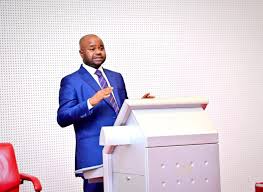
The Oyo Stakeholders Forum (OSF) has identified the current Chairman of the Federal Inland Revenue Service (FIRS), Dr. Sir Zacch Adedeji as the only aspirant with the vision and capacity to transform the state ahead of the 2027 governorship election.
The stakeholders revealed that they are pleased and satisfied with the exploits of Adedeji as FIRS which the achievement is ostensibly clear even for the blind to see, hence the call for him to transform Oyo state in 2027.
The Forum also pointed out that, “under Dr. Adedeji’s leadership at FIRS, Nigeria has witnessed a revolution in its tax administration system. His commitment to leveraging technology, implementing strategic reforms, and fostering public trust in the tax process has resulted in unprecedented revenue growth for the nation.”
The development was made known during a press conference addressed by the coordinator of the forum, Elder Jelili Akande, on Tuesday in Abuja.
OSF called on the people of Oyo to look forward to electing Adedeji as governor in 2027, while underscoring the need for his achievements at FIRS currently to be brought to bear in the governance of Oyo state.
Adding that Oyo state stands to benefit from Adedeji’s experience and exposure in the area of: replicating achievements at FIRS in Oyo; Modernizing Oyo state’s tax system; People-centered approach to revenue generation; Harnessing Oyo’s economic potential, and infrastructural development.
“The Oyo Stakeholders Forum firmly believes that Dr. Sir Zaach Adedeji possesses the vision, experience, and determination to transform Oyo State’s revenue system and drive sustainable development. His track record at FIRS is a testament to his ability to deliver results, and his commitment to transparency and accountability is exactly what Oyo State needs at this critical time.
“As we look forward to the 2027 elections, we urge all Oyo residents to support this vision of a prosperous, self-reliant state. Together, we can build an Oyo State where every resident shares in the benefits of economic growth and development,” Akande stated.
Part of the statement read:
“As Oyo State prepares for the 2027 gubernatorial elections, Dr. Adedeji’s vision for transforming the state’s revenue system comes as a beacon of hope. Oyo State, with its rich resources and industrious population, is brimming with untapped potential. However, the state’s heavy reliance on federal allocations has hindered its ability to achieve sustainable development.
Dr. Adedeji’s expertise in revenue generation offers a pathway to change this narrative and position Oyo State as a model of economic self-sufficiency and progress.
ACHIEVEMENTS AT FIRS: A TEMPLATE FOR OYO STATE
DR. ADEDEJI’S tenure at FIRS has been marked by strategic reforms that have improved efficiency and transparency. Key among these achievements is the introduction of a digital tax filing system, which has streamlined tax processes and minimized leakages. This technological transformation has made compliance easier for businesses and individuals alike, leading to a significant increase in tax revenues.
Additionally, Dr. Adedeji championed public-private partnerships to create awareness about tax compliance, ensuring that more businesses became part of the formal economy. His efforts have not only widened the tax net but have also restored public confidence in how tax revenues are utilized. Such achievements demonstrate his ability to create sustainable solutions that benefit both the government and citizens—a template he plans to replicate in Oyo State.
MODERNIZING OYO STATE’S TAX SYSTEM
As Governor, Dr. Adedeji plans to modernize Oyo State’s tax administration system, making it more inclusive, transparent, and technology-driven. His strategy will involve the deployment of innovative tools to identify untapped revenue streams, expand the tax base, and ensure that every taxable entity contributes fairly to the state’s development.
Central to this transformation will be a shift from the traditional reliance on federal allocations to a robust internally generated revenue (IGR) framework. By leveraging data analytics and automation, Dr. Adedeji aims to reduce leakages, improve compliance, and make the tax process seamless for individuals and businesses alike.
A PEOPLE-CENTERED APPROACH TO REVENUE GENERATION
Dr. Adedeji’s approach to revenue generation is rooted in his belief that governance should serve the people. As such, he is committed to ensuring that every kobo generated is accounted for and channeled into projects that directly impact the lives of Oyo residents. This includes investments in critical areas such as education, healthcare, infrastructure, and job creation.
His administration will prioritize transparency by implementing a system where taxpayers can easily track how their contributions are utilized. This level of accountability will not only boost public trust but also encourage voluntary compliance.
HARNESSING OYO’S ECONOMIC POTENTIAL
Oyo State is endowed with vast resources and opportunities. From its thriving agricultural sector to its emerging industrial hubs, the state has the potential to become an economic powerhouse. Dr. Adedeji’s vision includes harnessing these resources by creating an enabling environment for businesses to thrive.
His plans include offering tax incentives to attract local and foreign investments, particularly in key sectors such as agribusiness, manufacturing, and technology. By doing so, he aims to create jobs, boost productivity, and ultimately increase the state’s revenue.
THE PATH TO INFRASTRUCTURAL DEVELOPMENT
The increase in IGR under Dr. Adedeji’s leadership will translate into tangible benefits for the people of Oyo State. With more funds at the state’s disposal, his administration will focus on the development of critical infrastructure such as roads, schools, hospitals, and water supply systems. These projects will not only improve the quality of life for residents but also enhance the state’s attractiveness to investors.
A CALL FOR ACTION
The Oyo Stakeholders Forum firmly believes that Dr. Sir Zacch Adedeji possesses the vision, experience, and determination to transform Oyo State’s revenue system and drive sustainable development. His track record at FIRS is a testament to his ability to deliver results, and his commitment to transparency and accountability is exactly what Oyo State needs at this critical time.
As we look forward to the 2027 elections, we urge all Oyo residents to support this vision of a prosperous, self-reliant state. Together, we can build an Oyo State where every resident shares in the benefits of economic growth and development.”
We live in interesting times much in fulfillment of the great Chinese adage!. Interesting because of the elastic capacity of political spin doctors to connect totally unrelated political dots to fit into predetermined mindsets.
Barely three years ago, the usually combustible atmosphere in Benue State was inflamed by contrived controversies over the siting of a Federal Polytechnic in Wannune, in Tarka Local Government Area of Benue State.
According to trending narratives then , the Polytechnic was originally sited in Adikpo in Kwande Local Government Area in the Zone A axis of the State.
The Adikpo school was birthed by Senator Barnabas Gemade who was representing the zone at that time.
According to the purveyors of the story , the polytechnic has been moved to Wannune in Zone B due to the machinations of Senator Gabriel Suswam the immediate past Senator representing Benue North East in the National Assembly and the secretary to the government of the Federation, Senator George Akume who had worked independently to vanquish the achievements of Senator Gemade by erasing one of his star accomplishments as Senator.
Now that the governor of BenueState, Hyacinth Alia, has revealed those behind the relocation of the polytechnic from Kwande to Tarka Local Government would the kwande people apologise to sen. Suswam for falsely accusing him over what he knew nothing about?
The governor confirmed that the removal of the Federal Polytechnic Adikpo to Wannune in Tarkaa, was done by some powerful Abuja politicians who did it in collaboration with officials of the Federal ministry of education then.
If you recall, some sponsored pens took turns to write press articles in national dailies, and social media platforms and cluster WhatsApp groups accusing the former governor and Senator of not protecting their interest, over something that decided by members of then Buhari Federal cabinet.
Unfortunately, no matter how much Senator Suswam, tried to explain, the people of kwande refused to listen to reason, their elites whom we thought would do diligent investigations and explain things to their people back home were in the forefront the attacks on Suswam.
But thankfully, Governor Alia has cleared the air on the true state of things and we thank him immensely for it, and we hope that next time before you accuse public officials on any matter, you will do your research properly or we will continue to throw away and losing good representation, both at home and at the National level.
The storyline then was that Suswam, wanted the state owned College of Education in Katsina Ala to be taken over by the Federal Government while Akume will rather have a polytechnic sited in his ancestral village of Wannune.

The rumour mills then had no doubt been fed by conspiracy theories laden with negative political innuendo, portraying Senator Gabriel Torwua Suswam, of engaging in a selfish game of musical chairs but, the truth behind the relocation of the polytechnic has been unravel by the governor himself.
Very few people then had taken a step backwards to undertake a dispassionate assessment of the state of things. Most people seem consumed by the sentiments of the discussion rather than the facts.
As of three years ago, logic on its head to insinuate that Senator Gabriel Suswam, being a seasoned political player will endorse the “ relocation “ of an institution from a highly populated part of his senatorial district to a place outside of it when he was on the ballot for the 2023 presidential poll was idiotic. That will amount to political suicide.
Secondly, while it is true that the senate in 2017 approved a Bill by Senator Gemade to site a Polytechnic in Adikpo, the same bill was never concurred to in the House of Representatives , neither was it gazetted by the President but,now the issue is in the public domain.
In any case, Senator Suswam has never had a hand in the Adikpo project because he wasn’t in the senate when the bill was presented with the confirmation of the governor today, while addressing the good people of kwande/ Ushongo on a thank you visit in Adikpo.
As a matter of fact, he was in DSS detention when that bill was passed!. To therefore impute that he is part of a design to rob his zone of such a project is mischievous and uncharitable .
As a proud member of the Tiv community, it is incumbent on him to celebrate such a great feat as bringing a federal institution to any part of Tivland giving the consequential chain of development it will bring to the area.
It was strange to observe that the zeal for political victories whether real or pyrrhic outweigh concrete issues of development in Benue state. Rather than pull resources together to celebrate rare privileges such as this, some actors will rather expand the fault lines in the state and paint others black in order for them to take center stage. This is politics of self abnegation, a case of cutting your nose to spite your face.

By Sulaiman Abdul
Before Nasir Ahmed El-Rufai became governor, Kaduna State enjoyed a sense of peace and unity among its various communities. The people had learned to live together, respecting each other’s rights and boundaries.
Kaduna State has a long history of peaceful coexistence among its various communities, from the highlands of Makarfi to the plains of Kagoro. The farmers and herdsmen lived side by side, sharing the land and its treasures. While disputes over land have occurred in the past, the communities have managed to live together and prosper, showcasing their ability to accommodate differences and maintain harmony.
However, during El-Rufai’s tenure as governor, the state faced increased conflicts and tensions among different groups. During Elrufa’s tenure, longstanding misunderstandings that were ordinarily resolved at the community level were manipulated and escalated into violent conflicts fueled by tribal and religious jealousies. These conflicts have resulted in heavy loss of lives and valuable resources, creating a climate of fear and unrest in the state.
One of the main issues that has been exacerbated under Elrufai’s leadership is the age-old clash between herdsmen and farmers. This conflict, which has been a recurring problem for centuries, has escalated into deadly confrontations resulting in loss of lives and destruction of property.
The current state of killings and unrest in the region cannot be viewed as isolated incidents, but rather as part of a larger agenda of misgovernance that has divided communities along ethnic and religious lines. Elrufai’s administration has exploited internal weaknesses and cleavages in society, perpetuating a cycle of violence and discord.
El-Rufai’s eight-year tenure was marked by division, weakness, and confusion within the state. His policies exploited ethnic and religious differences, leading to a grand misgovernance that fueled the current spate of killings and unrest. It is clear that Kaduna State needs a more inclusive and proactive approach to address the challenges it faces and restore the peace and unity that once defined the state.
Allegations of human rights abuses, unguarded public utterances, and a flood of petitions have characterized the political career of Nasir El-Rufai, particularly during his eight-year tenure as the governor of Kaduna State. These issues have raised significant concerns both within Nigeria and internationally, highlighting the controversial nature of his leadership style and decision-making.
One of the key issues surrounding El-Rufai’s tenure is the broad and specific allegations of human rights abuses. Perhaps the most prominent case is the killing of over 300 followers of the Shiite leader, Ibraheem El-Zakzaky, in Zaria, Kaduna State, in 2015. Instead of holding the military accountable for the massacre, the El-Rufai-led government chose to prosecute El-Zakzaky and his wife, leading to a lengthy and controversial legal process that ultimately ended in dismissal by the Kaduna State High Court in July 2021. This case has brought El-Rufai under intense scrutiny from both domestic and international human rights bodies, with investigations ongoing at the International Criminal Court and the United Nations.
Furthermore, El-Rufai’s tenure was marked by arbitrary arrests of political enemies, seizure of properties, and wanton demolition of perceived opponents’ properties. Reports of extrajudicial killings and the use of force and intimidation to suppress protests have further tarnished his human rights record. Some court cases against him have alleged embezzlement of public funds and abuse of trust, involving cronies, allies, and family members for corrupt purposes during his time as head of the Bureau of Public Enterprises, Minister of the Federal Capital Territory, and governor of Kaduna State.
In addition to human rights abuses, El-Rufai’s unguarded public utterances have also generated controversy and backlash. He has made divisive statements that inflamed mistrust among citizens, particularly between Muslims and Christians in Kaduna State. His comment about Muslims ruling Kaduna for a long period while doing justice to Christians was widely criticized for its potential to stoke religious and ethnic tensions, leading to bloody clashes. The derogatory remarks he made towards political adversaries and respected groups like the Northern Elders Forum have further solidified his reputation for making inflammatory comments.
Moreover, a flood of petitions and legal challenges have followed El-Rufai throughout his political career. His nomination as a ministerial candidate attracted widespread rejections and petitions, leading to protests during the screening exercise at the National Assembly. Several pending cases in Nigerian and international courts, including the ECOWAS and the ICC, highlight the extent of the legal challenges facing El-Rufai. Allegations of genocide, crimes against humanity, and corruption have been leveled against him, reflecting the depths of public distrust and dissatisfaction with his leadership.
The tenure of Governor Elrufai in Kaduna State will be remembered as a dark period in the history of the state. The administration, characterized by a lack of transparency, accountability, and empathy, left a trail of suffering and despair in its wake. As Elrufai’s eight-year reign came to an end, the people of Kaduna State were left grappling with the harsh realities of hunger, inflation, job losses, and a deteriorating healthcare system.
The 2023 elections marked a turning point for the state, as voters overwhelmingly chose a new vision for the future. Senator Uba Sani emerged as the people’s choice to lead Kaduna State out of its current predicament and towards a brighter tomorrow. The jubilations that followed the election were not just about a change in leadership, but about the hope and possibility of a better future for all residents of the state.
Governor Uba Sani faces a daunting task ahead, as he must navigate the challenges left behind by his predecessor and chart a new course for the state. It is imperative that he surround himself with a team of competent and compassionate individuals who share his vision for a prosperous and united Kaduna State. The mention of leaders like Honorable Sani Mohammed Shaaban, with his impeccable credentials and commitment to the welfare of the people, highlights the importance of selecting the right individuals to support the governor in his quest for positive change.
Shaaban is a passionate believer in the organic links between generations, particularly when it comes to mentorship in northern Nigeria. At a very young age, he had the privilege of being exposed to political masters such as Ibrahim Tahir, Umaru Dikko, Joseph Tarka, and Aminu Kano. These individuals are living history and embodiments of all the exemplary qualities that young Northerners should strive to achieve.
Mentorship is a crucial aspect of personal and professional growth, and Shaaban understands the importance of learning from those who have come before him. The political masters he was fortunate enough to be mentored by not only imparted knowledge and wisdom but also instilled in him a sense of responsibility and dedication to serving his community and country.
Ibrahim Tahir, Umaru Dikko, Joseph Tarka, and Aminu Kano are all respected figures in northern Nigeria, known for their leadership, integrity, and commitment to social change. Shaaban sees them as role models and strives to follow in their footsteps by upholding the values they stood for.
In a society where traditional values and customs play a significant role, mentorship from esteemed individuals like Ibrahim Tahir, Umaru Dikko, Joseph Tarka, and Aminu Kano is invaluable. These mentors not only provide guidance and support but also serve as a living example of what can be achieved through hard work, dedication, and a commitment to serving others.
Shaaban’s belief in the organic links between generations is a testament to the power of mentorship and the importance of learning from those who have come before us. Thanks to the guidance and guardianship he received from northern political masters, Shaaban is well-equipped to carry on their legacy and make a positive impact in his community and beyond.
Umaru Dikko, known for his iron will and determination, inspired many with his unwavering commitment to his principles. Shaaban has been Dikko’s close tutelage since his school days in the United Kingdom and shares this steadfastness and commitment to his goals, demonstrating a resilience that mirrors that of Dikko.
Dr. Ibrahim Tahir, with his political sagacity, paved the way for future leaders like Shaaban whom he guided and mentored rigorously in the days of the second republic National Party of Nigeria (NPN). His intellect and foresight in navigating the complexities of Nigerian politics set a standard for Shaaban. As such, Shaaban exemplifies a similar level of acumen and strategic thinking in his own political endeavors.
Aminu Kano, a political maverick dedicated to social justice, has influenced Shaaban in his quest for a fair and equitable society. Shaaban’s dedication to the people and his passion for uplifting the marginalized echo the ideals that Kano championed during his lifetime.
Tarka, renowned for his courage and boldness, serves as a role model for Shaaban with whom he served as the national youth leader of the NPN. Shaaban’s fearless approach to tackling tough issues reflects the same courage that Tarka exhibited during his political career.
Shehu Shagari’s impetus and vision for a prosperous Nigeria continue to inspire leaders like Shaaban. Shaaban shares Shagari’s commitment to national unity and economic development, striving to build a better future for all Nigerians.
It is difficult in this age and time for any political in Kaduna State to compare with Shaaban who carries the legacy of these esteemed leaders with grace and determination.
His leadership, sacrifice, and dedication to the common people make him an invaluable asset to any government seeking to improve the lives of its citizens and to the North generally. In a diverse state like Kaduna, leaders like Shaaban who have enjoyed such rare opportunity for training by masters of the northern power play are crucial in bridging divides and fostering unity among all communities.
Shaaban’s inspiring presence and untiring efforts to serve the interests of the people of Kaduna State should be appreciated by all. Governor Uba Sani must heed the calls of the people for competent and compassionate individuals like Shaaban to support him in his mission to transform Kaduna State.
With leaders like Sani Shaaban by his side, Governor Uba Sani can guide the state towards prosperity and unity. The people of Kaduna deserve a government that works for their benefit and well-being, and with Shaaban’s leadership, a brighter tomorrow is possible for all residents of the state. It is time for a new era of governance that prioritizes the well-being and prosperity of all.
Abdul writes from Kaduna (0806 549 3479)





-
News5 days ago
IGP Disu decorates 29 senior police officers with new ranks….charges them on professionalism, integrity,others
-
News4 days ago
Airstrikes kill 40 ISWAP terrorists in Borno
-
News4 days ago
We finally received CTC Of Lifu’s Judgement, without Atiku, Other Candidates Names Mentioned—Senator Melaye
-
News4 days ago
2026 U-17 WWC: Tinubu rewards each Flamingos player with ₦100m
-
News5 days ago
How Federal High Court Chief judge is beign blackmailed with EFCC, CCB- ADC Campaign Council
-
News2 days ago
Crowd Shouts ‘Bamayi’ at Tinubu, pelt convoy in Abuja
-
News5 days ago
Nigerian Businessman Hands IGP Disu 7 Days Tọ Probe Police Officers Over Alleged Release Of Recovered N600m Rolls-Royce To Suspects
-
News5 days ago
2027: ADC accuses Federal High Court of withholding David Mark sack judgment