

News
Tales and rhythms of a coup d’etat in Nigeria’s country – BY TONY ERHA


For about two weeks, the rumour mill had been agog, concerning an alleged failed coup d’état to unseat Bola Ahmed Tinubu, the Nigeria president and a coterie of politicians and leaders, by a section of the Nigerian army. One’s heart wouldn’t skip the unsteady thuds of its beats, realising its extent and severity for Nigeria’s growing democracy culture and by extension its reversal effects on the hapless populace. Shocking revelations emanate from the news report, which allegedly bore the names and cadres of the alleged aberrant plotters.
Unfortunately, the Nigerian state had been tongue-tied and slyly in its reactions to the intense newsbreaks and updates on the rumours, which most of the news outlets seemingly confirmed as true. In the windstorm of the rumoured coup, presidential spokesmen and those of the military, dispelled it, but regarded the sack and replacement of the Chief of Army Staff, General Christopher Musa and his contemporaries of the Navy and Airforce as normal shakeups, which was later proved to be disloyalty on part of the key officers and many more of the lower ranks. The Presidency and the Military Information units were faulted, whereas the disloyalty allegation was another expression for a coup, with a punitive betrayal.
But, military takeovers in a democracy, as we are often reminded, are retrogressive and anti-people. It’s more so when a military coup hijacks a government that was put in place by the same commoners, who the coup plotters would say them wanted to save from misrule by the incumbent powers; where anti-coup d’états are upset that the gun entrusted on soldiers to safeguard the populace, is the same that silences, kills and maims the people to submit to their power-hijack.
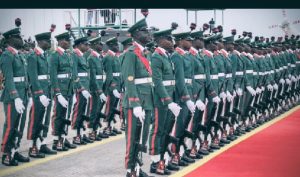
When soldiers, who swore on oath to remain in their barracks and trenches; pledging to defend the people and their sovereignty at all time, and to be buried with their rifle along their sides, now turn their arms against defenceless people, it becomes very frightening and a subject of great concern. That is where those sacked and those allegedly arrested should face the rebellious act of a coup or disloyalty.
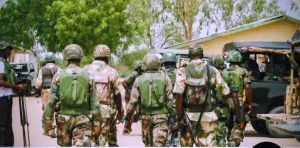
Yomie Johnson, the gun-toting late Liberian warlord, who killed Samuel Doe, in ambush of the Nimba county neigbourhood of Liberia, a capital and presidential seat of the power of the West Africa country, readily comes to the mind. With his ‘tail to his heart’ Sergeant Doe, the man who killed, maimed and misruled his country, was shot to death, by Johnson, culminated in a Nemesis or retributive justice, similar to the maxim of ‘he who kills by the sword dies by the sword”. In his Ikoyi, Lagos asylum, Johnson, the guitarist and womaniser, had written a moralistic book, “The Gun That Liberates Shouldn’t Rule”. Yomie Johnson, the mysterious die-hard soldier, who stopped the killing fields of Samuel Doe, wouldn’t be bugged that General Sani Abacha, his host and the late Nigerian dictator, who similarly gained presidential power through the barrel of the gun, would have nothing to do with a book title that sneered innuendo at his fistic rule of the country, after a bloodless coup, killings and maiming that marred his reign.
Nemesis may have forgiven Yomie Johnson his sins, for his was outright dedication to the commoners of Liberia, who he saved from the Samuel Doe’s cruelty. He later passed on after some failed contests for the same presidential seat, not by gun-putsch, but through popular election. But Nigeria’s gurgle-wearing general and the most prolific military coup-maker, was scandalised to have been killed in the ‘Garden of Eden’, by eating an apple courtesy of ‘Eve’, the roving mistress. And there is only a little dissimilarity between the late maximum leader and his ‘twin-in-arm-and-looting’, the Minna-based general and gap-toothed king of military coup d’etats, who God has apparently given the benefit of longevity, in order to witness the deadly consequences of his despotic reign of a country and its people that have continually given him a life-support.
It couldn’t be that it is for the love for the hapless populace that the plotters move to overthrown, than for the greater desire to feather their own nests and bleed the people’s treasury. Particularly, page 39 of the year 2000’s edition of H. B. Momoh’s book, “The Nigerian Civil War, 1967–1970: History and Reminiscences”, decoded the first Nigeria’s military coup, that prompted the civil war as follows;
“Either by design or default, Lieutenant Colonel Odumegwu-Ojukwu held on to 5 Infantry Battalion and refused to cooperate with the coupists, particularly in their bid to obtain money from Kano Central Bank under the pretext of settling troops salaries by intercepting the aircraft sent to Kano by Chukwuma Kaduna Nzeogwu”.
The Nigerian army, that was in 1993 dubbed in unflattering appellation of “an army of anything goes”, by a one-time revered Chief of Army Staff, Lt. Gen. Salihu Ibrahim, can’t vouch that it heeded the salient wake-up call, until now that a once-indomitable force, has become a near-mincemeat to makeshift Boko Haram and its complement bandit groups. Again, an intrepid former and late National Security Adviser (NSA), Owoye Azazi, in 2002, even though was serving under a People’s Democracy Party (PDP), was courageous in his memorable public comments that the escalation of insecurity in the country, particularly the rampaging activities of the dreaded Boko Haram, was traceable to some undemocratic practices by the political parties during elections, especially carried out by the ruling PDP.
A Muhammadu Buhari’s presidency and its ruling All Progressives Congress (APC), which kicked the PDP from power, with the promise that it was going to stamp out the ‘Boko boys’ and others, was the same that opened the country’s boarders to extreme rebels and herders, and their de-radicalization and enlistment into the army. Now, what we seem to have on hand is an army of occupation, in furthering in-house and external colonialism.
Excepting for the alleged involvement of Timipre Sylva, a former Minister of State for Petroleum and ex-governor of Bayelsa, who is said to be a kingpin of the coup that might have been goaded from outside the country’s southern zone, nearly all the 16 names, so far allegedly arrested as the failed mutineers, are from the northern part of the country. If the media accounts are authentic, it therefore means that for a first time, a Nigerian coup was engineered from a section of the country, unlike the coups of 1966, Muritala Mohammed’s, Gideon Okah’s, and that of the erudite Mamma Vatsa, which unified literary giants like Christopher Okigbo, the late Chinua Achebe and Wole Soyinka, whose joined notable Nigerians, pleading for leniency, but was tricked by IBB’s hastened execution of him.

The United States government has insisted that Nigeria should retain its Country of Particular Concern, CPC, designation, saying the country has not done enough to protect Christians from attacks.
Assistant Secretary of State for African Affairs, Frank Garcia, made this statement on Thursday during a congressional hearing on violence in Nigeria.
Garcia was responding to questions from US Congressman Riley Moore, who asked about the government’s efforts to dismantle militia strongholds and kidnapping camps in the Middle Belt, particularly in Benue and Plateau states.
Moore also raised concerns over the exclusion of the states from the forest guard initiative and delays in deploying 1,000 approved guards to Plateau.
“Before you answer that, we cannot take this CPC designation off of this country. They have not done enough,” Moore said.
Garcia acknowledged the lack of progress, but said Nigeria was taking steps to address the concerns, although they had yet to produce results.
He said the country’s security capacity was still being developed and that deployments were not happening fast enough.
“Unfortunately, the violence has not stopped,” Garcia added, citing continued attacks in Kaduna and Plateau states.
He said the US had provided police training and equipment, expanded intelligence sharing and worked with Nigerian financial institutions to disrupt terrorist financing.
Garcia added that Washington would continue diplomatic engagements and security cooperation to protect vulnerable communities and ensure accountability.
However, the Nigerian government has consistently rejected claims of a “Christian genocide” or targeted religious persecution, maintaining that insecurity affects Nigerians of all faiths.


Liquefied Petroleum Gas, commonly known as cooking gas, has risen significantly, forcing Nigerians to spend more to purchase the product.
The increase comes as depot owners and retailers raised their prices over the past two days.
StockGap increased its depot price by N25 to N1,440 per kilogram. Nigerian Independent Petroleum Company Limited, NIPCO, Mobil (now 11 Plc) and Ardova, on the other hand, sold the product at N1,400 and N1,390 per kilogram, respectively.
Similarly, LPG retail outlets, including Raniol, Juda Oil and Nigerian National Petroleum Company Limited, NNPC, outlets in Abuja and its environs, now dispense cooking gas at between N1,550 and N1,600 per kilogram, up from N1,400 and N1,500.
Micro-LPG dealers sell the product for between N1,700 and N1,800 per kilogram, depending on the location in Abuja.
Earlier, NIPCO’s spokesperson, Taofeek Lawal, had exclusively told DAILY POST that LPG prices could increase further between November and January next year.
The latest price increase means that Nigerians who previously spent N17,500 to refill a 12.5kg cylinder at N1,400 per kilogram will now pay N20,000 at the new rate of N1,600 per kilogram, representing an additional N2,500.
News
2027: Tinubu Must Withdraw ‘All Is Fair in Politics’ Remark, Embrace Peaceful Coexistence — ADC-PCC
The African Democratic Congress Presidential Campaign Council (ADC-PCC) has called on President Bola Ahmed Tinubu to publicly retract his controversial “All Is Fair in Politics” remark, warning that such rhetoric fuels political division, emboldens thugs and poses a grave threat to the nation’s peace and stability.
The ADC-PCC also expressed concern over what it described as the President’s disturbing silence on the conduct of some APC governors and party chieftains who have openly made inflammatory statements and allegedly encouraged political violence.
In a statement signed by its Director of Media and Publicity, Kola Ologbondiyan, the ADC-PCC urged President Tinubu to rise above partisan interests and demonstrate the statesmanship expected of a national leader, citing former President Goodluck Jonathan’s unequivocal declaration that no presidential ambition was worth the blood of any Nigerian.
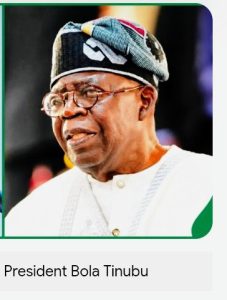
The Council described as shocking the President’s failure to condemn the growing wave of political violence, noting that, through his spokesman, Mr. Bayo Onanuga, the Presidency had instead chosen to caution opposition parties while shielding those allegedly responsible for violence within the ruling APC.
“President Tinubu cannot claim to desire peace when his own words provide cover for violence.
“‘All Is Fair in Politics’ is not the language of a Head of State. It is the language of political desperation and an open licence for thuggery, ballot snatching, intimidation and bloodshed.
“From Edo to Cross River, Gombe to Lagos, and Kebbi to Kaduna, Nigerians have witnessed attacks on opposition gatherings, destruction of campaign materials and the brutalisation of innocent supporters, allegedly by APC-sponsored thugs.
“Yet, Mr. President has not considered it necessary to call his governors and party members to order.
“Instead, the Presidency has resorted to diversionary tactics, blaming victims and preaching restraint to the opposition while members of the ruling party are accused of unleashing violence across the country,” the statement said.
The ADC-PCC challenged President Tinubu to explain why his condemnation of political violence appears directed at the opposition rather than members of his own party.
It asked: “Why has Mr. President refused to condemn APC governors who openly threaten opposition supporters? Why has he remained silent over public incitement by officials of his party? Why is his anger always directed at the opposition and never at those within his own political fold?”
The Council maintained that the ADC remains committed to peaceful, issue-based political engagement, insisting that its campaign is focused on addressing the country’s pressing challenges, including hunger, insecurity, unemployment, corruption and what it described as the failures of the Tinubu administration.
It accused the APC of resorting to violence because it had little to offer Nigerians in terms of credible solutions to the country’s problems.
Consequently, the ADC-PCC demanded that President Tinubu immediately and publicly withdraw his “All Is Fair in Politics” remark, condemn and call to order APC governors and party officials accused of inciting violence, and direct security agencies to protect all Nigerians impartially rather than allow them to become instruments of intimidation and oppression against opposition parties.
” Nigeria belongs to all of us. No political ambition is worth the blood of any Nigerian.
“If former President Goodluck Jonathan could make that profound declaration in 2015, President Tinubu has no excuse not to say so and demonstrate the sincerity of his commitment to peace in 2026.
“The ADC will not be intimidated. We will continue to campaign peacefully, and in 2027, Nigerians will have the opportunity to vote for competence, integrity and a new beginning,” the statement added.





-
News5 days ago
IGP Disu decorates 29 senior police officers with new ranks….charges them on professionalism, integrity,others
-
News4 days ago
Airstrikes kill 40 ISWAP terrorists in Borno
-
News4 days ago
We finally received CTC Of Lifu’s Judgement, without Atiku, Other Candidates Names Mentioned—Senator Melaye
-
News4 days ago
2026 U-17 WWC: Tinubu rewards each Flamingos player with ₦100m
-
News5 days ago
How Federal High Court Chief judge is beign blackmailed with EFCC, CCB- ADC Campaign Council
-
News2 days ago
Crowd Shouts ‘Bamayi’ at Tinubu, pelt convoy in Abuja
-
News5 days ago
Oil slump opens door to cheaper petrol for Nigerians …as Brent hits lowest since August
-
News4 days ago
2027: APC sacks kindergarteen Campaign Spokespersons…..Yari, Alake, Idris, now to speak for council