
News
Success & Challenges of 10th House Under Dr. Tajudeen Abbas

… How Education, Public Assets, Police Affairs Committees, Others Stand
BY OBUTE JAMES
The current session of Nigerian National Assembly was inaugurated on 13th June, 2023 following the emergence of four principal officers, the Senate President, Deputy Senate President; House of Representatives Speaker and Deputy Speaker.
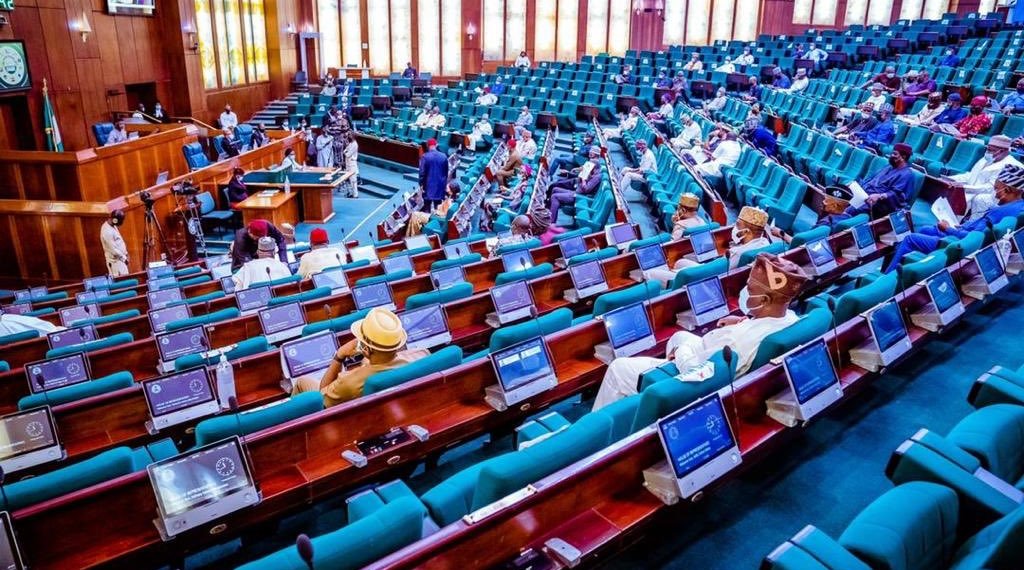
The country’s national parliament consists of two chambers, the Senate (109 Senators) and House of Representatives (360 Members). The legislature at the state level is unicameral while National Assembly serves as parliament for the Federal Capital Territory, Abuja
The former Governor of Akwa Ibom State, Senator Godswill Akpabio was elected President of the Senate having polled 63 votes while the former Chairman, Senate Committee on Appropriation; Senator Jubrin Barau emerged as Deputy Senate President. In the House of Representatives, Dr. Tajudeen Abbas, Ph.D got 353 votes to emerge as the Speaker and Hon. Benjamin Kalu also was unanimously elected as the Deputy Speaker.
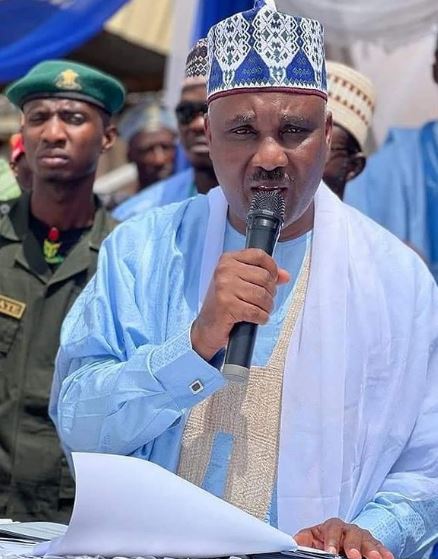
In his inaugural speech, the Speaker of the House of Representatives Rt. Hon. Tajudeen Abbas Ph.D said under his leadership, the lawmakers will work closely and interdependently with the Executive and Judiciary Arms to give Nigerians the good governance they deserve.
Abbas said the 10th House of Representatives will not only sustain but will surpass the gains of the Ninth House of Representatives, promising to work with members to introduce reforms and innovations for the benefit of Nigerians.
In the last few months of this administration, certain actions and decisions have been taken in line with the promises of the Speaker, Abbas. These include constitution and inauguration of several ad hoc and standing committees; emergence of 8 principal officers; town hall/stakeholders meeting on the 2024 budget; passage of the 2024 Budget, review of House Standing Order and unveiling/launching of legislative agenda.
Others include commencement of sectorial debate; unveiling of policy document on training, re-training and capacity building of legislators, legislative aides and support staff; and recently, inauguration of House Committee on Constitution Review. The Deputy Speaker, Rt. Hon. Benjamin Kalu is the chairman of this House Constitution Review Committee which was inaugurated on Monday 26th February, 2024. He will work with the Deputy Senate President, Senator Jubrin Barau. Barau is the Chairman, Senate Committee on the Review of 1999 Constitution.
The first notable decision of the House of Representatives under the leadership of Abbas was the Constitution of 7 Ad hoc Committees within 72 Hours of the takeoff of the 10th National Assembly. These committees took care of the House’s affairs until the announcement and constitution of the standing committees. These committees include Internal Security, Selection of Chairmen and Deputy Chairmen for Committees, Media and Publicity, Legislative Agenda, Rules & Business, Ethics and Privileges and Welfare. Apart from Legislative Agenda and Selection Committees, these ad hoc committees which were inaugurated on June 15th completed their tasks and ceased to exist the moment the chairmen and deputy chairmen of the standing committees were announced and inaugurated on July 27, 2023.
On July 4, 2023 eight principal officers emerged without crisis that sometime characterise such announcement. The Speaker, Abbas made the announcement sequel to consultation with the ruling APC leaders, opposition parties and various caucuses. They include Hon. Julius Ihonvbere (Edo) as the House Majority Leader and Hon. Usman Kumo (Gombe) as Chief Whip; Hon. Abdullahi Ibrahim Halims (Kogi) as Deputy Majority Leader and Hon. Oriyomi Onanuga (Ogun) as the Deputy Chief Whip; Hon. Kingsley Chinda (PDP, Rivers) Minority Leader and Hon. Ali Isah (Gombe) Minority Whip; Hon. Madaki Aliyu (NNPP, Kano) Deputy Minority Leader and Hon.George Ozodinobi (LP, Anambra), Deputy Minority Whip.
Appointment of Chairmen of Statutory and Standing Committees and How They Stand
Announcement and constitution of the standing committees’ chairmen and their deputy chairmen in view of the history of Nigerian parliament sometime results into serious crisis that affects the business of the House. However, under the leadership of Abbas both the acclaimed foes and allies of the Speaker seemed to be properly captured in the appointment of the chairmanship of these committees. Apart from lawmakers from ruling APC, Members from opposition political parties were also carried along in the appointment of chairmen and deputy chairmen of both the statutory and standing committees of the House.
Some pundits and political analysts argued that the increase in the number of House Standing Committees and appointment of their chairmen and deputy chairmen were basically on political consideration. The House Committees increases from110 to 134, There is no doubt that political consideration was one of the factors in the appointment of the chairmen and deputy chairmen, however, from the performance of some of the chairmen of these committees, it obvious that academic qualification, experience, effectiveness, efficiency and other factors came to play.
Education:
Under the leadership of Abbas, the previously known two committees on Education, Tertiary and Basic Education, were unbundled into 7 committees. The Tertiary Education alone in the previous assembly had about 300 government organisations to oversight. This will result into inefficiency, according to Abbas why justifying his action for increasing the number of standing committees in one of the stakeholders’ meetings recently.
The committees on education in the 10th House of Representatives include University Education (Lead Committee); TETFund & Other Services; Alternative Education; Federal Colleges of Education; Polytechnic; Examination Bodies and Basic Education.
Hon. Abubakar Hassan Fulata, former university lecturer, two times chairman of House Committee on Rules and Business is the Chairman of University Education in the 10th House of Representatives. One of the major achievements of this committee under Fulata was the removal of universities and other tertiary institutions from Integrated Personnel Payroll Information System, IPPIS.
The Academic Staff Union of Universities, ASUU had gone on strike for several months in the previous administration seeking its members removal from IPPIS and other issues. But these were not achieved. However, few days after Fulata pledged that his committee is working towards elimination of strike in universities and called for the removal of university lecturers from IPPIS, the government of President Ahmed Bola Tinubu yielded to the call and removed tertiary institutions from the IPPIS.
The Federal Executive Council in December last year approved the removal of tertiary institutions from IPPIS.
In commending the Federal Government for the bold step, Fulata said universities have been yearning and some of them in the National Assembly have been advocating for the removal of tertiary institutions from IPPIS because it is anti-intellectual, ant-academics and retrogressive.
According to him, there are enabling laws that give the councils and boards of tertiary institutions power of recruitment, and payment. But these powers were taking away by the IPPIS. He said it is unheard of that an entire university have to seek permission from about seven MDAs before recruiting a cleaner.
Public Assets:
House Committee on Public Assets was one of the newly created committees by the Abbas leadership of the 10th House of Representatives. A legal luminary, Barr. Ademorin Kuye is the Chairman of this committee.
Kuye and other members of the House Committee on Public Assets did not hesitate to point out the direction they are going shortly after the committee was Inaugurated.
In an interview with journalists recently, Kuye said the committee decided to take necessary actions immediately because of the need to recover trillion of Naira from stolen and moribund public assets within and outside Nigeria.
He emphasised the need to have Assets Register. This was also echoed by the recent House’s resolution urging Ministry of Finance Incorporated (MOFI) and the Nigerian Institute of Estate Surveyors and Valuers (NIESV) to embark on comprehensive enumeration and valuation of all public assets and publish a detailed inventory of the assets in a register that would be available to the public.
Kuye said the Committee on Public Assets is founded on three pillars including
“Stringent Oversight of Public Asset Management and Disposal in all the MDAs; “Guardianship of National Assets – the vast array of government assets both domestically and internationally, tangible and intangible, within Nigeria and abroad and ensuring their optimal utilization for Nigeria’s benefit.
“ Governance of Forfeited Assets – the assets forfeited to the Federal Government.”
He said their objective is to transform these assets into engines of economic growth through “Asset Monetization,
Investment Maximization, Innovative Revenue Generation and Strengthening Asset Management Practices.”
The committee is currently investigating the Public Private Partnership, PPPs and Concessions since 1999; alleged sales of two helccpters to private individuals below 20 percent of the cost price in June last year by a government agency among others.
Police Affairs:
Nigerian police have the highest number of operatives in the country. With the level of insecurity, the House of Representatives Speaker, Abbas who promised to work with other arms of government to tackle insecurity seems not to make mistake by appointing Hon. (Dr.) Abubakar Makki Yalleman as Chairman, House Committee on Police Affairs.
Yalleman was the Deputy Chairman, House Committee on Defence in the previous 9th House of Representatives.
In reaction to the focus of his committee, Yalleman said the House Committee on Police Affairs since inception has done so many things.
These according to him, include reviewing and making useful inputs into the budget of agencies under its supervision; co-hosting the service chiefs with the Rt. Hon. Speaker to deliberate on security issues; proposing additional recruitment of personnel for internal security agencies and ensuring that the recruitment is done on LGA basis as against State by State basis for a broader participation of Nigerians; and looking into the need for increased funding for internal security since the present security challenge is basically internal.
He noted that his committee is working for an increased collaboration and synergy among the security agencies to stem the tide of insecurity as well as increased oversight of the agencies under the committee’s supervision with the aim of improving their efficiency and effectiveness.
Few weeks ago, the House approved the committee Report on 2023 Police Trust Fund. Yalleman noted that even the 2022 Police Trust Fund has not been fully implemented, promising that his committee is working with relevant authorities and stakeholders to ensure timely presentation of the budget proposal, its passage and proper implementation.
In respect to Abbas leadership style in the last few months, Yalleman said he did not only engender an inclusive leadership that emphasizes bringing everyone on board but he has also reminded them (committee chairmen) of the need to bring everyone on board in their committee activities. According to him, Abbas is a democrat who believes every voice must be heard, every hand must be on deck and every section of the country must be carried along. Adding that he has also given the committees free hand to work.
More of the committees will be observed and analysed subsequently.
In democratic system of government, lawmaking and oversight remain the major roles of the legislators across the globe. Though the House Speaker, Rt. Tajudeen Abbas has repeatedly said the House under his leadership while maintaining its independence will work with the Executive Arm and relevant stakeholders to deliver the dividends of democracy, the need of oversight to ensure proper implemention of what the parliament approved cannot be overemphasised.
OBUTE O. JAMES, writes from Abuja and can be reached on:
(obutejam2015@gmail.com).
The United States government has insisted that Nigeria should retain its Country of Particular Concern, CPC, designation, saying the country has not done enough to protect Christians from attacks.
Assistant Secretary of State for African Affairs, Frank Garcia, made this statement on Thursday during a congressional hearing on violence in Nigeria.
Garcia was responding to questions from US Congressman Riley Moore, who asked about the government’s efforts to dismantle militia strongholds and kidnapping camps in the Middle Belt, particularly in Benue and Plateau states.
Moore also raised concerns over the exclusion of the states from the forest guard initiative and delays in deploying 1,000 approved guards to Plateau.
“Before you answer that, we cannot take this CPC designation off of this country. They have not done enough,” Moore said.
Garcia acknowledged the lack of progress, but said Nigeria was taking steps to address the concerns, although they had yet to produce results.
He said the country’s security capacity was still being developed and that deployments were not happening fast enough.
“Unfortunately, the violence has not stopped,” Garcia added, citing continued attacks in Kaduna and Plateau states.
He said the US had provided police training and equipment, expanded intelligence sharing and worked with Nigerian financial institutions to disrupt terrorist financing.
Garcia added that Washington would continue diplomatic engagements and security cooperation to protect vulnerable communities and ensure accountability.
However, the Nigerian government has consistently rejected claims of a “Christian genocide” or targeted religious persecution, maintaining that insecurity affects Nigerians of all faiths.


Liquefied Petroleum Gas, commonly known as cooking gas, has risen significantly, forcing Nigerians to spend more to purchase the product.
The increase comes as depot owners and retailers raised their prices over the past two days.
StockGap increased its depot price by N25 to N1,440 per kilogram. Nigerian Independent Petroleum Company Limited, NIPCO, Mobil (now 11 Plc) and Ardova, on the other hand, sold the product at N1,400 and N1,390 per kilogram, respectively.
Similarly, LPG retail outlets, including Raniol, Juda Oil and Nigerian National Petroleum Company Limited, NNPC, outlets in Abuja and its environs, now dispense cooking gas at between N1,550 and N1,600 per kilogram, up from N1,400 and N1,500.
Micro-LPG dealers sell the product for between N1,700 and N1,800 per kilogram, depending on the location in Abuja.
Earlier, NIPCO’s spokesperson, Taofeek Lawal, had exclusively told DAILY POST that LPG prices could increase further between November and January next year.
The latest price increase means that Nigerians who previously spent N17,500 to refill a 12.5kg cylinder at N1,400 per kilogram will now pay N20,000 at the new rate of N1,600 per kilogram, representing an additional N2,500.
News
2027: Tinubu Must Withdraw ‘All Is Fair in Politics’ Remark, Embrace Peaceful Coexistence — ADC-PCC
The African Democratic Congress Presidential Campaign Council (ADC-PCC) has called on President Bola Ahmed Tinubu to publicly retract his controversial “All Is Fair in Politics” remark, warning that such rhetoric fuels political division, emboldens thugs and poses a grave threat to the nation’s peace and stability.
The ADC-PCC also expressed concern over what it described as the President’s disturbing silence on the conduct of some APC governors and party chieftains who have openly made inflammatory statements and allegedly encouraged political violence.
In a statement signed by its Director of Media and Publicity, Kola Ologbondiyan, the ADC-PCC urged President Tinubu to rise above partisan interests and demonstrate the statesmanship expected of a national leader, citing former President Goodluck Jonathan’s unequivocal declaration that no presidential ambition was worth the blood of any Nigerian.
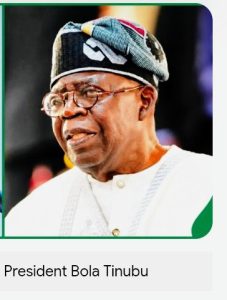
The Council described as shocking the President’s failure to condemn the growing wave of political violence, noting that, through his spokesman, Mr. Bayo Onanuga, the Presidency had instead chosen to caution opposition parties while shielding those allegedly responsible for violence within the ruling APC.
“President Tinubu cannot claim to desire peace when his own words provide cover for violence.
“‘All Is Fair in Politics’ is not the language of a Head of State. It is the language of political desperation and an open licence for thuggery, ballot snatching, intimidation and bloodshed.
“From Edo to Cross River, Gombe to Lagos, and Kebbi to Kaduna, Nigerians have witnessed attacks on opposition gatherings, destruction of campaign materials and the brutalisation of innocent supporters, allegedly by APC-sponsored thugs.
“Yet, Mr. President has not considered it necessary to call his governors and party members to order.
“Instead, the Presidency has resorted to diversionary tactics, blaming victims and preaching restraint to the opposition while members of the ruling party are accused of unleashing violence across the country,” the statement said.
The ADC-PCC challenged President Tinubu to explain why his condemnation of political violence appears directed at the opposition rather than members of his own party.
It asked: “Why has Mr. President refused to condemn APC governors who openly threaten opposition supporters? Why has he remained silent over public incitement by officials of his party? Why is his anger always directed at the opposition and never at those within his own political fold?”
The Council maintained that the ADC remains committed to peaceful, issue-based political engagement, insisting that its campaign is focused on addressing the country’s pressing challenges, including hunger, insecurity, unemployment, corruption and what it described as the failures of the Tinubu administration.
It accused the APC of resorting to violence because it had little to offer Nigerians in terms of credible solutions to the country’s problems.
Consequently, the ADC-PCC demanded that President Tinubu immediately and publicly withdraw his “All Is Fair in Politics” remark, condemn and call to order APC governors and party officials accused of inciting violence, and direct security agencies to protect all Nigerians impartially rather than allow them to become instruments of intimidation and oppression against opposition parties.
” Nigeria belongs to all of us. No political ambition is worth the blood of any Nigerian.
“If former President Goodluck Jonathan could make that profound declaration in 2015, President Tinubu has no excuse not to say so and demonstrate the sincerity of his commitment to peace in 2026.
“The ADC will not be intimidated. We will continue to campaign peacefully, and in 2027, Nigerians will have the opportunity to vote for competence, integrity and a new beginning,” the statement added.





-
News5 days ago
IGP Disu decorates 29 senior police officers with new ranks….charges them on professionalism, integrity,others
-
News4 days ago
Airstrikes kill 40 ISWAP terrorists in Borno
-
News4 days ago
We finally received CTC Of Lifu’s Judgement, without Atiku, Other Candidates Names Mentioned—Senator Melaye
-
News4 days ago
2026 U-17 WWC: Tinubu rewards each Flamingos player with ₦100m
-
News5 days ago
How Federal High Court Chief judge is beign blackmailed with EFCC, CCB- ADC Campaign Council
-
News2 days ago
Crowd Shouts ‘Bamayi’ at Tinubu, pelt convoy in Abuja
-
News5 days ago
Oil slump opens door to cheaper petrol for Nigerians …as Brent hits lowest since August
-
News4 days ago
2027: APC sacks kindergarteen Campaign Spokespersons…..Yari, Alake, Idris, now to speak for council