

News
Subsidy: Reps demand NNPCL audit over unaccounted N2tn assets


’ From findings, asset worth $64bn (about N28tn) was unveiled by Mr President (Buhari) but during transfer, only $58.8bn (N26tn at the official rate of N450 to $1) was transferred, leaving a balance of N2tn unaccounted. NNPCL should be meant to re-assess her accounting system.”
The House of Representatives has called for a forensic audit of the Nigerian National Petroleum Company Limited to determine its assets and liabilities as well as its current market value.
According to the House, the audit has become necessary due to the metamorphosis of the Nigerian National Petroleum Corporation into a limited liability company.
The House’s Ad Hoc committee on NNPCL’s assets and liabilities in its report which was presented to the legislature on Tuesday, claimed that its findings showed that asset worth $64bn (about N28tn) was unveiled by former President Muhammedu Buhari but during the transfer, only $58.8bn (N26tn at the official rate of N450 to $1) was transferred, leaving a balance of N2tn unaccounted for.
It recommended that NNPCL should re-assess its accounting system.
The committee presented its report a week after the Group Chief Executive Officer of the NNPCL, Mele Kyari, said the Federal Government still owed the company N2.8tn that it had spent on petrol subsidy.
The House on December 1, 2021, resolved to set up an ad hoc committee to determine the assets and liabilities of the NNPC before it was fully privatised as prescribed by the Petroleum Industry Act, which was to carry out the exercise within eight weeks.
The probe was based on a motion moved by a member, Ibrahim Isiaka, titled ‘Need to ascertain the total consolidated inventory, assets, interests and liabilities of the Nigerian National Petroleum Corporation and its subsidiaries before transfer to the NNPC Limited to ensure a glossary accounting system.
Following the enactment of the Petroleum Industry Act, the NNPC and its subsidiaries had been unbundled with the creation of an NNPC Limited, the Nigerian Upstream Regulatory Commission, and the Nigerian Midstream and the Downstream Petroleum Regulatory Authority.
The Corporate Affairs Commission also in September 2021 incorporated the NNPCL in line with the provisions of the PIA.
The House, at the plenary on Tuesday, considered and adopted the report of its ad hoc committee to ascertain the total inventory, assets, interest, and liabilities of the Nigerian National Petroleum Corporation and its subsidiaries.
When contacted, the spokesperson for the NNPCL, Garba-Deen Muhammad, told our correspondent that the firm had nothing to hide and would answer any question from the Reps members.
“They have been asking us questions and we’ve been answering them. So if they have any more questions for us, we will oblige and attend to them.
“We respect them and recognise their rights to perform their functions. NNPCL doesn’t have anything to hide.”
On refineries, he explained that the company would ensure that the facilities deliver up to expectation and was working hard to get the plants running.
In its report, the committee stated, ‘’From findings, asset worth $64bn (about N28tn) was unveiled by Mr President (Buhari) but during transfer, only $58.8bn (N26tn at the official rate of N450 to $1) was transferred, leaving a balance of N2tn unaccounted. NNPCL should be meant to re-assess her accounting system.”
The committee recommended that the NNPCL and Federal Government “should work modalities that will ensure removal of subsidy in accordance with the Petroleum Industry Act that stipulates that subsidy be removed within six months of operation of the PIA.”
The committee also recommended that the investments and operations of international oil companies should “be further investigated and scrutinised” before implementation and Fund for Innovation Development.”
The committee further recommended that “External auditors should audit the liabilities of over N2tn being inherited by NNPC Limited on behalf of the federation. There is a need to further establish the current market values of NNPC, especially under a devalued naira regime.
“The Federal Government should investigate foreign desk offices of NNPC subsidiaries with locations abroad, and make IOCs establish offices in Nigeria and develop a framework that will make the companies answerable to the laws of Nigeria.
“Forensic auditors to first audit all NNPC accounts with all the banks to verify the following: the true amount owed any bank as per loan(s) granted, the exact movements of funds from NNPC accounts as well as overcharges by banks which is a huge amount of money and will be a source of additional revenues to the Federal Government, and the defaulting banks should be made to refund the sum discovered back to NNPC/Federal Government with interest.”
P’Harcourt equipment
The committee also recommended that the NNPC should “auction the equipment and transfer proceeds of equipment awarded for Port Harcourt refinery in the sum of $250m (yet to be supplied) to NNPC Limited.”
According to its findings, the committee noted that the NNPC was alleged to have over 25 subsidiaries, whose profits, assets, and liabilities were transmissible to NNPC Ltd, “but the NNPC only transmitted records of only 21 subsidiaries.”
The committee noted that the NNPC, in its latest Group Audited Financial Statements, reported total assets of N15.84tn for 2020 and N16.2tn for 2021.
“However, in direct contrast to that position, NAPIMS alone, in its audited account for 2020 reported N21.04tn,” it stated.
According to it, NAPIMS has total assets of N4.84tn more than NNPCL, which it claimed was a mystery that needed to be unravelled.
The report partly read, “The issue of subsidy/under-recovery that has bedevilled the nation over the years seems to have reared its ugly head in our findings. There is evidence that the subsidy/under-recovery cost is being overestimated. The same costs seem to be charged against the federation in the audited accounts of both NNPC and NAPIMS.
“Nigerian publications on the 3rd of January 2022, pointed to the fact that NNPC is asking the Federal Government to pay additional $1.5bn to five IOCs as outstanding cash-call balance. This is additional liability about to be passed on to NNPC Ltd.
“However, our findings show that as a matter of fact, the federation has actually paid the liabilities of over $2bn through President Muhammadu Buhari’s directive; found a liability of over N2tn that NNPC Ltd is about inheriting on behalf of the federation. No reasonable basis has been established for this liability which is associated with Nigeria Agip Oil Company.”
The committee said available information showed that the NNPC assets were stated at “historical cost and written-down values,” while some subsidiaries of the NNPC, with locations in foreign countries, buy crude oil and gas from NNPC “without evidence of their payments for the purchases.”
It added, “These companies are indicted to be operating without employees and no fixed assets; yet over N30bn is traceable to some of them;
“Standard Chartered Bank is closing all its Nigerian branches and the nation has so much to worry about, considering the huge funds warehoused therein in the names of NAPIMS and NNPC.”
According to the committee, 80 companies supposedly owe the sum of $5.76bn on royalties, $1.0bn on gas flare penalty, while concession rental is $13.173m and royalty on gas is $409.58m, with royalty on gas in naira, N39.82bn.
“Hence, the recommendation is to recover the above debts and transmit to NNPC Ltd or confiscation of assets value of the debt from the debtors and transfer to NNPC Ltd,” the panel declared.
The committee also disclosed that NNPC spent over N1.48tn ($396m) on the rehabilitation of refineries between 2015 and 2022 “without significant outcome.” The Port Harcourt refineries received about $1.5bn for total rehabilitation, which was awarded to Technimont SPA of Italy, “whereas the same refinery awarded the contract for equipment of the refinery for over $250m yet to be delivered.”
The report further read in part, “The Ministry of Petroleum Resources; Ministry of Finance, Budget and National Planning; Central Bank of Nigeria, Auditor-General for the Federation and the Accountant-General of the Federation could not provide the committee with the exact monetary value of total assets and liabilities of NNPC. The CBN was only able to provide how much was paid into the Federation Account by NNPC and deposit banks of the organisation.”
The House of Representatives also called on the Federal Government to outsource the nation’s three refineries to international companies.
FG can’t continue subsidy, gas should be encouraged – NNPCL
The refineries have a combined capacity of 410,000 barrels per day, for maximum production
The House also asked the NNPCL to take full responsibility for the delays in rehabilitating the moribund refineries, urging the nation’s oil firm to be sincere with Nigerians on the true state of the facilities.
However, the Trade Union Congress opposed the calls for the privatization of the refineries, describing the move as a ploy by the political elite to sell the assets to their cronies.
The Secretary General of the congress, Nuhu Toro who spoke in an interview with our correspondent in Abuja described the idea as “laughable.”
He said, “It is laughable. They want to sell the refineries to themselves. We don’t agree. It is a no, no. They can’t be allowed to sell our national assets.”
PENGASSAN backs privatisation
But the Petroleum and Natural Gas Senior Staff Association of Nigeria said the call by the National Assembly to allow private entities to run Nigeria’s refineries was in order.
The National Public Relations Officer, PENGASSAN, Kingsley Udoidua, said, “PENGASSAN has always declared what should be done on matters like this. If you look at the NLNG (Nigeria Liquefied Natural Gas Limited) model, it is both the combination of privatisation and the government’s stake in it, which is the model we’ve been canvassing for.
‘’So, if that’s what the National Assembly means, then it is fine because PENGASSAN’s position is that the government should follow the NLNG model. If you study that model, it is partly government and private.’’
The Director General of the Nigeria Employers’ Consultative Association, Wale Oyerinde, emphasised the critical importance of transparency in the privatisation of refineries, as he lent his support to the growing demand for the privatisation of the facilities.
He said, “The oil refineries are some of the many national assets that have faced serious operational challenges for reasons yet unclear. To improve efficiency in the operations of government assets, we believe that transparent privatisation, with Nigerians owning a majority share, will serve the best interest of Nigeria and its citizens.’’
LCCI speaks
Also speaking, the Deputy-President of the Lagos Chamber of Commerce and Industry, Gabriel Idahosa said the refineries should have been privatised a long time ago.
According to him, allowing the private sector to take over the refineries would engender competition which would inevitably lead to growth, similar to what followed the privatisation of the telecommunications sector.
Idahosa said, “We’ve been saying it for over 30 years. At the time that Yar’Adua came in, two of the refineries had already been privatised. They reversed the privatisation, and that is what we have been suffering from till now. If they did not reverse the privatisation at the time, we would not be talking about anything like fuel subsidy or building of refineries.’’
Similarly, an economic expert at Olabisi Onabanjo University, Prof Sheriffdeen Tella, argued that if the refineries were privatised, it would present another avenue for the government to draw in revenue through Company Income Tax, Personal Income Tax, Land Grants, among others.
In the report on the state of the refineries, the House also frowned on the slow rehabilitation of the Port Harcourt Refining Company, blaming the NNPCL and demanding that the contractor be sanctioned for failing to meet some of the terms of the contract.
The committee recommended that the NNPCL should take full advantage of the Petroleum Industry Act 2021 to fast-track the rehabilitation programme of the refineries “for a deregulated business environment and restore the refineries to minimum 90 percent nameplate capacity utilisation.”
The committee also said the NNPCL and the contractor, Tecnimont SPA of Italy, should ensure that Phase 1 of the rehabilitation works in Refinery Area 5 of the Old Port Harcourt Refinery, which has a processing capacity of 60,000 barrels per day, is restored to 54,000 barrels per day of processing capacity, representing 90 percent capacity utilisation, “should unfailingly meet the new target date of September 2023,” from by March 2023.
The NNPCL and Tecnimont SPA of Italy were also urged to ensure that Phase 2 of the rehabilitation works in Refinery Areas 1&2 of the New Port Harcourt Refinery, with an installed capacity of 150,000 barrels per day, is restored to the estimated processing capacity of 135,000 barrels per day, representing 90 percent capacity utilization.
This is expected to lead to a combined processing capacity of 189,000 barrels per day from the OPHR and the NPHR and achieve the targeted date of December 2023.
The committee also said the NNPCL and another contractor, Daewoo E&C Nigeria Limited, should ensure that the WRPC quick-fix repairs project for the restoration of Refinery Areas 1&2 to operate at a minimum 60 percent, with an expected processing capacity of 75,000 barrels per day petroleum product output, meets the 12 months’ target date and comes on-stream in September 2023.
The House also resolved that “The NNPCL should ensure the immediate award of contract for the rehabilitation of the Kaduna Refinery and Petrochemical Company.
“The NNPCL should strive to achieve the three to four-year standard regular Turn Around Maintenance global best practice for the refineries after the full completion of rehabilitation works to ensure sustainable refinery operations and value maximization.’’
The report also stated, “The Federal Government and the NNPCL should consider outsourcing the Operations and Maintenance of the refineries to reputable international oil companies to guarantee the reliability, optimal operational availability and to maximise value for money to the nation;
“The Federal Government and the NNPCL should suspend the Direct Supply-Direct Purchase (oil swap) arrangement, remove subsidy on Petroleum Motor Spirit, deregulate prices on the product to ensure competitiveness and provide adequate palliative measures to reduce anticipated economic impact and hardship on Nigerians and the economy.”
The House equally resolved that “a forensic audit of all the rehabilitation projects in the three refineries be further conducted, as obvious omissions were noted in the submissions made by the NNPCL, seeming duplication of projects observed and possible double payments made.”
The lawmakers further resolved that the 10th National Assembly be mandated to carry out legislative oversight on the ongoing rehabilitation works to ensure that the nation achieves the expected processing capacity of 189,000 barrels per day from the PHRC and 75,000bspd from WRPC, plus additional processing capacity from the Dangote Refinery, in order to meet the nation’s domestic needs for petroleum products by December 2023.
The 10th Assembly was further mandated to ensure continuous legislative oversight of the ongoing rehabilitation programme by the NNPCL at the Port Harcourt, Warri, and Kaduna refineries in order to achieve project target timelines and rehabilitation of the refineries to bring them back to maximum refining capacity.
The House further resolved that “The Federal Government should ensure the activation of all the 37 non-active licences approved and issued to certain private refineries for maximum operations and competition, in order to eliminate the possibility of a monopoly in the downstream sector or revoke such licences and reissue to desiring competent companies.’’
It added, “The NNPCL should be called to take responsibility for the continued failed assurances for the commencement of operations and coming on-stream of the Port Harcourt refinery and the failure of the contractor (Tecnimont SPA of Italy) to deliver on the contract terms and project target timelines.
‘’The NNPCL (should) be called to be sincere to Nigerians in the overall interest of the nation on when exactly the Port Harcourt Refinery Rehabilitation Project will be delivered and the facility fully functional.
“The contractor handling the rehabilitation of the Port Harcourt refinery, Tecnimont SPA of Italy, be reprimanded for the failure to deliver on the terms of the contract agreement, demonstrating a lack of capacity to achieve expected project target timelines, and continuously shifting the expected operational dates from December 2022 to March 2023; from March 2023 to the second Quarter of 2023, and from second Quarter of 2023 to now September 2023.”
The committee also recommended that the NNPCL should pay the €202,500.03 outstanding payments due to SAIPEM Nigeria Limited on the contract for the Technical Plant Survey of Warri and Kaduna Refineries as the job was concluded and fully reported.
According to the lawmakers, the nation’s three refineries became unproductive from the year 2010, making the following range of losses: PHRC at 7.6 percent losses to the tune of N132.526bn from 2012; WRPC at 6 at losses to the tune of N111.376bn from 2014; and KRPC at 10 percent losses to the tune of N122.621bn from 2014.
Courtesy ThePunchOnline

The United States government has insisted that Nigeria should retain its Country of Particular Concern, CPC, designation, saying the country has not done enough to protect Christians from attacks.
Assistant Secretary of State for African Affairs, Frank Garcia, made this statement on Thursday during a congressional hearing on violence in Nigeria.
Garcia was responding to questions from US Congressman Riley Moore, who asked about the government’s efforts to dismantle militia strongholds and kidnapping camps in the Middle Belt, particularly in Benue and Plateau states.
Moore also raised concerns over the exclusion of the states from the forest guard initiative and delays in deploying 1,000 approved guards to Plateau.
“Before you answer that, we cannot take this CPC designation off of this country. They have not done enough,” Moore said.
Garcia acknowledged the lack of progress, but said Nigeria was taking steps to address the concerns, although they had yet to produce results.
He said the country’s security capacity was still being developed and that deployments were not happening fast enough.
“Unfortunately, the violence has not stopped,” Garcia added, citing continued attacks in Kaduna and Plateau states.
He said the US had provided police training and equipment, expanded intelligence sharing and worked with Nigerian financial institutions to disrupt terrorist financing.
Garcia added that Washington would continue diplomatic engagements and security cooperation to protect vulnerable communities and ensure accountability.
However, the Nigerian government has consistently rejected claims of a “Christian genocide” or targeted religious persecution, maintaining that insecurity affects Nigerians of all faiths.

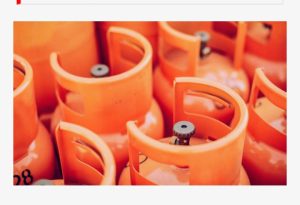
Liquefied Petroleum Gas, commonly known as cooking gas, has risen significantly, forcing Nigerians to spend more to purchase the product.
The increase comes as depot owners and retailers raised their prices over the past two days.
StockGap increased its depot price by N25 to N1,440 per kilogram. Nigerian Independent Petroleum Company Limited, NIPCO, Mobil (now 11 Plc) and Ardova, on the other hand, sold the product at N1,400 and N1,390 per kilogram, respectively.
Similarly, LPG retail outlets, including Raniol, Juda Oil and Nigerian National Petroleum Company Limited, NNPC, outlets in Abuja and its environs, now dispense cooking gas at between N1,550 and N1,600 per kilogram, up from N1,400 and N1,500.
Micro-LPG dealers sell the product for between N1,700 and N1,800 per kilogram, depending on the location in Abuja.
Earlier, NIPCO’s spokesperson, Taofeek Lawal, had exclusively told DAILY POST that LPG prices could increase further between November and January next year.
The latest price increase means that Nigerians who previously spent N17,500 to refill a 12.5kg cylinder at N1,400 per kilogram will now pay N20,000 at the new rate of N1,600 per kilogram, representing an additional N2,500.
News
2027: Tinubu Must Withdraw ‘All Is Fair in Politics’ Remark, Embrace Peaceful Coexistence — ADC-PCC
The African Democratic Congress Presidential Campaign Council (ADC-PCC) has called on President Bola Ahmed Tinubu to publicly retract his controversial “All Is Fair in Politics” remark, warning that such rhetoric fuels political division, emboldens thugs and poses a grave threat to the nation’s peace and stability.
The ADC-PCC also expressed concern over what it described as the President’s disturbing silence on the conduct of some APC governors and party chieftains who have openly made inflammatory statements and allegedly encouraged political violence.
In a statement signed by its Director of Media and Publicity, Kola Ologbondiyan, the ADC-PCC urged President Tinubu to rise above partisan interests and demonstrate the statesmanship expected of a national leader, citing former President Goodluck Jonathan’s unequivocal declaration that no presidential ambition was worth the blood of any Nigerian.
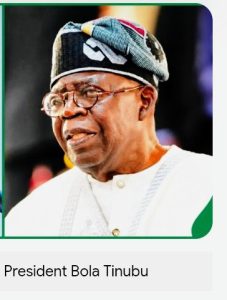
The Council described as shocking the President’s failure to condemn the growing wave of political violence, noting that, through his spokesman, Mr. Bayo Onanuga, the Presidency had instead chosen to caution opposition parties while shielding those allegedly responsible for violence within the ruling APC.
“President Tinubu cannot claim to desire peace when his own words provide cover for violence.
“‘All Is Fair in Politics’ is not the language of a Head of State. It is the language of political desperation and an open licence for thuggery, ballot snatching, intimidation and bloodshed.
“From Edo to Cross River, Gombe to Lagos, and Kebbi to Kaduna, Nigerians have witnessed attacks on opposition gatherings, destruction of campaign materials and the brutalisation of innocent supporters, allegedly by APC-sponsored thugs.
“Yet, Mr. President has not considered it necessary to call his governors and party members to order.
“Instead, the Presidency has resorted to diversionary tactics, blaming victims and preaching restraint to the opposition while members of the ruling party are accused of unleashing violence across the country,” the statement said.
The ADC-PCC challenged President Tinubu to explain why his condemnation of political violence appears directed at the opposition rather than members of his own party.
It asked: “Why has Mr. President refused to condemn APC governors who openly threaten opposition supporters? Why has he remained silent over public incitement by officials of his party? Why is his anger always directed at the opposition and never at those within his own political fold?”
The Council maintained that the ADC remains committed to peaceful, issue-based political engagement, insisting that its campaign is focused on addressing the country’s pressing challenges, including hunger, insecurity, unemployment, corruption and what it described as the failures of the Tinubu administration.
It accused the APC of resorting to violence because it had little to offer Nigerians in terms of credible solutions to the country’s problems.
Consequently, the ADC-PCC demanded that President Tinubu immediately and publicly withdraw his “All Is Fair in Politics” remark, condemn and call to order APC governors and party officials accused of inciting violence, and direct security agencies to protect all Nigerians impartially rather than allow them to become instruments of intimidation and oppression against opposition parties.
” Nigeria belongs to all of us. No political ambition is worth the blood of any Nigerian.
“If former President Goodluck Jonathan could make that profound declaration in 2015, President Tinubu has no excuse not to say so and demonstrate the sincerity of his commitment to peace in 2026.
“The ADC will not be intimidated. We will continue to campaign peacefully, and in 2027, Nigerians will have the opportunity to vote for competence, integrity and a new beginning,” the statement added.





-
News5 days ago
IGP Disu decorates 29 senior police officers with new ranks….charges them on professionalism, integrity,others
-
News4 days ago
Airstrikes kill 40 ISWAP terrorists in Borno
-
News4 days ago
We finally received CTC Of Lifu’s Judgement, without Atiku, Other Candidates Names Mentioned—Senator Melaye
-
News4 days ago
2026 U-17 WWC: Tinubu rewards each Flamingos player with ₦100m
-
News5 days ago
How Federal High Court Chief judge is beign blackmailed with EFCC, CCB- ADC Campaign Council
-
News5 days ago
Oil slump opens door to cheaper petrol for Nigerians …as Brent hits lowest since August
-
News2 days ago
Crowd Shouts ‘Bamayi’ at Tinubu, pelt convoy in Abuja
-
News5 days ago
Oil price fall: We ‘ll take appropriate action against marketers, petrol stations over unfair practices- FCCPC