

News
States Could Go Bankrupt Over New Minimum Wage-NGF

As the nation awaits the new minimum wage promised to be sent to the National Assembly by President Bola Tinubu, the burden of implementing the minimum wage may make many states bankrupt.
The Federal Executive Council, at its meeting last Tuesday, stepped down a memorandum on the report of the tripartite committee on the new minimum wage, to allow for more consultations among the federal and state governments on one part, the private sector and the labour unions on the other part.
Last Thursday, Tinubu met with the governors at the National Economic Council meeting chaired by Vice President Kashim Shettima. The meeting, which was expected to deliberate on the national minimum wage, was, however, silent on whether or not it considered the issue.
Also last Thursday, the Southern Governors’ Forum released the communiqué of its meeting held in Abeokuta, Ogun State, with the governors asking that each state should negotiate minimum wage with its workforce.
The labour unions have, however, reacted to the stance of the Nigeria Governors’ Forum over their overbearing influence on the minimum wage negotiations.
In a document, entitled, “Analysis of State FAAC inflows and state expenditure profile,” of the Nigeria Governors’ Forum Secretariat, the NGF report warned that implementing the new minimum wage could push states into bankruptcy due to increased recurrent expenditure.
According to the report, the burden of recurrent expenditure already left Abia, Ekiti, Gombe, Imo, Katsina, Kogi, Oyo, Plateau, Sokoto, Yobe, and Zamfara in deficit in 2022.
The report predicted that if the recurrent expenditure increased by 50 per cent, 13 states would fall into deficit, with only 10 remaining financially stable.
The tripartite committee’s recommendation of a N62,000 minimum wage would necessitate over a 100 per cent increase from the current N30,000, potentially leaving only a few states like Anambra, Bayelsa, Borno, Ebonyi, Gombe, Imo, Jigawa, Kaduna, Lagos, and Rivers with positive net revenues, based on the 2022 fiscal data.
A net revenue is the deduction of recurrent expenditure from the total revenue of the state. When it is positive, it means a surplus, but when negative, there is a deficit.
Also, the total revenue of states is calculated from the monthly revenue from the Federal Account Allocation Committee, internally generated revenue, aids and grants and constituency development funds.
According to the documents, sighted by The PUNCH, Abia, with an employment size of about 58,631 workers, pays N5,837,899,980.40 as wage monthly. Anambra has a 20,541 employment size and pays N1,824,851,308.96 monthly as wages, apart from N894,480,399.62 as pension obligation and N579,694,680.33 for debt servicing.
Bayelsa boasts of 48,213 workforce, paying N5,802,435,178.58 monthly, with N1,194,528,784.40 as pension obligation and N3,535,787,992.48 as debt servicing, totalling N10,532,751,955.46 as total recurrent expenditure monthly.
Benue has about 13,366 workers in its workforce and pays N2,040,184,471.85 as monthly wage, N76,838,634.62 for pension, and N64,685,126,826.08 for debt servicing, totalling N66,802,149,932.56 monthly.
Delta has about 50,871 workers, offering N8,973,081,853.50 as wages, N1,499,886,303.39 as pension, and N72,417,433,139.00 as debt servicing, accumulating to N82,890,401,295.89 in a month.
Jigawa has about 44,831 workers in its employ and pays N2,795,662,113.02 as wages, and N345,987,843.12 as a pension, totalling N3,141,649,956.14 monthly on recurrent expenditure.
Katsina, Kwara and Niger have 19,062, 36,048 and 22,225 workers, with accumulated N139,294,944,565.27, N4,457,268,675.54 and N2,653,614,213.35 monthly recurrent expenditure respectively.
According to the document, Abia has a total recurrent expenditure of N111,983,979,958.62, against a total revenue of N147,637,730,867.73.
For Adamawa, the recurrent expenditure stands at N70,369,399,885.57, against a total revenue of N109,722,949,684.65, while Akwa Ibom boasts of a high revenue of N444,288,683,000, with recurrent expenditure of N235,144,539,000.
Of the states, Lagos has the highest total revenue, amassing N1,243,778,878,170 in 2022, with a recurrent expenditure of N621,043,036,000, followed by Delta, with N702,020,717,460.08 and a recurrent expenditure of N377,905,100,451.83.
Rivers amassed N525,588,159,714.88 in 2022, with recurrent expenditure of N186,974,715,774.87; Kaduna had a total revenue of N222,349,875,000 and expenditure of N95,987,999,472.10; Ogun, N297,249,009,626.83, recurrent expenditure of N178,519,010,628.42 and Oyo, with total revenue of N247,156,776,739.70 and recurrent expenditure of N152,077,804,384.65.
Kebbi State had the lowest total revenue in 2022, raking in N92,132,444,588.16 and spent N57,601,464,374.96 on recurrent expenditure, followed by Taraba, with a total revenue of N101,177,283,069.87 and recurrent expenditure of N75,055,201,412.62.
Aside from FAAC allocation, some states recorded poor IGR in the 2022 data compiled by the NGF Secretariat.
Zamfara State generated N6,513,960,477.20; followed by Kebbi, with N8,630,767,122.96; Taraba, N9,744,331,840.01 and Yobe State, with N9,940,554,642.00.
The IGR of Katsina (N12,821,119,042.64), Adamawa (N13,175,774,969.53), Niger (N14,427,373,136.00), Benue (N15,021,223,729.38), Plateau (N15,927,001,739.90) and Imo (N16,711,346,111.18) also showed a poor revenue standing.
The PUNCH reported on October 19, 2023, that 15 states have yet to implement the N30,000 minimum wage for their workers since it was signed into law in 2019.
According to BudgiT, though the 15 states were yet to implement the minimum wage of N30,000, the 36 states of the federation grew their cumulative personnel cost by 13.44 per cent to N1.75tn in 2022 from N1.54tn in 2021.
The civil society organization, in a release, ‘The States of States Report 2023,’ highlighted that the 36 states of the federation grew their revenue by 28.95 per cent from N5.12tn in 2021 to N6.6tn in 2022.
“Put together, the IGR of the 36 states appreciated by 12.98 per cent from N1.61tn in 2021 to N1.82tn in 2022, denoting a strengthened domestic revenue mobilisation capability.
“Nonetheless, the IGR to GDP ratio remained very low at 1.01 per cent. The increase in IGR did not reflect across the board as 17 states experienced a decline in their IGR from the previous year, while 19 states recorded positive growth,” BudgIT said.
The Assistant General Secretary of the NLC, Chris Onyeka, in an interview with the News Agency of Nigeria on minimum wage and its implementation, claimed that many state governors were flouting the Minimum Wage Act and listed the states of Abia, Enugu, Bayelsa, Delta, Nasarawa, Gombe, Adamawa, Niger, Sokoto, Imo, Anambra, Taraba, Benue, and Zamfara as defaulting.
Reacting, the Enugu State chairman of TUC, Ben Asogwa, said the state commenced payment of N30,000 minimum wage and its consequential adjustment in February 2020 for state government workers, while local government workers and primary school teachers were paid 25 per cent consequential adjustment.
He, however, said Governor Peter Mbah, on assumption of office, approved the full implementation of the N30,000 minimum wage for both the LG workers and primary school teachers in the state.
The PUNCH reports that the Zamfara State Governor, Dauda Lawal, announced during a meeting with the leadership of the labour unions that the state would begin payment of N30,000 minimum wage effective June 2024.
[Credit: The Punch]
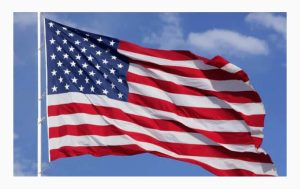
The United States government has insisted that Nigeria should retain its Country of Particular Concern, CPC, designation, saying the country has not done enough to protect Christians from attacks.
Assistant Secretary of State for African Affairs, Frank Garcia, made this statement on Thursday during a congressional hearing on violence in Nigeria.
Garcia was responding to questions from US Congressman Riley Moore, who asked about the government’s efforts to dismantle militia strongholds and kidnapping camps in the Middle Belt, particularly in Benue and Plateau states.
Moore also raised concerns over the exclusion of the states from the forest guard initiative and delays in deploying 1,000 approved guards to Plateau.
“Before you answer that, we cannot take this CPC designation off of this country. They have not done enough,” Moore said.
Garcia acknowledged the lack of progress, but said Nigeria was taking steps to address the concerns, although they had yet to produce results.
He said the country’s security capacity was still being developed and that deployments were not happening fast enough.
“Unfortunately, the violence has not stopped,” Garcia added, citing continued attacks in Kaduna and Plateau states.
He said the US had provided police training and equipment, expanded intelligence sharing and worked with Nigerian financial institutions to disrupt terrorist financing.
Garcia added that Washington would continue diplomatic engagements and security cooperation to protect vulnerable communities and ensure accountability.
However, the Nigerian government has consistently rejected claims of a “Christian genocide” or targeted religious persecution, maintaining that insecurity affects Nigerians of all faiths.

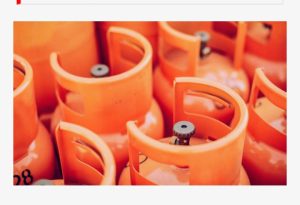
Liquefied Petroleum Gas, commonly known as cooking gas, has risen significantly, forcing Nigerians to spend more to purchase the product.
The increase comes as depot owners and retailers raised their prices over the past two days.
StockGap increased its depot price by N25 to N1,440 per kilogram. Nigerian Independent Petroleum Company Limited, NIPCO, Mobil (now 11 Plc) and Ardova, on the other hand, sold the product at N1,400 and N1,390 per kilogram, respectively.
Similarly, LPG retail outlets, including Raniol, Juda Oil and Nigerian National Petroleum Company Limited, NNPC, outlets in Abuja and its environs, now dispense cooking gas at between N1,550 and N1,600 per kilogram, up from N1,400 and N1,500.
Micro-LPG dealers sell the product for between N1,700 and N1,800 per kilogram, depending on the location in Abuja.
Earlier, NIPCO’s spokesperson, Taofeek Lawal, had exclusively told DAILY POST that LPG prices could increase further between November and January next year.
The latest price increase means that Nigerians who previously spent N17,500 to refill a 12.5kg cylinder at N1,400 per kilogram will now pay N20,000 at the new rate of N1,600 per kilogram, representing an additional N2,500.
News
2027: Tinubu Must Withdraw ‘All Is Fair in Politics’ Remark, Embrace Peaceful Coexistence — ADC-PCC
The African Democratic Congress Presidential Campaign Council (ADC-PCC) has called on President Bola Ahmed Tinubu to publicly retract his controversial “All Is Fair in Politics” remark, warning that such rhetoric fuels political division, emboldens thugs and poses a grave threat to the nation’s peace and stability.
The ADC-PCC also expressed concern over what it described as the President’s disturbing silence on the conduct of some APC governors and party chieftains who have openly made inflammatory statements and allegedly encouraged political violence.
In a statement signed by its Director of Media and Publicity, Kola Ologbondiyan, the ADC-PCC urged President Tinubu to rise above partisan interests and demonstrate the statesmanship expected of a national leader, citing former President Goodluck Jonathan’s unequivocal declaration that no presidential ambition was worth the blood of any Nigerian.
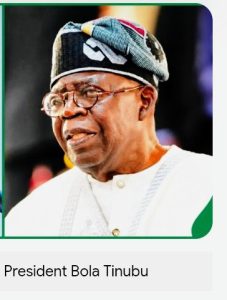
The Council described as shocking the President’s failure to condemn the growing wave of political violence, noting that, through his spokesman, Mr. Bayo Onanuga, the Presidency had instead chosen to caution opposition parties while shielding those allegedly responsible for violence within the ruling APC.
“President Tinubu cannot claim to desire peace when his own words provide cover for violence.
“‘All Is Fair in Politics’ is not the language of a Head of State. It is the language of political desperation and an open licence for thuggery, ballot snatching, intimidation and bloodshed.
“From Edo to Cross River, Gombe to Lagos, and Kebbi to Kaduna, Nigerians have witnessed attacks on opposition gatherings, destruction of campaign materials and the brutalisation of innocent supporters, allegedly by APC-sponsored thugs.
“Yet, Mr. President has not considered it necessary to call his governors and party members to order.
“Instead, the Presidency has resorted to diversionary tactics, blaming victims and preaching restraint to the opposition while members of the ruling party are accused of unleashing violence across the country,” the statement said.
The ADC-PCC challenged President Tinubu to explain why his condemnation of political violence appears directed at the opposition rather than members of his own party.
It asked: “Why has Mr. President refused to condemn APC governors who openly threaten opposition supporters? Why has he remained silent over public incitement by officials of his party? Why is his anger always directed at the opposition and never at those within his own political fold?”
The Council maintained that the ADC remains committed to peaceful, issue-based political engagement, insisting that its campaign is focused on addressing the country’s pressing challenges, including hunger, insecurity, unemployment, corruption and what it described as the failures of the Tinubu administration.
It accused the APC of resorting to violence because it had little to offer Nigerians in terms of credible solutions to the country’s problems.
Consequently, the ADC-PCC demanded that President Tinubu immediately and publicly withdraw his “All Is Fair in Politics” remark, condemn and call to order APC governors and party officials accused of inciting violence, and direct security agencies to protect all Nigerians impartially rather than allow them to become instruments of intimidation and oppression against opposition parties.
” Nigeria belongs to all of us. No political ambition is worth the blood of any Nigerian.
“If former President Goodluck Jonathan could make that profound declaration in 2015, President Tinubu has no excuse not to say so and demonstrate the sincerity of his commitment to peace in 2026.
“The ADC will not be intimidated. We will continue to campaign peacefully, and in 2027, Nigerians will have the opportunity to vote for competence, integrity and a new beginning,” the statement added.





-
News5 days ago
IGP Disu decorates 29 senior police officers with new ranks….charges them on professionalism, integrity,others
-
News4 days ago
Airstrikes kill 40 ISWAP terrorists in Borno
-
News4 days ago
We finally received CTC Of Lifu’s Judgement, without Atiku, Other Candidates Names Mentioned—Senator Melaye
-
News4 days ago
2026 U-17 WWC: Tinubu rewards each Flamingos player with ₦100m
-
News5 days ago
How Federal High Court Chief judge is beign blackmailed with EFCC, CCB- ADC Campaign Council
-
News2 days ago
Crowd Shouts ‘Bamayi’ at Tinubu, pelt convoy in Abuja
-
News5 days ago
Nigerian Businessman Hands IGP Disu 7 Days Tọ Probe Police Officers Over Alleged Release Of Recovered N600m Rolls-Royce To Suspects
-
News5 days ago
2027: ADC accuses Federal High Court of withholding David Mark sack judgment