

News
Reviving Moribund Textile Industry: Senate recommends ban on textile imports

The Senate on Tuesday recommended a total ban on the importation of textile materials as part of efforts to revive Nigeria’s collapsed cotton and fabric manufacturing sector.
The upper legislative chamber also called on the Federal Government, Ministry of Agriculture, and Ministry of Industry, Trade and Investment to urgently revive textile industries across the country to create jobs and address youth restiveness and insecurity.
The resolutions followed deliberation on a motion titled: “Urgent Need to revive the Textile Industries in Nigeria with particular reference to the Kaduna-Kano axis”, sponsored by Senator Sunday Katung (Kaduna South), and co-sponsored by 10 other senators including Adams Oshiomhole (Edo North); Mohammed Tahir Monguno, (Borno North); Ibrahim Khalid, (Kaduna North), and Aminu Waziri Tambuwal, (Sokoto South).
The Senate also urged the Nigerian Customs Service to increase border surveillance to curb smuggling.
Presenting the motion, Katung noted that Nigeria’s first large textile mill was built in Kaduna in 1957, with similar mills replicated across regions. This drove tremendous growth in the 1960s and 1970s, aided by government interventionist schemes including a ban on textile imports.
“By the late 1970s and 1980s, there were 167 textile mills in the country that provided 500,000 direct employments thereby making the textile industry the highest employer of labour in Nigeria, after the Federal Government.
“Kaduna referred to as the ’Textile City’ once housed about 11 mills operating at optimal capacity, including Arewa Textile Plc, Fantext Nigeria Ltd, Notext Nigeria Ltd, Super Text Ltd, and United Nigeria Textile Ltd.,” he said.
He,, however, regretted that by 1997 KTL, Arewa Textiles and UNTL were barely functioning due to obsolete equipment and irregular power supply. By 2007, all three mills had shut down with over 7,000 employees losing their jobs.
Katung expressed concern that Nigeria is now a net importer of textiles, relying on imports to meet over 99 per cent of domestic needs.
“With the lifting of the ban on textile importation in 2010, Nigeria now has almost 80% of its textiles imported from China, Indonesia, Taiwan and other countries. This trend is definitely not helping the Nigerian economy, in terms of employment/job creations and needed foreign exchange,” he stated.
The lawmaker said the once third-largest textile industry in Africa in the 1980s, which generated up to $2 billion annually and produced over 1.4 billion textile pieces, is now the weakest segment of Nigeria’s industrial sector.
Senators who contributed warned against allowing the motion to die like previous ones and called for a holistic plan covering cotton production, modern machinery, and working capital.
Senator Jibrin Isa, (Kogi East) proposed a structured bailout: existing machinery to represent original promoters’ equity, the Bank of Industry to provide additional machinery as Federal Government’s equity, and commercial banks to grant working capital.
Also, Senator Muhammad Ogoshi Onawo, (Nasarawa South), lamented that 500,000 direct jobs have been lost in the sector, saying “If the federal government acts on the proposed backward integration plan, youths will be employed, farmers engaged and the country will be better for it.”
In his own, Senator Adams Oshiomhole.(Edo North) blamed the collapse on “ill-conceived trade policies” during the military era, including Nigeria’s submission to WTO rules without safeguards, noting that “only manufacturing creates job-led growth that reduces idle hands and insecurity,.”
Senator Natasha Akpoti-Uduaghan, (Kogi Central) urged focus on cotton cultivation, noting that cotton remains America’s number one cash crop, generating $75 billion annually. She cited Ethiopia’s 40 textile houses supplying H&M and Zara and creating about 50,000 jobs.
But Senator Mohammed Tahir Monguno, (Borno North), called for two measures: an outright ban on foreign textile imports and a special-purpose fund from the Central Bank of Nigeria, similar to that created for Nollywood, to revive the sector.
The Senate said it would engage the Executive arm to ensure the motion receives attention needed to create over 45 million fresh jobs, urging commercial banks and high-net-worth Nigerians to invest in the textile industry.
The United States government has insisted that Nigeria should retain its Country of Particular Concern, CPC, designation, saying the country has not done enough to protect Christians from attacks.
Assistant Secretary of State for African Affairs, Frank Garcia, made this statement on Thursday during a congressional hearing on violence in Nigeria.
Garcia was responding to questions from US Congressman Riley Moore, who asked about the government’s efforts to dismantle militia strongholds and kidnapping camps in the Middle Belt, particularly in Benue and Plateau states.
Moore also raised concerns over the exclusion of the states from the forest guard initiative and delays in deploying 1,000 approved guards to Plateau.
“Before you answer that, we cannot take this CPC designation off of this country. They have not done enough,” Moore said.
Garcia acknowledged the lack of progress, but said Nigeria was taking steps to address the concerns, although they had yet to produce results.
He said the country’s security capacity was still being developed and that deployments were not happening fast enough.
“Unfortunately, the violence has not stopped,” Garcia added, citing continued attacks in Kaduna and Plateau states.
He said the US had provided police training and equipment, expanded intelligence sharing and worked with Nigerian financial institutions to disrupt terrorist financing.
Garcia added that Washington would continue diplomatic engagements and security cooperation to protect vulnerable communities and ensure accountability.
However, the Nigerian government has consistently rejected claims of a “Christian genocide” or targeted religious persecution, maintaining that insecurity affects Nigerians of all faiths.


Liquefied Petroleum Gas, commonly known as cooking gas, has risen significantly, forcing Nigerians to spend more to purchase the product.
The increase comes as depot owners and retailers raised their prices over the past two days.
StockGap increased its depot price by N25 to N1,440 per kilogram. Nigerian Independent Petroleum Company Limited, NIPCO, Mobil (now 11 Plc) and Ardova, on the other hand, sold the product at N1,400 and N1,390 per kilogram, respectively.
Similarly, LPG retail outlets, including Raniol, Juda Oil and Nigerian National Petroleum Company Limited, NNPC, outlets in Abuja and its environs, now dispense cooking gas at between N1,550 and N1,600 per kilogram, up from N1,400 and N1,500.
Micro-LPG dealers sell the product for between N1,700 and N1,800 per kilogram, depending on the location in Abuja.
Earlier, NIPCO’s spokesperson, Taofeek Lawal, had exclusively told DAILY POST that LPG prices could increase further between November and January next year.
The latest price increase means that Nigerians who previously spent N17,500 to refill a 12.5kg cylinder at N1,400 per kilogram will now pay N20,000 at the new rate of N1,600 per kilogram, representing an additional N2,500.
News
2027: Tinubu Must Withdraw ‘All Is Fair in Politics’ Remark, Embrace Peaceful Coexistence — ADC-PCC
The African Democratic Congress Presidential Campaign Council (ADC-PCC) has called on President Bola Ahmed Tinubu to publicly retract his controversial “All Is Fair in Politics” remark, warning that such rhetoric fuels political division, emboldens thugs and poses a grave threat to the nation’s peace and stability.
The ADC-PCC also expressed concern over what it described as the President’s disturbing silence on the conduct of some APC governors and party chieftains who have openly made inflammatory statements and allegedly encouraged political violence.
In a statement signed by its Director of Media and Publicity, Kola Ologbondiyan, the ADC-PCC urged President Tinubu to rise above partisan interests and demonstrate the statesmanship expected of a national leader, citing former President Goodluck Jonathan’s unequivocal declaration that no presidential ambition was worth the blood of any Nigerian.
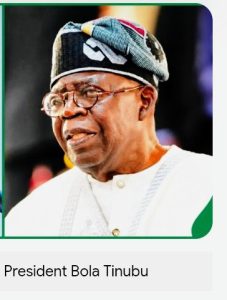
The Council described as shocking the President’s failure to condemn the growing wave of political violence, noting that, through his spokesman, Mr. Bayo Onanuga, the Presidency had instead chosen to caution opposition parties while shielding those allegedly responsible for violence within the ruling APC.
“President Tinubu cannot claim to desire peace when his own words provide cover for violence.
“‘All Is Fair in Politics’ is not the language of a Head of State. It is the language of political desperation and an open licence for thuggery, ballot snatching, intimidation and bloodshed.
“From Edo to Cross River, Gombe to Lagos, and Kebbi to Kaduna, Nigerians have witnessed attacks on opposition gatherings, destruction of campaign materials and the brutalisation of innocent supporters, allegedly by APC-sponsored thugs.
“Yet, Mr. President has not considered it necessary to call his governors and party members to order.
“Instead, the Presidency has resorted to diversionary tactics, blaming victims and preaching restraint to the opposition while members of the ruling party are accused of unleashing violence across the country,” the statement said.
The ADC-PCC challenged President Tinubu to explain why his condemnation of political violence appears directed at the opposition rather than members of his own party.
It asked: “Why has Mr. President refused to condemn APC governors who openly threaten opposition supporters? Why has he remained silent over public incitement by officials of his party? Why is his anger always directed at the opposition and never at those within his own political fold?”
The Council maintained that the ADC remains committed to peaceful, issue-based political engagement, insisting that its campaign is focused on addressing the country’s pressing challenges, including hunger, insecurity, unemployment, corruption and what it described as the failures of the Tinubu administration.
It accused the APC of resorting to violence because it had little to offer Nigerians in terms of credible solutions to the country’s problems.
Consequently, the ADC-PCC demanded that President Tinubu immediately and publicly withdraw his “All Is Fair in Politics” remark, condemn and call to order APC governors and party officials accused of inciting violence, and direct security agencies to protect all Nigerians impartially rather than allow them to become instruments of intimidation and oppression against opposition parties.
” Nigeria belongs to all of us. No political ambition is worth the blood of any Nigerian.
“If former President Goodluck Jonathan could make that profound declaration in 2015, President Tinubu has no excuse not to say so and demonstrate the sincerity of his commitment to peace in 2026.
“The ADC will not be intimidated. We will continue to campaign peacefully, and in 2027, Nigerians will have the opportunity to vote for competence, integrity and a new beginning,” the statement added.





-
News5 days ago
IGP Disu decorates 29 senior police officers with new ranks….charges them on professionalism, integrity,others
-
News4 days ago
Airstrikes kill 40 ISWAP terrorists in Borno
-
News4 days ago
We finally received CTC Of Lifu’s Judgement, without Atiku, Other Candidates Names Mentioned—Senator Melaye
-
News4 days ago
2026 U-17 WWC: Tinubu rewards each Flamingos player with ₦100m
-
News5 days ago
How Federal High Court Chief judge is beign blackmailed with EFCC, CCB- ADC Campaign Council
-
News2 days ago
Crowd Shouts ‘Bamayi’ at Tinubu, pelt convoy in Abuja
-
News5 days ago
Oil slump opens door to cheaper petrol for Nigerians …as Brent hits lowest since August
-
News4 days ago
2027: APC sacks kindergarteen Campaign Spokespersons…..Yari, Alake, Idris, now to speak for council