

News
Refinery Owners Seek FG’s Intervention, Push for Naira-for-Crude sales policy

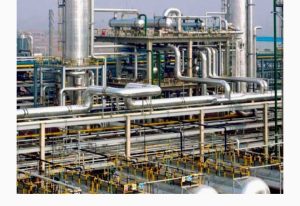
Crude Oil Refinery Owners Association of Nigeria (CORAN) at the weekend called for urgent presidential intervention to address mounting structural constraints confronting domestic refiners, warning that Nigeria risks continuing to export its crude oil, jobs and refining margins while remaining dependent on imported petroleum products.
The association, in a position paper, called for the immediate convening of a Presidential Refining Industry Roundtable, bringing together refiners, regulators, crude producers, the Nigerian National Petroleum Company Limited (NNPC), financial institutions, infrastructure investors and relevant government ministries to develop a clear roadmap for the sector.
CORAN said the proposed intervention should focus on securing commercially viable crude supplies for local refineries, institutionalising the Naira-for-Crude initiative, establishing a domestic crude pricing framework, unlocking long-term financing and curbing what it described as unnecessary dependence on imported petroleum products.
It argued that despite being one of Africa’s largest crude oil producers, Nigerian refiners still faced difficulties accessing feedstock under commercially workable arrangements. GeographicReference
While acknowledging improved crude supplies to local refineries in the second quarter of 2026, the association maintained that physical allocation alone would not guarantee the survival and growth of domestic refining.
According to CORAN, the real issue was whether crude could be supplied under arrangements that adequately reflected transportation costs, crude quality, delivery points, evacuation expenses, financing requirements and the proximity of refineries to producing assets.
It said Nigerian refiners often faced additional costs associated with trucking, barging and pipeline transportation, which must be considered in determining commercially sustainable crude prices.
CORAN therefore proposed a domestic crude pricing mechanism that would take into account crude quality, delivery location, avoided international freight and insurance costs, domestic evacuation expenses and reasonable commercial margins for producers.
The refinery owners also renewed their push for the full institutionalisation of the Naira-for-Crude initiative, describing the policy as critical to reducing the foreign exchange exposure of domestic refiners whose products were largely sold in the local currency.
“Naira-for-Crude should become an industrialisation policy rather than an episodic intervention,” CORAN stated.
The association argued that requiring refineries to source crude in foreign currency while selling most of their products in naira created an unnecessary commercial mismatch that could undermine investments in the sector.
It consequently called for a transparent and predictable framework through which qualified domestic refineries, including modular and emerging operators, could access Nigerian crude and settle eligible transactions in naira. GeographicReference
CORAN also raised concerns about the continued influx of imported petroleum products, warning that excessive imports could weaken incentives for investment in domestic refining.
Although it acknowledged that imports might be necessary to bridge genuine supply gaps and maintain adequate product availability, the association said they should increasingly serve as a temporary balancing mechanism rather than remain the foundation of Nigeria’s downstream petroleum market.
According to CORAN, continued dependence on imported products would increase foreign exchange demand, expose Nigeria to international freight costs and geopolitical disruptions, while transferring jobs and refining margins outside the country.
The association identified the high cost and limited availability of long-term financing as another major obstacle to the development of new refineries and the expansion of existing facilities.
It therefore proposed the establishment of a Refinery Development and Expansion Financing Framework involving development finance institutions, commercial banks, pension funds, infrastructure funds and private investors.
CORAN said the framework should provide longer-tenor funding, credit guarantees, refinancing windows and construction-risk support for refinery projects.
The association further called for increased investment in pipelines, storage terminals, depots, rail-linked transportation and marine evacuation facilities, arguing that Nigeria’s overwhelming dependence on road transportation was increasing costs for refiners and consumers. GeographicReference
It said moving crude and finished petroleum products predominantly by road was not only commercially inefficient but also contributed to road deterioration and heightened transportation and accident risks.
CORAN urged the federal government to begin treating refining as strategic industrial infrastructure, rather than simply as another component of the downstream petroleum business.
It noted that a stronger domestic refining industry could stimulate employment and investment across engineering, fabrication, transportation, petrochemicals, lubricants, plastics and construction, while helping the country conserve foreign exchange.
The association said its call for presidential engagement was reinforced by recent developments in the United States, where President Donald Trump met refinery and fuel industry executives to discuss ways of expanding refining capacity and reducing fuel prices.
CORAN argued that government engagement with refiners should not be interpreted as corporate entitlement, but as recognition of the strategic importance of refining to energy security and economic stability.
It said the proposed Presidential Refining Industry Roundtable should produce measurable timelines for the full institutionalisation of Naira-for-Crude, the strengthening of the Domestic Crude Supply Obligation, the development of a domestic crude pricing template and the creation of sustainable financing mechanisms for refinery development.
Other issues requiring urgent attention, it said, included promoting commercially viable crude swaps, developing shared infrastructure, supporting refinery expansion and establishing a national roadmap capable of positioning Nigeria as a major refining hub for Africa.
CORAN maintained that with the right policy framework, Nigeria could build an integrated refining ecosystem comprising large, medium-sized and modular facilities located around crude-producing areas and major consumption centres.
The association stressed that the country could no longer afford a petroleum value chain in which it exports its primary resource and imports the products derived from it at considerable economic cost.
Meanwhile, the world’s largest single-train oil refinery, Dangote Petroleum Refinery is expected to sign its Initial Public Offer (IPO) today (Monday).
It was gathered that the signing ceremony will take place at 11am, at Eko Hotels, Lagos.
The founder and Africa’s richest person, Aliko Dangote, is targeting a $50 billion valuation for the 650,000 barrels per day (bpd) refinery. The company plans to sell up to a 10 per cent stake, potentially raising around $5 billion in one of Nigeria’s biggest capital market deals.
Since coming onstream a few years ago, the refinery has transformed Nigeria’s fuel supply chain by reducing dependence on imported petroleum products. The company had said that the projected valuation reflects the company’s internal expectations but declined to comment further on the timing or structure of the transaction.
The Securities and Exchange Commission (SEC) had weekend approved the IPO of Dangote Petroleum Refinery and Petrochemicals FZE, with the company offering 4.1 billion ordinary shares at N525 each.
The offer could raise approximately N2.15 trillion if fully subscribed, according to a statement issued by the Dangote Group yesterday. The SEC’s approval cleared the way for the next stages of the offering.
According to the Commission, the proposed offering comprises 4.1 billion ordinary shares at N525 per share, with the potential to raise approximately N2.15 trillion if fully subscribed.
In addition, the SEC has registered the company’s existing 120.13 billion ordinary shares.
The regulatory approval cleared the refinery’s draft offer documents and authorised the company to proceed with its Completion Board Meeting and Signing Ceremony, marking a significant milestone in the IPO process.
The approval was conveyed in a letter to the Lead Issuing House, Vetiva Advisory Services Limited, signed by the Director of the Securities and Investment Services Department of the SEC, Abdulkadir Abbas.
SEC also registered the refinery’s existing 120.13 billion ordinary shares as part of the process. SearchPublic Records
The proposed offer will give investors an opportunity to acquire shares in one of Nigeria’s largest industrial projects as the refinery moves towards becoming a publicly traded company.

The United States government has insisted that Nigeria should retain its Country of Particular Concern, CPC, designation, saying the country has not done enough to protect Christians from attacks.
Assistant Secretary of State for African Affairs, Frank Garcia, made this statement on Thursday during a congressional hearing on violence in Nigeria.
Garcia was responding to questions from US Congressman Riley Moore, who asked about the government’s efforts to dismantle militia strongholds and kidnapping camps in the Middle Belt, particularly in Benue and Plateau states.
Moore also raised concerns over the exclusion of the states from the forest guard initiative and delays in deploying 1,000 approved guards to Plateau.
“Before you answer that, we cannot take this CPC designation off of this country. They have not done enough,” Moore said.
Garcia acknowledged the lack of progress, but said Nigeria was taking steps to address the concerns, although they had yet to produce results.
He said the country’s security capacity was still being developed and that deployments were not happening fast enough.
“Unfortunately, the violence has not stopped,” Garcia added, citing continued attacks in Kaduna and Plateau states.
He said the US had provided police training and equipment, expanded intelligence sharing and worked with Nigerian financial institutions to disrupt terrorist financing.
Garcia added that Washington would continue diplomatic engagements and security cooperation to protect vulnerable communities and ensure accountability.
However, the Nigerian government has consistently rejected claims of a “Christian genocide” or targeted religious persecution, maintaining that insecurity affects Nigerians of all faiths.


Liquefied Petroleum Gas, commonly known as cooking gas, has risen significantly, forcing Nigerians to spend more to purchase the product.
The increase comes as depot owners and retailers raised their prices over the past two days.
StockGap increased its depot price by N25 to N1,440 per kilogram. Nigerian Independent Petroleum Company Limited, NIPCO, Mobil (now 11 Plc) and Ardova, on the other hand, sold the product at N1,400 and N1,390 per kilogram, respectively.
Similarly, LPG retail outlets, including Raniol, Juda Oil and Nigerian National Petroleum Company Limited, NNPC, outlets in Abuja and its environs, now dispense cooking gas at between N1,550 and N1,600 per kilogram, up from N1,400 and N1,500.
Micro-LPG dealers sell the product for between N1,700 and N1,800 per kilogram, depending on the location in Abuja.
Earlier, NIPCO’s spokesperson, Taofeek Lawal, had exclusively told DAILY POST that LPG prices could increase further between November and January next year.
The latest price increase means that Nigerians who previously spent N17,500 to refill a 12.5kg cylinder at N1,400 per kilogram will now pay N20,000 at the new rate of N1,600 per kilogram, representing an additional N2,500.
News
2027: Tinubu Must Withdraw ‘All Is Fair in Politics’ Remark, Embrace Peaceful Coexistence — ADC-PCC
The African Democratic Congress Presidential Campaign Council (ADC-PCC) has called on President Bola Ahmed Tinubu to publicly retract his controversial “All Is Fair in Politics” remark, warning that such rhetoric fuels political division, emboldens thugs and poses a grave threat to the nation’s peace and stability.
The ADC-PCC also expressed concern over what it described as the President’s disturbing silence on the conduct of some APC governors and party chieftains who have openly made inflammatory statements and allegedly encouraged political violence.
In a statement signed by its Director of Media and Publicity, Kola Ologbondiyan, the ADC-PCC urged President Tinubu to rise above partisan interests and demonstrate the statesmanship expected of a national leader, citing former President Goodluck Jonathan’s unequivocal declaration that no presidential ambition was worth the blood of any Nigerian.
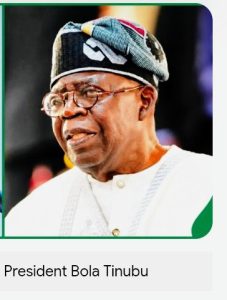
The Council described as shocking the President’s failure to condemn the growing wave of political violence, noting that, through his spokesman, Mr. Bayo Onanuga, the Presidency had instead chosen to caution opposition parties while shielding those allegedly responsible for violence within the ruling APC.
“President Tinubu cannot claim to desire peace when his own words provide cover for violence.
“‘All Is Fair in Politics’ is not the language of a Head of State. It is the language of political desperation and an open licence for thuggery, ballot snatching, intimidation and bloodshed.
“From Edo to Cross River, Gombe to Lagos, and Kebbi to Kaduna, Nigerians have witnessed attacks on opposition gatherings, destruction of campaign materials and the brutalisation of innocent supporters, allegedly by APC-sponsored thugs.
“Yet, Mr. President has not considered it necessary to call his governors and party members to order.
“Instead, the Presidency has resorted to diversionary tactics, blaming victims and preaching restraint to the opposition while members of the ruling party are accused of unleashing violence across the country,” the statement said.
The ADC-PCC challenged President Tinubu to explain why his condemnation of political violence appears directed at the opposition rather than members of his own party.
It asked: “Why has Mr. President refused to condemn APC governors who openly threaten opposition supporters? Why has he remained silent over public incitement by officials of his party? Why is his anger always directed at the opposition and never at those within his own political fold?”
The Council maintained that the ADC remains committed to peaceful, issue-based political engagement, insisting that its campaign is focused on addressing the country’s pressing challenges, including hunger, insecurity, unemployment, corruption and what it described as the failures of the Tinubu administration.
It accused the APC of resorting to violence because it had little to offer Nigerians in terms of credible solutions to the country’s problems.
Consequently, the ADC-PCC demanded that President Tinubu immediately and publicly withdraw his “All Is Fair in Politics” remark, condemn and call to order APC governors and party officials accused of inciting violence, and direct security agencies to protect all Nigerians impartially rather than allow them to become instruments of intimidation and oppression against opposition parties.
” Nigeria belongs to all of us. No political ambition is worth the blood of any Nigerian.
“If former President Goodluck Jonathan could make that profound declaration in 2015, President Tinubu has no excuse not to say so and demonstrate the sincerity of his commitment to peace in 2026.
“The ADC will not be intimidated. We will continue to campaign peacefully, and in 2027, Nigerians will have the opportunity to vote for competence, integrity and a new beginning,” the statement added.





-
News5 days ago
IGP Disu decorates 29 senior police officers with new ranks….charges them on professionalism, integrity,others
-
News4 days ago
Airstrikes kill 40 ISWAP terrorists in Borno
-
News4 days ago
We finally received CTC Of Lifu’s Judgement, without Atiku, Other Candidates Names Mentioned—Senator Melaye
-
News4 days ago
2026 U-17 WWC: Tinubu rewards each Flamingos player with ₦100m
-
News5 days ago
How Federal High Court Chief judge is beign blackmailed with EFCC, CCB- ADC Campaign Council
-
News2 days ago
Crowd Shouts ‘Bamayi’ at Tinubu, pelt convoy in Abuja
-
News5 days ago
Nigerian Businessman Hands IGP Disu 7 Days Tọ Probe Police Officers Over Alleged Release Of Recovered N600m Rolls-Royce To Suspects
-
News5 days ago
2027: ADC accuses Federal High Court of withholding David Mark sack judgment