

News
Opinion: Why NUJ, NBA, ASUU, Clergymen, CSOs, Traditional Rulers Must Endorse Gov Okpebholo’s Anti-Cultism Fight

By Fred Itua
Is the war against cultism in Edo State winnable? Yes, it is—and Governor Monday Okpebholo is demonstrating this with courage, clarity, and commitment. While cultism has long been a deeply entrenched menace in the social and criminal landscape of Edo State—festering in schools, communities, and even political spaces—the narrative is shifting. For the first time in a long time, we are witnessing a government not only speaking against cultism but taking decisive steps to dismantle its roots and consequences.
Governor Okpebholo inherited a state bruised by cult-related violence, from senseless killings on campuses to brutal street reprisals in local government areas. It was a crisis that had, over the years, defied tokenistic responses. But what this administration is offering is not tokenism—it is strategy, backed by law, executed with resolve, and powered by a belief that safety is a right, not a privilege.
Governor Okpebholo’s anti-cultism campaign is not just about today’s safety—it is about the legacy we leave behind. It is about reclaiming campuses, streets, markets, shrines, and sacred spaces that have been infiltrated by darkness. It is about making sure that a 13-year-old boy in Iruekpen, a girl in Auchi Polytechnic, or a trader in Upper Mission Road no longer lives in fear. It is about showing that governance in Edo State is not about occupying an office—it is about taking responsibility and protecting lives.
This is why the Governor’s directive to turn demolished cult dens into symbols of statehood—police stations, youth centers, rehabilitation clinics, and libraries—is profound. These are not random decisions; they are deliberate responses to reclaim physical, psychological, and ideological spaces.
Under Governor Okpebholo’s anti-cultism campaign, key successes have been recorded. There has been an increase in the arrests and prosecution of cult leaders and members. In collaboration with the Nigeria Police Force, the Department of State Services (DSS), and local security networks, the state government launched a targeted offensive against cultism hotspots across Benin City, Ekpoma, Auchi, and other flashpoints. In the last two months alone, security agencies have arrested over 120 suspected cultists, many of whom are now facing prosecution. Unlike in the past, this administration ensures that arrests do not end in silence—they proceed to the courtroom.
The war against cultism has equally witnessed a disruption of cult activities and recovery of weapons. Intelligence-led operations have led to the disruption of initiation ceremonies, the sealing off of meeting locations, and the recovery of arms, charms, and dangerous weapons. The governor’s directive to security operatives has been clear: no tolerance, no compromise, no retreat. This has inspired confidence among citizens who now tip off authorities with actionable intelligence.
This audacious campaign has received legislative backing and policy reforms. One of the strengths of this fight is its legal reinforcement. The governor initiated amendments to the state’s anti-cultism law, tightening loopholes and providing stiffer sentences for both perpetrators and enablers. The law also empowers community vigilantes and recognized security outfits to legally collaborate with the police on cult-related intelligence and operations. This legislative clarity has removed bureaucratic barriers that often delay justice.
The campaign has also witnessed community mobilization and youth sensitization. Governor Okpebholo understands that arrests alone are not enough; cultism thrives on misinformation, fear, and youthful desperation. The administration has therefore embarked on aggressive youth sensitization campaigns in schools, markets, and worship centers. Working with the Ministry of Education, anti-cultism clubs are being resuscitated in secondary schools, while tertiary institutions are being engaged through student union governments and faith-based fellowships to combat peer pressure and organized recruitment rings.
Another major boost for the campaign is the partnership with religious and traditional institutions. In a shift from past approaches, the state government is leveraging the influence of traditional rulers, pastors, and imams to delegitimize cultism as a means of power. Town halls have been held in Esanland, Edo South, and Edo North where palace chiefs and youth leaders signed public declarations renouncing cultism and pledging support to the Governor’s campaign. This has given the war a cultural and moral backbone.
The Governor has equally made a firm commitment to the improvement of the security architecture in the state. The reinforcement of the Edo State Security Corps and coordination with vigilante groups has brought visible presence and quick response to formerly neglected areas. Governor Okpebholo has also approved funds for logistics and welfare of field operatives—because fighting crime effectively requires that those who risk their lives are motivated and well-equipped.
But this is just the beginning. For this anti-cultism campaign to be sustained and institutionalized beyond media headlines, it must become a people’s movement. We therefore call on all critical stakeholders to lend their voice and weight to this war.
To the revered traditional rulers across the state, this is the time to go beyond palace meetings. Public declarations, youth summits, and community watchdog structures must be backed by royal authority. As the spiritual and cultural authority no law enforcement agency can match, these leaders must publicly denounce and de-legitimize cultism during village meetings, festivals, and palace gatherings. They must instruct youth leaders and community chiefs to report cult activities and bar them from masquerading as cultural groups. Also, the enforcement of cultural sanctions on families and compounds known to harbour cultists is key. When the throne frowns, the people listen.
To pastors of megachurches, imams of large mosques, and spiritual leaders, your pulpits must become platforms of truth and safety. Condemn cultism openly and counsel the confused.
To content creators, skit makers, influencers, and celebrities, reject the romanticization of cult culture. Don’t make comedy out of tragedy. Use your reach to save lives.
To student leaders, NANS representatives, and campus journalists, be allies, not apologists. Speak up. Advocate reform. Support whistleblowing systems.
To the Nigeria Union of Journalists (NUJ), Nigerian Bar Association (NBA), Nigerian Medical Association (NMA), and other professional bodies, we urge you to take public positions in support of the administration’s efforts. Host seminars. Write communiqués. Lend legal and moral support.
Let it be said in our time that Edo State stood firm against a generational menace and chose peace over violence. Governor Monday Okpebholo has demonstrated that with leadership, focus, and bold action, the war against cultism is winnable. But he cannot do it alone.
Let every Edo son and daughter, home and abroad, rise to this noble fight. Cultism must die so that Edo may live.
*Edo Oyeeeee*!
*Fred Itua is the Chief Press Secretary to the Edo State Governor.*

The United States government has insisted that Nigeria should retain its Country of Particular Concern, CPC, designation, saying the country has not done enough to protect Christians from attacks.
Assistant Secretary of State for African Affairs, Frank Garcia, made this statement on Thursday during a congressional hearing on violence in Nigeria.
Garcia was responding to questions from US Congressman Riley Moore, who asked about the government’s efforts to dismantle militia strongholds and kidnapping camps in the Middle Belt, particularly in Benue and Plateau states.
Moore also raised concerns over the exclusion of the states from the forest guard initiative and delays in deploying 1,000 approved guards to Plateau.
“Before you answer that, we cannot take this CPC designation off of this country. They have not done enough,” Moore said.
Garcia acknowledged the lack of progress, but said Nigeria was taking steps to address the concerns, although they had yet to produce results.
He said the country’s security capacity was still being developed and that deployments were not happening fast enough.
“Unfortunately, the violence has not stopped,” Garcia added, citing continued attacks in Kaduna and Plateau states.
He said the US had provided police training and equipment, expanded intelligence sharing and worked with Nigerian financial institutions to disrupt terrorist financing.
Garcia added that Washington would continue diplomatic engagements and security cooperation to protect vulnerable communities and ensure accountability.
However, the Nigerian government has consistently rejected claims of a “Christian genocide” or targeted religious persecution, maintaining that insecurity affects Nigerians of all faiths.


Liquefied Petroleum Gas, commonly known as cooking gas, has risen significantly, forcing Nigerians to spend more to purchase the product.
The increase comes as depot owners and retailers raised their prices over the past two days.
StockGap increased its depot price by N25 to N1,440 per kilogram. Nigerian Independent Petroleum Company Limited, NIPCO, Mobil (now 11 Plc) and Ardova, on the other hand, sold the product at N1,400 and N1,390 per kilogram, respectively.
Similarly, LPG retail outlets, including Raniol, Juda Oil and Nigerian National Petroleum Company Limited, NNPC, outlets in Abuja and its environs, now dispense cooking gas at between N1,550 and N1,600 per kilogram, up from N1,400 and N1,500.
Micro-LPG dealers sell the product for between N1,700 and N1,800 per kilogram, depending on the location in Abuja.
Earlier, NIPCO’s spokesperson, Taofeek Lawal, had exclusively told DAILY POST that LPG prices could increase further between November and January next year.
The latest price increase means that Nigerians who previously spent N17,500 to refill a 12.5kg cylinder at N1,400 per kilogram will now pay N20,000 at the new rate of N1,600 per kilogram, representing an additional N2,500.
News
2027: Tinubu Must Withdraw ‘All Is Fair in Politics’ Remark, Embrace Peaceful Coexistence — ADC-PCC
The African Democratic Congress Presidential Campaign Council (ADC-PCC) has called on President Bola Ahmed Tinubu to publicly retract his controversial “All Is Fair in Politics” remark, warning that such rhetoric fuels political division, emboldens thugs and poses a grave threat to the nation’s peace and stability.
The ADC-PCC also expressed concern over what it described as the President’s disturbing silence on the conduct of some APC governors and party chieftains who have openly made inflammatory statements and allegedly encouraged political violence.
In a statement signed by its Director of Media and Publicity, Kola Ologbondiyan, the ADC-PCC urged President Tinubu to rise above partisan interests and demonstrate the statesmanship expected of a national leader, citing former President Goodluck Jonathan’s unequivocal declaration that no presidential ambition was worth the blood of any Nigerian.
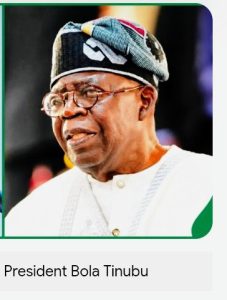
The Council described as shocking the President’s failure to condemn the growing wave of political violence, noting that, through his spokesman, Mr. Bayo Onanuga, the Presidency had instead chosen to caution opposition parties while shielding those allegedly responsible for violence within the ruling APC.
“President Tinubu cannot claim to desire peace when his own words provide cover for violence.
“‘All Is Fair in Politics’ is not the language of a Head of State. It is the language of political desperation and an open licence for thuggery, ballot snatching, intimidation and bloodshed.
“From Edo to Cross River, Gombe to Lagos, and Kebbi to Kaduna, Nigerians have witnessed attacks on opposition gatherings, destruction of campaign materials and the brutalisation of innocent supporters, allegedly by APC-sponsored thugs.
“Yet, Mr. President has not considered it necessary to call his governors and party members to order.
“Instead, the Presidency has resorted to diversionary tactics, blaming victims and preaching restraint to the opposition while members of the ruling party are accused of unleashing violence across the country,” the statement said.
The ADC-PCC challenged President Tinubu to explain why his condemnation of political violence appears directed at the opposition rather than members of his own party.
It asked: “Why has Mr. President refused to condemn APC governors who openly threaten opposition supporters? Why has he remained silent over public incitement by officials of his party? Why is his anger always directed at the opposition and never at those within his own political fold?”
The Council maintained that the ADC remains committed to peaceful, issue-based political engagement, insisting that its campaign is focused on addressing the country’s pressing challenges, including hunger, insecurity, unemployment, corruption and what it described as the failures of the Tinubu administration.
It accused the APC of resorting to violence because it had little to offer Nigerians in terms of credible solutions to the country’s problems.
Consequently, the ADC-PCC demanded that President Tinubu immediately and publicly withdraw his “All Is Fair in Politics” remark, condemn and call to order APC governors and party officials accused of inciting violence, and direct security agencies to protect all Nigerians impartially rather than allow them to become instruments of intimidation and oppression against opposition parties.
” Nigeria belongs to all of us. No political ambition is worth the blood of any Nigerian.
“If former President Goodluck Jonathan could make that profound declaration in 2015, President Tinubu has no excuse not to say so and demonstrate the sincerity of his commitment to peace in 2026.
“The ADC will not be intimidated. We will continue to campaign peacefully, and in 2027, Nigerians will have the opportunity to vote for competence, integrity and a new beginning,” the statement added.





-
News5 days ago
IGP Disu decorates 29 senior police officers with new ranks….charges them on professionalism, integrity,others
-
News4 days ago
Airstrikes kill 40 ISWAP terrorists in Borno
-
News4 days ago
We finally received CTC Of Lifu’s Judgement, without Atiku, Other Candidates Names Mentioned—Senator Melaye
-
News4 days ago
2026 U-17 WWC: Tinubu rewards each Flamingos player with ₦100m
-
News5 days ago
How Federal High Court Chief judge is beign blackmailed with EFCC, CCB- ADC Campaign Council
-
News2 days ago
Crowd Shouts ‘Bamayi’ at Tinubu, pelt convoy in Abuja
-
News5 days ago
Oil slump opens door to cheaper petrol for Nigerians …as Brent hits lowest since August
-
News5 days ago
Nigerian Businessman Hands IGP Disu 7 Days Tọ Probe Police Officers Over Alleged Release Of Recovered N600m Rolls-Royce To Suspects