

News
Opinion: Implications of Omo-Agege’s Defection To Urhobo Nation, Delta APC And Tinubu’s Electoral Calculation

By Frank Tietie
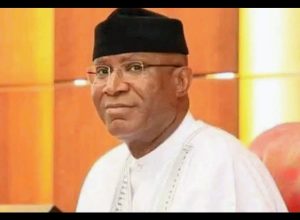
The resignation of Ovie Omo-Agege from the All Progressives Congress (APC) in Delta State is not an ordinary political development. It is a seismic political event with grave implications for the future of the APC in Delta State, the political destiny of the Urhobo people and perhaps even the electoral calculations of President Bola Ahmed Tinubu ahead of the next general elections.
Senator Ovie Omo-Agege’s departure from the APC follows what he considers the brazen rigging and manipulation of the Delta Central Senatorial Primary Election, which purportedly returned Senator Ede Dafinone as the winner. More painful is the allegation that the APC leadership at both state and national levels failed or refused to address the obvious irregularities complained of by Omo-Agege and his supporters.
This development reveals a dangerous contradiction within the APC. A political party that ought to reward loyalty, sacrifice and political investment has instead chosen expediency and internal betrayal. Senator Omo-Agege had voluntarily conceded the leadership structure of the Delta APC following Governor Sheriff Oborevwori’s defection to the party. He did so in the interest of party unity and broader electoral calculations—such an act required unusual political maturity, discipline and strategic restraint.
Unfortunately, the APC failed to show fidelity to a man who had built the party structure in Delta State almost from the ground up. Before Omo-Agege emerged as a dominant force in Delta politics, the APC in Delta was largely fragmented and electorally weak. It was under his leadership that the party became nationally competitive in Delta State and produced one of the strongest opposition movements in the South-South region. That same political asset has now been discarded.
The implications of Omo-Agege’s exit are quite enormous. First, the APC has suffered a monumental political loss in Delta State. Senator Omo-Agege is not merely a politician with supporters; he is a political institution in Delta Central and across large parts of Delta State. His grassroots appeal among the Urhobo people remains unmatched by any current APC figure in the state. Indeed, if Senator Omo-Agege decides to contest the Delta Central Senatorial seat under the platform of virtually any viable political party, there is a strong chance he will secure a landslide victory. Such reality alone exposes the APC’s strategic blunder.
Second, the resignation reveals a deeper, more troubling reality about the state of Urhobo political consciousness. It is difficult to avoid the conclusion that enemies of the Urhobo nation, from far and near and within, did not want Omo-Agege to emerge as the APC Senatorial candidate because of his very bright prospects of eventually becoming the Senate President of Nigeria. Such a possibility was not imaginary but clearly pragmatic.
Senator Omo-Agege had already served as Deputy Senate President and possessed both legislative experience and national political visibility. His return to the Senate under favourable political circumstances could have placed him among the leading contenders for the office of Senate President in the next dispensation. Such a prospect would have elevated Urhobo political relevance at the highest level of national governance. That possibility now appears to have been deliberately sabotaged, and one wonders why a people would be so naive.
Every conceivable political chicanery appears to have been deployed against Omo-Agege from the moment he emerged as the winner. Yet, the ordinary people of Delta Central actually voted for him in large numbers despite the state government’s negative persuasion. What is even more unfortunate is that many within the Urhobo political establishment either failed to recognise the strategic implications or were overtaken by the immediate temptations of prebendal politics.
The tragedy of the Urhobo people, particularly their leaders, has often been the inability to sustain a collective political vision beyond immediate personal gains. Time and again, opportunities for historic political advancement have been undermined by internal divisions, elite rivalry and short-term calculations. The Omo-Agege episode sadly fits into that pattern. The Urhobo people may ultimately pay a heavy price for this failure of foresight.
Beyond Delta State, Omo-Agege’s resignation should also deeply concern President Tinubu and the APC’s national leadership. Surprisingly, the President and his political strategists have not been sufficiently circumspect to realise that the APC’s chances of making meaningful electoral gains in Delta State have seriously diminished with Omo-Agege’s exit from the party.
Delta State is not a politically ordinary state in the South-South. It is strategic in terms of demographics, economics, and electoral symbolism. The APC’s pathway to serious competitiveness in Delta was substantially anchored on Omo-Agege’s political machinery, personal influence and ability to mobilise grassroots support across Delta Central and beyond. Without him, the APC risks becoming politically hollow in Delta State despite the high-profile defections it has recently celebrated.
Politics is ultimately about trust, reward for loyalty and the careful management of political capital. When a party appears unwilling to protect one of its most valuable political assets from what is perceived as internal injustice, it sends a dangerous signal to both loyalists and prospective allies.
The resignation of Ovie Omo-Agege is therefore not just the exit of one politician from a political party. It is a profound commentary on the fragility of political loyalty, the consequences of elite conspiracy and the recurring inability of the Urhobo political class to rally behind strategic historical opportunities.
History may yet judge this episode as one of the greatest political miscalculations in the evolution of both the APC in Delta State and modern Urhobo politics.
Frank Tietie – Lawyer, Media Personality and Civil Society Leader writes from Abuja

The United States government has insisted that Nigeria should retain its Country of Particular Concern, CPC, designation, saying the country has not done enough to protect Christians from attacks.
Assistant Secretary of State for African Affairs, Frank Garcia, made this statement on Thursday during a congressional hearing on violence in Nigeria.
Garcia was responding to questions from US Congressman Riley Moore, who asked about the government’s efforts to dismantle militia strongholds and kidnapping camps in the Middle Belt, particularly in Benue and Plateau states.
Moore also raised concerns over the exclusion of the states from the forest guard initiative and delays in deploying 1,000 approved guards to Plateau.
“Before you answer that, we cannot take this CPC designation off of this country. They have not done enough,” Moore said.
Garcia acknowledged the lack of progress, but said Nigeria was taking steps to address the concerns, although they had yet to produce results.
He said the country’s security capacity was still being developed and that deployments were not happening fast enough.
“Unfortunately, the violence has not stopped,” Garcia added, citing continued attacks in Kaduna and Plateau states.
He said the US had provided police training and equipment, expanded intelligence sharing and worked with Nigerian financial institutions to disrupt terrorist financing.
Garcia added that Washington would continue diplomatic engagements and security cooperation to protect vulnerable communities and ensure accountability.
However, the Nigerian government has consistently rejected claims of a “Christian genocide” or targeted religious persecution, maintaining that insecurity affects Nigerians of all faiths.


Liquefied Petroleum Gas, commonly known as cooking gas, has risen significantly, forcing Nigerians to spend more to purchase the product.
The increase comes as depot owners and retailers raised their prices over the past two days.
StockGap increased its depot price by N25 to N1,440 per kilogram. Nigerian Independent Petroleum Company Limited, NIPCO, Mobil (now 11 Plc) and Ardova, on the other hand, sold the product at N1,400 and N1,390 per kilogram, respectively.
Similarly, LPG retail outlets, including Raniol, Juda Oil and Nigerian National Petroleum Company Limited, NNPC, outlets in Abuja and its environs, now dispense cooking gas at between N1,550 and N1,600 per kilogram, up from N1,400 and N1,500.
Micro-LPG dealers sell the product for between N1,700 and N1,800 per kilogram, depending on the location in Abuja.
Earlier, NIPCO’s spokesperson, Taofeek Lawal, had exclusively told DAILY POST that LPG prices could increase further between November and January next year.
The latest price increase means that Nigerians who previously spent N17,500 to refill a 12.5kg cylinder at N1,400 per kilogram will now pay N20,000 at the new rate of N1,600 per kilogram, representing an additional N2,500.
News
2027: Tinubu Must Withdraw ‘All Is Fair in Politics’ Remark, Embrace Peaceful Coexistence — ADC-PCC
The African Democratic Congress Presidential Campaign Council (ADC-PCC) has called on President Bola Ahmed Tinubu to publicly retract his controversial “All Is Fair in Politics” remark, warning that such rhetoric fuels political division, emboldens thugs and poses a grave threat to the nation’s peace and stability.
The ADC-PCC also expressed concern over what it described as the President’s disturbing silence on the conduct of some APC governors and party chieftains who have openly made inflammatory statements and allegedly encouraged political violence.
In a statement signed by its Director of Media and Publicity, Kola Ologbondiyan, the ADC-PCC urged President Tinubu to rise above partisan interests and demonstrate the statesmanship expected of a national leader, citing former President Goodluck Jonathan’s unequivocal declaration that no presidential ambition was worth the blood of any Nigerian.
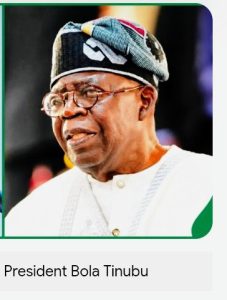
The Council described as shocking the President’s failure to condemn the growing wave of political violence, noting that, through his spokesman, Mr. Bayo Onanuga, the Presidency had instead chosen to caution opposition parties while shielding those allegedly responsible for violence within the ruling APC.
“President Tinubu cannot claim to desire peace when his own words provide cover for violence.
“‘All Is Fair in Politics’ is not the language of a Head of State. It is the language of political desperation and an open licence for thuggery, ballot snatching, intimidation and bloodshed.
“From Edo to Cross River, Gombe to Lagos, and Kebbi to Kaduna, Nigerians have witnessed attacks on opposition gatherings, destruction of campaign materials and the brutalisation of innocent supporters, allegedly by APC-sponsored thugs.
“Yet, Mr. President has not considered it necessary to call his governors and party members to order.
“Instead, the Presidency has resorted to diversionary tactics, blaming victims and preaching restraint to the opposition while members of the ruling party are accused of unleashing violence across the country,” the statement said.
The ADC-PCC challenged President Tinubu to explain why his condemnation of political violence appears directed at the opposition rather than members of his own party.
It asked: “Why has Mr. President refused to condemn APC governors who openly threaten opposition supporters? Why has he remained silent over public incitement by officials of his party? Why is his anger always directed at the opposition and never at those within his own political fold?”
The Council maintained that the ADC remains committed to peaceful, issue-based political engagement, insisting that its campaign is focused on addressing the country’s pressing challenges, including hunger, insecurity, unemployment, corruption and what it described as the failures of the Tinubu administration.
It accused the APC of resorting to violence because it had little to offer Nigerians in terms of credible solutions to the country’s problems.
Consequently, the ADC-PCC demanded that President Tinubu immediately and publicly withdraw his “All Is Fair in Politics” remark, condemn and call to order APC governors and party officials accused of inciting violence, and direct security agencies to protect all Nigerians impartially rather than allow them to become instruments of intimidation and oppression against opposition parties.
” Nigeria belongs to all of us. No political ambition is worth the blood of any Nigerian.
“If former President Goodluck Jonathan could make that profound declaration in 2015, President Tinubu has no excuse not to say so and demonstrate the sincerity of his commitment to peace in 2026.
“The ADC will not be intimidated. We will continue to campaign peacefully, and in 2027, Nigerians will have the opportunity to vote for competence, integrity and a new beginning,” the statement added.




-
News5 days ago
IGP Disu decorates 29 senior police officers with new ranks….charges them on professionalism, integrity,others
-
News4 days ago
Airstrikes kill 40 ISWAP terrorists in Borno
-
News4 days ago
We finally received CTC Of Lifu’s Judgement, without Atiku, Other Candidates Names Mentioned—Senator Melaye
-
News4 days ago
2026 U-17 WWC: Tinubu rewards each Flamingos player with ₦100m
-
News5 days ago
How Federal High Court Chief judge is beign blackmailed with EFCC, CCB- ADC Campaign Council
-
News2 days ago
Crowd Shouts ‘Bamayi’ at Tinubu, pelt convoy in Abuja
-
News5 days ago
Oil slump opens door to cheaper petrol for Nigerians …as Brent hits lowest since August
-
News5 days ago
Oil price fall: We ‘ll take appropriate action against marketers, petrol stations over unfair practices- FCCPC