

News
Opinion: Benue’s Journey of Political Crisis

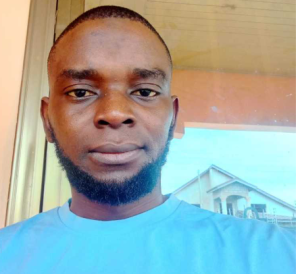
By Nombor Philip Terlumun
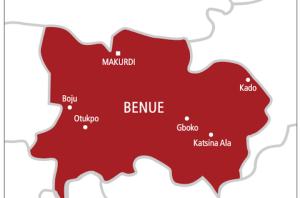
Benue State is one of the North Central states in Nigeria, created on 3rd February, 19976 with a population of about 4,253,641 according to the 2006 census. The people of the State are mostly agrarian, fishermen and forest hunters. Peaceful coexistence of diverse culture and heritage.
History, as defined by certain scholars, is the systemic study of past, present and future events, particularly in human affairs. Benue has it history dating as far back as C 1500 when the Tiv first arrived what is today known as the Benue Valley.
The political structure and leadership of the Tiv and Benue was based on age, the oldest in every community was the head of the community with the responsibilities of séance on behalf of the people, settling disputes, allocating lands to each member (household) of the community, performing marital rites and others as was assigned him.
As time goes on, among the Tiv of Benue valley, the position of tor Agbande was instituted between the 18th-19th century, which became the highest office among the Tiv nation- Tesemchi Makar (1994).
Until the establishment of the Tor Tiv stool, the Ôrtar, ityôr, tax collectors and the first class chiefs, the ator Agbande were the highest, most powerful and revered institutions and offices among the Tiv.
The advent Christianity and the western education in Nigeria, the Benue valley was marked for capture between 1830-1900 which will later change it ancestral style of leadership to present leadership style.
Modern Politics
The iconic Sen. Joseph Sarwuan Tarkaa was Tiv first to venture into partisan politics, first as the Federal Commissioner of Transport and then Communications under General Yakubu Gowon, one of the founding fathers of the United Middle Belt Congress (UMBC). In 1979, Tarkaa was elected senator to represent Benue East.
In rejection of being lord over by Muslims and northern politicians, the UMBC under the leadership of J S Tarkaa rejected the Native Authority’s support for the Northern People’s Congress (NPC) and instructed no Tiv to be member of the NPC.
As it’s often said, politics is a game of interest, personal interest. For political and personal reasons and interest, the UMBC registered its members while the NPC also registered its members in the state.
Tarkaa, who felt politically threaten by northern politicians, declared the abolishment of the NPC in the state, refusal to denounced membership was grievous. This marked the beginning of the first Tiv political crisis named Atem Ityô, Nande Nande or Num u Parti u Baja.
Families were divided against each other, ropes were tied across compounds to separate members of the UMBC and the NPC, brothers betrayed brothers to death, food was shared and eaten by members of same political parties only, it was a feast of corpses, houses were razed and traditional rulers killed. The traditional rulers were the primary target of the Tarkaa’s UMBC as it was believed or thought they were doing the bindings of the Sudan of Sokoto. This marked the beginning of the unending political crisis in Benue.
Peace however returned after the 1979 elections which saw Aper Aku elected Gov of the state. There was political and leadership stability from Aku’s 1979-1999.
When democracy returned in 1999 with full flagged and registration of multiple political parties, again the Tiv nation became the battle field, an ocean flowing of blood.
This time, the People’s Democratic Party (PDP) of then governor His Excellency Sen George Akume and the All Nigerians People’s Party (ANPP) of Sen Daniel Saor and Paul Iorpuu Unongu whose national leader was Gen. Muhammadu Buhari Rtd. The ANPP at all times, tagged the Akume’s administration as being corrupt, inhumane and undeserving for the people of the State.
The PDP on the other hand, was determined holding on to power as long as it could not minding the consequences.
Unongu’s Kwande Paid the Price
As the political tussle between the PDP and ANPP continue unabated. The first four years of the PDP came to an end and elections were set to hold in 2003.
The elections were to change the present Government or re-elect the government for continuity.
The two popular candidate were Sen George Akume who was seeking re-election and Chief Paul Unongu, who was contesting to oust Akume.
Akume was re-elected on the 19th, April 2003 with total votes of 681,717. Unongu, Adasu and Mku scored 0 votes as was declared by INEC.
However, Kwande rejected the governorship results insisting they voted for Unongu in unison, everywhere became tensed, fear took over Benue as other local governments too rejected the governorship results.
Kwande Took a Step
In what seems like a drama stage, Kwande stood their ground and rejected Akume’s PDP during the chairmanship elections. Two local governments chairmen were marked by the government of day to be ousted no matter the circumstances, they were Kwande chairman and Timothy Aondoakaa of Vandeikya.
Sensing rejection of PDP in Kwande, thousands of militias were sent to hijack ballot boxes and ensure the PDP wins the Kwande LG elections. Kwande youths and elders refused being intimidated by political thugs. A situation that generates into full political war between the Kwande and the militias with Basil Kwambe serving as the medium of communication between the militias and their sponsors.
Lives were lost, homes destroyed, other properties worth billions razed.
My village of Ute, neighboring Kwande became the refugee home of the Kwande people.
At a time we were fighting to recover the Tiv-Jukun crisis of 2001, the Vaase, Gbeji, Zaki-Biam and katsina-Ala military invasion, we were hit more harder by the Tiv politics of “Aya sha Agee”.
Today, I see youths fueling political crisis on social Media. Yes, we may not witness the Atem Ityô but majority of us witnessed the Kwande political crisis of 2003-2004 and, we know the level of damages it caused and the number of lives lost.
If you are a stakeholder, be stakeholding well and ensure those you are stakeholding for were not responsible for the Kwande crises of 2003-2004 and will not be responsible for Political Crisis in the State.
If you are the masses, mass well and ensure those you are massing for were not responsible for the Kwande crises of 2003-2004 and will not be responsible for Political Crisis in the State.
Don’t be the tool of the next Atem Ityô in the 21st century.
Nombor Philip Terlumun writes from Glasgow, UK), and could be reached via +1 914 520-5126
Email: nomborphilip@gmail.com

The United States government has insisted that Nigeria should retain its Country of Particular Concern, CPC, designation, saying the country has not done enough to protect Christians from attacks.
Assistant Secretary of State for African Affairs, Frank Garcia, made this statement on Thursday during a congressional hearing on violence in Nigeria.
Garcia was responding to questions from US Congressman Riley Moore, who asked about the government’s efforts to dismantle militia strongholds and kidnapping camps in the Middle Belt, particularly in Benue and Plateau states.
Moore also raised concerns over the exclusion of the states from the forest guard initiative and delays in deploying 1,000 approved guards to Plateau.
“Before you answer that, we cannot take this CPC designation off of this country. They have not done enough,” Moore said.
Garcia acknowledged the lack of progress, but said Nigeria was taking steps to address the concerns, although they had yet to produce results.
He said the country’s security capacity was still being developed and that deployments were not happening fast enough.
“Unfortunately, the violence has not stopped,” Garcia added, citing continued attacks in Kaduna and Plateau states.
He said the US had provided police training and equipment, expanded intelligence sharing and worked with Nigerian financial institutions to disrupt terrorist financing.
Garcia added that Washington would continue diplomatic engagements and security cooperation to protect vulnerable communities and ensure accountability.
However, the Nigerian government has consistently rejected claims of a “Christian genocide” or targeted religious persecution, maintaining that insecurity affects Nigerians of all faiths.


Liquefied Petroleum Gas, commonly known as cooking gas, has risen significantly, forcing Nigerians to spend more to purchase the product.
The increase comes as depot owners and retailers raised their prices over the past two days.
StockGap increased its depot price by N25 to N1,440 per kilogram. Nigerian Independent Petroleum Company Limited, NIPCO, Mobil (now 11 Plc) and Ardova, on the other hand, sold the product at N1,400 and N1,390 per kilogram, respectively.
Similarly, LPG retail outlets, including Raniol, Juda Oil and Nigerian National Petroleum Company Limited, NNPC, outlets in Abuja and its environs, now dispense cooking gas at between N1,550 and N1,600 per kilogram, up from N1,400 and N1,500.
Micro-LPG dealers sell the product for between N1,700 and N1,800 per kilogram, depending on the location in Abuja.
Earlier, NIPCO’s spokesperson, Taofeek Lawal, had exclusively told DAILY POST that LPG prices could increase further between November and January next year.
The latest price increase means that Nigerians who previously spent N17,500 to refill a 12.5kg cylinder at N1,400 per kilogram will now pay N20,000 at the new rate of N1,600 per kilogram, representing an additional N2,500.
News
2027: Tinubu Must Withdraw ‘All Is Fair in Politics’ Remark, Embrace Peaceful Coexistence — ADC-PCC
The African Democratic Congress Presidential Campaign Council (ADC-PCC) has called on President Bola Ahmed Tinubu to publicly retract his controversial “All Is Fair in Politics” remark, warning that such rhetoric fuels political division, emboldens thugs and poses a grave threat to the nation’s peace and stability.
The ADC-PCC also expressed concern over what it described as the President’s disturbing silence on the conduct of some APC governors and party chieftains who have openly made inflammatory statements and allegedly encouraged political violence.
In a statement signed by its Director of Media and Publicity, Kola Ologbondiyan, the ADC-PCC urged President Tinubu to rise above partisan interests and demonstrate the statesmanship expected of a national leader, citing former President Goodluck Jonathan’s unequivocal declaration that no presidential ambition was worth the blood of any Nigerian.
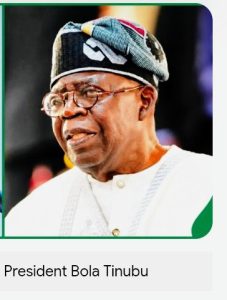
The Council described as shocking the President’s failure to condemn the growing wave of political violence, noting that, through his spokesman, Mr. Bayo Onanuga, the Presidency had instead chosen to caution opposition parties while shielding those allegedly responsible for violence within the ruling APC.
“President Tinubu cannot claim to desire peace when his own words provide cover for violence.
“‘All Is Fair in Politics’ is not the language of a Head of State. It is the language of political desperation and an open licence for thuggery, ballot snatching, intimidation and bloodshed.
“From Edo to Cross River, Gombe to Lagos, and Kebbi to Kaduna, Nigerians have witnessed attacks on opposition gatherings, destruction of campaign materials and the brutalisation of innocent supporters, allegedly by APC-sponsored thugs.
“Yet, Mr. President has not considered it necessary to call his governors and party members to order.
“Instead, the Presidency has resorted to diversionary tactics, blaming victims and preaching restraint to the opposition while members of the ruling party are accused of unleashing violence across the country,” the statement said.
The ADC-PCC challenged President Tinubu to explain why his condemnation of political violence appears directed at the opposition rather than members of his own party.
It asked: “Why has Mr. President refused to condemn APC governors who openly threaten opposition supporters? Why has he remained silent over public incitement by officials of his party? Why is his anger always directed at the opposition and never at those within his own political fold?”
The Council maintained that the ADC remains committed to peaceful, issue-based political engagement, insisting that its campaign is focused on addressing the country’s pressing challenges, including hunger, insecurity, unemployment, corruption and what it described as the failures of the Tinubu administration.
It accused the APC of resorting to violence because it had little to offer Nigerians in terms of credible solutions to the country’s problems.
Consequently, the ADC-PCC demanded that President Tinubu immediately and publicly withdraw his “All Is Fair in Politics” remark, condemn and call to order APC governors and party officials accused of inciting violence, and direct security agencies to protect all Nigerians impartially rather than allow them to become instruments of intimidation and oppression against opposition parties.
” Nigeria belongs to all of us. No political ambition is worth the blood of any Nigerian.
“If former President Goodluck Jonathan could make that profound declaration in 2015, President Tinubu has no excuse not to say so and demonstrate the sincerity of his commitment to peace in 2026.
“The ADC will not be intimidated. We will continue to campaign peacefully, and in 2027, Nigerians will have the opportunity to vote for competence, integrity and a new beginning,” the statement added.





-
News5 days ago
IGP Disu decorates 29 senior police officers with new ranks….charges them on professionalism, integrity,others
-
News4 days ago
Airstrikes kill 40 ISWAP terrorists in Borno
-
News4 days ago
We finally received CTC Of Lifu’s Judgement, without Atiku, Other Candidates Names Mentioned—Senator Melaye
-
News4 days ago
2026 U-17 WWC: Tinubu rewards each Flamingos player with ₦100m
-
News5 days ago
How Federal High Court Chief judge is beign blackmailed with EFCC, CCB- ADC Campaign Council
-
News2 days ago
Crowd Shouts ‘Bamayi’ at Tinubu, pelt convoy in Abuja
-
News5 days ago
Oil slump opens door to cheaper petrol for Nigerians …as Brent hits lowest since August
-
News5 days ago
Oil price fall: We ‘ll take appropriate action against marketers, petrol stations over unfair practices- FCCPC