

News
Open Week: Speaker Abbas reels out Green Chamber’s achievements in two years

..Speaker making history – ex-Presiding Officers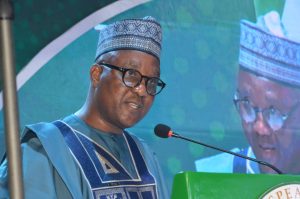
The Speaker of the House of Representatives Rt. Hon. Abbas Tajudeen, Ph.D, GCON, Tuesday, reeled out the achievements of the Green Chamber in two years during its second Open Week, marking the two years in office of members of the 10th Assembly.
It was an opportunity to present to Nigerians, the Midterm Legislative Scorecard of the 10th House, during which the chambers were opened to the citizens and the lawmakers explained their legislative activities to the people.
At the opening ceremony, Abbas Tajudeen said the decision to hold the session inside the hallowed chambers of the House was for direct interaction between the legislators and Nigerians to inform the citizens on the lawmakers’ activities.
He said the parliament has acted on the feedback from stakeholders on various legislative activities.
At the ceremony were the President of the Senate, Senator Godswill Obot Akpabio, GCON, former Speakers Femi Gbajabiamila, CFR, Yakubu Dogara, and Patricia Olubunmi Etteh; the Emir of Zazzau, His Royal Highness, Amb. Ahmed Nuhu Bamalli, members of the diplomatic corps and the academia.
Also in attendance were the Executive Secretary, National Assembly Library Trust Fund, Hon. Henry Nwawuba; civil society and non-governmental organisations (CSOs & NGOs), representatives of the Armed Forces and paramilitary organisations, students, and members of the National Youth Service Corps (NYSC), among others.
The Speaker emphasised that the midterm scorecard being presented serves as “both a mirror and a compass,” saying it shows “our progress, acknowledges our shortcomings, and guides our course for the remaining two years.”
He stated that the House will “intensify our legislative work, bolster oversight, deepen public engagement, and advance reforms that strengthen governance, promote inclusive development, and safeguard our democracy.”
Speaker Abbas said: “Our efforts to build capacity and engage citizens have been unprecedented. We held national and regional town hall meetings on critical legislation, convened numerous town halls, including those for women and youths, to gather stakeholder input, and invited memoranda from experts and communities.
“We have additionally included citizens’ perceptions in this midterm scorecard. Recognising that public trust in government institutions has often been low, we conducted opinion surveys and town hall feedback sessions to gauge satisfaction with our work. The findings reveal a notable willingness among Nigerians to engage constructively with the legislature.
“We acknowledge the criticisms raised, ranging from the pace of bill passage to the depth of oversight, and have acted on this feedback by streamlining our committee procedures and increasing transparency in hearings. Including this candid assessment demonstrates that the House is not afraid of constructive criticism and is committed to continuous improvement.”
Speaker Abbas noted that the programme reflects the lawmakers’ commitment to an open parliament that listens and responds to citizens. He said from Tuesday, July 8, to Thursday, July 10, the House will host thematic sessions and interactive events designed to deepen engagement.
While Tuesday allowed participants to discuss nutrition and food security with experts from government, civil society, and development partners, Speaker Abbas said Wednesday would feature the special seat bill dialogue on women’s representation, a forum on the constitutional role of traditional rulers, and an afternoon session on the economy and citizen participation.
He added that Thursday’s agenda would include workshops on youth involvement in politics, live media interactions with leadership, and a closing dinner. He invited civil society, academia, the private sector, and the public to attend, share insights, and help strengthen our legislative process.
Speaker Abbas said: “Today, as we launch the mid-term legislative scorecard of the 10th House of Representatives, we recognise that this is a critical moment in our tenure. Two years ago, Nigerians entrusted us with their aspirations, and since then, we have pursued transparency, inclusion, and accountability in all our actions.
“In developing our eight-point legislative agenda for 2023-2027, we consulted widely with government ministries, civil society, and development partners. We aligned our priorities with the Renewed Hope Agenda of His Excellency, President Bola Ahmed Tinubu, while preserving the constitutional separation of powers and our oversight functions. Collaborative governance has guided our work.
“We have maintained a respectful partnership with the Executive while asserting the autonomy of the legislature whenever required.”
The Speaker also disclosed that in the first two sessions, the House introduced 2,263 bills. Among these, 1,478 have gone through Second Reading, 135 are awaiting further consideration, and 339 have been referred to Standing Committees. He added that five bills were negatived, reflecting rigorous legislative debate.
He further disclosed that member-sponsored bills accounted for 2,204 of the total, with 26 Executive bills and 33 emanating from the Senate for concurrence. He noted that these figures indicate a steady upward trend since 1999, “highlighting an ever-growing legislative capacity and competence.”
As of June 30, 2025, Speaker Abbas said the House has passed 237 bills and forwarded them for presidential assent, of which 55 have been signed into law.
The Speaker explained that the legislative backlog includes bills awaiting Senate or presidential approval, such as the Oath Act (Repeal and Enactment) Bill, which modernises oath administration laws; the Federal Fire and Rescue Service Bill, to improve emergency response; and the Federal Audit Service (Amendment) Bill, which enhances transparency.
Others are the Administration of Criminal Justice Act Bill, which aims to modernise criminal justice processes.
At the same time, he mentioned amendments to security and anti-corruption laws that seek to improve coordination, update mandates, and strengthen measures against financial crimes.
Speaker Abbas stated that the House’s use of motions has increased in tandem with our legislative output, as members sponsored 1,100 motions in two years, over 36 per cent of which addressed matters of urgent public importance.
“These motions have triggered swift executive action on flood disasters, public health emergencies, and citizen grievances,” he stated, adding that “The record number and scope of our motions illustrate our heightened responsiveness.”
By June 2025, the Speaker said committees held over 1,000 meetings and visited more than 300 sites. He added that they monitored over 200 ministries, departments, and agencies (MDAs) and carefully examined policies and spending to ensure they align with the expectations of the people.
Regarding constitutional reform, Speaker Abbas said the House is considering 109 amendment bills across various sectors, including electoral, judicial, legislative, and inclusive governance. Of these, he noted, 12 electoral reform bills address the scheduling of all general elections on a single day, establish independent candidacy, and create a dedicated commission for local government elections.
According to the Speaker, judicial reforms encompass 21 bills designed to streamline appellate processes and strengthen judicial independence.
He said: “A central feature of our inclusive governance proposals is the introduction of constitutionally guaranteed reserved seats for women and persons with disabilities. Under the draft amendment, ten per cent (10%) of seats in both the Senate and the House of Representatives would be set aside for women, apportioned by the state to ensure regional balance.
“These seats would be filled through direct elections on separate ballots, with staggered terms to promote continuity and mentorship. Five per cent (5%) of seats would be reserved for persons with disabilities, with candidates nominated by accredited disability advocacy organisations. Reserved-seat representatives would enjoy the same rights, privileges, and committee assignments as their peers, reinforcing their full integration into legislative work.”
The Speaker added: “By embedding reserved seats into our Constitution, we will break the cycle of stagnation. This mechanism will accelerate progress towards gender parity, enrich our legislative debates with diverse perspectives, and ensure that the National Assembly truly reflects the people it serves. The 10th House will pursue vigorous collaboration with the State Houses of Assembly and all stakeholders to ensure that the bill on the reserved seat is passed and becomes part of our constitution.”
Speaker Abbas stated that executive-legislative cooperation remains essential, while thanking President Bola Ahmed Tinubu, GCFR, for his “steadfast support of the legislature, for consulting the National Assembly on key policy matters, and for respecting our input throughout the legislative process.”
In his remarks, the Senate President said contrary to the criticism that the National Assembly is a rubberstamp to the Executive Arm of the government, the parliament scrutinises plans, policies, and programmes of the current administration.
Senator Akpabio also appreciated the cordial relationship between him and Speaker Abbas.
Making reference to the embargo the House placed on consideration of bills from the Senate last week, Senator Akpabio said the Senate has resolved to accelerate concurrence on bills passed by the House. He particularly stated that the Senate has commenced consideration of the bills and would devote the coming weeks to their passage.
On the ‘Open Week’ initiative, the Senate President said: “We are very proud that the House is taking the lead and the Senate will follow. Thereafter, we will consider doing it together on a yearly basis.”
Speaking on the topic, ‘Reflections on the Growth of the House of Representatives since 1999,’ the Speaker of 9th Assembly and Chief of Staff to the President, Rt Hon. Gbajabiamila, noted that since Nigeria returned to democracy 26 years ago, generations of members of the National Assembly and, indeed, in state legislatures across the country, have done “the complicated and often thankless job of building that legislative tradition.”
He added that these legislative houses have accomplished this task “without a roadmap, while navigating the unique realities of our political and cultural landscape.”
Before 1999, the former Speaker recalled that the country’s last experiment with legislative governance ended in 1993, and before then, in 1983. As such, he said, there wasn’t much of an institutional memory to learn from; the conventions of parliamentary practice and procedure were a new experience.
Gbajabiamila said: “The ongoing efforts by the administration of President Bola Ahmed Tinubu to restore a system of robust local government administration, built on adequate financing, independence, transparency, and accountability, are critical to the future of the national parliament and must be supported by all who have served and continue to serve in this institution.
“In advanced democracies worldwide, many of the quality-of-life issues that affect citizens daily are the responsibility of local governments. Everything from waste management to the regulation of local commerce, basic education, healthcare, and even community policing and security are local government functions.
“When local governments have the resources and independence to function as the constitution intended, then legislators are freed to legislate, develop policy, advocate for the greater good, and hold the executive to account. It is time to let legislators be legislators as God and the Constitution of our republic intended.
“If we cannot agree on the place of the local governments in our political system, and if we cannot collectively undertake to do what is necessary to ensure that the local government institution has the political and financial independence, and the administrative capacity to function optimally, then we must consider alternatives to formalise the additional duties that have now become the responsibility of the legislators.”
He added: “The current system, which forces legislators to spend more time seeking and pursuing resource opportunities to meet constituency needs and expectations rather than developing the capacities required to be effective as lawmakers, legislative advocates, policymakers, and overseers of the public purse, as the constitution demands, is untenable in the long term.
“If we expect legislators to provide social services in their localities, then, perhaps it is time for a national conversation to ensure our constitution reflects this, and the necessary resources are made available in a structured and efficient manner, allowing for transparency and accountability.”
The Chief of Staff to the President emphasised that a democracy without a strong legislature and a robust legislative tradition is a promise deferred.
In their separate remarks, Dogara and Etteh hailed Speaker Abbas for introducing far-reaching reforms in the House, saying he is making history in a positive way.
Etteh particularly remarked that the Speaker is the best in the history of Nigeria’s democracy.
Dogara, on his part, singled out the efforts of the 10th House in the area of citizens’ engagements, commendinng the Speaker for his many people-oriented initiatives.

The United States government has insisted that Nigeria should retain its Country of Particular Concern, CPC, designation, saying the country has not done enough to protect Christians from attacks.
Assistant Secretary of State for African Affairs, Frank Garcia, made this statement on Thursday during a congressional hearing on violence in Nigeria.
Garcia was responding to questions from US Congressman Riley Moore, who asked about the government’s efforts to dismantle militia strongholds and kidnapping camps in the Middle Belt, particularly in Benue and Plateau states.
Moore also raised concerns over the exclusion of the states from the forest guard initiative and delays in deploying 1,000 approved guards to Plateau.
“Before you answer that, we cannot take this CPC designation off of this country. They have not done enough,” Moore said.
Garcia acknowledged the lack of progress, but said Nigeria was taking steps to address the concerns, although they had yet to produce results.
He said the country’s security capacity was still being developed and that deployments were not happening fast enough.
“Unfortunately, the violence has not stopped,” Garcia added, citing continued attacks in Kaduna and Plateau states.
He said the US had provided police training and equipment, expanded intelligence sharing and worked with Nigerian financial institutions to disrupt terrorist financing.
Garcia added that Washington would continue diplomatic engagements and security cooperation to protect vulnerable communities and ensure accountability.
However, the Nigerian government has consistently rejected claims of a “Christian genocide” or targeted religious persecution, maintaining that insecurity affects Nigerians of all faiths.


Liquefied Petroleum Gas, commonly known as cooking gas, has risen significantly, forcing Nigerians to spend more to purchase the product.
The increase comes as depot owners and retailers raised their prices over the past two days.
StockGap increased its depot price by N25 to N1,440 per kilogram. Nigerian Independent Petroleum Company Limited, NIPCO, Mobil (now 11 Plc) and Ardova, on the other hand, sold the product at N1,400 and N1,390 per kilogram, respectively.
Similarly, LPG retail outlets, including Raniol, Juda Oil and Nigerian National Petroleum Company Limited, NNPC, outlets in Abuja and its environs, now dispense cooking gas at between N1,550 and N1,600 per kilogram, up from N1,400 and N1,500.
Micro-LPG dealers sell the product for between N1,700 and N1,800 per kilogram, depending on the location in Abuja.
Earlier, NIPCO’s spokesperson, Taofeek Lawal, had exclusively told DAILY POST that LPG prices could increase further between November and January next year.
The latest price increase means that Nigerians who previously spent N17,500 to refill a 12.5kg cylinder at N1,400 per kilogram will now pay N20,000 at the new rate of N1,600 per kilogram, representing an additional N2,500.
News
2027: Tinubu Must Withdraw ‘All Is Fair in Politics’ Remark, Embrace Peaceful Coexistence — ADC-PCC
The African Democratic Congress Presidential Campaign Council (ADC-PCC) has called on President Bola Ahmed Tinubu to publicly retract his controversial “All Is Fair in Politics” remark, warning that such rhetoric fuels political division, emboldens thugs and poses a grave threat to the nation’s peace and stability.
The ADC-PCC also expressed concern over what it described as the President’s disturbing silence on the conduct of some APC governors and party chieftains who have openly made inflammatory statements and allegedly encouraged political violence.
In a statement signed by its Director of Media and Publicity, Kola Ologbondiyan, the ADC-PCC urged President Tinubu to rise above partisan interests and demonstrate the statesmanship expected of a national leader, citing former President Goodluck Jonathan’s unequivocal declaration that no presidential ambition was worth the blood of any Nigerian.
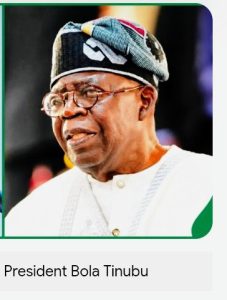
The Council described as shocking the President’s failure to condemn the growing wave of political violence, noting that, through his spokesman, Mr. Bayo Onanuga, the Presidency had instead chosen to caution opposition parties while shielding those allegedly responsible for violence within the ruling APC.
“President Tinubu cannot claim to desire peace when his own words provide cover for violence.
“‘All Is Fair in Politics’ is not the language of a Head of State. It is the language of political desperation and an open licence for thuggery, ballot snatching, intimidation and bloodshed.
“From Edo to Cross River, Gombe to Lagos, and Kebbi to Kaduna, Nigerians have witnessed attacks on opposition gatherings, destruction of campaign materials and the brutalisation of innocent supporters, allegedly by APC-sponsored thugs.
“Yet, Mr. President has not considered it necessary to call his governors and party members to order.
“Instead, the Presidency has resorted to diversionary tactics, blaming victims and preaching restraint to the opposition while members of the ruling party are accused of unleashing violence across the country,” the statement said.
The ADC-PCC challenged President Tinubu to explain why his condemnation of political violence appears directed at the opposition rather than members of his own party.
It asked: “Why has Mr. President refused to condemn APC governors who openly threaten opposition supporters? Why has he remained silent over public incitement by officials of his party? Why is his anger always directed at the opposition and never at those within his own political fold?”
The Council maintained that the ADC remains committed to peaceful, issue-based political engagement, insisting that its campaign is focused on addressing the country’s pressing challenges, including hunger, insecurity, unemployment, corruption and what it described as the failures of the Tinubu administration.
It accused the APC of resorting to violence because it had little to offer Nigerians in terms of credible solutions to the country’s problems.
Consequently, the ADC-PCC demanded that President Tinubu immediately and publicly withdraw his “All Is Fair in Politics” remark, condemn and call to order APC governors and party officials accused of inciting violence, and direct security agencies to protect all Nigerians impartially rather than allow them to become instruments of intimidation and oppression against opposition parties.
” Nigeria belongs to all of us. No political ambition is worth the blood of any Nigerian.
“If former President Goodluck Jonathan could make that profound declaration in 2015, President Tinubu has no excuse not to say so and demonstrate the sincerity of his commitment to peace in 2026.
“The ADC will not be intimidated. We will continue to campaign peacefully, and in 2027, Nigerians will have the opportunity to vote for competence, integrity and a new beginning,” the statement added.





-
News5 days ago
IGP Disu decorates 29 senior police officers with new ranks….charges them on professionalism, integrity,others
-
News4 days ago
Airstrikes kill 40 ISWAP terrorists in Borno
-
News4 days ago
We finally received CTC Of Lifu’s Judgement, without Atiku, Other Candidates Names Mentioned—Senator Melaye
-
News4 days ago
2026 U-17 WWC: Tinubu rewards each Flamingos player with ₦100m
-
News5 days ago
How Federal High Court Chief judge is beign blackmailed with EFCC, CCB- ADC Campaign Council
-
News2 days ago
Crowd Shouts ‘Bamayi’ at Tinubu, pelt convoy in Abuja
-
News5 days ago
Oil slump opens door to cheaper petrol for Nigerians …as Brent hits lowest since August
-
News5 days ago
Oil price fall: We ‘ll take appropriate action against marketers, petrol stations over unfair practices- FCCPC