
News
NCC, Operators,Others set to break barriers, chart new course for sustainable, quality service delivery*

*
Operators in Nigeria’s tele communications industry and allied services have identified key similar factors that are barriers to smooth telecomminications operations and service delivery in the country and agreed tọ pursue a coordinated action involving all industry players to surmount the challenges
The joint action and collaboration is required from the key stakeholders which cuts across government, regulators, investors, financiers and thẹ telecom industry proper,stakeholders admitted in Abuja
At the recent Nigerian Digital Connectivity Investment forum, with the them: ” Unlocking Infrastructure Investments through Data,Transparent and Partnerships” Infrastructure, participants in chatting a way forward, recognised that the principal barriers identified across the Forum during the conference, included, the cost and tenor of financing, the
Right of Way and permitting constraints.
Others are, the cost and reliability of power, and gaps in trusted infrastructure data, which the foremost government regulator, the Nigerian Communications Commission, NCC, accepted to sustain engagement with participants and relevant stakeholders towards advancing the identified actions and investment pathways.
In a communique issued after the event, the investment Forum provided a platform for government, regulators, investors, financiers, infrastructure providers and other stakeholders to examine Nigeria’s digital infrastructure investment opportunities
It also afforded participants the same platform to identify barriers to deployment and financing, and agree on practical actions for accelerating investment and expanding meaningful connectivity.
The forum which analysed several issues in the Nigerian telecom industry, from observations, however passed some resolutions and made recommendations aimed at improving service delivery
According to the
Resolutions and Recommendations:
Participants resolved and recommended as follows: The Federal Government should accelerate the delivery of Project BRIDGE, the 90,000 km national fibre backbone, as a strategic response to the middle-mile connectivity gap; advance complementary measures to improve the availability and reliability of power for digital infrastructure; sustain policy consistency; and support financing structures that reduce the cost of capital for the sector.
The Nigerian Communications Commission should sustain the reforms already improving investment conditions, including the tariff realignment, the designation of critical national information infrastructure and Right of Way engagement with States; publish the first national Nigeria Digital Connectivity Index report; advance open-access and wholesale regulation; and finalise the direct-to-device framework.
State Governments should cut and harmonise Right of Way and site permit charges, adopt the Federal model under which the operator that lays fibre reinstates the road, and shorten permitting timelines.
Operators, infrastructure and technology companies should pursue shared-infrastructure and neutral-host models that lower the cost of rural and indoor coverage, and pair every coverage investment with measures that put affordable devices in users’ hands, including locally manufactured devices and SIMs.
Investors and development finance institutions should match long-life assets with long-tenor naira capital, tie infrastructure funding to independently verified network performance, and use blended structures and credit enhancement to bring projects that are not yet commercially ready to market.
Participants which were drawn from all sectors, appreciated the NCC, the Nigerian government, international partners for the partnership and the general principles of the investment Forum
Published below in full is the Communique as issued :
*Communiqué From Nigeria Digital Connectivity Investment Forum 2026*
*1. Preamble*
The Nigerian Communications Commission (NCC), in partnership with Swedfund and Ookla, convened the Nigeria Digital Connectivity Investment Forum, 2026 at the Onomo Allure Hotel, Abuja, on September 29-30, 2026, under the theme “Unlocking Infrastructure Investment through Data, Transparency and Partnerships”. Day 1 addressed Data, Demand and Infrastructure Investment Opportunities; Day 2 addressed Financing, Partnerships and Action Pathways, and closed with Investment Partnership and Investor Access Roundtables at which participants agreed the priority actions set out below.
The Forum was attended by the Honourable Minister of Industry, Trade and Investment; representative of the Honourable Minister of Communications, Innovation and Digital Economy; the Ambassador of Sweden to Nigeria; heads of Federal agencies; development finance institutions, investment banks and institutional investors; mobile network operators, tower and fibre infrastructure companies, satellite and fixed wireless providers; original equipment manufacturers; industry associations; and Management and staff of the Commission.
The Forum provided a platform for government, regulators, investors, financiers, infrastructure providers and other stakeholders to examine Nigeria’s digital infrastructure investment opportunities, identify barriers to deployment and financing, and agree on practical actions for accelerating investment and expanding meaningful connectivity.
Participants benefited from important perspectives from leading figures in Nigeria’s investment and financial sectors. On Day 1, Mr. Bolaji Balogun, Chief Executive Officer of Chapel Hill Denham, provided an investor perspective on “Financing Digital Infrastructure,” emphasising the importance of investable projects, appropriate financing structures, capital-market participation and conditions that can attract long-term private and institutional capital.
On Day 2, Mr. Bismarck Rewane, Chairman of the Board of FCMB and Managing Director of Financial Derivatives Company, provided insights on the broader economic and financial environment for infrastructure investment, highlighting the importance of cost and availability of capital, investor confidence, policy predictability and the role of digital infrastructure in supporting productivity and economic growth.
*2. Objectives*
The Forum was convened to:
set out national digital infrastructure and investment priorities;
present Nigeria’s connectivity and market data, including the Nigeria Digital Connectivity Index, as a basis for transparent planning;
examine what makes digital infrastructure bankable;
showcase new models that reduce cost or extend reach; and
convene investors, regulators, policymakers and operators to agree concrete opportunities.
*3. Observations*
Following the presentations, panel discussions and investment roundtables, participants observed that:
Demand is outgrowing the networks: Nigeria consumed about 1.6 million terabytes of data in July 2026, an increase of almost 47% in twelve months, and subscriptions are projected to grow from about 195 million towards 350 million within ten to fifteen years. Cloud computing and artificial intelligence will place further demand on networks, data centres and, above all, power.
Digital connectivity is economic infrastructure: Telecommunications and information services accounted for 9.72% of Nigeria’s real GDP in the second quarter of 2026, and mobile contributed about USD 240 billion to Africa’s economy in 2025. The future of trade is digital, and Nigeria, as Co-Champion of the AfCFTA Protocol on Digital Trade and the first state party to ratify it, is positioned as a platform from which to serve the African market.
Usage, rather than coverage, is now the larger gap: Mobile broadband covers about 90% of Nigerians, yet smartphone ownership stands at about 27% and broadband penetration at 57.4% against a 70% target. Device affordability, digital skills and trust are the binding constraints, and coverage investment alone cannot close them.
Independent evidence reduces investor uncertainty: The collaboration between the Commission, Swedfund and Ookla provides a granular picture of the connectivity people experience. National gains do not, however, reveal which constraint limits experience in a given location: the approach should be to screen nationally, validate locally, and verify after intervention.
Power and the middle mile are the binding constraints on deployment: For tower companies’ power is not a side business but the business, and the cost of inland connectivity confines data centre and internet service investment to a few metropolitan centres. Energy and connectivity investment should be planned together, with tower clusters recognised as anchor off takers for distributed generation.
Long-life assets require long-tenor capital: Digital infrastructure has an asset life of twenty to thirty years and cannot be financed on five-year bank tenors. Infrastructure financing in Nigeria has grown from under ₦70 billion in 2004 to ₦19.4 trillion in 2025, and access to that capital rests on governance, management capacity and predictability. Long-term financing is not, however, automatic bankability.
State-level conditions determine the pace of deployment: The pilot of the Nigeria Digital Connectivity Index across twelve States shows Right of Way reform translating directly into fibre growth of between 22% and 95% in reforming States, with twelve States now charging zero, up from seven in December 2024.
New deployment models are available now: Shared rural networks, satellite services delivered to unmodified handsets, micro-cabling, solar-powered rural sites and local device and SIM manufacturing all reduce the cost of reaching the unserved. None removes the need for affordable devices in user’s hands.
4. Resolutions and Recommendations
Participants resolved and recommended as follows:
The Federal Government should accelerate the delivery of Project BRIDGE, the 90,000 km national fibre backbone, as a strategic response to the middle-mile connectivity gap; advance complementary measures to improve the availability and reliability of power for digital infrastructure; sustain policy consistency; and support financing structures that reduce the cost of capital for the sector.
The Nigerian Communications Commission should sustain the reforms already improving investment conditions, including the tariff realignment, the designation of critical national information infrastructure and Right of Way engagement with States; publish the first national Nigeria Digital Connectivity Index report; advance open-access and wholesale regulation; and finalise the direct-to-device framework.
State Governments should cut and harmonise Right of Way and site permit charges, adopt the Federal model under which the operator that lays fibre reinstates the road, and shorten permitting timelines.
Operators, infrastructure and technology companies should pursue shared-infrastructure and neutral-host models that lower the cost of rural and indoor coverage, and pair every coverage investment with measures that put affordable devices in users’ hands, including locally manufactured devices and SIMs.
Investors and development finance institutions should match long-life assets with long-tenor naira capital, tie infrastructure funding to independently verified network performance, and use blended structures and credit enhancement to bring projects that are not yet commercially ready to market.
5. Priority Actions and Partnership Pathways
From the roundtables, participants agreed the following priority actions, with the period within which each should be taken:
Within six months
Secure funding for community co-owned rural networks powered by renewable energy in zero-connectivity communities, through partnership with the Universal Service Provision Fund, State governments and the Rural Electrification Agency.
Within six to eighteen months
Issue open-access and wholesale regulation, publish a wholesale rate card and complete the broadband mapping.
Give the Universal Service Fund regulatory backing as the primary source for underserved-area projects, supported by blended public and multilateral funding.
Build the business case for indoor coverage in commercial buildings, with tower companies, neutral hosts and property owners.
Capture data-centre requirements in the National Broadband Plan, pairing off-grid and renewable power with blended finance.
Within eighteen to twenty-four months
Establish a financing framework for telecommunications power, standardising energy provision by regulation and bringing it within critical national information infrastructure protection.
Develop metro and access fibre under concession, mapped against existing assets and integrated with Project BRIDGE.
5. Way Forward
Participants recognised that the principal barriers identified across the Forum—the cost and tenor of financing,
Zẹẹ Right of Way and permitting constraints, the cost and reliability of power, and gaps in trusted infrastructure data—are interconnected and require coordinated action across government, regulators, investors, financiers and industry.
The Nigerian Communications Commission undertook to sustain engagement with participants and relevant stakeholders towards advancing the identified actions and investment pathways.
6. Appreciation
Participants expressed appreciation to the Federal Government of Nigeria, the Honourable Ministers, the Government of Sweden, Swedfund and Ookla for their partnership, and to the Board, Management and staff of the Nigerian Communications Commission for convening and hosting the Forum.
Signed:
Nnenna Ukoha
Director, Public Affairs Department
Nigerian Communications Commission
October 4, 2026

The United States government has insisted that Nigeria should retain its Country of Particular Concern, CPC, designation, saying the country has not done enough to protect Christians from attacks.
Assistant Secretary of State for African Affairs, Frank Garcia, made this statement on Thursday during a congressional hearing on violence in Nigeria.
Garcia was responding to questions from US Congressman Riley Moore, who asked about the government’s efforts to dismantle militia strongholds and kidnapping camps in the Middle Belt, particularly in Benue and Plateau states.
Moore also raised concerns over the exclusion of the states from the forest guard initiative and delays in deploying 1,000 approved guards to Plateau.
“Before you answer that, we cannot take this CPC designation off of this country. They have not done enough,” Moore said.
Garcia acknowledged the lack of progress, but said Nigeria was taking steps to address the concerns, although they had yet to produce results.
He said the country’s security capacity was still being developed and that deployments were not happening fast enough.
“Unfortunately, the violence has not stopped,” Garcia added, citing continued attacks in Kaduna and Plateau states.
He said the US had provided police training and equipment, expanded intelligence sharing and worked with Nigerian financial institutions to disrupt terrorist financing.
Garcia added that Washington would continue diplomatic engagements and security cooperation to protect vulnerable communities and ensure accountability.
However, the Nigerian government has consistently rejected claims of a “Christian genocide” or targeted religious persecution, maintaining that insecurity affects Nigerians of all faiths.


Liquefied Petroleum Gas, commonly known as cooking gas, has risen significantly, forcing Nigerians to spend more to purchase the product.
The increase comes as depot owners and retailers raised their prices over the past two days.
StockGap increased its depot price by N25 to N1,440 per kilogram. Nigerian Independent Petroleum Company Limited, NIPCO, Mobil (now 11 Plc) and Ardova, on the other hand, sold the product at N1,400 and N1,390 per kilogram, respectively.
Similarly, LPG retail outlets, including Raniol, Juda Oil and Nigerian National Petroleum Company Limited, NNPC, outlets in Abuja and its environs, now dispense cooking gas at between N1,550 and N1,600 per kilogram, up from N1,400 and N1,500.
Micro-LPG dealers sell the product for between N1,700 and N1,800 per kilogram, depending on the location in Abuja.
Earlier, NIPCO’s spokesperson, Taofeek Lawal, had exclusively told DAILY POST that LPG prices could increase further between November and January next year.
The latest price increase means that Nigerians who previously spent N17,500 to refill a 12.5kg cylinder at N1,400 per kilogram will now pay N20,000 at the new rate of N1,600 per kilogram, representing an additional N2,500.
News
2027: Tinubu Must Withdraw ‘All Is Fair in Politics’ Remark, Embrace Peaceful Coexistence — ADC-PCC
The African Democratic Congress Presidential Campaign Council (ADC-PCC) has called on President Bola Ahmed Tinubu to publicly retract his controversial “All Is Fair in Politics” remark, warning that such rhetoric fuels political division, emboldens thugs and poses a grave threat to the nation’s peace and stability.
The ADC-PCC also expressed concern over what it described as the President’s disturbing silence on the conduct of some APC governors and party chieftains who have openly made inflammatory statements and allegedly encouraged political violence.
In a statement signed by its Director of Media and Publicity, Kola Ologbondiyan, the ADC-PCC urged President Tinubu to rise above partisan interests and demonstrate the statesmanship expected of a national leader, citing former President Goodluck Jonathan’s unequivocal declaration that no presidential ambition was worth the blood of any Nigerian.
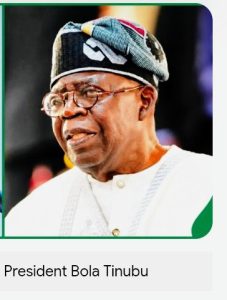
The Council described as shocking the President’s failure to condemn the growing wave of political violence, noting that, through his spokesman, Mr. Bayo Onanuga, the Presidency had instead chosen to caution opposition parties while shielding those allegedly responsible for violence within the ruling APC.
“President Tinubu cannot claim to desire peace when his own words provide cover for violence.
“‘All Is Fair in Politics’ is not the language of a Head of State. It is the language of political desperation and an open licence for thuggery, ballot snatching, intimidation and bloodshed.
“From Edo to Cross River, Gombe to Lagos, and Kebbi to Kaduna, Nigerians have witnessed attacks on opposition gatherings, destruction of campaign materials and the brutalisation of innocent supporters, allegedly by APC-sponsored thugs.
“Yet, Mr. President has not considered it necessary to call his governors and party members to order.
“Instead, the Presidency has resorted to diversionary tactics, blaming victims and preaching restraint to the opposition while members of the ruling party are accused of unleashing violence across the country,” the statement said.
The ADC-PCC challenged President Tinubu to explain why his condemnation of political violence appears directed at the opposition rather than members of his own party.
It asked: “Why has Mr. President refused to condemn APC governors who openly threaten opposition supporters? Why has he remained silent over public incitement by officials of his party? Why is his anger always directed at the opposition and never at those within his own political fold?”
The Council maintained that the ADC remains committed to peaceful, issue-based political engagement, insisting that its campaign is focused on addressing the country’s pressing challenges, including hunger, insecurity, unemployment, corruption and what it described as the failures of the Tinubu administration.
It accused the APC of resorting to violence because it had little to offer Nigerians in terms of credible solutions to the country’s problems.
Consequently, the ADC-PCC demanded that President Tinubu immediately and publicly withdraw his “All Is Fair in Politics” remark, condemn and call to order APC governors and party officials accused of inciting violence, and direct security agencies to protect all Nigerians impartially rather than allow them to become instruments of intimidation and oppression against opposition parties.
” Nigeria belongs to all of us. No political ambition is worth the blood of any Nigerian.
“If former President Goodluck Jonathan could make that profound declaration in 2015, President Tinubu has no excuse not to say so and demonstrate the sincerity of his commitment to peace in 2026.
“The ADC will not be intimidated. We will continue to campaign peacefully, and in 2027, Nigerians will have the opportunity to vote for competence, integrity and a new beginning,” the statement added.


-
News5 days ago
IGP Disu decorates 29 senior police officers with new ranks….charges them on professionalism, integrity,others
-
News4 days ago
Airstrikes kill 40 ISWAP terrorists in Borno
-
News4 days ago
We finally received CTC Of Lifu’s Judgement, without Atiku, Other Candidates Names Mentioned—Senator Melaye
-
News4 days ago
2026 U-17 WWC: Tinubu rewards each Flamingos player with ₦100m
-
News5 days ago
How Federal High Court Chief judge is beign blackmailed with EFCC, CCB- ADC Campaign Council
-
News2 days ago
Crowd Shouts ‘Bamayi’ at Tinubu, pelt convoy in Abuja
-
News5 days ago
Oil slump opens door to cheaper petrol for Nigerians …as Brent hits lowest since August
-
News5 days ago
Oil price fall: We ‘ll take appropriate action against marketers, petrol stations over unfair practices- FCCPC