

News
NATASHA’S RECALL, NJC’S CODE OF CONDUCT/JUDICIAL DISCIPLINE REGULATIONS – MATTERS ARISING

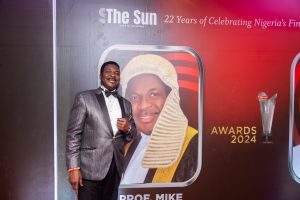
BY PROF MIKE OZEKHOME, SAN, CON, OFR, FCIArb, LL.D
INTRODUCTION
The dramatic on/off attempt to recall the Senator representing Kogi central Senatorial District in the National Assembly has focused public attention on that hitherto obscure and seldom used process. While the public has been regaled (if not quite transfixed) with the apparently determined and desperate attempt by her supposed constituents to recall her (and her equally robust push-back), the body at the centre of it all – the electoral umpire – has been no less up-to-the-job with its prompt assessments and verdicts (so far, in her favour). INEC roundly rejected the recall process on the ground that it has not met the constitutional requirements of section 69(a) of the 1999 Constitution.
However, what few observers have noticed (much less commented on) is the legal framework which underpins the entire process – INEC’s Guidelines for Recalling Members of the National and State Houses of Assembly, 2024. I will get to the details shortly, but it is quite interesting that a similar handicap, in my opinion, afflicts an even more sensitive regulatory document, the NJC’s (National Judiciary Council) Regulations for the Discipline of Judicial Officers. I believe both documents are potentially problematic for the following reasons, starting with that of INEC as aforesaid.
INEC’S RECALL GUIDELINES, 2024
This would-be sledgehammer which Senator Natasha’s traducers sought to deploy for her removal is expressed on its face to have been made by INEC pursuant to Sections 69, 110 and 160 of the Constitution, Sections 2(c) and 113 of the Electoral Act, 2022, “and all other powers enabling it in that behalf”. At its foot (its conclusion), it bears the signature of Prof. Mahmood Yakubu, INEC’s Chairman. Therein, in my view, lies the problem. This is because, an enactment which is supposedly made by a multi-member body cannot validly be endorsed or executed by only one of them – without an express authorization to that effect. Administrative bodies must act within the scope of their statutory powers and follow administrative due process. See the cases of Ajiboye V. Attorney-General of the Federation (1994) 5 NWLR (Pt. 345) 765 and Shitta-Bey v. Federal Public Service Commission (1981) 1 SC 40.
The relevant law is Section 27(2) of the Interpretation Act, which provides that where a body established by an enactment comprises three or more persons and is empowered to make subsidiary instruments, for any such instrument to be valid, it should be “executed under the hand of any two of the members thereof as may be authorized by such body generally for that purpose or specially or any particular occasion”.
Now, by virtue of Paragraph 14(1) of the Third Schedule to the 1999 Constitution, INEC consists of a Chairman and twelve members (called “National Electoral Commissioners”). Section 148 of the Electoral Act, 2022 empowers INEC to make regulations, guidelines or manuals for the purpose of giving effect to the Act. Even though Section 147 of the Act empowers the Commission to delegate “any of its powers and functions to any National Electoral Commissioner, Resident Electoral Commissioner, electoral officer, or any other officer of the Commission or any other officer appointed under the provisions of (the) Act,” curiously, not only are the Guidelines themselves not expressed to have been made pursuant to the aforesaid provisions of Section 148 of the Electoral Act, more importantly, they are silent on any delegation of the power to enact them by the Commission to its Chairman, as contemplated by Section 147 of the Electoral Act.
The implication of this defect is glaring: the Recall Guidelines are ultra vires the sole executor thereof, INEC’s Chairman, because by virtue of the aforesaid combined provisions of Section 27(2) of the Interpretation Act and Paragraph 14(b) of the Third Schedule to the Constitution, they should have borne the imprimatur (been “executed under the hand”) of at least two of INEC’s Commissioners or officers. There are limits to statutory and constitutional powers due to the supremacy of due process over the ultra vires acts of public officers. See the cases of Attorney-General of Lagos State v. Attorney-General of the Federation (2003) 12 NWLR (Pt. 833)1 and Minister of Internal Affairs v. Shugaba Darman (1982) 3 NCLR 915. This ought to have completely put paid to Senator Natasha’s entire recall saga, and forcing INEC to go back to the drawing-board. This remains to be seen, of course. The “wahala” of reviewing without supposed ballot papers of recall. The law might yet hand her a technical victory – seemingly without firing a shot.
NJC’S JUDICIAL DISCIPLINE REGULATIONS 2017
This document appears to be even more problematic than INEC’s Guidelines. How is that so? This is so because even though the Regulations were expressly made by the NJC on the 9th day of March, 2017, there is nothing on their face to indicate to suggest that they were executed by any officer of that distinguished body of Jurists – not even the Honourable Chief Justice of Nigeria who is its head by virtue of Paragraph 20(1) of the 3rd Schedule of the 1999 Constitution. The same paragraph provides that the NJC consists of twenty-three members.
Indeed, similar provisions in Section 27(2) of the Interpretation Act prescribe that the NJC Regulations ought to bear the imprimatur of at least two of its members. Its failure in this regard, with the greatest respect, is even worse because I am not aware of any provision – similar to those of Section 147 of the Electoral Act, 2022 – which empowers the Council to delegate any, some or all its powers (especially of enacting subsidiary instruments such as the Regulations) to any of its members (presumably the Hon. CJN). This lacuna is too obvious to be over-emphasized – much less overlooked. It should be squarely addressed by concerned authorities.
RULES OF EVIDENCE
Beyond the foregoing fatal structural defect, a fundamentally more worrisome aspect of the NJC Regulations, in my humble view, are the provisions of Regulation 21(3) thereof which stipulate that the rules of evidence do not apply to the Investigating Committee’s hearings. This provision is curious, to say the least, given that the Regulations are meant to guide an investigation into judicial misconduct – to probe allegations of ethical violations and malfeasance against judicial officers who, by their very calling, are trained to apply (and have been applying virtually throughout their entire careers) the rules of evidence codified in the Evidence Act, 2011.
This provision is problematic because by virtue of the provisions of Item 23 of the Exclusive Legislative List of the Constitution, only the National Assembly is competent to legislate on evidence. See the case of AG Abia State v. AG Federation (2002) LPELR-611 (SC). That being the case, the broader question becomes whether the other evidence-related provisions of the NJC’s said Regulations – namely Regulation 21(2), (4), (5), (7) and (8) might legitimately come under scrutiny. They stipulate as follows:-
– (2): “All testimony taken at the hearing shall be given under oath or affirmation and recorded”;
– (4): “The complainant shall be given an opportunity to produce evidence and call witnesses”;
– (5): “At any hearing of the Investigating Committee, the subject judge has the right to present evidence, to compel the attendance of witnesses and to compel the production of witnesses and to cross examine, in person or by Counsel, Committee Witness”;
– (7): “The Investigating Committee may take oral evidence if it considers it necessary to do so”;
– (8): “The Investigating Committee must arrange for any evidence given orally to be recorded in a transcript or by electronic recording”.
The significance of the foregoing is underscored by the fact that the NJC is not one of the bodies which are specifically excluded from the application of the Evidence Act, 2011, under the provisions of Section 256 of the Evidence Act. The maxim is expresso uniu est exclusio alterius (the express mention of a thing in a statute implies the exclusion of others which otherwise might be included). See P.H.C.S. LTD VS MIGFO LTD. (2012) All FWLR Pt. 642 pg. 1615.
I humbly submit that the foregoing view is buttressed by Item 68 of the Exclusive Legislative List of the Constitution which stipulate that the power of the National Assembly to legislate on the substantive subject matters of the preceding Items (1-67) in that List includes “any matter incidental or supplementary to any matter mentioned elsewhere in (the) List.”
CODE OF CONDUCT FOR PUBLIC AND JUDICIAL OFFICERS
Yet, another interesting issue is the Code of Conduct for Judicial Officers 2016. Is the fact that it appears to be co-extensive with the Code of Conduct for Public Officers under the Constitution in the Fifth Schedule thereof anomalous in any way?. Has the Constitution covered the field or can the more detailed and specific provisions of the latter co-exist with it? Is enacting a Code of Conduct for Judicial Officers among the powers donated to the NJC under Paragraph 21 of the Third Schedule to the Constitution? That is the question.
This issue is somewhat topical given the ongoing story about the propriety of the chairmanship of the Board of Trustees of the IBB golf club, Abuja, by the President of the Court of Appeal. Given the provisions of Rule 9.3 of the said Code of Conduct for Judicial Officers 2016 which expressly permits judicial officers to join sporting organisations. One wonders whether Hon. Justice Monica Dongban-Mensem breaches any Code of Conduct to so act. I very doubt if the Code of Conduct for Public Officers under the Constitution bans such engagements. Although she may be on sure footing, to so act, this must be subjected to public perception of the Head of the Intermediate Court intermingling with the hordes of politicians that daily patronize the Golf Club. And perception is invariably reality. With Justice Emeka Nwite’s restraining order against her and others from being nominated and presented pending the determination of the Originating suit – the many peels of the onions are just unfolding.
In all, the non-endorsement of the foregoing vital regulatory instruments (including the Code of Conduct for Judicial Officers) in the manner required by law might make them vulnerable to challenge by ambitious counsel and litigants who might fall back on such complaints in the absence of more fundamental objections or defences. Let those in charge of amendments to these laws do the needful immediately.

The United States government has insisted that Nigeria should retain its Country of Particular Concern, CPC, designation, saying the country has not done enough to protect Christians from attacks.
Assistant Secretary of State for African Affairs, Frank Garcia, made this statement on Thursday during a congressional hearing on violence in Nigeria.
Garcia was responding to questions from US Congressman Riley Moore, who asked about the government’s efforts to dismantle militia strongholds and kidnapping camps in the Middle Belt, particularly in Benue and Plateau states.
Moore also raised concerns over the exclusion of the states from the forest guard initiative and delays in deploying 1,000 approved guards to Plateau.
“Before you answer that, we cannot take this CPC designation off of this country. They have not done enough,” Moore said.
Garcia acknowledged the lack of progress, but said Nigeria was taking steps to address the concerns, although they had yet to produce results.
He said the country’s security capacity was still being developed and that deployments were not happening fast enough.
“Unfortunately, the violence has not stopped,” Garcia added, citing continued attacks in Kaduna and Plateau states.
He said the US had provided police training and equipment, expanded intelligence sharing and worked with Nigerian financial institutions to disrupt terrorist financing.
Garcia added that Washington would continue diplomatic engagements and security cooperation to protect vulnerable communities and ensure accountability.
However, the Nigerian government has consistently rejected claims of a “Christian genocide” or targeted religious persecution, maintaining that insecurity affects Nigerians of all faiths.


Liquefied Petroleum Gas, commonly known as cooking gas, has risen significantly, forcing Nigerians to spend more to purchase the product.
The increase comes as depot owners and retailers raised their prices over the past two days.
StockGap increased its depot price by N25 to N1,440 per kilogram. Nigerian Independent Petroleum Company Limited, NIPCO, Mobil (now 11 Plc) and Ardova, on the other hand, sold the product at N1,400 and N1,390 per kilogram, respectively.
Similarly, LPG retail outlets, including Raniol, Juda Oil and Nigerian National Petroleum Company Limited, NNPC, outlets in Abuja and its environs, now dispense cooking gas at between N1,550 and N1,600 per kilogram, up from N1,400 and N1,500.
Micro-LPG dealers sell the product for between N1,700 and N1,800 per kilogram, depending on the location in Abuja.
Earlier, NIPCO’s spokesperson, Taofeek Lawal, had exclusively told DAILY POST that LPG prices could increase further between November and January next year.
The latest price increase means that Nigerians who previously spent N17,500 to refill a 12.5kg cylinder at N1,400 per kilogram will now pay N20,000 at the new rate of N1,600 per kilogram, representing an additional N2,500.
News
2027: Tinubu Must Withdraw ‘All Is Fair in Politics’ Remark, Embrace Peaceful Coexistence — ADC-PCC
The African Democratic Congress Presidential Campaign Council (ADC-PCC) has called on President Bola Ahmed Tinubu to publicly retract his controversial “All Is Fair in Politics” remark, warning that such rhetoric fuels political division, emboldens thugs and poses a grave threat to the nation’s peace and stability.
The ADC-PCC also expressed concern over what it described as the President’s disturbing silence on the conduct of some APC governors and party chieftains who have openly made inflammatory statements and allegedly encouraged political violence.
In a statement signed by its Director of Media and Publicity, Kola Ologbondiyan, the ADC-PCC urged President Tinubu to rise above partisan interests and demonstrate the statesmanship expected of a national leader, citing former President Goodluck Jonathan’s unequivocal declaration that no presidential ambition was worth the blood of any Nigerian.
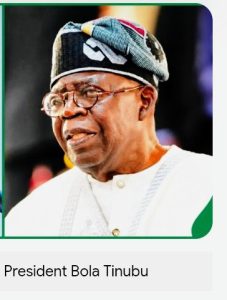
The Council described as shocking the President’s failure to condemn the growing wave of political violence, noting that, through his spokesman, Mr. Bayo Onanuga, the Presidency had instead chosen to caution opposition parties while shielding those allegedly responsible for violence within the ruling APC.
“President Tinubu cannot claim to desire peace when his own words provide cover for violence.
“‘All Is Fair in Politics’ is not the language of a Head of State. It is the language of political desperation and an open licence for thuggery, ballot snatching, intimidation and bloodshed.
“From Edo to Cross River, Gombe to Lagos, and Kebbi to Kaduna, Nigerians have witnessed attacks on opposition gatherings, destruction of campaign materials and the brutalisation of innocent supporters, allegedly by APC-sponsored thugs.
“Yet, Mr. President has not considered it necessary to call his governors and party members to order.
“Instead, the Presidency has resorted to diversionary tactics, blaming victims and preaching restraint to the opposition while members of the ruling party are accused of unleashing violence across the country,” the statement said.
The ADC-PCC challenged President Tinubu to explain why his condemnation of political violence appears directed at the opposition rather than members of his own party.
It asked: “Why has Mr. President refused to condemn APC governors who openly threaten opposition supporters? Why has he remained silent over public incitement by officials of his party? Why is his anger always directed at the opposition and never at those within his own political fold?”
The Council maintained that the ADC remains committed to peaceful, issue-based political engagement, insisting that its campaign is focused on addressing the country’s pressing challenges, including hunger, insecurity, unemployment, corruption and what it described as the failures of the Tinubu administration.
It accused the APC of resorting to violence because it had little to offer Nigerians in terms of credible solutions to the country’s problems.
Consequently, the ADC-PCC demanded that President Tinubu immediately and publicly withdraw his “All Is Fair in Politics” remark, condemn and call to order APC governors and party officials accused of inciting violence, and direct security agencies to protect all Nigerians impartially rather than allow them to become instruments of intimidation and oppression against opposition parties.
” Nigeria belongs to all of us. No political ambition is worth the blood of any Nigerian.
“If former President Goodluck Jonathan could make that profound declaration in 2015, President Tinubu has no excuse not to say so and demonstrate the sincerity of his commitment to peace in 2026.
“The ADC will not be intimidated. We will continue to campaign peacefully, and in 2027, Nigerians will have the opportunity to vote for competence, integrity and a new beginning,” the statement added.





-
News5 days ago
IGP Disu decorates 29 senior police officers with new ranks….charges them on professionalism, integrity,others
-
News4 days ago
Airstrikes kill 40 ISWAP terrorists in Borno
-
News4 days ago
We finally received CTC Of Lifu’s Judgement, without Atiku, Other Candidates Names Mentioned—Senator Melaye
-
News4 days ago
2026 U-17 WWC: Tinubu rewards each Flamingos player with ₦100m
-
News5 days ago
How Federal High Court Chief judge is beign blackmailed with EFCC, CCB- ADC Campaign Council
-
News2 days ago
Crowd Shouts ‘Bamayi’ at Tinubu, pelt convoy in Abuja
-
News5 days ago
Oil price fall: We ‘ll take appropriate action against marketers, petrol stations over unfair practices- FCCPC
-
News5 days ago
Nigerian Businessman Hands IGP Disu 7 Days Tọ Probe Police Officers Over Alleged Release Of Recovered N600m Rolls-Royce To Suspects