

News
IWD: Senate Celebrates Women…. Prioritizes Rights Promotion, Empowerment

By Kassim Omomia
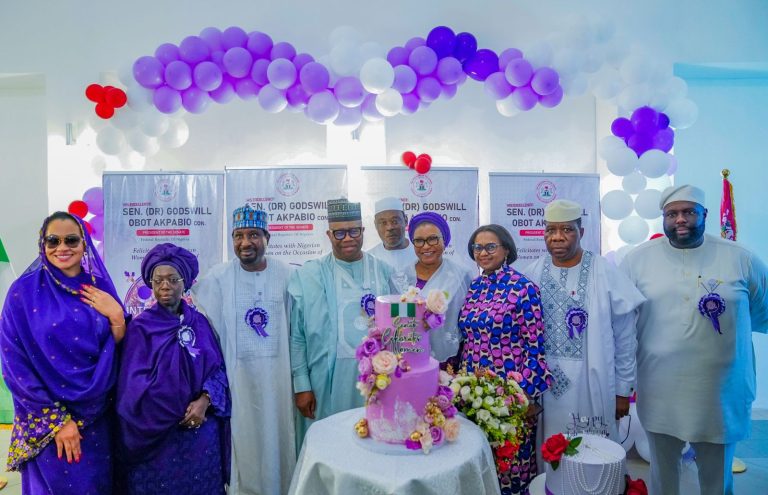
The Senate Thursday joined its House of Representatives counterpart and others worldwide to celebrate women on this year’s, International Day For Women,IWD.
The event is an annual celebration set aside by the United Nations to celebrate women world wide
At plenary, the Senate President, Godswill Akpabio vowed to promote the rights of women
He noted that even though women representation in the Senate is low , but he will continue to do all within his powers to promote the rights of women and girls in the country.
Highlight of the Senate Celebration of the IWD, was the lowering of “The Mace” to enable Senators exit the chamber during plenary to cut the cake .
Speaking,the Senate President said “On behalf of the Senate President and the esteemed members of the Senate, we extend our heartfelt appreciation, acknowledging the unwavering support and invaluable contributions made by Nigerian
women to our great nation, Nigeria”
The Senate also assured that it will make efforts to ensure fair consideration of legislations supporting women’s Rights in Nigeria.
Four Female Senators are among the 109 senators in the 10th session of the Senate of the Federal Republic of Nigeria
They are Senators : Natasha Akpoti Uduaghan, Senator Idiat Adebule, Senator Ipalibo Harry Banigo and Senator Ireti Kingibe
A Brief On IWD:
March 8 has been set aside worldwide to mark the international women’s day.
It has been observed since the early 1900’s – a time of great expansion and turbulence in the industrialized world that saw booming population growth and the rise of radical ideologies.
1908
Great unrest and critical debate was occurring among women. Women’s oppression and inequality were spurring women to become more vocal and active in campaigning for change. Then in 1908, 15,000 women marched through New York City demanding shorter hours, better pay and voting rights.
1909
In accordance with a declaration by the Socialist Party of America, the first National Woman’s Day (NWD) was observed across the United States on February 28. Women continued to celebrate NWD on the last Sunday of February until 1913.
1910
In 1910 a second International Conference of Working Women was held in Copenhagen. A woman named Clara Zetkin (Leader of the ‘Women’s Office’ for the Social Democratic Party in Germany) tabled the idea of an International Women’s Day. She proposed that every year in every country there should be a celebration on the same day – a Women’s Day – to press for their demands. The conference of over 100 women from 17 countries, representing unions, socialist parties, working women’s clubs – and including the first three women elected to the Finnish parliament – greeted Zetkin’s suggestion with unanimous approval and thus International Women’s Day was the result.
1911
Following the decision agreed at Copenhagen in Denmark in 1911, International Women’s Day was honored for the first time in Austria, Denmark, Germany and Switzerland on 19 March. More than one million women and men attended IWD rallies campaigning for women’s rights to work, vote, be trained, to hold public office and end discrimination. However less than a week later on March 25, the tragic ‘Triangle Fire’ in New York City took the lives of more than 140 working women, most of them Italian and Jewish immigrants. This disastrous event drew significant attention to working conditions and labor legislation in the United States that became a focus of subsequent International Women’s Day events. 1911 also saw women’s Bread and Roses campaign.
1913-1914
On the eve of World War I campaigning for peace, Russian women observed their first International Women’s Day on February 23, the last Sunday in February. Following discussions, International Women’s Day was agreed to be marked annually on March 8 that translated in the widely adopted Gregorian calendar from February 23 – and this day has remained the global date for International Women’s Day ever since. In 1914, further women across Europe held rallies to campaign against the war and to express women’s solidarity. For example, in London in the United Kingdom there was a march from Bow to Trafalgar Square in support of women’s suffrage on March 8, 1914. Sylvia Pankhurst was arrested in front of Charing Cross station on her way to speak in Trafalgar Square.
1917
On the last Sunday of February, Russian women began a strike for “Bread and Peace” in response to the death of over 2 million Russian soldiers in World War 1. Opposed by political leaders, the women continued to strike until four days later the Czar was forced to abdicate and the provisional Government granted women the right to vote. The date the women’s strike commenced was Sunday February 23 on the Julian calendar then in use in Russia. This day on the Gregorian calendar in use elsewhere was March 8.
1975
International Women’s Day was marked for a first time by the United Nations in 1975. Then in December 1977, the General Assembly adopted a resolution proclaiming a United Nations Day for Women’s Rights and International Peace to be observed on any day of the year by Member States, in accordance with their historical and national traditions.
1996
The UN announced their first annual theme “Celebrating the past, Planning for the Future” which was followed in 1997 with “Women at the Peace table”, in 1998 with “Women and Human Rights”, in 1999 with “World Free of Violence Against Women”, and so on each year.
2000
By the new millennium, there was little mainstream activity occurring for International Women’s Day in most countries. The world had moved on and, in many spheres, feminism wasn’t a popular topic. Something was needed to re-ignite International Women’s Day giving it the respect it deserves and to raise awareness among the masses. There was urgent work to do – battles had not been won, and gender parity had still not been achieved. There was a strong need to engage the mainstream masses, and to encourage and support collective action.
2001
Following a year of planning and collaborative conversations with various women’s groups, charities and further organizations, the internationalwomensday.com platform was launched with the specific aim of re-energizing the day and inviting mass participation, a focus which continues to this day, by celebrating and making visible the achievements of women, while continuing the call for accelerating gender parity. The IWD website was launched in a pre-social media world as a helpful hub to inspire action – there was no Facebook to connect and mobilize communities; no Eventbrite to publish and promote events; no Instagram, Twitter, LinkedIn or TikTok to galvanize collective action. This was a time when the rise of women was still largely seen as the fall of men. As such, in 2001 the website was launched in a collaborative spirit of providing a free useful hub for encouraging IWD events, sharing information about the day and wider gender issues, and celebrating the achievements of women. The IWD website, which provides useful guidance and resources, adopts an annual campaign theme that is globally relevant for groups and organizations. The campaign theme, one of many around the world, provides a framework and direction for annual IWD activity and takes into account the wider agenda of both celebration, as well as the call to action for gender parity. Campaign themes over the years have each focused on a specific and timely topic that, if more widely understood, may help advance women and forge a more inclusive world. IWD campaigns have included: #InspireInclusion, #EmbraceEquity, #BreakTheBias, #ChooseToChallenge, #EachforEqual, #BalanceforBetter, #PressforProgress, #BeBoldforChange, #PledgeforParity, #MakeItHappen, #TheGenderAgenda, and more. Campaign themes for the global IWD website are collaboratively developed each year with a range of stakeholders and widely adopted worldwide across the mainstream. The IWD website also serves as a significant vehicle for charities, fundraising hefty six figure sums with 100% of donations going direct to charity. The IWD website’s Charities of Choice are the World Association of Girl Guides and Girl Scouts (WAGGGS) since 2007, and Catalyst Inc the global working women’s organization, since 2017. Today, an IWD Charity Alliance is open to female-focused registered charities from around the world.
2011
2011 saw the 100 year centenary of International Women’s Day – with the first IWD event held exactly 100 years ago in 1911 in Austria, Denmark, Germany and Switzerland. In the United States, President Barack Obama proclaimed March 2011 to be “Women’s History Month”, calling Americans to mark IWD by reflecting on “the extraordinary accomplishments of women” in shaping the country’s history. The then Secretary of State, Hillary Clinton, launched the “100 Women Initiative: Empowering Women and Girls through International Exchanges”. In the United Kingdom, celebrity activist Annie Lennox lead a march across one of London’s iconic bridges raising awareness in support for global charity Women for Women International. Further charities such as Oxfam have run extensive IWD activity. Many celebrities and business leaders actively support the day. IWD was finally starting to become more mainstream and inclusive, with groups everywhere participating.
2024 and beyond
The world has witnessed a significant change and attitudinal shift in both women’s and society’s thoughts about women’s equality and emancipation. Many from a younger generation may feel that all the battles have been won for women, while many feminists from the 1970’s and beyond know only too well the longevity and ingrained complexity of patriarchy. With more women in the boardroom, greater equality in legislative rights, and an increased critical mass of women’s visibility as impressive role models in every aspect of life, one could think that women have gained true equality. The unfortunate fact is that women are still not paid equally to that of their male counterparts, women still are not present in equal numbers in business or politics, and globally women’s education, health and the violence against them is worse than that of men. However, great improvements have been made. We do have female astronauts and prime ministers. Albeit, a challenge still in many countries, girls are largely welcomed into university, women can work while balancing the needs of a family, and women can have real choices. And so, each year the world inspires women and celebrates their achievements. IWD is an official holiday in many countries including Afghanistan, Armenia, Azerbaijan, Belarus, Burkina Faso, Cambodia, China (for women only), Cuba, Georgia, Guinea-Bissau, Eritrea, Kazakhstan, Kyrgyzstan, Laos, Madagascar (for women only), Moldova, Mongolia, Montenegro, Nepal (for women only), Russia, Tajikistan, Turkmenistan, Uganda, Ukraine, Uzbekistan, Vietnam, and Zambia. The tradition sees men honoring their mothers, wives, girlfriends, colleagues, etc with flowers and small gifts. In some countries, IWD has the equivalent status of Mother’s Day where children give small presents to their mothers and grandmothers.
Many news websites actively engage in IWD by running ‘Special IWD Features’ in partnership with their clients and doing what they can, whether through controversy or collaboration, to drive visibility and traffic to their female-focused content. The elevation of print and digital content across the world promoting IWD contributes positively to a global dialogue and narrative about women’s equality.
A global web of rich and diverse local activity connects women from all around the world, ranging from political rallies, business conferences, government activities and networking events through to local women’s craft markets, theatrical performances, fashion parades and more. Many global corporations actively support IWD by running their own events and campaigns. For example, on March 8 Google often changes its Google Doodle on its global search pages to honor IWD – and even designates its own annual IWD theme, which for back in 2023 was DareToBe.
Year on year, IWD is certainly a powerful moment increasing in status. So make a difference, think globally and act locally.
All choice of IWD activity is valid, that’s what makes IWD so inclusive.
There’s a space and place for everyone to help fight the good fight. That’s the spirit of abundance.
So make everyday International Women’s Day.
Do your bit to ensure that the future for girls is bright, equal, safe, and rewarding.
Additional reports, courtesy of International women day.com
.”
The United States government has insisted that Nigeria should retain its Country of Particular Concern, CPC, designation, saying the country has not done enough to protect Christians from attacks.
Assistant Secretary of State for African Affairs, Frank Garcia, made this statement on Thursday during a congressional hearing on violence in Nigeria.
Garcia was responding to questions from US Congressman Riley Moore, who asked about the government’s efforts to dismantle militia strongholds and kidnapping camps in the Middle Belt, particularly in Benue and Plateau states.
Moore also raised concerns over the exclusion of the states from the forest guard initiative and delays in deploying 1,000 approved guards to Plateau.
“Before you answer that, we cannot take this CPC designation off of this country. They have not done enough,” Moore said.
Garcia acknowledged the lack of progress, but said Nigeria was taking steps to address the concerns, although they had yet to produce results.
He said the country’s security capacity was still being developed and that deployments were not happening fast enough.
“Unfortunately, the violence has not stopped,” Garcia added, citing continued attacks in Kaduna and Plateau states.
He said the US had provided police training and equipment, expanded intelligence sharing and worked with Nigerian financial institutions to disrupt terrorist financing.
Garcia added that Washington would continue diplomatic engagements and security cooperation to protect vulnerable communities and ensure accountability.
However, the Nigerian government has consistently rejected claims of a “Christian genocide” or targeted religious persecution, maintaining that insecurity affects Nigerians of all faiths.


Liquefied Petroleum Gas, commonly known as cooking gas, has risen significantly, forcing Nigerians to spend more to purchase the product.
The increase comes as depot owners and retailers raised their prices over the past two days.
StockGap increased its depot price by N25 to N1,440 per kilogram. Nigerian Independent Petroleum Company Limited, NIPCO, Mobil (now 11 Plc) and Ardova, on the other hand, sold the product at N1,400 and N1,390 per kilogram, respectively.
Similarly, LPG retail outlets, including Raniol, Juda Oil and Nigerian National Petroleum Company Limited, NNPC, outlets in Abuja and its environs, now dispense cooking gas at between N1,550 and N1,600 per kilogram, up from N1,400 and N1,500.
Micro-LPG dealers sell the product for between N1,700 and N1,800 per kilogram, depending on the location in Abuja.
Earlier, NIPCO’s spokesperson, Taofeek Lawal, had exclusively told DAILY POST that LPG prices could increase further between November and January next year.
The latest price increase means that Nigerians who previously spent N17,500 to refill a 12.5kg cylinder at N1,400 per kilogram will now pay N20,000 at the new rate of N1,600 per kilogram, representing an additional N2,500.
News
2027: Tinubu Must Withdraw ‘All Is Fair in Politics’ Remark, Embrace Peaceful Coexistence — ADC-PCC
The African Democratic Congress Presidential Campaign Council (ADC-PCC) has called on President Bola Ahmed Tinubu to publicly retract his controversial “All Is Fair in Politics” remark, warning that such rhetoric fuels political division, emboldens thugs and poses a grave threat to the nation’s peace and stability.
The ADC-PCC also expressed concern over what it described as the President’s disturbing silence on the conduct of some APC governors and party chieftains who have openly made inflammatory statements and allegedly encouraged political violence.
In a statement signed by its Director of Media and Publicity, Kola Ologbondiyan, the ADC-PCC urged President Tinubu to rise above partisan interests and demonstrate the statesmanship expected of a national leader, citing former President Goodluck Jonathan’s unequivocal declaration that no presidential ambition was worth the blood of any Nigerian.
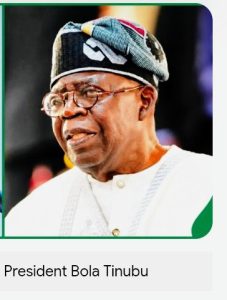
The Council described as shocking the President’s failure to condemn the growing wave of political violence, noting that, through his spokesman, Mr. Bayo Onanuga, the Presidency had instead chosen to caution opposition parties while shielding those allegedly responsible for violence within the ruling APC.
“President Tinubu cannot claim to desire peace when his own words provide cover for violence.
“‘All Is Fair in Politics’ is not the language of a Head of State. It is the language of political desperation and an open licence for thuggery, ballot snatching, intimidation and bloodshed.
“From Edo to Cross River, Gombe to Lagos, and Kebbi to Kaduna, Nigerians have witnessed attacks on opposition gatherings, destruction of campaign materials and the brutalisation of innocent supporters, allegedly by APC-sponsored thugs.
“Yet, Mr. President has not considered it necessary to call his governors and party members to order.
“Instead, the Presidency has resorted to diversionary tactics, blaming victims and preaching restraint to the opposition while members of the ruling party are accused of unleashing violence across the country,” the statement said.
The ADC-PCC challenged President Tinubu to explain why his condemnation of political violence appears directed at the opposition rather than members of his own party.
It asked: “Why has Mr. President refused to condemn APC governors who openly threaten opposition supporters? Why has he remained silent over public incitement by officials of his party? Why is his anger always directed at the opposition and never at those within his own political fold?”
The Council maintained that the ADC remains committed to peaceful, issue-based political engagement, insisting that its campaign is focused on addressing the country’s pressing challenges, including hunger, insecurity, unemployment, corruption and what it described as the failures of the Tinubu administration.
It accused the APC of resorting to violence because it had little to offer Nigerians in terms of credible solutions to the country’s problems.
Consequently, the ADC-PCC demanded that President Tinubu immediately and publicly withdraw his “All Is Fair in Politics” remark, condemn and call to order APC governors and party officials accused of inciting violence, and direct security agencies to protect all Nigerians impartially rather than allow them to become instruments of intimidation and oppression against opposition parties.
” Nigeria belongs to all of us. No political ambition is worth the blood of any Nigerian.
“If former President Goodluck Jonathan could make that profound declaration in 2015, President Tinubu has no excuse not to say so and demonstrate the sincerity of his commitment to peace in 2026.
“The ADC will not be intimidated. We will continue to campaign peacefully, and in 2027, Nigerians will have the opportunity to vote for competence, integrity and a new beginning,” the statement added.





-
News5 days ago
IGP Disu decorates 29 senior police officers with new ranks….charges them on professionalism, integrity,others
-
News4 days ago
Airstrikes kill 40 ISWAP terrorists in Borno
-
News4 days ago
We finally received CTC Of Lifu’s Judgement, without Atiku, Other Candidates Names Mentioned—Senator Melaye
-
News4 days ago
2026 U-17 WWC: Tinubu rewards each Flamingos player with ₦100m
-
News5 days ago
How Federal High Court Chief judge is beign blackmailed with EFCC, CCB- ADC Campaign Council
-
News2 days ago
Crowd Shouts ‘Bamayi’ at Tinubu, pelt convoy in Abuja
-
News5 days ago
Oil slump opens door to cheaper petrol for Nigerians …as Brent hits lowest since August
-
News4 days ago
2027: APC sacks kindergarteen Campaign Spokespersons…..Yari, Alake, Idris, now to speak for council