
News
Interview: We Have Minority Caucus Agenda To Guide Opposition Role In House Of Reps- Chinda

Minority Leader of the House of Representstives and member representing Obio/Akpor Constituency of Rivers State, Honourable Kingsley Chinda, spoke to members of the National Assembly New Media Forum, the Online journalists attached to the National Assembly on some critical national issues, what the opposition party is doing to checkmate the Majority and ruling party, among others in a stormy session . Excerpts from TheBigeye.ng
Leader Sir, there are insinuations that the Minority in the 10th House of Representatives are not providing the needed and credible Opposition as should be their statutory role in parliament?

Well, it clearly depends on the angle you’re looking at it from. You know that the populace, the people want to hear when you chide any leader or leadership in it’s agenda, it will make news about the 10th assembly minority leadership.
We sat down and looked at it critically and decided that the minority position should be one that’ll add, and not just as a watchdog, but also provide credible alternatives. And then it should be a group of people that are deep thinkers. And whatever we do, our interest should be the interest of Nigeria first and foremost, not a personal interest, not for purposes of popularity, not protecting interest. And so, we have also come up with what we called Minority Caucus Agenda, which is a guide to us on what kind of opposition we should present before the House.
Ever since this government came on board. You understand that we have been grappling with economic issues, mainly survival for Nigerians with the removal of the fuel subsidy and the fiscal policy that came on board. And so for us, on the floor of the parliament, we have not opposed most of the programmes that they offer. Why? Most of these programmes are programmes that has to do with palliative with cushioning the effect of removal of subsidy on Nigerians and we cannot be seen to be opposing such programmes.
But our position has been on implementation of those programmes; how well are they implemented? What is the impact on Nigerians? Are we actually feeling the palliatives? Like I said on the floor of the House, this palliative should actually to a reasonable extent cushion the feelings of Nigerians.
So for the opposition, to answer your question clearly, it’s that we have provided credible opposition but it might be a little bit different from what you used to hear. It will not be noise without action, it will be opposition that will be effective, that will provide an alternative and at the end of the day, as politicians what do we hope to achieve sincerely, to build a better society? That’s our ultimate goal.
How has the Sectoral engagement been in the House?
Well, so far the sectoral engagement has taken another dimension. Like I said, I was in the last assembly when we started sectoral engagements and sincerely we felt that the ministers were given 15 minutes of fame on the floor of the Parliament, and so we started to tell the leadership that that should not be the intention. We should go deep in engaging whoever appears before the Parliament. And then we must have some take home for Nigerians.
The engagement with the Service Chiefs, you saw how deep the questions were, how free people were allowed to clearly express themselves, because we know that, that’s the security sector. It’s a very delicate part of our government and our society. And that’s why we had to go into an Executive Session for them to tell us truly what is happening because every week, we have not less than two, three motions on security on the floor of the parliament. And every week we observe one minute silence for those who have been killed, who ordinarily would have been alive today. We are worried with that, and that’s why we had to take them on very deep issues, which we cannot throw open to the public. But I will tell you that it was very successful. Some of the answers were satisfactory. The areas that we disagreed with, we also made them understand that for this, we don’t agree.
I believe that if we continue with this kind of engagement, there will be a difference. The service teams will actually understand that Nigerians are interested in what is happening and the next time they will come to the house for further engagement, we expect them to tell us the report that as the last time this was where we were and today this is where we are. These are the improvements we have made. So I will say that it was a very, very big success. It was completely different from what security boots used to be.
On local content, there’s a bill before the House. Don’t you think we need to leverage on Ajaokuta steel?
It will be difficult for us to develop without developing the steel sector because every infrastructure will depend heavily on steel and so as long as you continue to import steel, it will be difficult to develop local industries, car manufacturing industries, and several aspects of construction you requested. And so, attention will be given to that sector very strongly, as much as attention will be given to power. Now back to the bill. I pray that that bill sees the light of day
If you look at the oil sector today, some of the oil companies are beginning to backtrack. Why? , the local content is bringing in our locals into that field. Nigerians are beginning to participate, they are beginning to be big players in the oil sector because of the local content. What we are saying in that, the gain made in the oil sector, there is a need for us to start early to make the same gain in other sectors – ICT, Agriculture, construction and every facet of our economy. Encourage Nigerians to be big players in these sectors, not just to import but build manpower. But technology, and even the hardware and software. If we say a percentage of this must be localised or ABC must be given to locals. It means that we must begin to develop our local capacity from day one.
The mining that’s going on in some parts of northern Nigeria today, if we develop it, I’m sure that very soon we will forget that we had oil because you have precious stones that are more valuable than oil that will fetch the country more money than oil.
Well, they’re all lying there. And because they are not organised today they are being stolen. You have people come from outside the country to illegally mine them. The cost is of no value to the country. So what we are trying to say is not just myself, you agree that that bill was sponsored by myself and 38 other members and I can tell you that more members are even interested in seeing that it passed into law. And my prayer is once it is passed and implementation starts, we’ll see massive development in the country. We’ll also see issues of employment generation. I mean, the crisis will have to do with the security issues and that to me if part of the reasons is that people are unemployed. People are hungry, it’s poverty which leads to some of this crisis.
What if you provide a proper avenue for people to generate money? I don’t think that anybody will want to go into crime if you have the opportunity of making money legitimately. And so that is one of the things that this bill will do for this country. However, it will be open to public hearing.
Former President Goodluck Jonathan has called for the scraping of off-cycle elections, what is your reaction on this ?
There is already a bill that we’re processing to unify the electoral system. So I agree with the former President Goodluck Jonathan. The off-cycle election has not been helpful to us. If you look at it critically, it is just for the benefit of the individual involved. Not just the larger society. You have a situation where you begin to plan for elections almost all year round. And if we continue that way Nigeria will continue to be in election in the next four years, because we expect that we’ll have more off-cycle elections as elections are being nullified by the judiciary and fresh elections conducted.
Recently, some people were sworn in. So if we go by that trend, what it means is that they will come after us. So I think that the proper thing for us to do is both the legislature and the executive, at any point in time that you are sworn in, at the end of the term, everybody goes and the election is conducted. So I agree with Jonathan that there is a need for us to look inwards. Let us completely scrap off-cycle elections.
You said the House is working on harmonising elections. But we all know that we copied from the American system and in America, they have what is called Midterm elections, is the bill incorporating something similar?
Well, that bill is still being crafted in the office. So I don’t want to start wading into the details at this stage until it comes on the floor of the House. But I can assure that most of the issues you raised are actually the concern that the bill intends to address. Of course, you know that legislation is work in progress, it cannot be perfect – there’s room for amendment. But it’s in progress. We’re crafting the amendments to the Electoral Act. And that is one area that is being considered once it is laid before the house for first reading, second reading, then we’ll go into the nitty gritty, okay.
On Research and Education, What is there in your Legislative Agenda, How does the House intend to make both items attractive and affordable?
But clearly education is not cheap. It’s not cheap. As a person, I believe, yes, that everybody should have access to education. But I also don’t believe that the quality of education can improve with the meagre budget given to it. It’s not possible. Let me give you an example. We all go out of this country to get education elsewhere, where we feel we can get a better education. How much do you pay for it? What is the cost of school fees in London? What is the cost in Canada? How much do we pay to send our children to Ghana? If you pay the same in Nigeria, you will get the same quality education. But ordinarily, when you provide cheap education you are likely to get cheap knowledge because you need money to equip the laboratories and bring them up to standard. So for me from the minority end, perhaps before the budget is fully debated, we’ll need to look at every sector, look at internationally accepted standards for education, for health and all that and see how well Nigeria is completely compliant with them.
At Tuesday plenary , the Chief of Defence Staff blamed the judiciary for insecurity in Nigeria, How do you situate this ?
I can’t blame the Judiciary for the insecurity but what I keep saying is that all of us have contributed in one way or the other, all of us, including the legislature, so it will be wrong to point accusing fingers at one person. Now I will give you an example. If you are detained today for any crime, I’m sure that your colleagues, if they think that I have the contact to help you, will come to me to persuade me to help. And if the judge is perhaps my brother and I cry to him, he will help. Then tomorrow, you will blame the judge, you forgot about those who came to me, you forgot about myself who went to him. So it’s a cyclical motive. And that’s why I keep saying that, look, we all need to be properly enlightened. We all need to look at society first. But if I have in mind that what you have done is wrong then you will be punished just to deter others from doing the same thing. When we set you free, other members of the association will also develop some level of impunity to say if it happens, there will be people who run around for me. So you can’t blame the Judiciary for insecurity. No, that would be completely wrong.
The United States government has insisted that Nigeria should retain its Country of Particular Concern, CPC, designation, saying the country has not done enough to protect Christians from attacks.
Assistant Secretary of State for African Affairs, Frank Garcia, made this statement on Thursday during a congressional hearing on violence in Nigeria.
Garcia was responding to questions from US Congressman Riley Moore, who asked about the government’s efforts to dismantle militia strongholds and kidnapping camps in the Middle Belt, particularly in Benue and Plateau states.
Moore also raised concerns over the exclusion of the states from the forest guard initiative and delays in deploying 1,000 approved guards to Plateau.
“Before you answer that, we cannot take this CPC designation off of this country. They have not done enough,” Moore said.
Garcia acknowledged the lack of progress, but said Nigeria was taking steps to address the concerns, although they had yet to produce results.
He said the country’s security capacity was still being developed and that deployments were not happening fast enough.
“Unfortunately, the violence has not stopped,” Garcia added, citing continued attacks in Kaduna and Plateau states.
He said the US had provided police training and equipment, expanded intelligence sharing and worked with Nigerian financial institutions to disrupt terrorist financing.
Garcia added that Washington would continue diplomatic engagements and security cooperation to protect vulnerable communities and ensure accountability.
However, the Nigerian government has consistently rejected claims of a “Christian genocide” or targeted religious persecution, maintaining that insecurity affects Nigerians of all faiths.

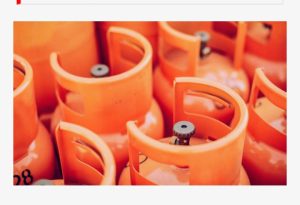
Liquefied Petroleum Gas, commonly known as cooking gas, has risen significantly, forcing Nigerians to spend more to purchase the product.
The increase comes as depot owners and retailers raised their prices over the past two days.
StockGap increased its depot price by N25 to N1,440 per kilogram. Nigerian Independent Petroleum Company Limited, NIPCO, Mobil (now 11 Plc) and Ardova, on the other hand, sold the product at N1,400 and N1,390 per kilogram, respectively.
Similarly, LPG retail outlets, including Raniol, Juda Oil and Nigerian National Petroleum Company Limited, NNPC, outlets in Abuja and its environs, now dispense cooking gas at between N1,550 and N1,600 per kilogram, up from N1,400 and N1,500.
Micro-LPG dealers sell the product for between N1,700 and N1,800 per kilogram, depending on the location in Abuja.
Earlier, NIPCO’s spokesperson, Taofeek Lawal, had exclusively told DAILY POST that LPG prices could increase further between November and January next year.
The latest price increase means that Nigerians who previously spent N17,500 to refill a 12.5kg cylinder at N1,400 per kilogram will now pay N20,000 at the new rate of N1,600 per kilogram, representing an additional N2,500.
News
2027: Tinubu Must Withdraw ‘All Is Fair in Politics’ Remark, Embrace Peaceful Coexistence — ADC-PCC
The African Democratic Congress Presidential Campaign Council (ADC-PCC) has called on President Bola Ahmed Tinubu to publicly retract his controversial “All Is Fair in Politics” remark, warning that such rhetoric fuels political division, emboldens thugs and poses a grave threat to the nation’s peace and stability.
The ADC-PCC also expressed concern over what it described as the President’s disturbing silence on the conduct of some APC governors and party chieftains who have openly made inflammatory statements and allegedly encouraged political violence.
In a statement signed by its Director of Media and Publicity, Kola Ologbondiyan, the ADC-PCC urged President Tinubu to rise above partisan interests and demonstrate the statesmanship expected of a national leader, citing former President Goodluck Jonathan’s unequivocal declaration that no presidential ambition was worth the blood of any Nigerian.
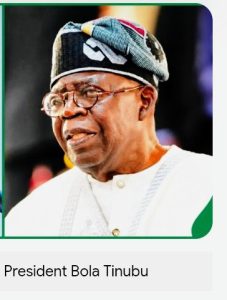
The Council described as shocking the President’s failure to condemn the growing wave of political violence, noting that, through his spokesman, Mr. Bayo Onanuga, the Presidency had instead chosen to caution opposition parties while shielding those allegedly responsible for violence within the ruling APC.
“President Tinubu cannot claim to desire peace when his own words provide cover for violence.
“‘All Is Fair in Politics’ is not the language of a Head of State. It is the language of political desperation and an open licence for thuggery, ballot snatching, intimidation and bloodshed.
“From Edo to Cross River, Gombe to Lagos, and Kebbi to Kaduna, Nigerians have witnessed attacks on opposition gatherings, destruction of campaign materials and the brutalisation of innocent supporters, allegedly by APC-sponsored thugs.
“Yet, Mr. President has not considered it necessary to call his governors and party members to order.
“Instead, the Presidency has resorted to diversionary tactics, blaming victims and preaching restraint to the opposition while members of the ruling party are accused of unleashing violence across the country,” the statement said.
The ADC-PCC challenged President Tinubu to explain why his condemnation of political violence appears directed at the opposition rather than members of his own party.
It asked: “Why has Mr. President refused to condemn APC governors who openly threaten opposition supporters? Why has he remained silent over public incitement by officials of his party? Why is his anger always directed at the opposition and never at those within his own political fold?”
The Council maintained that the ADC remains committed to peaceful, issue-based political engagement, insisting that its campaign is focused on addressing the country’s pressing challenges, including hunger, insecurity, unemployment, corruption and what it described as the failures of the Tinubu administration.
It accused the APC of resorting to violence because it had little to offer Nigerians in terms of credible solutions to the country’s problems.
Consequently, the ADC-PCC demanded that President Tinubu immediately and publicly withdraw his “All Is Fair in Politics” remark, condemn and call to order APC governors and party officials accused of inciting violence, and direct security agencies to protect all Nigerians impartially rather than allow them to become instruments of intimidation and oppression against opposition parties.
” Nigeria belongs to all of us. No political ambition is worth the blood of any Nigerian.
“If former President Goodluck Jonathan could make that profound declaration in 2015, President Tinubu has no excuse not to say so and demonstrate the sincerity of his commitment to peace in 2026.
“The ADC will not be intimidated. We will continue to campaign peacefully, and in 2027, Nigerians will have the opportunity to vote for competence, integrity and a new beginning,” the statement added.




-
News5 days ago
IGP Disu decorates 29 senior police officers with new ranks….charges them on professionalism, integrity,others
-
News4 days ago
Airstrikes kill 40 ISWAP terrorists in Borno
-
News4 days ago
We finally received CTC Of Lifu’s Judgement, without Atiku, Other Candidates Names Mentioned—Senator Melaye
-
News4 days ago
2026 U-17 WWC: Tinubu rewards each Flamingos player with ₦100m
-
News5 days ago
How Federal High Court Chief judge is beign blackmailed with EFCC, CCB- ADC Campaign Council
-
News2 days ago
Crowd Shouts ‘Bamayi’ at Tinubu, pelt convoy in Abuja
-
News5 days ago
Oil slump opens door to cheaper petrol for Nigerians …as Brent hits lowest since August
-
News4 days ago
ADC Crisis: Court Rejects Nafiu Bala’s Resignation Letter, Says It’s Fake