

News
Henceforth FG,States To Share Payment of Electricity Subsidy —Tinubu

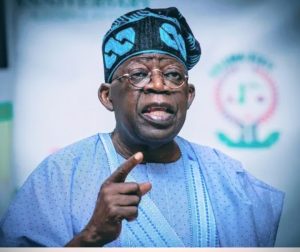
President Bola Ahmed Tinubu has directed that henceforth States and the federal government are to bear the cost of electricity subsidy
Vanguard gathered that funding for payment of the subsidy will now come from Power Assistance Consumers Fund, PCAF.
PCAF is a government-backed financial pool designed to subsidise electricity bills for low-income and vulnerable households to ensure affordability in the face of rising tariffs, thus improving energy access while stabilising the electricity sector by funding targeted support, instead of universal subsidies.
More than 18 states are currently operating their regulatory agencies, with others waiting in the wings to do same.
The states include Lagos, Ondo, Osun, Ekiti, Edo, Delta, Bayelsa, Akwa Ibom, Cross River, Abia, Anambra, Imo, Kogi, Niger, Nasarawa, Plateau, Gombe and Jigawa

Director-General of the Budget Office of the Federation, BoF, Mr. Tanimu Yakubu, who disclosed this at the opening of the 2026 Post-Budget Preparation using Government Integrated Financial Management System, GIFMIS, workshop, in Abuja, yesterday, said state governments that enjoyed the political benefits of electricity subsidy must also share in filling the gap created by subsidy and must not be left to the Federal Government alone.
He said in an address read on his behalf by the Director of Expenditure Social, Mr. Yusuf Muhammed: “Mr. President has directed that we operationalise a clearer framework to share the cost of electricity across the federation, so the burden is not treated as an open-ended fiscal residual. I mean federal residual. Let me be direct.
“If you want a stable power sector, we must pay for the choices we make. When tariffs are held low cost, a gap is created. That gap is a subsidy, and a subsidy is a bill.
“In 2026, we will stop pretending that this bill can be left to the Federal Government alone, especially where the policy choice or the political benefit is shared across tiers of government. Mr. President directed us to invoke the electricity sector legal framework to make burden-sharing practical and transparent.
“This means subsidy costs must be explicit, tracked and funded, so they do not return as arrears liquidity crisis or hidden liabilities in the market. It also means that if any tier of government chooses affordability intervention, the responsibility must be clear, agreed and enforceable. This is not punishment. It is an alignment.
“When everyone carries a fair share of the cost, everyone also has an incentive to support cost effective, efficiency- targeted protection for the vulnerable, and empower market that can actually deliver for MDAs.
“The implication is simple, makes subsidies-related cost visible in your planning and submission. Do not push liabilities into the market as arrears or unfunded commitment. Support transparent rule-based attribution and financing of affordability decisions.”
The D-G also said the President directed the BoF and the MDAs to enhance the dynamism of fiscal rules through a review of the Fiscal Responsibility Framework.
“Fiscal rules are not a slogan, they are the guardrails of government. Without guardrails, spending becomes impulsive, debt becomes casual, and the budget becomes a statement of intent, rather than a tool of delivery.
“But rules must also be smart. They must respond to volatility without collapsing under pressure. That is why the 2026 direction is not to abandon rules, but to modernise them, so they work in today’s Nigeria.
“Mr. President’s directive is to review the Fiscal Responsibility Framework to make it more dynamic and more enforceable. That means clearer fiscal anchors, better-defined escape clauses for genuine shocks, and a credible path back to compliance when those clauses are used.
“It means stronger reporting, tighter discipline around contingent liabilities, and a firmer link between the medium-term framework and annual appropriations.
‘’For MDAs, this changes the conversation. You will not only be asked what you want to spend. You will be asked how it fits the fiscal rules, how it affects sustainability, and what measurable results it will deliver,’’ he said.
According to the D-G, in 2026, capital proposals must be delivery-ready and where appropriate, they must be finance-ready.
He said: “A long list of projects is not a development strategy. It is often a map of disappointment. What citizens feel is delivery —completed roads, reliable power, functional schools, working hospitals.
“So in 2026, we are moving decisively from naming projects to financing and delivering projects. This is where project financing becomes central. It is not a buzzword, it is a discipline. It means projects must be properly scoped, costed, sequenced and packaged to attract the right mix of funding—budget, PPPs, blended finance, guarantees, and counterpart resources where relevant.
“It means readiness: designs, approvals, procurement strategy, and an implementation time-table. It means bankability: a credible revenue or service-payment logic, risk allocation, and clear governance.
“It means prioritisation: fewer projects, better funded, better delivered. If we do this, the budget becomes a pipeline of completion, not a catalogue of unfinished work. That is the project-financing mindset Mr. President wants embedded across MDAs in 2026.”
NGF, state electricity regulatory commissions review decision
Reacting to the development yesterday, the Director of Media and Communications, Nigerian Governors’ Forum, NGF, Yunusa Abdullahi, said: ‘’We are reviewing the context and content of the information. We will not be making further comments on it.’’
Similarly, the State Electricity Regulatory Commissions, SERCs, in Lagos, Imo, Enugu, Ekiti, Oyo, Ondo, Edo, Niger, and Anambra yesterday held an emergency virtual meeting to review the situation and decide on appropriate steps to take.
A member, who pleaded to be anonymous, said: “We cannot make our official position known immediately. We are hearing it for the first time and currently meeting to review it. We need to understand the issue before responding or reacting to it.
“The government has taken appropriate steps in recent times to stimulate the development of the sector by deregulating activities, making the states to play active roles. But we need to interrogate the current decision and understand the implications on not only the states but also the entire power sector.”
States should pay subsidy as active partners — CPPE
On his part, Dr. Muda Yusuf, Chief executive officer, Centre for the Promotion of Private Enterprises, CPPE, said states should be ready to play active roles, including bearing subsidy burden as active stakeholders in the sector.
He said: “This model is not different from the model we had with the first subsidy. You know the first subsidy, all the states and local governments that had anything to do with FAAC allocation are paying for it because the NNPC which was supposed to be remitting to the federation account was not remitting, so all the states were paying for it.
“When the first subsidy stopped, NNPC was able to remit a lot more and the states were getting more revenue so I believe the same scenario is about to play out, with regard to electricity subsidy.
“The numbers are getting bigger and bigger by the day. The last time we were told that the GENCOs and the gas suppliers were owed about five trillion naira. The Federal Government had to issue a bond to that effect, that’s what we are seeing here and that was as at June or September last year.
Between then and now the figures will have gone up. So a subsidy regime that’s obviously difficult for the Federal Government alone to continue to carry is one that is not so sustainable but it’s not politically feasible to tamper with that subsidy regime as we speak.
“This is because the citizens are yet to recover from earlier reforms and the implications on their real income and on their welfare.
“We are in a pre-election year, so this is another cross the government will have to carry and they are closely connected from those who are supplying gas to those who are generating, down to those who are transmitting, as well as those distributing.
“This is a strongly linked and connected chain. And once there’s a break in the chain, electricity system goes down.
“However, it’s a sector that needs more rigorous reform, more fundamental reforms. But I am not sure those reforms can move as quickly as we desire, particularly at a time like this.
“This is a major policy concern. But for me, I think that decision is almost inevitable, given the rate at which electricity subsidy has been growing, because all the players have been talking about cost-reflective tariff and all of that, but I don’t think that is feasible at this time. That is a challenge.”
This is a big fiscal, political shift — Prof Iledare
Similarly, FUPRE Energy Business School and Executive Director, Emmanuel Egbogah Foundation, Prof. Wumi Iledare, said: “This is a big fiscal and political shift. It’s basically saying electricity subsidy is no longer just a federal burden, states must now share the cost.
“That fits the new electricity reforms where states have more power-sector authority, but it raises tough questions.
“How will the sharing formula work? Poorer states can’t carry the same load as richer ones. Can states even afford this without creating new debts? And what incentives does this create?
“If states must co-pay, they will likely push faster toward realistic tariffs, targeted subsidies, and local power investments.
“So this could either deepen the crisis or finally force more discipline and accountability in electricity financing. The outcome depends on whether the framework is transparent and rules-based, not political bargaining.”
Experts doubt FG’s power to make states pay electricity subsidies
Also speaking on the issue, a legal practitioner and Lead Consultant at Sage Consulting on Power Sector Advocacy and Advisory, Mr. Bode Fadipe, expressed reservations about how the policy will be enforced, noting that electricity subsidy remained a federal decision.
Fadipe queried whether the Federal Government has the constitutional authority to dictate how states should deploy their financial resources.
He said: “That is a serious issue when you are asking states to take on part of the subsidy or contribute to electricity subsidy payments. What will be the basis? Will it be based on what states consume or what their indigenes consume?
“It is a little hazy to start conjecturing how states will handle this when it is not their facility that conveys the energy we are talking about. It is unclear how state governments can now assume such responsibility.
“Perhaps when we see the policy and the implementation guidelines, it will become clearer what direction the Federal Government intends to take.
“But does the Federal Government have the right to tell states how to spend their money? These are fundamental issues that need to be addressed.”
Reflecting on the controversy surrounding attempts by Enugu Electricity Regulatory Commission, EERC, to set electricity tariffs last year, Fadipe noted that the Federal Government still controls the wholesale electricity market.
He said: “The wholesale market remains a federal government market. When electricity gets to the distribution level and the question arises, how much did State A or State B consume, or how much did the Federal Capital Territory consume, and the decision is taken that states should pay 10 or 20 per cent, it would have to be voluntary.
“It cannot be by federal directive. What the Federal Government is concerned about at the wholesale level is that its money is recovered. Who pays what should be immaterial to it.
“The Enugu issue is very clear. Enugu could not ask for a subsidy on a product it does not control. If it wants to do so, then it must be prepared to pay the differential arising from that decision.”
An electricity market expert, Lanre Elatuyi, said the Federal Government can only achieve such a policy through direct deductions from states’ allocations via the Federation Account Allocation Committee, FAAC.
However, Elatuyi warned that this approach could lead to conflict, as states will need accurate data on the volume of electricity consumed within their jurisdictions.
“FAAC deductions are one way of implementing this, and I believe it is fair for states to also contribute to electricity subsidy payments. The level of debt in the power sector has shown that the Federal Government alone can no longer shoulder the subsidy burden. “States can decide the percentage of subsidy they are willing to pay, especially since the Electricity Act empowers them to establish and regulate their own electricity markets,” he added.

The United States government has insisted that Nigeria should retain its Country of Particular Concern, CPC, designation, saying the country has not done enough to protect Christians from attacks.
Assistant Secretary of State for African Affairs, Frank Garcia, made this statement on Thursday during a congressional hearing on violence in Nigeria.
Garcia was responding to questions from US Congressman Riley Moore, who asked about the government’s efforts to dismantle militia strongholds and kidnapping camps in the Middle Belt, particularly in Benue and Plateau states.
Moore also raised concerns over the exclusion of the states from the forest guard initiative and delays in deploying 1,000 approved guards to Plateau.
“Before you answer that, we cannot take this CPC designation off of this country. They have not done enough,” Moore said.
Garcia acknowledged the lack of progress, but said Nigeria was taking steps to address the concerns, although they had yet to produce results.
He said the country’s security capacity was still being developed and that deployments were not happening fast enough.
“Unfortunately, the violence has not stopped,” Garcia added, citing continued attacks in Kaduna and Plateau states.
He said the US had provided police training and equipment, expanded intelligence sharing and worked with Nigerian financial institutions to disrupt terrorist financing.
Garcia added that Washington would continue diplomatic engagements and security cooperation to protect vulnerable communities and ensure accountability.
However, the Nigerian government has consistently rejected claims of a “Christian genocide” or targeted religious persecution, maintaining that insecurity affects Nigerians of all faiths.


Liquefied Petroleum Gas, commonly known as cooking gas, has risen significantly, forcing Nigerians to spend more to purchase the product.
The increase comes as depot owners and retailers raised their prices over the past two days.
StockGap increased its depot price by N25 to N1,440 per kilogram. Nigerian Independent Petroleum Company Limited, NIPCO, Mobil (now 11 Plc) and Ardova, on the other hand, sold the product at N1,400 and N1,390 per kilogram, respectively.
Similarly, LPG retail outlets, including Raniol, Juda Oil and Nigerian National Petroleum Company Limited, NNPC, outlets in Abuja and its environs, now dispense cooking gas at between N1,550 and N1,600 per kilogram, up from N1,400 and N1,500.
Micro-LPG dealers sell the product for between N1,700 and N1,800 per kilogram, depending on the location in Abuja.
Earlier, NIPCO’s spokesperson, Taofeek Lawal, had exclusively told DAILY POST that LPG prices could increase further between November and January next year.
The latest price increase means that Nigerians who previously spent N17,500 to refill a 12.5kg cylinder at N1,400 per kilogram will now pay N20,000 at the new rate of N1,600 per kilogram, representing an additional N2,500.
News
2027: Tinubu Must Withdraw ‘All Is Fair in Politics’ Remark, Embrace Peaceful Coexistence — ADC-PCC
The African Democratic Congress Presidential Campaign Council (ADC-PCC) has called on President Bola Ahmed Tinubu to publicly retract his controversial “All Is Fair in Politics” remark, warning that such rhetoric fuels political division, emboldens thugs and poses a grave threat to the nation’s peace and stability.
The ADC-PCC also expressed concern over what it described as the President’s disturbing silence on the conduct of some APC governors and party chieftains who have openly made inflammatory statements and allegedly encouraged political violence.
In a statement signed by its Director of Media and Publicity, Kola Ologbondiyan, the ADC-PCC urged President Tinubu to rise above partisan interests and demonstrate the statesmanship expected of a national leader, citing former President Goodluck Jonathan’s unequivocal declaration that no presidential ambition was worth the blood of any Nigerian.
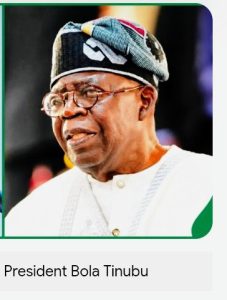
The Council described as shocking the President’s failure to condemn the growing wave of political violence, noting that, through his spokesman, Mr. Bayo Onanuga, the Presidency had instead chosen to caution opposition parties while shielding those allegedly responsible for violence within the ruling APC.
“President Tinubu cannot claim to desire peace when his own words provide cover for violence.
“‘All Is Fair in Politics’ is not the language of a Head of State. It is the language of political desperation and an open licence for thuggery, ballot snatching, intimidation and bloodshed.
“From Edo to Cross River, Gombe to Lagos, and Kebbi to Kaduna, Nigerians have witnessed attacks on opposition gatherings, destruction of campaign materials and the brutalisation of innocent supporters, allegedly by APC-sponsored thugs.
“Yet, Mr. President has not considered it necessary to call his governors and party members to order.
“Instead, the Presidency has resorted to diversionary tactics, blaming victims and preaching restraint to the opposition while members of the ruling party are accused of unleashing violence across the country,” the statement said.
The ADC-PCC challenged President Tinubu to explain why his condemnation of political violence appears directed at the opposition rather than members of his own party.
It asked: “Why has Mr. President refused to condemn APC governors who openly threaten opposition supporters? Why has he remained silent over public incitement by officials of his party? Why is his anger always directed at the opposition and never at those within his own political fold?”
The Council maintained that the ADC remains committed to peaceful, issue-based political engagement, insisting that its campaign is focused on addressing the country’s pressing challenges, including hunger, insecurity, unemployment, corruption and what it described as the failures of the Tinubu administration.
It accused the APC of resorting to violence because it had little to offer Nigerians in terms of credible solutions to the country’s problems.
Consequently, the ADC-PCC demanded that President Tinubu immediately and publicly withdraw his “All Is Fair in Politics” remark, condemn and call to order APC governors and party officials accused of inciting violence, and direct security agencies to protect all Nigerians impartially rather than allow them to become instruments of intimidation and oppression against opposition parties.
” Nigeria belongs to all of us. No political ambition is worth the blood of any Nigerian.
“If former President Goodluck Jonathan could make that profound declaration in 2015, President Tinubu has no excuse not to say so and demonstrate the sincerity of his commitment to peace in 2026.
“The ADC will not be intimidated. We will continue to campaign peacefully, and in 2027, Nigerians will have the opportunity to vote for competence, integrity and a new beginning,” the statement added.





-
News5 days ago
IGP Disu decorates 29 senior police officers with new ranks….charges them on professionalism, integrity,others
-
News4 days ago
Airstrikes kill 40 ISWAP terrorists in Borno
-
News4 days ago
We finally received CTC Of Lifu’s Judgement, without Atiku, Other Candidates Names Mentioned—Senator Melaye
-
News4 days ago
2026 U-17 WWC: Tinubu rewards each Flamingos player with ₦100m
-
News5 days ago
How Federal High Court Chief judge is beign blackmailed with EFCC, CCB- ADC Campaign Council
-
News5 days ago
Oil slump opens door to cheaper petrol for Nigerians …as Brent hits lowest since August
-
News2 days ago
Crowd Shouts ‘Bamayi’ at Tinubu, pelt convoy in Abuja
-
News5 days ago
Oil price fall: We ‘ll take appropriate action against marketers, petrol stations over unfair practices- FCCPC