
News
FG Granting Licences To Importers Of Dirty Fuel

……As Dangote Accusses IOCs Of Frustrating
Vice President of Dangote Oil and Gas Industries Limited, Devakumar Edwin, has accused a federal government regulatory agency, the Nigerian Midstream and Downstream Petroleum Regulatory Authority of granting licences indiscriminately to marketers to import dirty refined products into the country.
He also alleged that International Oil Companies in Nigeria were in the bid of frustrating the survival of the new Dangote Oil Refinery and Petrochemicals.
Edwin said the IOCs were “deliberately and willfully frustrating” the refinery’s efforts to buy local crude by hiking the cost above the market price, thereby forcing the refinery to import crude from countries as far as the United States, with its attendant high costs.
He spoke to journalists at a one-day training programme organised by the Dangote Group on Friday, where he also accused the Nigerian Midstream and Downstream Petroleum Regulatory Authority of granting licences indiscriminately to marketers to import dirty refined products into the country.
Edwin recalled that the Federal Government issued 25 licences for the construction of refineries in Nigeria, but only the Dangote Group delivered on its promise, calling therefore on the Nigerian government to support the refinery
The vice president explained that more than 3.5 billion litres of diesel and aviation fuel had been exported to Europe by the refinery in the past few months, representing
about 90 per cent of its production.
He said , “The Federal Government issued 25 licences to build refineries and we are the only one that delivered on our promise. In effect, we deserve every support from the government. It is good to note that from the start of production, more than 3.5 billion litres, which represents 90 per cent of our production, have been exported. We are calling on the Federal Government and regulators to give us the necessary support to create jobs and prosperity for the nation,” Edwin stated.
He added that though the Nigerian Upstream Petroleum Regulatory Commission was trying its best to allocate crude oil for the 650,000-capacity refinery, “the IOCs are deliberately and willfully frustrating our efforts to buy the local crude.”
The Dangote official said the IOCs sometimes made the refinery pay $6 over and above the market price, saying this has forced the company to reduce its output as well as import crude from countries like the United States at a higher cost.
He said, “Recall that the NUPRC recently met with crude oil producers as well as refineries’ owners in Nigeria, in a bid to ensure full adherence to Domestic Crude Oil Supply Obligations as enunciated under section 109(2) of the Petroleum Industry Act. It seems that the IOCs’ objective is to ensure that our petroleum refinery fails. It is either they are deliberately asking for a ridiculous/humongous premium or they simply state that crude is not available. At some point, we paid $6 over and above the market price. This has forced us to reduce our output as well as import crude from countries as far as the US, increasing our cost of production.
He noted that the IOCs objectives seems to ensure that Nigeria remains a country which exports crude oil and imports refined petroleum products. They (IOCs) are keen on exporting the raw materials to their home countries, creating employment and wealth for their countries, adding to their Gross Domestic Product, and dumping the expensive refined products into Nigeria – thus making us to be dependent on imported products. It is the same strategy the multinationals have been adopting in every commodity, making Nigeria and Sub-Saharan Africa to be facing unemployment and poverty, while they create wealth for themselves at our expense.”
“This is exploitation – pure and simple. Unfortunately, the country is also playing into their hands by continuing to issue import licences at the expense of our economy and at the cost of the health of the Nigerians who are exposed to carcinogenic products.”
It was said that even though Dangote is producing and bringing diesel into the market, complying with the regulations of the Economic Community of West African States, “licences are being issued, in large quantities, to traders who are buying the extremely high sulphur diesel from Russia and dumping it in the Nigerian market.”
Edwin explained, “Since the US, European Union and the United Kingdom imposed a price cap scheme from February 5, 2023, on Russian petroleum products, a large number of vessels are waiting near Togo with Russian ultra-high sulphur diesel and they are being purchased and dumped into the Nigerian market.
“Some of the European countries were so alarmed about the carcinogenic effect of the extra high sulphur diesel being dumped into the Nigerian market that countries like Belgium and the Netherlands imposed a ban on such fuel being exported from its country, into West Africa recently. Sadly, the country is giving import licences for such dirty diesel to be imported into Nigeria when we have more than adequate petroleum refining capacity locally.”
He recalled that in May, Belgium and the Netherlands adopted new quality standards to halt the export of cheap, low-quality fuels to West Africa, harmonising its standards with those of the European Union.
These measures, according to Edwin, synchronised fuel export standards with the European domestic market, specifically targeting diesel and petrol with high sulphur and chemical content.
Historically, he recounted that these fuels with sulphur content reaching up to 10,000 ppm, were exported at reduced rates to countries like Nigeria and other West African consumers.
He mentioned that Belgium’s Minister of Environment, Zakia Khattabi, announced that his country followed the Netherlands, which in April 2023 also prohibited the export of low-quality petrol and diesel to West Africa via the ports of Amsterdam and Rotterdam.
He quoted Khattabi as saying, “For far too long toxic fuels have been departing from Belgium to destinations including Africa. They cause extremely poor air quality in countries such as Ghana, Nigeria, and Cameroon and are even carcinogenic.”
Edwin narrated that a September 2017 investigation by an international organisation, Public Eye, revealed that polluted and toxic fuels were being exported on a large scale from the ports of Rotterdam and Amsterdam for export to African markets.
He reiterated that as much as a quarter of the petrol and diesel available in West Africa originated from the ports of Amsterdam, Rotterdam, and Antwerp, stressing that these fuels contain sulphur and other pollutants, such as cancer-causing benzene, in quantities up to 400 times the limits permitted in Europe.
Edwin said “The decision of the Nigerian Midstream and Downstream Petroleum Regulatory Authority in granting licenses indiscriminately for the importation of dirty diesel and aviation fuel has made the Dangote refinery expand into foreign markets. The refinery has recently exported diesel and aviation fuel to Europe and other parts of the world. The same industry players fought us for crashing the price of diesel and aviation fuel, but our aim, as I have said earlier, is to grow our economy.” he narrated
He noted that because the refinery meets the international standard as well as complies with stringent guidelines and regulations to protect the local environment, it has been able to export its products to Europe and other parts of the world.
While appealing to the Federal Government and the National Assembly to urgently intervene for speedy implementation of the PIA and to ensure the interest of Nigeria and Nigerians are protected, he revealed that “Recently, the government of Ghana, through legislation banned the importation of highly contaminated diesel and PMS into their county.
“It is regrettable that in Nigeria, import licences are granted despite knowing that we can produce nearly double the amount of products needed in Nigeria and even export the surplus.
He disclosed that since January 2021, ECOWAS regulations have prohibited the import of highly contaminated diesel into the region.”
Recall that the President of the Dangote Group, Aliko Dangote, had recently accused some powerful individuals of frustrating his refinery, adding that the IOCs were denying him access to crude oil.
He said, “In a system where, for 35 years, people are used to counting good money, and all of a sudden, they see that the days of counting that money have come to an end, you don’t expect them to pray for you. Of course, you expect them to fight back.
“And I think that is the process that we’re now really going through. But the truth is that, yes, the country, the sub-region, and also the continent, of sub-Saharan Africa, need this refinery. So, you expect them to fight through non-supply of crude, non-purchase of the product, but I think it’s all temporary. We’ll get there,” Aliko added.
Dangote revealed that he was once persuaded by a former Minister of Energy in Saudi Arabia, Khalid Al-Falih, to shelve the idea of building a refinery. However, he said he told the former minister that he did not need his advice.
“Four years ago, I was in Saudi Arabia during the fasting period, and I was invited for the breaking of the fast, Dr Falih, who used to be the Minister of Energy invited me to come and break the fast with him and I went there. He just said, ‘Aliko, I heard that you’re planning on building a refinery, what capacity?’ I said 650,000. He kept quiet for a while and said, ‘You know just about 120km from Mecca, we are building one and I think I would like you to go and have a look. We as Saudi Aramco, are facing a lot of challenges and, we are proceeding with it, but my advice to you is not to do it because normally, refineries are built by major oil corporations or sovereign countries.’
“I said, ‘But Your Excellency, unfortunately, we have already started, so I’m not looking for advice.’ That was really how we continued,” he recounted.
Dangote revealed that both local and international cartels, which he described as “mafia”, made repeated attempts to sabotage the $19bn refinery project located in Lagos.
“Well, I knew that there would be a fight. But I didn’t know that the mafia in oil, are stronger than the mafia in drugs. I can tell you that. Yes, it’s a fact,” he said.
Dangote, who described himself as a fighter, said they tried all sorts to stop him.
“As a matter of fact, during the COVID period, some of the international banks were looking forward to making sure that they push us into default of our loans so that the project would just be dead. And that didn’t happen with the help of banks like Afreximbank,” it was stated.
Reports indicate that despite its huge crude oil reserves, Nigeria still depends heavily on imported refined fuel.
But Dangote recently said Nigeria would no longer import any fuel by the time he begins the sale of PMS in the third week of July.
Efforts to get the IOCs to react to the development through the Oil Producers Trade Section of the Lagos Chamber of Commerce and Industry were unsuccessful.
But the Director-General, LCCI, Chinyere Almona, had yet to respond to the issue
However, spokesperson of NMDPRA, George Ene-Ita, requested details about the claims of the Dangote official , but he is yet to respond
Add reports, courtesy Punch
The United States government has insisted that Nigeria should retain its Country of Particular Concern, CPC, designation, saying the country has not done enough to protect Christians from attacks.
Assistant Secretary of State for African Affairs, Frank Garcia, made this statement on Thursday during a congressional hearing on violence in Nigeria.
Garcia was responding to questions from US Congressman Riley Moore, who asked about the government’s efforts to dismantle militia strongholds and kidnapping camps in the Middle Belt, particularly in Benue and Plateau states.
Moore also raised concerns over the exclusion of the states from the forest guard initiative and delays in deploying 1,000 approved guards to Plateau.
“Before you answer that, we cannot take this CPC designation off of this country. They have not done enough,” Moore said.
Garcia acknowledged the lack of progress, but said Nigeria was taking steps to address the concerns, although they had yet to produce results.
He said the country’s security capacity was still being developed and that deployments were not happening fast enough.
“Unfortunately, the violence has not stopped,” Garcia added, citing continued attacks in Kaduna and Plateau states.
He said the US had provided police training and equipment, expanded intelligence sharing and worked with Nigerian financial institutions to disrupt terrorist financing.
Garcia added that Washington would continue diplomatic engagements and security cooperation to protect vulnerable communities and ensure accountability.
However, the Nigerian government has consistently rejected claims of a “Christian genocide” or targeted religious persecution, maintaining that insecurity affects Nigerians of all faiths.
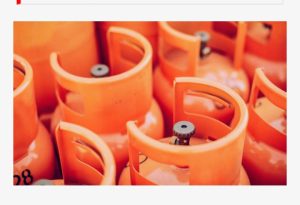
Liquefied Petroleum Gas, commonly known as cooking gas, has risen significantly, forcing Nigerians to spend more to purchase the product.
The increase comes as depot owners and retailers raised their prices over the past two days.
StockGap increased its depot price by N25 to N1,440 per kilogram. Nigerian Independent Petroleum Company Limited, NIPCO, Mobil (now 11 Plc) and Ardova, on the other hand, sold the product at N1,400 and N1,390 per kilogram, respectively.
Similarly, LPG retail outlets, including Raniol, Juda Oil and Nigerian National Petroleum Company Limited, NNPC, outlets in Abuja and its environs, now dispense cooking gas at between N1,550 and N1,600 per kilogram, up from N1,400 and N1,500.
Micro-LPG dealers sell the product for between N1,700 and N1,800 per kilogram, depending on the location in Abuja.
Earlier, NIPCO’s spokesperson, Taofeek Lawal, had exclusively told DAILY POST that LPG prices could increase further between November and January next year.
The latest price increase means that Nigerians who previously spent N17,500 to refill a 12.5kg cylinder at N1,400 per kilogram will now pay N20,000 at the new rate of N1,600 per kilogram, representing an additional N2,500.
News
2027: Tinubu Must Withdraw ‘All Is Fair in Politics’ Remark, Embrace Peaceful Coexistence — ADC-PCC
The African Democratic Congress Presidential Campaign Council (ADC-PCC) has called on President Bola Ahmed Tinubu to publicly retract his controversial “All Is Fair in Politics” remark, warning that such rhetoric fuels political division, emboldens thugs and poses a grave threat to the nation’s peace and stability.
The ADC-PCC also expressed concern over what it described as the President’s disturbing silence on the conduct of some APC governors and party chieftains who have openly made inflammatory statements and allegedly encouraged political violence.
In a statement signed by its Director of Media and Publicity, Kola Ologbondiyan, the ADC-PCC urged President Tinubu to rise above partisan interests and demonstrate the statesmanship expected of a national leader, citing former President Goodluck Jonathan’s unequivocal declaration that no presidential ambition was worth the blood of any Nigerian.
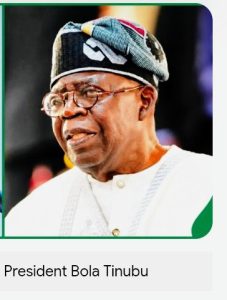
The Council described as shocking the President’s failure to condemn the growing wave of political violence, noting that, through his spokesman, Mr. Bayo Onanuga, the Presidency had instead chosen to caution opposition parties while shielding those allegedly responsible for violence within the ruling APC.
“President Tinubu cannot claim to desire peace when his own words provide cover for violence.
“‘All Is Fair in Politics’ is not the language of a Head of State. It is the language of political desperation and an open licence for thuggery, ballot snatching, intimidation and bloodshed.
“From Edo to Cross River, Gombe to Lagos, and Kebbi to Kaduna, Nigerians have witnessed attacks on opposition gatherings, destruction of campaign materials and the brutalisation of innocent supporters, allegedly by APC-sponsored thugs.
“Yet, Mr. President has not considered it necessary to call his governors and party members to order.
“Instead, the Presidency has resorted to diversionary tactics, blaming victims and preaching restraint to the opposition while members of the ruling party are accused of unleashing violence across the country,” the statement said.
The ADC-PCC challenged President Tinubu to explain why his condemnation of political violence appears directed at the opposition rather than members of his own party.
It asked: “Why has Mr. President refused to condemn APC governors who openly threaten opposition supporters? Why has he remained silent over public incitement by officials of his party? Why is his anger always directed at the opposition and never at those within his own political fold?”
The Council maintained that the ADC remains committed to peaceful, issue-based political engagement, insisting that its campaign is focused on addressing the country’s pressing challenges, including hunger, insecurity, unemployment, corruption and what it described as the failures of the Tinubu administration.
It accused the APC of resorting to violence because it had little to offer Nigerians in terms of credible solutions to the country’s problems.
Consequently, the ADC-PCC demanded that President Tinubu immediately and publicly withdraw his “All Is Fair in Politics” remark, condemn and call to order APC governors and party officials accused of inciting violence, and direct security agencies to protect all Nigerians impartially rather than allow them to become instruments of intimidation and oppression against opposition parties.
” Nigeria belongs to all of us. No political ambition is worth the blood of any Nigerian.
“If former President Goodluck Jonathan could make that profound declaration in 2015, President Tinubu has no excuse not to say so and demonstrate the sincerity of his commitment to peace in 2026.
“The ADC will not be intimidated. We will continue to campaign peacefully, and in 2027, Nigerians will have the opportunity to vote for competence, integrity and a new beginning,” the statement added.




-
News5 days ago
IGP Disu decorates 29 senior police officers with new ranks….charges them on professionalism, integrity,others
-
News4 days ago
Airstrikes kill 40 ISWAP terrorists in Borno
-
News4 days ago
We finally received CTC Of Lifu’s Judgement, without Atiku, Other Candidates Names Mentioned—Senator Melaye
-
News4 days ago
2026 U-17 WWC: Tinubu rewards each Flamingos player with ₦100m
-
News5 days ago
How Federal High Court Chief judge is beign blackmailed with EFCC, CCB- ADC Campaign Council
-
News2 days ago
Crowd Shouts ‘Bamayi’ at Tinubu, pelt convoy in Abuja
-
News5 days ago
2027: ADC accuses Federal High Court of withholding David Mark sack judgment
-
News5 days ago
Oil slump opens door to cheaper petrol for Nigerians …as Brent hits lowest since August