

News
Engage Govt On Legitimate Grievances, Speaker Abbas Urges Igbo Leaders

… Hails Deputy Speaker Kalu’s South-East Peace Project

Speaker of the House of Representatives Rt. Hon. Abbas Tajudeen, Ph.D, has urged Igbo leaders in the South-East geopolitical zone to engage the government in addressing the legitimate grievances of their people.
Speaker Abbas, in his address at the launch of the Peace in the South East Project, an initiative of the Deputy Speaker, Rt. Hon. Benjamin Okezie Kalu, decried that despite South-East’s economic strengths, agitations in the zone had caused it colossal losses.
Speaking on Friday at the event held in Bende, Abia State, Kalu’s hometown, Speaker Abbas stated that the peace in the South-East is, by extension, the peace and progress of the entire Nigeria.
The Speaker noted that the PISE-P was borne out of his deputy’s deep love for the zone and profound concern over the rise of insecurity, “which has cast a dark shadow over the region.”
He lamented that the wave of insecurity “continues to cripple daily life and significantly paralyse socio-economic endeavours, in a region whose people are renowned for their resourcefulness and economic enterprise.”
Speaker Abbas, therefore, described Hon. Kalu’s project as a “historic and patriotic endeavour.”
The Speaker said: “It may be recalled that between 1956 and 1965, the then Eastern Region was regarded as the fastest-growing economy in Africa and Asia. Indeed, the South-East has remained an economic powerhouse in Nigeria and Sub-Saharan Africa, leading in trade and commerce.
“From Aba to Adamawa and Enugu to Europe, Igbos are known to be entrepreneurial, resourceful, peace-loving, savvy, tenacious and peace-loving. That is the character of the Igbos. That is who you are. Three of your cities, Aba, Onitsha and Nnewi, are among the most industrialised in Nigeria.
“A sizeable chunk of the major investments in many parts of Nigeria are Igbo-owned. Your contributions to the Nigerian economy, either through imports, business investment, or diaspora remittances, among others, are indisputable.
“The contributions of the Igbos are apparent not only with regard to the economy but also in all fields of human endeavour, including literature, academia, the creative industry and many more.”
Speaker Abass said unfortunately, with its rich history, vibrant culture, and significant contributions to Nigeria’s economic and social fabric, the region had faced numerous challenges in recent years.
“These challenges have often manifested in the form of separatist agitations, unrest, and terrorism. The consequences on both lives and property have been colossal,” he said.
To address these issues effectively, the Speaker said the stakeholders must first understand their root causes.
Speaker Abbas noted: “These underlying causes include the sense of marginalisation and the feeling by many people in the South-East that their voices are not heard and their concerns are not adequately addressed in the national discourse.
“Secondly, the general economic challenges and the attendant lack of sufficient economic opportunities fuel frustration and make the youth more susceptible to radical ideologies. This is true for most parts of Nigeria, not just the South-East.
“Additionally, we cannot ignore either should we be ashamed to acknowledge the historical context, including memories of past conflicts and perceived injustices that continue to influence the current sentiments in the region.”
The Speaker noted that Nigeria is a tapestry of over 250 ethnic groups and multiple religions. While being the country’s greatest strength, he said the diversity also poses significant challenges and can sometimes lead to division and conflict.
“The task before us, therefore, is not just to coexist but to thrive in our diversity,” he stated.
Speaker Abbas said most importantly, the challenges in governance, including corruption and ineffective administration, “have exacerbated the situation, leading to a lack of trust in the authorities.”
The Speaker stated that he believed strongly PISE-P could foster peace, stability and sustainable development in the South-East and restore the vibrancy and prosperity of the people.
He noted that for peace to be sustainable, a multi-faceted approach, as clearly outlined in the seven pillars of the project, must be adopted.
Speaker Abbas said: “The first is inclusive governance, which is crucial in ensuring that the people of this region feel adequately represented at all levels of government and decision-making processes.
“Secondly, it is important to emphasise that peace is a sine qua non for development. The development craved by the people of this region can never be achieved in the absence of peace.
“History has taught us that violence, carnage and mayhem have never resolved conflicts. This underscores the need for open and honest dialogue and reconciliation between the government and community leaders and between different ethnic and social groups in the South East.
“Dialogue should address grievances, foster understanding, and promote reconciliation. Also, I call on the political leaders from the South-East to engage the government in addressing the legitimate grievances of their people.”
The Speaker stated that it was only when peace and order had been restored, that the focus could be on creating economic opportunities, particularly for the youth.
At the National Assembly, Speaker Abbas said the lawmakers would ensure that funding was provided for investment in infrastructure, support for local businesses, and the creation of job opportunities.
“In a few days, the National Assembly will pass the 2024 budget. Special care has been taken to ensure a balance in the distribution of infrastructure projects across the six geopolitical zones. We have a duty to rebuild this region and accelerate its recovery towards becoming the economic powerhouse it has been.
“Only a few days later, the House of Representatives passed the South East Development Commission bill, sponsored by Hon. Benjamin Kalu. When assented to by the President, the Commission will support the reconstruction and rehabilitation of infrastructure in the region.”
Another critical strategy for ensuring sustainable peace and development, according to Speaker Abbas, is educating the populace about the importance of unity and the dangers of division.
The Speaker added that the agitations in the South-East and other regions of the country could be greatly minimised through good governance and adherence to the rule of law.
“Legislators and all public officials, as well as traditional and religious institutions, have a role in building trust and stability through good governance,” he stated.

The United States government has insisted that Nigeria should retain its Country of Particular Concern, CPC, designation, saying the country has not done enough to protect Christians from attacks.
Assistant Secretary of State for African Affairs, Frank Garcia, made this statement on Thursday during a congressional hearing on violence in Nigeria.
Garcia was responding to questions from US Congressman Riley Moore, who asked about the government’s efforts to dismantle militia strongholds and kidnapping camps in the Middle Belt, particularly in Benue and Plateau states.
Moore also raised concerns over the exclusion of the states from the forest guard initiative and delays in deploying 1,000 approved guards to Plateau.
“Before you answer that, we cannot take this CPC designation off of this country. They have not done enough,” Moore said.
Garcia acknowledged the lack of progress, but said Nigeria was taking steps to address the concerns, although they had yet to produce results.
He said the country’s security capacity was still being developed and that deployments were not happening fast enough.
“Unfortunately, the violence has not stopped,” Garcia added, citing continued attacks in Kaduna and Plateau states.
He said the US had provided police training and equipment, expanded intelligence sharing and worked with Nigerian financial institutions to disrupt terrorist financing.
Garcia added that Washington would continue diplomatic engagements and security cooperation to protect vulnerable communities and ensure accountability.
However, the Nigerian government has consistently rejected claims of a “Christian genocide” or targeted religious persecution, maintaining that insecurity affects Nigerians of all faiths.


Liquefied Petroleum Gas, commonly known as cooking gas, has risen significantly, forcing Nigerians to spend more to purchase the product.
The increase comes as depot owners and retailers raised their prices over the past two days.
StockGap increased its depot price by N25 to N1,440 per kilogram. Nigerian Independent Petroleum Company Limited, NIPCO, Mobil (now 11 Plc) and Ardova, on the other hand, sold the product at N1,400 and N1,390 per kilogram, respectively.
Similarly, LPG retail outlets, including Raniol, Juda Oil and Nigerian National Petroleum Company Limited, NNPC, outlets in Abuja and its environs, now dispense cooking gas at between N1,550 and N1,600 per kilogram, up from N1,400 and N1,500.
Micro-LPG dealers sell the product for between N1,700 and N1,800 per kilogram, depending on the location in Abuja.
Earlier, NIPCO’s spokesperson, Taofeek Lawal, had exclusively told DAILY POST that LPG prices could increase further between November and January next year.
The latest price increase means that Nigerians who previously spent N17,500 to refill a 12.5kg cylinder at N1,400 per kilogram will now pay N20,000 at the new rate of N1,600 per kilogram, representing an additional N2,500.
News
2027: Tinubu Must Withdraw ‘All Is Fair in Politics’ Remark, Embrace Peaceful Coexistence — ADC-PCC
The African Democratic Congress Presidential Campaign Council (ADC-PCC) has called on President Bola Ahmed Tinubu to publicly retract his controversial “All Is Fair in Politics” remark, warning that such rhetoric fuels political division, emboldens thugs and poses a grave threat to the nation’s peace and stability.
The ADC-PCC also expressed concern over what it described as the President’s disturbing silence on the conduct of some APC governors and party chieftains who have openly made inflammatory statements and allegedly encouraged political violence.
In a statement signed by its Director of Media and Publicity, Kola Ologbondiyan, the ADC-PCC urged President Tinubu to rise above partisan interests and demonstrate the statesmanship expected of a national leader, citing former President Goodluck Jonathan’s unequivocal declaration that no presidential ambition was worth the blood of any Nigerian.
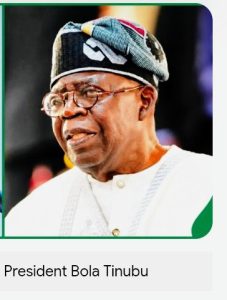
The Council described as shocking the President’s failure to condemn the growing wave of political violence, noting that, through his spokesman, Mr. Bayo Onanuga, the Presidency had instead chosen to caution opposition parties while shielding those allegedly responsible for violence within the ruling APC.
“President Tinubu cannot claim to desire peace when his own words provide cover for violence.
“‘All Is Fair in Politics’ is not the language of a Head of State. It is the language of political desperation and an open licence for thuggery, ballot snatching, intimidation and bloodshed.
“From Edo to Cross River, Gombe to Lagos, and Kebbi to Kaduna, Nigerians have witnessed attacks on opposition gatherings, destruction of campaign materials and the brutalisation of innocent supporters, allegedly by APC-sponsored thugs.
“Yet, Mr. President has not considered it necessary to call his governors and party members to order.
“Instead, the Presidency has resorted to diversionary tactics, blaming victims and preaching restraint to the opposition while members of the ruling party are accused of unleashing violence across the country,” the statement said.
The ADC-PCC challenged President Tinubu to explain why his condemnation of political violence appears directed at the opposition rather than members of his own party.
It asked: “Why has Mr. President refused to condemn APC governors who openly threaten opposition supporters? Why has he remained silent over public incitement by officials of his party? Why is his anger always directed at the opposition and never at those within his own political fold?”
The Council maintained that the ADC remains committed to peaceful, issue-based political engagement, insisting that its campaign is focused on addressing the country’s pressing challenges, including hunger, insecurity, unemployment, corruption and what it described as the failures of the Tinubu administration.
It accused the APC of resorting to violence because it had little to offer Nigerians in terms of credible solutions to the country’s problems.
Consequently, the ADC-PCC demanded that President Tinubu immediately and publicly withdraw his “All Is Fair in Politics” remark, condemn and call to order APC governors and party officials accused of inciting violence, and direct security agencies to protect all Nigerians impartially rather than allow them to become instruments of intimidation and oppression against opposition parties.
” Nigeria belongs to all of us. No political ambition is worth the blood of any Nigerian.
“If former President Goodluck Jonathan could make that profound declaration in 2015, President Tinubu has no excuse not to say so and demonstrate the sincerity of his commitment to peace in 2026.
“The ADC will not be intimidated. We will continue to campaign peacefully, and in 2027, Nigerians will have the opportunity to vote for competence, integrity and a new beginning,” the statement added.





-
News5 days ago
IGP Disu decorates 29 senior police officers with new ranks….charges them on professionalism, integrity,others
-
News4 days ago
Airstrikes kill 40 ISWAP terrorists in Borno
-
News4 days ago
We finally received CTC Of Lifu’s Judgement, without Atiku, Other Candidates Names Mentioned—Senator Melaye
-
News4 days ago
2026 U-17 WWC: Tinubu rewards each Flamingos player with ₦100m
-
News5 days ago
How Federal High Court Chief judge is beign blackmailed with EFCC, CCB- ADC Campaign Council
-
News2 days ago
Crowd Shouts ‘Bamayi’ at Tinubu, pelt convoy in Abuja
-
News5 days ago
Oil slump opens door to cheaper petrol for Nigerians …as Brent hits lowest since August
-
News5 days ago
Oil price fall: We ‘ll take appropriate action against marketers, petrol stations over unfair practices- FCCPC