

News
DEMOCRACY IN CAPTIVITY: How Money, Manipulation and Political Imposition Are Suffocating Nigeria’s Democratic Future Ahead of 2027.


By Charles Edet Esq, Fcr
Nigeria’s democratic process is steadily descending into a disturbing era of uncertainty, where political manipulation, electoral intimidation, manufactured consensus arrangements, judicial contradictions, and outrageous monetisation of political participation now threaten the very soul of representative governance. What should ordinarily be a transparent democratic pathway for the emergence of credible leadership is gradually becoming an exclusive preserve of the wealthy political elite and entrenched power
blocs.
The unfolding developments ahead of the 2027 general elections, particularly within the ruling All Progressives Congress, have intensified national anxiety over the credibility of internal party democracy. Across several states, aspirants with strong grassroots appeal have either withdrawn under pressure or been tactically edged out through controversial “consensus” arrangements allegedly orchestrated by influential political interests. In many cases, those who resisted such arrangements openly described the process as a “coronation” rather than a democratic contest.
More troubling is the unbearable commercialisation of political ambition in Nigeria. The astronomical costs of nomination forms, ranging from ₦20 million to ₦100 million and beyond, have effectively excluded ordinary Nigerians, young professionals, grassroots mobilizers, women, and financially average citizens from participating in governance. Democracy is no longer being shaped by popularity, competence, integrity, or public trust, but by the intimidating weight of financial capacity. The implication is dangerous: only the rich can aspire, while the poor merely watch from the sidelines as spectators in a democracy that constitutionally belongs to them.
The tragedy is even more severe for women. Despite repeated rhetoric about inclusion and gender participation, the prevailing political environment has practically reduced leadership contests to an affair dominated by wealthy men and established political godfathers. How can genuine democratic inclusion
exist when financially disadvantaged but credible women are systematically pushed aside by prohibitive costs and hostile political structures? Such realities fundamentally contradict the principles of fairness, representation, and equal opportunity upon which democracy is built.
Equally alarming is the growing trend where former governors, after spending eight years in executive office, seamlessly migrate into the National Assembly, thereby consolidating political dominance and shrinking opportunities for fresh voices and emerging leaders.
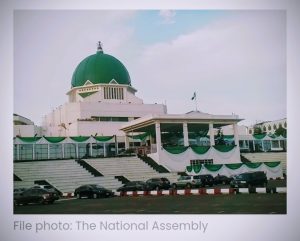
The legislature, ideally designed as a sanctuary for diverse representation and independent oversight, is increasingly becoming an extension of executive recycling and political entitlement. This pattern weakens democratic renewal and deepens public frustration with governance.
Electoral violence, delegate intimidation, inflated voting figures, manipulated accreditation systems, and allegations of false counting during primaries have further damaged public confidence in elections. The judiciary, expected to remain the moral guardian of constitutional democracy, is also facing growing accusations of contradictory and politically influenced judgments that often redefine electoral outcomes long after votes have been cast.
If these disturbing trends continue unchecked, elections may gradually lose their legitimacy as instruments of popular choice. Democracy cannot survive where money silences merit, where consensus replaces competition, where courts become political battlegrounds, and where the ordinary citizen is financially prohibited from aspiring to lead. Nigeria must urgently rescue its democracy from elite captivity before public faith in the electoral process suffers irreversible collapse.
Edet, Journalist/Security Analyst. Contact
080-6888-5385 5385 WhatsApp.

The United States government has insisted that Nigeria should retain its Country of Particular Concern, CPC, designation, saying the country has not done enough to protect Christians from attacks.
Assistant Secretary of State for African Affairs, Frank Garcia, made this statement on Thursday during a congressional hearing on violence in Nigeria.
Garcia was responding to questions from US Congressman Riley Moore, who asked about the government’s efforts to dismantle militia strongholds and kidnapping camps in the Middle Belt, particularly in Benue and Plateau states.
Moore also raised concerns over the exclusion of the states from the forest guard initiative and delays in deploying 1,000 approved guards to Plateau.
“Before you answer that, we cannot take this CPC designation off of this country. They have not done enough,” Moore said.
Garcia acknowledged the lack of progress, but said Nigeria was taking steps to address the concerns, although they had yet to produce results.
He said the country’s security capacity was still being developed and that deployments were not happening fast enough.
“Unfortunately, the violence has not stopped,” Garcia added, citing continued attacks in Kaduna and Plateau states.
He said the US had provided police training and equipment, expanded intelligence sharing and worked with Nigerian financial institutions to disrupt terrorist financing.
Garcia added that Washington would continue diplomatic engagements and security cooperation to protect vulnerable communities and ensure accountability.
However, the Nigerian government has consistently rejected claims of a “Christian genocide” or targeted religious persecution, maintaining that insecurity affects Nigerians of all faiths.


Liquefied Petroleum Gas, commonly known as cooking gas, has risen significantly, forcing Nigerians to spend more to purchase the product.
The increase comes as depot owners and retailers raised their prices over the past two days.
StockGap increased its depot price by N25 to N1,440 per kilogram. Nigerian Independent Petroleum Company Limited, NIPCO, Mobil (now 11 Plc) and Ardova, on the other hand, sold the product at N1,400 and N1,390 per kilogram, respectively.
Similarly, LPG retail outlets, including Raniol, Juda Oil and Nigerian National Petroleum Company Limited, NNPC, outlets in Abuja and its environs, now dispense cooking gas at between N1,550 and N1,600 per kilogram, up from N1,400 and N1,500.
Micro-LPG dealers sell the product for between N1,700 and N1,800 per kilogram, depending on the location in Abuja.
Earlier, NIPCO’s spokesperson, Taofeek Lawal, had exclusively told DAILY POST that LPG prices could increase further between November and January next year.
The latest price increase means that Nigerians who previously spent N17,500 to refill a 12.5kg cylinder at N1,400 per kilogram will now pay N20,000 at the new rate of N1,600 per kilogram, representing an additional N2,500.
News
2027: Tinubu Must Withdraw ‘All Is Fair in Politics’ Remark, Embrace Peaceful Coexistence — ADC-PCC
The African Democratic Congress Presidential Campaign Council (ADC-PCC) has called on President Bola Ahmed Tinubu to publicly retract his controversial “All Is Fair in Politics” remark, warning that such rhetoric fuels political division, emboldens thugs and poses a grave threat to the nation’s peace and stability.
The ADC-PCC also expressed concern over what it described as the President’s disturbing silence on the conduct of some APC governors and party chieftains who have openly made inflammatory statements and allegedly encouraged political violence.
In a statement signed by its Director of Media and Publicity, Kola Ologbondiyan, the ADC-PCC urged President Tinubu to rise above partisan interests and demonstrate the statesmanship expected of a national leader, citing former President Goodluck Jonathan’s unequivocal declaration that no presidential ambition was worth the blood of any Nigerian.
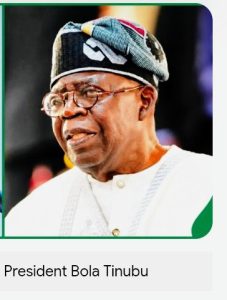
The Council described as shocking the President’s failure to condemn the growing wave of political violence, noting that, through his spokesman, Mr. Bayo Onanuga, the Presidency had instead chosen to caution opposition parties while shielding those allegedly responsible for violence within the ruling APC.
“President Tinubu cannot claim to desire peace when his own words provide cover for violence.
“‘All Is Fair in Politics’ is not the language of a Head of State. It is the language of political desperation and an open licence for thuggery, ballot snatching, intimidation and bloodshed.
“From Edo to Cross River, Gombe to Lagos, and Kebbi to Kaduna, Nigerians have witnessed attacks on opposition gatherings, destruction of campaign materials and the brutalisation of innocent supporters, allegedly by APC-sponsored thugs.
“Yet, Mr. President has not considered it necessary to call his governors and party members to order.
“Instead, the Presidency has resorted to diversionary tactics, blaming victims and preaching restraint to the opposition while members of the ruling party are accused of unleashing violence across the country,” the statement said.
The ADC-PCC challenged President Tinubu to explain why his condemnation of political violence appears directed at the opposition rather than members of his own party.
It asked: “Why has Mr. President refused to condemn APC governors who openly threaten opposition supporters? Why has he remained silent over public incitement by officials of his party? Why is his anger always directed at the opposition and never at those within his own political fold?”
The Council maintained that the ADC remains committed to peaceful, issue-based political engagement, insisting that its campaign is focused on addressing the country’s pressing challenges, including hunger, insecurity, unemployment, corruption and what it described as the failures of the Tinubu administration.
It accused the APC of resorting to violence because it had little to offer Nigerians in terms of credible solutions to the country’s problems.
Consequently, the ADC-PCC demanded that President Tinubu immediately and publicly withdraw his “All Is Fair in Politics” remark, condemn and call to order APC governors and party officials accused of inciting violence, and direct security agencies to protect all Nigerians impartially rather than allow them to become instruments of intimidation and oppression against opposition parties.
” Nigeria belongs to all of us. No political ambition is worth the blood of any Nigerian.
“If former President Goodluck Jonathan could make that profound declaration in 2015, President Tinubu has no excuse not to say so and demonstrate the sincerity of his commitment to peace in 2026.
“The ADC will not be intimidated. We will continue to campaign peacefully, and in 2027, Nigerians will have the opportunity to vote for competence, integrity and a new beginning,” the statement added.





-
News5 days ago
IGP Disu decorates 29 senior police officers with new ranks….charges them on professionalism, integrity,others
-
News4 days ago
Airstrikes kill 40 ISWAP terrorists in Borno
-
News4 days ago
We finally received CTC Of Lifu’s Judgement, without Atiku, Other Candidates Names Mentioned—Senator Melaye
-
News4 days ago
2026 U-17 WWC: Tinubu rewards each Flamingos player with ₦100m
-
News5 days ago
How Federal High Court Chief judge is beign blackmailed with EFCC, CCB- ADC Campaign Council
-
News2 days ago
Crowd Shouts ‘Bamayi’ at Tinubu, pelt convoy in Abuja
-
News5 days ago
Oil slump opens door to cheaper petrol for Nigerians …as Brent hits lowest since August
-
News5 days ago
Nigerian Businessman Hands IGP Disu 7 Days Tọ Probe Police Officers Over Alleged Release Of Recovered N600m Rolls-Royce To Suspects