

News
Constitution review: Speaker Abbas Says Gender Bills Urgent, Pragmatic

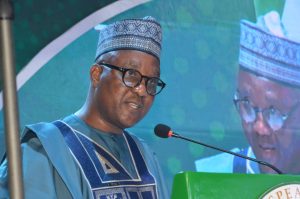
…sets up committee, desk to engage governors, first ladies, party leaders, others
The Speaker of the House of Representatives Rt. Hon. Abbas Tajudeen, Ph.D., GCON, has called on relevant stakeholders to work towards the passage of the gender-based bills in the ongoing review of the 1999 Constitution, saying the move is time-sensitive and pragmatic.
Addressing the stakeholders at the Town Hall and Strategic Roundtable on the Reserved Seats for Women Bill in Abuja on Wednesday, the Speaker noted that the event was “to listen, to learn, and to lead.”
While noting that the town hall/strategic roundtable was not merely a routine event on our calendar, Speaker Abbas stated that it was “a deliberate moment of clarity, candour, and collective resolve,” stressing that it directly aligns with Agenda 6 of the 10th House Legislative Agenda on Inclusion and Open Parliament.
He explained that Agenda 6 is challenging the House to broaden representation, enhance transparency, and ensure that every Nigerian can see and hear themselves in the nation’s legislature.
The Speaker said: “As you are all aware, the statistics on women’s underrepresentation are dismal. That is why the current proposals before the National Assembly on greater women’s inclusion are both urgent and pragmatic.
“There are several related bills before the National Assembly, and it is important that we understand their precise content. HB 1189, HB 1349, and HB 1421 each propose, in addition to the current three senators from each state and one senator from the Federal Capital Territory, one additional senator for each state and for the FCT who shall be a woman.
“For the House of Representatives, HB 1189 and HB 1421 propose, in addition to the current 360 members, two additional members for each state and the FCT who shall be women, while HB 1349 proposes one additional Member for each state and the FCT who shall be a woman.
“For the State Houses of Assembly, both HB 1189 and HB 1349 propose one additional member from each of the three senatorial districts in the state who shall be a woman. To accommodate these changes, all three bills propose that the Independent National Electoral Commission shall divide each state into two federal constituencies to be occupied by women.”
He added: “Another proposal, HB 1811, seeks to establish six special seats in the House of Representatives for each of two special interest groups: women and persons living with disabilities, distributed evenly across the six geopolitical zones. It further provides that aspirants to these special seats shall meet all other qualifications for regular seats. It recommends a regional electoral college for each geopolitical zone, comprising all national officers of the association from the states within the zone, to determine the final representatives for the special seats.
“These proposals are thoughtful and ambitious, yet they raise practical questions that we must confront honestly and address. Some recommendations, in their current form, make the pathway more tedious, demanding, and burdensome for women seeking election to the House of Representatives.”
Speaker Abbas explained that a woman aspirant might be required to campaign across an area larger than a single federal constituency, possibly the size of a whole senatorial district or even more. This, he stated, is a significant challenge in logistics, finance, and time, especially for first-time aspirants who often face resource constraints.
He said there is also the practicality of asking INEC to divide three senatorial districts into two special federal constituencies for women. He asked, “Which parameters would guide such a division: population, geography, existing constituency boundaries, or administrative convenience?” He noted that each option has consequences for fairness, feasibility, and acceptability.
The Speaker said: “My candid view is that we should examine all the proposals to make them easier and more practical rather than more difficult. For instance, for the reserved seat for women in the Senate, we could consider attaching that election to the gubernatorial election for operational and campaign purposes.”
“The same idea could apply to the reserved seats for women in the House of Representatives. We could maintain the current delineation of senatorial districts and provide three reserved seats for women per state in the House. Candidates for the reserved seats could then campaign alongside senatorial candidates, and the elections could be held simultaneously.
“Technically and financially, it would be easier for both pairs of candidates, regular and reserved, to plan together, share structures, and spread costs. This approach would also reduce voter confusion and administrative complexity for INEC.”
Speaker Abbas stated that these are the kinds of common-sense adjustments he expected the town hall and strategy meeting to interrogate. “We need a practical, acceptable, and workable formula that allows women to utilise existing campaign structures for governorship, senate, and other elections,” he noted.
While restating the philosophy behind the proposals, Speaker Abbas emphasised that the presence of more women in legislative chambers is not charity, saying it is an investment in quality law-making.
“Women bring perspectives on health, education, social welfare, entrepreneurship, community security, and conflict resolution. These are not women’s issues. They are national priorities. When women sit at the table, the table becomes stronger, steadier, and more sensitive to the realities of our people,” he said.
Speaking on the criticisms as to special seats and why not simple competition, the Speaker stated that the playing field is not level, citing economic barriers, party gatekeeping, political violence, cultural stereotypes, and structural obstacles, which he said have produced persistent underrepresentation.
He said: “Temporary special measures are recognised democratic tools to correct systemic imbalance. Countries across Africa, Europe, Asia, and the Americas use them. They do not weaken democracy; they widen it. Importantly, too, these are temporary measures until the playing field is leveled. For this reason, all proposals include a sunset clause. The provisions commence after the life of the current National Assembly and are reviewed sixteen years after commencement.”
Speaker Abbas explained that the overall objectives of these bills are “to build a bridge, not a barrier,” adding that “we are opening an avenue, not closing a door.” He noted: “No sitting member loses a seat. No state surrenders existing representation. We are expanding, not reducing. We are adding, not subtracting.”
He further said: “For my male colleagues, this is vital. Your mandate remains. Your constituency remains. What we seek is not sacrifice, but statesmanship; not surrender, but solidarity.”
To galvanise the positions of stakeholders such as governors, party chieftains, traditional and religious leaders, among others, the Speaker launched a joint Working and Strategy Advocacy Committee comprising the House Committee on Women Affairs and the Committee on Women in Parliament.
“This committee will serve as our mobilisation engine, developing clear messages, translating the bill into accessible language for media, and coordinating stakeholder engagement. It will regularly update leadership on progress, challenges, and opportunities, enabling prompt action,” he said.
The Speaker added that beyond the committee, we must formalise coordination within the legislature. He, therefore, proposed establishing a Reserved Seats Desk in the Senate and the House, and encouraged every state House of Assembly to set up a similar desk.
“These desks will act as focal points for information management, stakeholder liaison, and legislative follow-up. By integrating these desks into our institutions, we transition from ad hoc enthusiasm to structured, steady, and sustained action,” he said

The United States government has insisted that Nigeria should retain its Country of Particular Concern, CPC, designation, saying the country has not done enough to protect Christians from attacks.
Assistant Secretary of State for African Affairs, Frank Garcia, made this statement on Thursday during a congressional hearing on violence in Nigeria.
Garcia was responding to questions from US Congressman Riley Moore, who asked about the government’s efforts to dismantle militia strongholds and kidnapping camps in the Middle Belt, particularly in Benue and Plateau states.
Moore also raised concerns over the exclusion of the states from the forest guard initiative and delays in deploying 1,000 approved guards to Plateau.
“Before you answer that, we cannot take this CPC designation off of this country. They have not done enough,” Moore said.
Garcia acknowledged the lack of progress, but said Nigeria was taking steps to address the concerns, although they had yet to produce results.
He said the country’s security capacity was still being developed and that deployments were not happening fast enough.
“Unfortunately, the violence has not stopped,” Garcia added, citing continued attacks in Kaduna and Plateau states.
He said the US had provided police training and equipment, expanded intelligence sharing and worked with Nigerian financial institutions to disrupt terrorist financing.
Garcia added that Washington would continue diplomatic engagements and security cooperation to protect vulnerable communities and ensure accountability.
However, the Nigerian government has consistently rejected claims of a “Christian genocide” or targeted religious persecution, maintaining that insecurity affects Nigerians of all faiths.

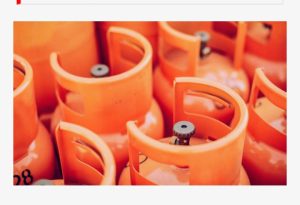
Liquefied Petroleum Gas, commonly known as cooking gas, has risen significantly, forcing Nigerians to spend more to purchase the product.
The increase comes as depot owners and retailers raised their prices over the past two days.
StockGap increased its depot price by N25 to N1,440 per kilogram. Nigerian Independent Petroleum Company Limited, NIPCO, Mobil (now 11 Plc) and Ardova, on the other hand, sold the product at N1,400 and N1,390 per kilogram, respectively.
Similarly, LPG retail outlets, including Raniol, Juda Oil and Nigerian National Petroleum Company Limited, NNPC, outlets in Abuja and its environs, now dispense cooking gas at between N1,550 and N1,600 per kilogram, up from N1,400 and N1,500.
Micro-LPG dealers sell the product for between N1,700 and N1,800 per kilogram, depending on the location in Abuja.
Earlier, NIPCO’s spokesperson, Taofeek Lawal, had exclusively told DAILY POST that LPG prices could increase further between November and January next year.
The latest price increase means that Nigerians who previously spent N17,500 to refill a 12.5kg cylinder at N1,400 per kilogram will now pay N20,000 at the new rate of N1,600 per kilogram, representing an additional N2,500.
News
2027: Tinubu Must Withdraw ‘All Is Fair in Politics’ Remark, Embrace Peaceful Coexistence — ADC-PCC
The African Democratic Congress Presidential Campaign Council (ADC-PCC) has called on President Bola Ahmed Tinubu to publicly retract his controversial “All Is Fair in Politics” remark, warning that such rhetoric fuels political division, emboldens thugs and poses a grave threat to the nation’s peace and stability.
The ADC-PCC also expressed concern over what it described as the President’s disturbing silence on the conduct of some APC governors and party chieftains who have openly made inflammatory statements and allegedly encouraged political violence.
In a statement signed by its Director of Media and Publicity, Kola Ologbondiyan, the ADC-PCC urged President Tinubu to rise above partisan interests and demonstrate the statesmanship expected of a national leader, citing former President Goodluck Jonathan’s unequivocal declaration that no presidential ambition was worth the blood of any Nigerian.
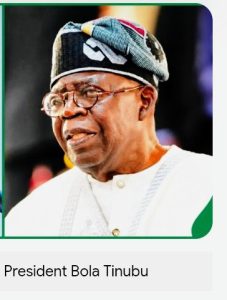
The Council described as shocking the President’s failure to condemn the growing wave of political violence, noting that, through his spokesman, Mr. Bayo Onanuga, the Presidency had instead chosen to caution opposition parties while shielding those allegedly responsible for violence within the ruling APC.
“President Tinubu cannot claim to desire peace when his own words provide cover for violence.
“‘All Is Fair in Politics’ is not the language of a Head of State. It is the language of political desperation and an open licence for thuggery, ballot snatching, intimidation and bloodshed.
“From Edo to Cross River, Gombe to Lagos, and Kebbi to Kaduna, Nigerians have witnessed attacks on opposition gatherings, destruction of campaign materials and the brutalisation of innocent supporters, allegedly by APC-sponsored thugs.
“Yet, Mr. President has not considered it necessary to call his governors and party members to order.
“Instead, the Presidency has resorted to diversionary tactics, blaming victims and preaching restraint to the opposition while members of the ruling party are accused of unleashing violence across the country,” the statement said.
The ADC-PCC challenged President Tinubu to explain why his condemnation of political violence appears directed at the opposition rather than members of his own party.
It asked: “Why has Mr. President refused to condemn APC governors who openly threaten opposition supporters? Why has he remained silent over public incitement by officials of his party? Why is his anger always directed at the opposition and never at those within his own political fold?”
The Council maintained that the ADC remains committed to peaceful, issue-based political engagement, insisting that its campaign is focused on addressing the country’s pressing challenges, including hunger, insecurity, unemployment, corruption and what it described as the failures of the Tinubu administration.
It accused the APC of resorting to violence because it had little to offer Nigerians in terms of credible solutions to the country’s problems.
Consequently, the ADC-PCC demanded that President Tinubu immediately and publicly withdraw his “All Is Fair in Politics” remark, condemn and call to order APC governors and party officials accused of inciting violence, and direct security agencies to protect all Nigerians impartially rather than allow them to become instruments of intimidation and oppression against opposition parties.
” Nigeria belongs to all of us. No political ambition is worth the blood of any Nigerian.
“If former President Goodluck Jonathan could make that profound declaration in 2015, President Tinubu has no excuse not to say so and demonstrate the sincerity of his commitment to peace in 2026.
“The ADC will not be intimidated. We will continue to campaign peacefully, and in 2027, Nigerians will have the opportunity to vote for competence, integrity and a new beginning,” the statement added.




-
News5 days ago
IGP Disu decorates 29 senior police officers with new ranks….charges them on professionalism, integrity,others
-
News4 days ago
Airstrikes kill 40 ISWAP terrorists in Borno
-
News4 days ago
We finally received CTC Of Lifu’s Judgement, without Atiku, Other Candidates Names Mentioned—Senator Melaye
-
News4 days ago
2026 U-17 WWC: Tinubu rewards each Flamingos player with ₦100m
-
News5 days ago
How Federal High Court Chief judge is beign blackmailed with EFCC, CCB- ADC Campaign Council
-
News2 days ago
Crowd Shouts ‘Bamayi’ at Tinubu, pelt convoy in Abuja
-
News5 days ago
Oil slump opens door to cheaper petrol for Nigerians …as Brent hits lowest since August
-
News5 days ago
Nigerian Businessman Hands IGP Disu 7 Days Tọ Probe Police Officers Over Alleged Release Of Recovered N600m Rolls-Royce To Suspects