

News
Beyond the Headlines: Gombe’s Steady Progress in Basic Education

By Ismaila Uba Misilli
In the journey of nation-building, it’s easy to see people sensationalize a visible crack in the wall while ignoring the solid foundation steadily being laid beneath. A recent newspaper analysis alleging the neglect of a primary school in a community in Billiri LGA of Gombe State is a case in point.
While the good intentions of such reporting are appreciated, it is equally important to place facts over emotions and context over snapshots. We owe it to the public to always tell the whole story, not just a part of it.
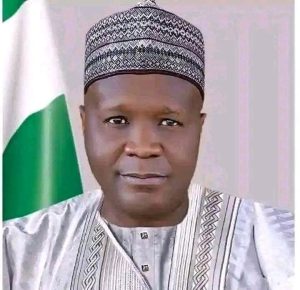
In 2019, Governor Muhammadu Inuwa Yahaya came into office with a clear and ambitious vision: to transform the education sector in Gombe State and lay the foundation for a knowledge-driven society. Though he did not promise miracles, but he promised commitment, action, and results. And he has delivered, steadily and deliberately.
It is a known fact that for decades, Gombe state’s education system groaned under the weight of poor infrastructure, untrained teachers, and low enrolment.
These problems weren’t created overnight, and they certainly cannot be resolved overnight. But in less than six years, the Inuwa Yahaya administration has made measurable progress that cannot be dismissed by an isolated picture of a dilapidated school, especially one that is among those in the queue for potential rehabilitation.
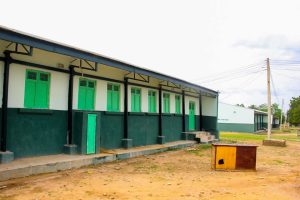
Let us be honest: the school in question, which went viral for its reported lack of roofing and windows, is part of the inherited rot—an unfortunate but undeniable reality of the state’s educational landscape before the coming of the present administration.
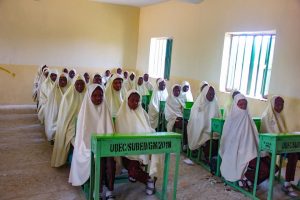
However, to suggest that this single school is a reflection of the government’s failure is not just misleading; it is unjust to the thousands of pupils across Gombe who are now learning in newly built or renovated classrooms, thanks to Governor Inuwa Yahaya’s targeted investments in education.
From the outset of his administration, Governor Yahaya recognized that no society can rise above the quality of its education system. Yes, he inherited a sector plagued by years of decay, but rather than offer excuses or shift blame, the governor rolled up his sleeves and set out to fix the rot.
His first bold move was to declare a state of emergency and significantly increase budgetary allocation to the education sector to ensure that the right resources were deployed to where they were needed most. This deliberate action has paved the way for massive infrastructural development across all levels of education in the state.
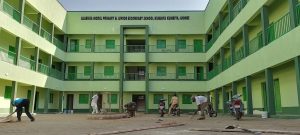
Today, across the 114 wards of Gombe State, no community has been left behind in the ongoing educational renewal. About 2,000 classrooms have been constructed or renovated across the 11 local government areas, ensuring that children can learn in safe, conducive, and inspiring environments. This isn’t just about paint and plaster; it’s about restoring hope and setting new standards.
In Billiri Local Government Area, for instance, the impact is both wide and deep. New classroom blocks have been constructed or renovated in primary and junior secondary schools across various communities, including Sikirit, Billiri Central, Latede, Latur, Tal, Tudu, and Ayaba. The schools have not only been rebuilt with quality materials but also equipped with essential facilities such as offices, stores, and toilets.
Renovation works have equally breathed new life into older schools in places like Sabonlayi Baganje and Popandi Kwaya and a brand-new Fed Staff School and a six-classroom block in Kulgul. Even nomadic and ECCDE schools in remote areas like Tudu and Ayaba have seen infrastructural improvements.
This is not the work of a government that ignores its responsibilities. This is the hallmark of a government that is systematic in its approach; one that prioritizes, plans, and executes with precision.
Every single ward has felt the impact of this administration’s Midas touch on education. This level of equity and commitment is rare, and it must be acknowledged.
Education experts have observed that these efforts are already yielding results. Pupils and students are performing better in a more conducive learning environment. Teachers are more motivated. Parents are enrolling their children in public schools in growing numbers. The ripple effect is real—and it’s positive.
While criticism is a healthy part of governance, it must be rooted in fairness. To cherry-pick a structure already on the government’s radar and amplify it as a symbol of neglect is akin to judging a book by its torn cover—ignoring the progress within its pages.
No one is claiming perfection. But no one can deny progress. The journey to transformation is ongoing, and Gombe is clearly on the right path.
Six years into Governor Inuwa Yahaya’s administration, the education sector, specially at the primary level, has witnessed steady and tangible progress, yielding real benefits for the younger generation.
Beyond the widespread construction, renovation, and remodelling of schools and staff quarters, the state government established a state-of-the-art Teachers Resource Centre (TRC) in Kwami—the first of its kind in the North-East sub-region—dedicated to the continuous training and retraining of teachers.
Notably, the administration has successfully returned no fewer than 350,000 out-of-school children back into the classroom over the past six years. Through the now-concluded Better Education Service Delivery for All (BESDA) programme, Gombe State made significant strides in addressing barriers to education caused by poverty, displacement, and social exclusion.
Under the BESDA programme, over 250,000 children were enrolled in schools—more than 100,000 of whom were absorbed into primary and junior secondary schools through the innovative integration of Tsangaya (Islamic education) with formal western education.
So to those who see only the cracks, we invite you to also see the construction. Look beyond the picture. Visit the schools that have been transformed. Speak to the teachers, the pupils, the parents. Then you will understand that Governor Inuwa Yahaya is not merely fixing a broken system—he is building a future. And that, indeed, is the story that deserves to go viral.
Misilli is the DG ( Press Affairs), Government House, Gombe.

The United States government has insisted that Nigeria should retain its Country of Particular Concern, CPC, designation, saying the country has not done enough to protect Christians from attacks.
Assistant Secretary of State for African Affairs, Frank Garcia, made this statement on Thursday during a congressional hearing on violence in Nigeria.
Garcia was responding to questions from US Congressman Riley Moore, who asked about the government’s efforts to dismantle militia strongholds and kidnapping camps in the Middle Belt, particularly in Benue and Plateau states.
Moore also raised concerns over the exclusion of the states from the forest guard initiative and delays in deploying 1,000 approved guards to Plateau.
“Before you answer that, we cannot take this CPC designation off of this country. They have not done enough,” Moore said.
Garcia acknowledged the lack of progress, but said Nigeria was taking steps to address the concerns, although they had yet to produce results.
He said the country’s security capacity was still being developed and that deployments were not happening fast enough.
“Unfortunately, the violence has not stopped,” Garcia added, citing continued attacks in Kaduna and Plateau states.
He said the US had provided police training and equipment, expanded intelligence sharing and worked with Nigerian financial institutions to disrupt terrorist financing.
Garcia added that Washington would continue diplomatic engagements and security cooperation to protect vulnerable communities and ensure accountability.
However, the Nigerian government has consistently rejected claims of a “Christian genocide” or targeted religious persecution, maintaining that insecurity affects Nigerians of all faiths.


Liquefied Petroleum Gas, commonly known as cooking gas, has risen significantly, forcing Nigerians to spend more to purchase the product.
The increase comes as depot owners and retailers raised their prices over the past two days.
StockGap increased its depot price by N25 to N1,440 per kilogram. Nigerian Independent Petroleum Company Limited, NIPCO, Mobil (now 11 Plc) and Ardova, on the other hand, sold the product at N1,400 and N1,390 per kilogram, respectively.
Similarly, LPG retail outlets, including Raniol, Juda Oil and Nigerian National Petroleum Company Limited, NNPC, outlets in Abuja and its environs, now dispense cooking gas at between N1,550 and N1,600 per kilogram, up from N1,400 and N1,500.
Micro-LPG dealers sell the product for between N1,700 and N1,800 per kilogram, depending on the location in Abuja.
Earlier, NIPCO’s spokesperson, Taofeek Lawal, had exclusively told DAILY POST that LPG prices could increase further between November and January next year.
The latest price increase means that Nigerians who previously spent N17,500 to refill a 12.5kg cylinder at N1,400 per kilogram will now pay N20,000 at the new rate of N1,600 per kilogram, representing an additional N2,500.
News
2027: Tinubu Must Withdraw ‘All Is Fair in Politics’ Remark, Embrace Peaceful Coexistence — ADC-PCC
The African Democratic Congress Presidential Campaign Council (ADC-PCC) has called on President Bola Ahmed Tinubu to publicly retract his controversial “All Is Fair in Politics” remark, warning that such rhetoric fuels political division, emboldens thugs and poses a grave threat to the nation’s peace and stability.
The ADC-PCC also expressed concern over what it described as the President’s disturbing silence on the conduct of some APC governors and party chieftains who have openly made inflammatory statements and allegedly encouraged political violence.
In a statement signed by its Director of Media and Publicity, Kola Ologbondiyan, the ADC-PCC urged President Tinubu to rise above partisan interests and demonstrate the statesmanship expected of a national leader, citing former President Goodluck Jonathan’s unequivocal declaration that no presidential ambition was worth the blood of any Nigerian.
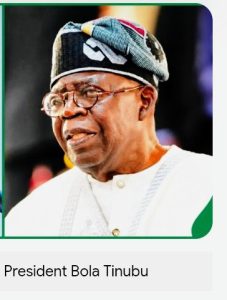
The Council described as shocking the President’s failure to condemn the growing wave of political violence, noting that, through his spokesman, Mr. Bayo Onanuga, the Presidency had instead chosen to caution opposition parties while shielding those allegedly responsible for violence within the ruling APC.
“President Tinubu cannot claim to desire peace when his own words provide cover for violence.
“‘All Is Fair in Politics’ is not the language of a Head of State. It is the language of political desperation and an open licence for thuggery, ballot snatching, intimidation and bloodshed.
“From Edo to Cross River, Gombe to Lagos, and Kebbi to Kaduna, Nigerians have witnessed attacks on opposition gatherings, destruction of campaign materials and the brutalisation of innocent supporters, allegedly by APC-sponsored thugs.
“Yet, Mr. President has not considered it necessary to call his governors and party members to order.
“Instead, the Presidency has resorted to diversionary tactics, blaming victims and preaching restraint to the opposition while members of the ruling party are accused of unleashing violence across the country,” the statement said.
The ADC-PCC challenged President Tinubu to explain why his condemnation of political violence appears directed at the opposition rather than members of his own party.
It asked: “Why has Mr. President refused to condemn APC governors who openly threaten opposition supporters? Why has he remained silent over public incitement by officials of his party? Why is his anger always directed at the opposition and never at those within his own political fold?”
The Council maintained that the ADC remains committed to peaceful, issue-based political engagement, insisting that its campaign is focused on addressing the country’s pressing challenges, including hunger, insecurity, unemployment, corruption and what it described as the failures of the Tinubu administration.
It accused the APC of resorting to violence because it had little to offer Nigerians in terms of credible solutions to the country’s problems.
Consequently, the ADC-PCC demanded that President Tinubu immediately and publicly withdraw his “All Is Fair in Politics” remark, condemn and call to order APC governors and party officials accused of inciting violence, and direct security agencies to protect all Nigerians impartially rather than allow them to become instruments of intimidation and oppression against opposition parties.
” Nigeria belongs to all of us. No political ambition is worth the blood of any Nigerian.
“If former President Goodluck Jonathan could make that profound declaration in 2015, President Tinubu has no excuse not to say so and demonstrate the sincerity of his commitment to peace in 2026.
“The ADC will not be intimidated. We will continue to campaign peacefully, and in 2027, Nigerians will have the opportunity to vote for competence, integrity and a new beginning,” the statement added.





-
News5 days ago
IGP Disu decorates 29 senior police officers with new ranks….charges them on professionalism, integrity,others
-
News4 days ago
Airstrikes kill 40 ISWAP terrorists in Borno
-
News4 days ago
We finally received CTC Of Lifu’s Judgement, without Atiku, Other Candidates Names Mentioned—Senator Melaye
-
News4 days ago
2026 U-17 WWC: Tinubu rewards each Flamingos player with ₦100m
-
News5 days ago
How Federal High Court Chief judge is beign blackmailed with EFCC, CCB- ADC Campaign Council
-
News2 days ago
Crowd Shouts ‘Bamayi’ at Tinubu, pelt convoy in Abuja
-
News5 days ago
Oil slump opens door to cheaper petrol for Nigerians …as Brent hits lowest since August
-
News5 days ago
Nigerian Businessman Hands IGP Disu 7 Days Tọ Probe Police Officers Over Alleged Release Of Recovered N600m Rolls-Royce To Suspects