

News
Between the 2025 Budget and Wale Edun, Who Is Ailing?

By Adeyemi Jackson
That Nigerian’s feel the pinch of the ongoing reforms of President Bola Tinubu’s administration is something that could be blamed on the shoddy implementation of the ₦54.99 trillion 2025 Budget or a total lack of it.
It is farcical that implementation of the nation’s 2025 spending plan did not begin until late September, actually, effectively in October, when the year is almost over, with scant three months left.
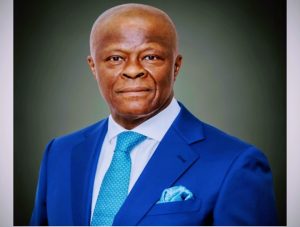
For a government that market itself as reform oriented, this failure to restore the budget to a January to December circle is a catastrophic failure that have negated every other thing it claims to have achieved and this failure lands squarely on the desk of the man entrusted with ensuring that the country has financial certainty, the Minister of Finance and the Coordinating Minister of the Economy, Wale Edun.
The disruption of the budget cycle, aside being a problem in itself – a misalignment with the global business cycle, has created other problems. It has created operational and service delivery challenges that made Ministries, Departments, and Agencies (MDAs) facing delays in receiving funds, delay in the implementation of critical projects with the non-implementation of capital projects negatively affecting job creation and poverty alleviation efforts. On another front are the economic and fiscal impacts that have shaken investor confidence because of uncertainty over Nigeria’s fiscal direction, which means the handling of the 2025 Budget has deterred foreign and domestic investment.
We must not lose sight of the fact that the shabby attitude towards the 2025 Budget worsened inflationary pressures because delaying capital spending is a sure recipe for price variations that ensure that prices have been pushed up beyond what was used to articulate the budget.
Additionally, governance and accountability risks have been heightened as the delay made room for last-minute manipulations that undermine transparency and the essence of budgeting, which would be further compounded by inevitable delays to the preparation of performance data that would in turn weaken accountability mechanisms.
Tragically, the Minister of Finance, Wale Edun, is playing the ostrich. He would not accept that the 2025 Budget is ailing the same way he has refused to accept his frail health and the reality that his current role is larger than his capacity, hence the strain that led to his recent health scare.
Like cancer that eventually kills its host if not excised by amputation, Edun’s health is poised to wreck not just the economy but also the entire country because of the aforementioned consequences. And like an insidious ailment that disguises its existence, Edun’s team is whitewashing his lack of grasp with rosy statistics that are at variance with the harsh reality Nigerians are surviving.
He is telling us about improvement in the economy when the non-implementation of the 2025 budget is crippling the nation’s economy. Despite the beautiful postings and assertions by the Federal Government that it has surpassed targeted 2025 revenue generation as of August this year, it is yet to give life to its 2025 budget.
Since the economy was put in Edun’s care, our currency has been plagued by turbulence and tough realities that made the country a veritable hell. In May 2023, the currency traded at around ₦460 to the dollar officially, with a parallel market rate near ₦740. Yes, the clamour was to eliminate the multiple exchange rates and the decision to unify the exchange rates was hailed as a bold reform, but Edun’s handling of the economy under the circumstances unleashed a wave of economic shocks. By October 2025, the naira had plunged to over ₦1,470 per dollar, reflecting deep structural weaknesses and the painful adjustment process. For ordinary Nigerians, this was not just a macroeconomic shift because it has made our existence into a daily struggle. Prices of essentials soared, savings lost value, and businesses faced rising costs. This makes it nauseating that Edun and his team are insisting the reforms will yield long-term gains, whereas the immediate impact has been a squeeze on livelihoods and a test of public patience.
Whatever flicker of hope Nigerians held that the 2025 Budget would ease their economic hardship is fast fading. The delay in implementation has compounded public frustration, and the man at the helm—Finance Minister Wale Edun, appears increasingly absent from the task. His health, understandably, has taken precedence, but governance cannot be paused for personal recovery. The urgency of restoring economic stability demands leadership that is present, responsive, and accountable. Nigerians are not asking for miracles; they are demanding functionality, an economy that works, a government that delivers, and a budget that translates into real relief. The silence from the Ministry of Finance is deafening, and the absence of clear direction is costing lives, livelihoods, and trust.
Is it Wale Edun that is ailing, or is it the budget itself? Nigerians deserve clarity, not on the health of the Minister of Finance as it is now crystal clear that he is out of the game, but on the health of the economy he is meant to superintend. The indifference, silence, and sluggishness surrounding the 2025 Budget implementation have stranded citizens in uncertainty, watching their hopes for recovery crushed and unravel. If the Minister is unable to carry out his duties, the government must act decisively—not out of political loyalty, but out of responsibility to the people. The budget is not a theoretical document; it is a lifeline for millions. And right now, that lifeline is fraying. What Nigerians are asking is not perfection, they are asking for leadership, for urgency, and for a government that does not wait for its stewards to recover before it begins to serve. The question is no longer rhetorical. It is a demand: who will take charge and restore confidence in Nigeria’s economic future?
Jackson is a public affairs analyst writing from Jos.

The United States government has insisted that Nigeria should retain its Country of Particular Concern, CPC, designation, saying the country has not done enough to protect Christians from attacks.
Assistant Secretary of State for African Affairs, Frank Garcia, made this statement on Thursday during a congressional hearing on violence in Nigeria.
Garcia was responding to questions from US Congressman Riley Moore, who asked about the government’s efforts to dismantle militia strongholds and kidnapping camps in the Middle Belt, particularly in Benue and Plateau states.
Moore also raised concerns over the exclusion of the states from the forest guard initiative and delays in deploying 1,000 approved guards to Plateau.
“Before you answer that, we cannot take this CPC designation off of this country. They have not done enough,” Moore said.
Garcia acknowledged the lack of progress, but said Nigeria was taking steps to address the concerns, although they had yet to produce results.
He said the country’s security capacity was still being developed and that deployments were not happening fast enough.
“Unfortunately, the violence has not stopped,” Garcia added, citing continued attacks in Kaduna and Plateau states.
He said the US had provided police training and equipment, expanded intelligence sharing and worked with Nigerian financial institutions to disrupt terrorist financing.
Garcia added that Washington would continue diplomatic engagements and security cooperation to protect vulnerable communities and ensure accountability.
However, the Nigerian government has consistently rejected claims of a “Christian genocide” or targeted religious persecution, maintaining that insecurity affects Nigerians of all faiths.


Liquefied Petroleum Gas, commonly known as cooking gas, has risen significantly, forcing Nigerians to spend more to purchase the product.
The increase comes as depot owners and retailers raised their prices over the past two days.
StockGap increased its depot price by N25 to N1,440 per kilogram. Nigerian Independent Petroleum Company Limited, NIPCO, Mobil (now 11 Plc) and Ardova, on the other hand, sold the product at N1,400 and N1,390 per kilogram, respectively.
Similarly, LPG retail outlets, including Raniol, Juda Oil and Nigerian National Petroleum Company Limited, NNPC, outlets in Abuja and its environs, now dispense cooking gas at between N1,550 and N1,600 per kilogram, up from N1,400 and N1,500.
Micro-LPG dealers sell the product for between N1,700 and N1,800 per kilogram, depending on the location in Abuja.
Earlier, NIPCO’s spokesperson, Taofeek Lawal, had exclusively told DAILY POST that LPG prices could increase further between November and January next year.
The latest price increase means that Nigerians who previously spent N17,500 to refill a 12.5kg cylinder at N1,400 per kilogram will now pay N20,000 at the new rate of N1,600 per kilogram, representing an additional N2,500.
News
2027: Tinubu Must Withdraw ‘All Is Fair in Politics’ Remark, Embrace Peaceful Coexistence — ADC-PCC
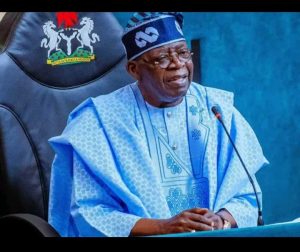
The African Democratic Congress Presidential Campaign Council (ADC-PCC) has called on President Bola Ahmed Tinubu to publicly retract his controversial “All Is Fair in Politics” remark, warning that such rhetoric fuels political division, emboldens thugs and poses a grave threat to the nation’s peace and stability.
The ADC-PCC also expressed concern over what it described as the President’s disturbing silence on the conduct of some APC governors and party chieftains who have openly made inflammatory statements and allegedly encouraged political violence.
In a statement signed by its Director of Media and Publicity, Kola Ologbondiyan, the ADC-PCC urged President Tinubu to rise above partisan interests and demonstrate the statesmanship expected of a national leader, citing former President Goodluck Jonathan’s unequivocal declaration that no presidential ambition was worth the blood of any Nigerian.
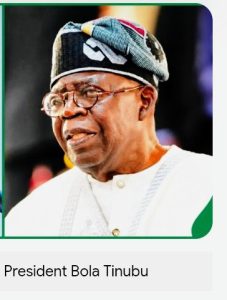
The Council described as shocking the President’s failure to condemn the growing wave of political violence, noting that, through his spokesman, Mr. Bayo Onanuga, the Presidency had instead chosen to caution opposition parties while shielding those allegedly responsible for violence within the ruling APC.
“President Tinubu cannot claim to desire peace when his own words provide cover for violence.
“‘All Is Fair in Politics’ is not the language of a Head of State. It is the language of political desperation and an open licence for thuggery, ballot snatching, intimidation and bloodshed.
“From Edo to Cross River, Gombe to Lagos, and Kebbi to Kaduna, Nigerians have witnessed attacks on opposition gatherings, destruction of campaign materials and the brutalisation of innocent supporters, allegedly by APC-sponsored thugs.
“Yet, Mr. President has not considered it necessary to call his governors and party members to order.
“Instead, the Presidency has resorted to diversionary tactics, blaming victims and preaching restraint to the opposition while members of the ruling party are accused of unleashing violence across the country,” the statement said.
The ADC-PCC challenged President Tinubu to explain why his condemnation of political violence appears directed at the opposition rather than members of his own party.
It asked: “Why has Mr. President refused to condemn APC governors who openly threaten opposition supporters? Why has he remained silent over public incitement by officials of his party? Why is his anger always directed at the opposition and never at those within his own political fold?”
The Council maintained that the ADC remains committed to peaceful, issue-based political engagement, insisting that its campaign is focused on addressing the country’s pressing challenges, including hunger, insecurity, unemployment, corruption and what it described as the failures of the Tinubu administration.
It accused the APC of resorting to violence because it had little to offer Nigerians in terms of credible solutions to the country’s problems.
Consequently, the ADC-PCC demanded that President Tinubu immediately and publicly withdraw his “All Is Fair in Politics” remark, condemn and call to order APC governors and party officials accused of inciting violence, and direct security agencies to protect all Nigerians impartially rather than allow them to become instruments of intimidation and oppression against opposition parties.
” Nigeria belongs to all of us. No political ambition is worth the blood of any Nigerian.
“If former President Goodluck Jonathan could make that profound declaration in 2015, President Tinubu has no excuse not to say so and demonstrate the sincerity of his commitment to peace in 2026.
“The ADC will not be intimidated. We will continue to campaign peacefully, and in 2027, Nigerians will have the opportunity to vote for competence, integrity and a new beginning,” the statement added.





-
News5 days ago
IGP Disu decorates 29 senior police officers with new ranks….charges them on professionalism, integrity,others
-
News4 days ago
Airstrikes kill 40 ISWAP terrorists in Borno
-
News4 days ago
We finally received CTC Of Lifu’s Judgement, without Atiku, Other Candidates Names Mentioned—Senator Melaye
-
News4 days ago
2026 U-17 WWC: Tinubu rewards each Flamingos player with ₦100m
-
News5 days ago
How Federal High Court Chief judge is beign blackmailed with EFCC, CCB- ADC Campaign Council
-
News2 days ago
Crowd Shouts ‘Bamayi’ at Tinubu, pelt convoy in Abuja
-
News5 days ago
Nigerian Businessman Hands IGP Disu 7 Days Tọ Probe Police Officers Over Alleged Release Of Recovered N600m Rolls-Royce To Suspects
-
News5 days ago
2027: ADC accuses Federal High Court of withholding David Mark sack judgment