
News
ASUU Strike! Reposition Tertiary Education, Gbajabiamila Warns

As OBJ, Others Offer Solution On Funding, Capacity Building

The Speaker of the House of Representatives, Rep. Gbajabiamila has reiterated the need for the repositioning of tertiary education in Nigeria.
This is as critical stakeholders in the nation’s tertiary education sector have urged Nigerians and the Federal government to consider alternative means of funding tertiary education in the country
According to him, the current state of tertiary education in the country has called for drastic to be taken if the future of the country is of any concern for Nigerians.
Gbajabiamila spoke in Abuja on Tuesday during the National Summit on Tertiary Education Reform organized by his office.
Critical stakeholders in the tertiary education sector including former President Olusegun Obasanjo, top government functionaries, academia and the private sector were represented at the summit
Noting that Nigeria’s greatest resource is neither her oil nor other abundant mineral deposits across the country but the Nigerian people, Gbajabiamila said events of the last few months have called for a rethink about how to adequately equip and empower the Nigerian child in a globalizing world.
He said: “Our cause is more than to seek solutions to the challenges of tertiary education in Nigeria. In fact, we are here today on a mission to save Nigeria.
“A just society cannot guarantee its citizens equal outcomes any more than a doctor can promise eternal good health. What we can, and must do, is ensure all our citizens are afforded equal opportunities to succeed or fail on their own. For Nigeria to reach its potential and achieve the greatness we are capable of, we must invest in our people.
“In this generation, social, economic and political development is, and will continue to be powered by advancements in information and communication technologies.
“We must provide the resources to modernise and improve our education infrastructure and provide the right training for young people from primary through tertiary education. This goes to the heart of our survival as a nation and as a people.
“Allow me this morning to speak the truth as I see it so that together we can agree on what we need to do to overcome. Time was when the tertiary institutions in our country were centres of excellence, comparable to the best institutions elsewhere in the world. There was a time when our brothers and sisters from across Africa and even farther away sought out our institutions, and we welcomed them in droves. That time is no more.
“It used to be that a student admitted to the university knew the date of their graduation and graduated on that day. And it once was that a career in academia guaranteed stable employment and an honourable quality of life. For the most part, all of these now exist as memories of a distant past. But it really wasn’t so long ago”.
According to him, the summit hopes to offer enduring solutions to the perennial challenges confronting Nigeria’s tertiary institutions. “This National Summit on Tertiary Education Reform (NSTER) is the manifestation of our commitment in the 9th House of Representatives to engender a national conversation to consider bold ideas and radical innovations to restructure and reform public tertiary education in Nigeria.
“How do we ensure that every child born in Nigeria in this generation and hereafter can compete favourably in an ever-changing world? This is the defining issue of our age. And the answer is simple, we do it by providing a quality education that empowers the mind to ask hard questions and accept complicated solutions.
“We do it by training our people to revel in the inquiry, embrace complexity and not be afraid of knotty problems. Education is the silver bullet that eliminates poverty and lack; it presents hope and confidence and reduces violence and strife.
“Therefore, the central public policy challenge is the conflict between the competing objectives of access and quality. How do we fund a quality tertiary education without imposing costs that make access to quality education impossible for most people?
“I don’t have the answer to that question. I have my own ideas, and I have, as a legislator, sought to advance those ideas through the legislative policy process. In 2019, I sponsored, and the House of Representatives passed the Students Loan (Access to Higher Education) Bill to provide access to education financing for students who qualify. That Bill is in the Senate, awaiting concurrence.
“We hope it will get to the President before the expiration of this administration. But a framework of student loans is only one idea. I believe there are many more. This summit aims to provide an opportunity for all Nigerians and friends of Nigeria to present those ideas for consideration, examination, debate and, eventually, action”.
Gbajabiamila however assured that the summit will not be an exercise in futility while urging the participants to be bold and truthful in their submission, saying, “The conversations we hold at this Summit and the submissions we have received will form the basis of a policy action plan and implementation framework we will unveil shortly after the conclusion of the summit.
“Additionally, a journal of all the submissions will be published as a guide and reference for the future”.
Panellists at the summit were in unison that the prevailing realities have made it expedient for the government and academics to review their positions if tertiary education in the country must be rescued from going into extinction.
Former President Obasanjo said it is incumbent on society to ensure that no child is denied basic education due to lack of means and must be kept in school till the conclusion of secondary education.
He said as part of the solution, the over 20 million Nigerian out-of-school children must be returned to school as a starting point if Nigeria is hoping to avoid a future catastrophe occasioned by the over 20 million denied education.
He however emphasized that tertiary education must be paid for. While commending the Speaker for the initiative of Gbajabiamila’s Student Loan Bill as its passage into law would ensure indigent students are given an opportunity.
The former president also expressed skepticism over corruption issues that may thwart access to the loan by those who genuinely need it thereby defeating the essence of the Law.
Former president Obasanjo’s position was backed by Prof. Hillary Edoaga, former Vice Chancellor of the Michael Okpara University of Agriculture and Prof. Tukur Sa’ad, former Vice Chancellor of the University of Technology, Minna.
Prof. Edoaga noted that the government should provide the basic funding for the maintenance of the institutions while adding that Nigerians should be ready to pay for tertiary education.
Prof. Sa’ad, who said the government should hand off the running of the universities, noted that the government must understand that Universities have laws governing them and act accordingly.
He urged the government to make the composition of the Governing Councils of the institutions truly representative of what it should be and not dominated by government representatives.
He also urged the institutions to be innovative and creative in the generation of internal revenue to mitigate their spending.
On his part, Prof Temitayo Ogundipe, in addition to the need for the payment of obligatory fees for tertiary education, the immediate past Vice Chancellor of the University of Lagos, said universities should explore a comprehensive partnership with the private sector for investment in tertiary education.
He also submitted that the government should hand off accommodation issues to allow universities to take total administrative control of accommodation.
Saying that such a move would free up government funds for other pressing demands, Ogundipe noted that as it currently stands, accommodation fees charged by the government pale into insignificance when compared with the expenses and funds accruing to the institutions from the government.
The summit continues today

The United States government has insisted that Nigeria should retain its Country of Particular Concern, CPC, designation, saying the country has not done enough to protect Christians from attacks.
Assistant Secretary of State for African Affairs, Frank Garcia, made this statement on Thursday during a congressional hearing on violence in Nigeria.
Garcia was responding to questions from US Congressman Riley Moore, who asked about the government’s efforts to dismantle militia strongholds and kidnapping camps in the Middle Belt, particularly in Benue and Plateau states.
Moore also raised concerns over the exclusion of the states from the forest guard initiative and delays in deploying 1,000 approved guards to Plateau.
“Before you answer that, we cannot take this CPC designation off of this country. They have not done enough,” Moore said.
Garcia acknowledged the lack of progress, but said Nigeria was taking steps to address the concerns, although they had yet to produce results.
He said the country’s security capacity was still being developed and that deployments were not happening fast enough.
“Unfortunately, the violence has not stopped,” Garcia added, citing continued attacks in Kaduna and Plateau states.
He said the US had provided police training and equipment, expanded intelligence sharing and worked with Nigerian financial institutions to disrupt terrorist financing.
Garcia added that Washington would continue diplomatic engagements and security cooperation to protect vulnerable communities and ensure accountability.
However, the Nigerian government has consistently rejected claims of a “Christian genocide” or targeted religious persecution, maintaining that insecurity affects Nigerians of all faiths.


Liquefied Petroleum Gas, commonly known as cooking gas, has risen significantly, forcing Nigerians to spend more to purchase the product.
The increase comes as depot owners and retailers raised their prices over the past two days.
StockGap increased its depot price by N25 to N1,440 per kilogram. Nigerian Independent Petroleum Company Limited, NIPCO, Mobil (now 11 Plc) and Ardova, on the other hand, sold the product at N1,400 and N1,390 per kilogram, respectively.
Similarly, LPG retail outlets, including Raniol, Juda Oil and Nigerian National Petroleum Company Limited, NNPC, outlets in Abuja and its environs, now dispense cooking gas at between N1,550 and N1,600 per kilogram, up from N1,400 and N1,500.
Micro-LPG dealers sell the product for between N1,700 and N1,800 per kilogram, depending on the location in Abuja.
Earlier, NIPCO’s spokesperson, Taofeek Lawal, had exclusively told DAILY POST that LPG prices could increase further between November and January next year.
The latest price increase means that Nigerians who previously spent N17,500 to refill a 12.5kg cylinder at N1,400 per kilogram will now pay N20,000 at the new rate of N1,600 per kilogram, representing an additional N2,500.
News
2027: Tinubu Must Withdraw ‘All Is Fair in Politics’ Remark, Embrace Peaceful Coexistence — ADC-PCC
The African Democratic Congress Presidential Campaign Council (ADC-PCC) has called on President Bola Ahmed Tinubu to publicly retract his controversial “All Is Fair in Politics” remark, warning that such rhetoric fuels political division, emboldens thugs and poses a grave threat to the nation’s peace and stability.
The ADC-PCC also expressed concern over what it described as the President’s disturbing silence on the conduct of some APC governors and party chieftains who have openly made inflammatory statements and allegedly encouraged political violence.
In a statement signed by its Director of Media and Publicity, Kola Ologbondiyan, the ADC-PCC urged President Tinubu to rise above partisan interests and demonstrate the statesmanship expected of a national leader, citing former President Goodluck Jonathan’s unequivocal declaration that no presidential ambition was worth the blood of any Nigerian.
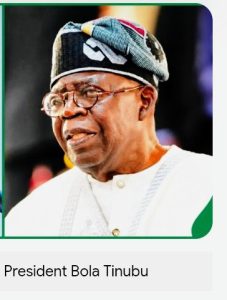
The Council described as shocking the President’s failure to condemn the growing wave of political violence, noting that, through his spokesman, Mr. Bayo Onanuga, the Presidency had instead chosen to caution opposition parties while shielding those allegedly responsible for violence within the ruling APC.
“President Tinubu cannot claim to desire peace when his own words provide cover for violence.
“‘All Is Fair in Politics’ is not the language of a Head of State. It is the language of political desperation and an open licence for thuggery, ballot snatching, intimidation and bloodshed.
“From Edo to Cross River, Gombe to Lagos, and Kebbi to Kaduna, Nigerians have witnessed attacks on opposition gatherings, destruction of campaign materials and the brutalisation of innocent supporters, allegedly by APC-sponsored thugs.
“Yet, Mr. President has not considered it necessary to call his governors and party members to order.
“Instead, the Presidency has resorted to diversionary tactics, blaming victims and preaching restraint to the opposition while members of the ruling party are accused of unleashing violence across the country,” the statement said.
The ADC-PCC challenged President Tinubu to explain why his condemnation of political violence appears directed at the opposition rather than members of his own party.
It asked: “Why has Mr. President refused to condemn APC governors who openly threaten opposition supporters? Why has he remained silent over public incitement by officials of his party? Why is his anger always directed at the opposition and never at those within his own political fold?”
The Council maintained that the ADC remains committed to peaceful, issue-based political engagement, insisting that its campaign is focused on addressing the country’s pressing challenges, including hunger, insecurity, unemployment, corruption and what it described as the failures of the Tinubu administration.
It accused the APC of resorting to violence because it had little to offer Nigerians in terms of credible solutions to the country’s problems.
Consequently, the ADC-PCC demanded that President Tinubu immediately and publicly withdraw his “All Is Fair in Politics” remark, condemn and call to order APC governors and party officials accused of inciting violence, and direct security agencies to protect all Nigerians impartially rather than allow them to become instruments of intimidation and oppression against opposition parties.
” Nigeria belongs to all of us. No political ambition is worth the blood of any Nigerian.
“If former President Goodluck Jonathan could make that profound declaration in 2015, President Tinubu has no excuse not to say so and demonstrate the sincerity of his commitment to peace in 2026.
“The ADC will not be intimidated. We will continue to campaign peacefully, and in 2027, Nigerians will have the opportunity to vote for competence, integrity and a new beginning,” the statement added.




-
News5 days ago
IGP Disu decorates 29 senior police officers with new ranks….charges them on professionalism, integrity,others
-
News4 days ago
Airstrikes kill 40 ISWAP terrorists in Borno
-
News4 days ago
We finally received CTC Of Lifu’s Judgement, without Atiku, Other Candidates Names Mentioned—Senator Melaye
-
News4 days ago
2026 U-17 WWC: Tinubu rewards each Flamingos player with ₦100m
-
News5 days ago
How Federal High Court Chief judge is beign blackmailed with EFCC, CCB- ADC Campaign Council
-
News2 days ago
Crowd Shouts ‘Bamayi’ at Tinubu, pelt convoy in Abuja
-
News5 days ago
Oil slump opens door to cheaper petrol for Nigerians …as Brent hits lowest since August
-
News4 days ago
2027: APC sacks kindergarteen Campaign Spokespersons…..Yari, Alake, Idris, now to speak for council