

News
Another blow on ISWAP, Abu Khalid killed

…….Abu Khalid’s killing is a major victory for Nigerian troops fighting terror_
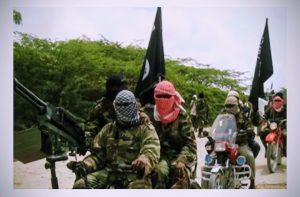
Troops of the military joint task force in Nigeria’s Northeast recorded another major breakthrough in their battle against terrorists with the killing, early last week, of a senior Boko Haram/Islamic State West Africa Province (ISWAP) leader, Abu Khalid. Khalid, reported to be the second-in-command of Boko Haram in Sambisa Forest got killed alongside 10 other insurgents in a coordinated night operation by troops of Operation Hadin Kai (OPHK) in Komala area of Konduga local council area of Borno State on February 1.
The feat, according to a statement by the Media Officer of OPHK, Lieutenant-Colonel Sani Uba, followed a fierce encounter between troops of Sector 1 working with members of the Civilian Joint Task Force (CJTF) under Operation Desert Sanity, on one hand, and the terrorists on the other. He said Khalid was a high-value target within the terrorist hierarchy, as he was responsible for coordinating insurgent operations and logistics across the Sambisa axis. His killing, the military spokesman noted, marked a significant disruption of the group’s command structure.
Following the Sambisa encounter, troops recovered from the terrorists five AK-47 rifles, magazines, several bicycles, assorted logistics and food items, as well as a large stock of medical consumables. No casualty was recorded among the troops. Col. Uba said troops’ morale remained high as clearance operations continued across Sambisa Forest, Mandara Mountains, Timbuktu Triangle and other known terrorist enclaves in the Northeast region.
Khalid’s killing came barely 24 hours after troops eliminated another notorious ISWAP commander, Julaibib, during a separate encounter in the Gujba axis of the Timbuktu Triangle. Military intelligence, according to Uba, indicated that the successive blows have thrown terrorist elements into disarray. He reaffirmed the commitment of soldiers to sustaining the tempo of operations until all terrorists are neutralised, with lasting peace and economic stability restored.
In recent times, OPHK troops dealt serial blows on insurgents and other criminal elements in their operations across the theatre. Reports said while taking on Julaibib in a fierce fight around Kimba in Damboa local council area on January 30, troops also killed several terrorists and thereby significantly undermined their fighting power.
Also, troops working alongside the CJTF operatives neutralised three terrorists during a well-coordinated ambush between Ngazalgana and Lamusheri communities in Borno State, following credible intelligence on insurgent movements. Two AK-47 rifles were recovered, while surviving terrorists fled with gunshot wounds.
A day earlier, another ambush in Gwoza local council area forced Boko Haram and ISWAP elements to retreat, with one insurgent neutralised and two motorcycles recovered.
The insurgency in Nigeria has killed more than 40,000 people and displaced some two million in the Northeast since it erupted in 2009, according to figures by the United Nations. The syndrome was compounded by operations of jihadist groups in the Sahel states of Niger, Mali and Burkina Faso, and has spilled into neighbouring Cameroon and Chad, necessitating a sub-regional Multi-National Joint Task Force (MNJTF) to fight cross-border terrorism in the Lake Chad Basin.
In January, an ISWAP roadside bomb along the Wajiroko–Azir axis in the Damboa district wounded several soldiers.
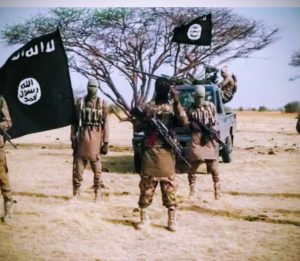
Although the intensity has waned compared to nearly a decade ago when Boko Haram insurgents controlled swathes of Nigerian territory, terrorists yet strike occasionally and largely provide the general ambience in which bandits perpetrate kidnapping attacks against the citizenry.
Only last week, some 175 persons were reported massacred in Woro, Kwara State; and that is not mentioning about 35 persons reported killed in Doma village, Faskari council area of Katsina State.
In 2025, operations by troops of OPHK resulted in the death of scores of Boko Haram members, including a high-ranking commander and ally of notorious bandit leader, Bello Turji.
Even this year, troops working with local vigilantes conducted a fighting patrol along the Amtasa-Washim axis in Hong council area of Adamawa State, during which they engaged terrorists, rescued abductees and recovered weapons.
The military deserves commendation for gallant efforts in the war against terrorists. But the battle is far from being won. Those criminal actors yet find openings to wreak havoc against hapless citizens, leaving sorrow, tears and blood in their trail.
Amidst remarkable successes in the campaign against insecurity, the ultimate objective of the military should be to stop terrorists completely in their tracks.

The United States government has insisted that Nigeria should retain its Country of Particular Concern, CPC, designation, saying the country has not done enough to protect Christians from attacks.
Assistant Secretary of State for African Affairs, Frank Garcia, made this statement on Thursday during a congressional hearing on violence in Nigeria.
Garcia was responding to questions from US Congressman Riley Moore, who asked about the government’s efforts to dismantle militia strongholds and kidnapping camps in the Middle Belt, particularly in Benue and Plateau states.
Moore also raised concerns over the exclusion of the states from the forest guard initiative and delays in deploying 1,000 approved guards to Plateau.
“Before you answer that, we cannot take this CPC designation off of this country. They have not done enough,” Moore said.
Garcia acknowledged the lack of progress, but said Nigeria was taking steps to address the concerns, although they had yet to produce results.
He said the country’s security capacity was still being developed and that deployments were not happening fast enough.
“Unfortunately, the violence has not stopped,” Garcia added, citing continued attacks in Kaduna and Plateau states.
He said the US had provided police training and equipment, expanded intelligence sharing and worked with Nigerian financial institutions to disrupt terrorist financing.
Garcia added that Washington would continue diplomatic engagements and security cooperation to protect vulnerable communities and ensure accountability.
However, the Nigerian government has consistently rejected claims of a “Christian genocide” or targeted religious persecution, maintaining that insecurity affects Nigerians of all faiths.


Liquefied Petroleum Gas, commonly known as cooking gas, has risen significantly, forcing Nigerians to spend more to purchase the product.
The increase comes as depot owners and retailers raised their prices over the past two days.
StockGap increased its depot price by N25 to N1,440 per kilogram. Nigerian Independent Petroleum Company Limited, NIPCO, Mobil (now 11 Plc) and Ardova, on the other hand, sold the product at N1,400 and N1,390 per kilogram, respectively.
Similarly, LPG retail outlets, including Raniol, Juda Oil and Nigerian National Petroleum Company Limited, NNPC, outlets in Abuja and its environs, now dispense cooking gas at between N1,550 and N1,600 per kilogram, up from N1,400 and N1,500.
Micro-LPG dealers sell the product for between N1,700 and N1,800 per kilogram, depending on the location in Abuja.
Earlier, NIPCO’s spokesperson, Taofeek Lawal, had exclusively told DAILY POST that LPG prices could increase further between November and January next year.
The latest price increase means that Nigerians who previously spent N17,500 to refill a 12.5kg cylinder at N1,400 per kilogram will now pay N20,000 at the new rate of N1,600 per kilogram, representing an additional N2,500.
News
2027: Tinubu Must Withdraw ‘All Is Fair in Politics’ Remark, Embrace Peaceful Coexistence — ADC-PCC
The African Democratic Congress Presidential Campaign Council (ADC-PCC) has called on President Bola Ahmed Tinubu to publicly retract his controversial “All Is Fair in Politics” remark, warning that such rhetoric fuels political division, emboldens thugs and poses a grave threat to the nation’s peace and stability.
The ADC-PCC also expressed concern over what it described as the President’s disturbing silence on the conduct of some APC governors and party chieftains who have openly made inflammatory statements and allegedly encouraged political violence.
In a statement signed by its Director of Media and Publicity, Kola Ologbondiyan, the ADC-PCC urged President Tinubu to rise above partisan interests and demonstrate the statesmanship expected of a national leader, citing former President Goodluck Jonathan’s unequivocal declaration that no presidential ambition was worth the blood of any Nigerian.
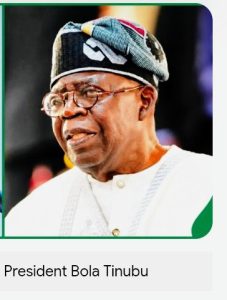
The Council described as shocking the President’s failure to condemn the growing wave of political violence, noting that, through his spokesman, Mr. Bayo Onanuga, the Presidency had instead chosen to caution opposition parties while shielding those allegedly responsible for violence within the ruling APC.
“President Tinubu cannot claim to desire peace when his own words provide cover for violence.
“‘All Is Fair in Politics’ is not the language of a Head of State. It is the language of political desperation and an open licence for thuggery, ballot snatching, intimidation and bloodshed.
“From Edo to Cross River, Gombe to Lagos, and Kebbi to Kaduna, Nigerians have witnessed attacks on opposition gatherings, destruction of campaign materials and the brutalisation of innocent supporters, allegedly by APC-sponsored thugs.
“Yet, Mr. President has not considered it necessary to call his governors and party members to order.
“Instead, the Presidency has resorted to diversionary tactics, blaming victims and preaching restraint to the opposition while members of the ruling party are accused of unleashing violence across the country,” the statement said.
The ADC-PCC challenged President Tinubu to explain why his condemnation of political violence appears directed at the opposition rather than members of his own party.
It asked: “Why has Mr. President refused to condemn APC governors who openly threaten opposition supporters? Why has he remained silent over public incitement by officials of his party? Why is his anger always directed at the opposition and never at those within his own political fold?”
The Council maintained that the ADC remains committed to peaceful, issue-based political engagement, insisting that its campaign is focused on addressing the country’s pressing challenges, including hunger, insecurity, unemployment, corruption and what it described as the failures of the Tinubu administration.
It accused the APC of resorting to violence because it had little to offer Nigerians in terms of credible solutions to the country’s problems.
Consequently, the ADC-PCC demanded that President Tinubu immediately and publicly withdraw his “All Is Fair in Politics” remark, condemn and call to order APC governors and party officials accused of inciting violence, and direct security agencies to protect all Nigerians impartially rather than allow them to become instruments of intimidation and oppression against opposition parties.
” Nigeria belongs to all of us. No political ambition is worth the blood of any Nigerian.
“If former President Goodluck Jonathan could make that profound declaration in 2015, President Tinubu has no excuse not to say so and demonstrate the sincerity of his commitment to peace in 2026.
“The ADC will not be intimidated. We will continue to campaign peacefully, and in 2027, Nigerians will have the opportunity to vote for competence, integrity and a new beginning,” the statement added.





-
News5 days ago
IGP Disu decorates 29 senior police officers with new ranks….charges them on professionalism, integrity,others
-
News4 days ago
Airstrikes kill 40 ISWAP terrorists in Borno
-
News4 days ago
We finally received CTC Of Lifu’s Judgement, without Atiku, Other Candidates Names Mentioned—Senator Melaye
-
News4 days ago
2026 U-17 WWC: Tinubu rewards each Flamingos player with ₦100m
-
News5 days ago
How Federal High Court Chief judge is beign blackmailed with EFCC, CCB- ADC Campaign Council
-
News2 days ago
Crowd Shouts ‘Bamayi’ at Tinubu, pelt convoy in Abuja
-
News5 days ago
Oil slump opens door to cheaper petrol for Nigerians …as Brent hits lowest since August
-
News5 days ago
Nigerian Businessman Hands IGP Disu 7 Days Tọ Probe Police Officers Over Alleged Release Of Recovered N600m Rolls-Royce To Suspects