

News
Alleviating Poverty: 75000 To poorest of poorest ,a trash


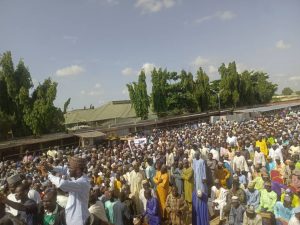
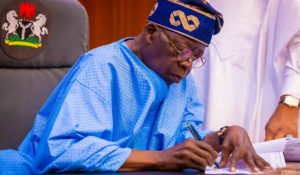
….Nigeria has no database for Poor
…Change guard,transfers can’t mitigate poverty-experts
Some Nigerian Economists and development experts have faulted the Federal Government’s 75000 cash transfer to the poorest citizens as a tip in the iceberg to curtail the monumental suffering of Nigerians and alleviate poverty
They said the initiative is not only inadequate to address poverty but that such measures do not make significant impact and meaningful changes in the lives of the indigent .
Recall that in a statement last Sunday, Senior Special Assistant to the President on Public Affairs, Hon. Aliyu Audu said the Federal Government was set to distribute N75,000 cash payments to 70 million Nigerians as part of efforts to mitigate the effects of economic hardship and reduce poverty across the nation.
He informed that the initiative was in line with President Bola Tinubu’s commitment to alleviating the struggles faced by citizens and addressing the country’s growing poverty levels. Audu explained that this move reflects the administration’s dedication to improving the lives of Nigerians.
Also speaking on the initiative, Minister of Humanitarian Affairs and Poverty Reduction, Prof Nentawe Yilwatda, on Wednesday said the Federal Government was poised to distribute N75, 000 cash transfers to an estimated 70 million ‘poorest of the poor’ Nigerians this year.
Prof Yilwatda revealed that the ministry plans to deploy the programme across all 36 states of the federation by the end of January 2025, targeting the registration of up to 18.1 million Nigerian households through the National Identity Number (NIN) system.
“The target of the president is that we should target 15 million households,” he said. In the words of the minister, each household in the programme would have an average of four to five individuals, translating to a target of roughly 70 million individuals nationwide.
“We are doing the data capturing, but for now, the poorest of the poor that we have in our data is only 1.4 million with NIN. We are working with NIMC, deploying resources, and conducting training. NIMC has brought in more devices under a program with the World Bank to assist us in data capturing for those without NIN numbers.
“We are training in some states like Rivers, Kwara, Abuja, and Nasarawa, among others, and deploying to these states in the first round. By the end of January, we want to deploy across the 36 states to start capturing the NIN numbers of up to 18.1 million households. This will enable us to make payments to them for conditional cash transfers,” the minister said.
But Dr. Chijioke Ekechukwu, a former Director-General of the Abuja Chamber of Commerce and Industry (ACCI) and CEO of Dignity Finance, argued that while palliative programmes are common across the world, Nigeria’s approach is flawed due to inadequate databases and poor fiscal discipline.
“Every country of the world embarks on programmes to palliate the well-being of their citizens, especially during disaster periods. Nigeria’s case should not, therefore, be isolated. Unfortunately, we are not in any disaster period. We do not have the relevant database to determine prospective beneficial citizens. We do not have the right fiscal discipline to make it successful and effective.”
According to Okechukwu, the proposed cash distribution does not have the capacity to reduce financial pressures sustainably. He pointed out that as much as it has the semblance of a stopgap palliative, it is not likely to make any meaningful impact in alleviating poverty and hardship.
He insisted that even if all desired citizens receive the same amount, it does not have an enduring capacity to reduce their financial pressures.
“It is, therefore, not sustainable. The previous palliative measures did not obviously achieve the desired goals for many reasons, which include implementation and lack of sincerity of purpose. This one is not likely to achieve the requisite outcomes.”
The former DG emphasised the need for a robust database to identify beneficiaries by sector and state, alongside technical training for artisans.
“The government should actually create a robust database, sector by sector, state by state, and provide technical training for all skills. When these artisans have finished learning, they should be funded with minimal seed money,” Okechukwu stated.
Economist and development expert, Aliyu Ilias also criticised previous and on-going palliative programmes for their inability to achieve long-term development goals.
He cited examples of programmes initiated by successive administrations, including former Presidents Olusegun Obasanjo’s National Poverty Eradication Programme (NAPEP), Umaru Yar’Adua’s Wealth Creation Initiative, Goodluck Jonathan’s Subsidy Reinvestment Programme (SURE-P), and Buhari’s National Social Investment Programme (NSIP).
According to Ilias, “these measures have not reflected in people’s development or welfare. Palliatives are short-term interventions, lasting three to four months at best. For instance, if you provide N75,000 monthly for three months, the funds will be spent quickly, with no lasting benefit.”
The expert recommended a shift from cash transfers to long-term solutions like technical training, business investment, and creation of an enabling environment to foster growth of small-scale enterprises.
He also highlighted the need to depoliticize palliative distribution, and suggested a bottom-up approach involving traditional rulers, non-governmental organisations (NGOs), civil society organisations (CSOs), and religious institutions.
“The most effective approach is to create an enabling environment where people can work and earn, particularly by supporting small businesses. Encouraging and funding small businesses would yield better results.
“Giving out money while also increasing the cost of energy, telecommunications, and other essentials undermines any progress.
“So those interventions can never solve the problem of poverty. We need a structured approach to address these challenges. While direct cash transfers are an improvement because they reach beneficiaries directly, unlike previous systems prone to corruption, they remain short-term solutions.
“A more sustainable approach would involve investing in people’s businesses. Providing technical training, start-up funding, and tools for small-scale enterprises would solve more problems.” Ilias expressed concerns over political influence on the programme, emphasising that political office holders may find one way or the other to benefit their cronies. He therefore advised that it should be a bottom-up approach, and not a top-to- bottom approach.
“You do not allow those people to choose who benefits. Traditional rulers, people can actually identify, even NGOs, CSOs, churches, mosques, can easily identify who actually needs a palliative compared to allowing a politician to bring forward some names,” he advised.
Spokesperson of the Nigeria Labour Congress (NLC), Benson Upah, stated that while cash transfers are one way to reach out to the vulnerable people in the country, it should not be taken as a solution.
Upah urged the Federal Government to ensure that the process is transparent and that those who truly need the intervention are the beneficiaries.
“There are layers of interventions. Sometimes, these interventions can be in cash or in kind, such as reducing tariffs. For vulnerable ones, one of the ways is to get cash transfers. However, this process has to be transparent, has to be judicious, equitable and well thought out. It should never be an opportunity to be corrupt. I do not know the criteria they intend to use, but it should not be like what happened in the past.
“Also, there should be more effective and enduring ways of reaching out to the vulnerable people. The cash transfer should just be an emergency response thing because the money will finish almost immediately. So the government must find sustainable ways to effectively impact the lives of Nigerians who are seriously poor,” the labour leader.
Similarly, Auwal Musa Rafsanjani, Executive Director, Civil Society Legislative Advocacy Centre (CISLAC) believes that the proposed N75,000 cash transfers could provide short-term relief to some of the poorest Nigerians, helping to meet basic needs such as food and shelter.
On the other hand, Rafsanjani said that the transfers are unlikely to create long-term improvements in economic well-being if there is no sustainable economic empowerment framework, just as lack of productive investments or follow-up programmes will limit its effectiveness, leaving beneficiaries reliant on further hand-outs.
“To make a meaningful impact, such cash transfers would need to be consistent and complemented by broader economic programmes. Global best practices, such as conditional cash transfer programmes in Brazil’s Bolsa Família or Mexico’s Oportunidades, link payments to outcomes like children’s school attendance or maternal health check-ups. This ensures that cash transfers address structural poverty drivers while providing immediate support. However, given Nigeria’s fiscal struggles, such an initiative should be tied to cost-efficient social safety nets rather than recurring unconditional cash payments.”
Rafsanjani also noted that previous palliative measures, such as the COVID-19 stimulus packages, fell short due to poor implementation, limited transparency, and inadequate monitoring as many intended beneficiaries were excluded because the government lacked reliable data to target the most vulnerable Nigerians. “Additionally,” he said, “leakages and politicisation undermined the credibility of the interventions. Previous palliative measures, such as TraderMoni, were heavily politicised during elections, undermining their credibility and effectiveness. The disbursements created no lasting impact on economic empowerment, with most loans turning into bad debts, highlighting the inefficiency and unsustainability of such programmes when not properly structured and monitored. For the new initiative to succeed, these systemic issues must be addressed comprehensively.”
According to him, there is a risk of the cash transfer programme being politicized, with funds disproportionately benefiting party loyalists or specific regions. To avoid this, he suggested that the government must adopt transparent beneficiary identification processes and publish detailed lists of recipients, their BVNs, and geographic distribution.
He also advocated independent monitoring and evaluation by civil society organizations, development partners, and that international bodies should also be incorporated to build trust and prevent bias.
In order to achieve the purpose for which the money would be disbursed, the CISLAC Executive Director advised that government must adopt global best practices in identifying and reaching beneficiaries, such as developing a reliable social registry, similar to South Africa’s Integrated Social Information System, which tracks vulnerable households using biometric data, geographic information, and socioeconomic indicators.
He called on the government to leverage technology, using mobile money platforms, such as those used in Kenya’s M-PESA, to reach unbanked populations effectively and require partnerships with mobile operators and incentives to increase mobile phone penetration.
“Work with local governments, civil society organizations, and traditional leaders to identify vulnerable households through community-level engagement; Link cash transfers to measurable outcomes such as school enrolment, vaccination, or job training programmess to promote economic resilience and long-term impact; Public disclosure of the selection criteria, process, and results is essential to ensure accountability and transparency in the program’s execution.”

The United States government has insisted that Nigeria should retain its Country of Particular Concern, CPC, designation, saying the country has not done enough to protect Christians from attacks.
Assistant Secretary of State for African Affairs, Frank Garcia, made this statement on Thursday during a congressional hearing on violence in Nigeria.
Garcia was responding to questions from US Congressman Riley Moore, who asked about the government’s efforts to dismantle militia strongholds and kidnapping camps in the Middle Belt, particularly in Benue and Plateau states.
Moore also raised concerns over the exclusion of the states from the forest guard initiative and delays in deploying 1,000 approved guards to Plateau.
“Before you answer that, we cannot take this CPC designation off of this country. They have not done enough,” Moore said.
Garcia acknowledged the lack of progress, but said Nigeria was taking steps to address the concerns, although they had yet to produce results.
He said the country’s security capacity was still being developed and that deployments were not happening fast enough.
“Unfortunately, the violence has not stopped,” Garcia added, citing continued attacks in Kaduna and Plateau states.
He said the US had provided police training and equipment, expanded intelligence sharing and worked with Nigerian financial institutions to disrupt terrorist financing.
Garcia added that Washington would continue diplomatic engagements and security cooperation to protect vulnerable communities and ensure accountability.
However, the Nigerian government has consistently rejected claims of a “Christian genocide” or targeted religious persecution, maintaining that insecurity affects Nigerians of all faiths.


Liquefied Petroleum Gas, commonly known as cooking gas, has risen significantly, forcing Nigerians to spend more to purchase the product.
The increase comes as depot owners and retailers raised their prices over the past two days.
StockGap increased its depot price by N25 to N1,440 per kilogram. Nigerian Independent Petroleum Company Limited, NIPCO, Mobil (now 11 Plc) and Ardova, on the other hand, sold the product at N1,400 and N1,390 per kilogram, respectively.
Similarly, LPG retail outlets, including Raniol, Juda Oil and Nigerian National Petroleum Company Limited, NNPC, outlets in Abuja and its environs, now dispense cooking gas at between N1,550 and N1,600 per kilogram, up from N1,400 and N1,500.
Micro-LPG dealers sell the product for between N1,700 and N1,800 per kilogram, depending on the location in Abuja.
Earlier, NIPCO’s spokesperson, Taofeek Lawal, had exclusively told DAILY POST that LPG prices could increase further between November and January next year.
The latest price increase means that Nigerians who previously spent N17,500 to refill a 12.5kg cylinder at N1,400 per kilogram will now pay N20,000 at the new rate of N1,600 per kilogram, representing an additional N2,500.
News
2027: Tinubu Must Withdraw ‘All Is Fair in Politics’ Remark, Embrace Peaceful Coexistence — ADC-PCC
The African Democratic Congress Presidential Campaign Council (ADC-PCC) has called on President Bola Ahmed Tinubu to publicly retract his controversial “All Is Fair in Politics” remark, warning that such rhetoric fuels political division, emboldens thugs and poses a grave threat to the nation’s peace and stability.
The ADC-PCC also expressed concern over what it described as the President’s disturbing silence on the conduct of some APC governors and party chieftains who have openly made inflammatory statements and allegedly encouraged political violence.
In a statement signed by its Director of Media and Publicity, Kola Ologbondiyan, the ADC-PCC urged President Tinubu to rise above partisan interests and demonstrate the statesmanship expected of a national leader, citing former President Goodluck Jonathan’s unequivocal declaration that no presidential ambition was worth the blood of any Nigerian.
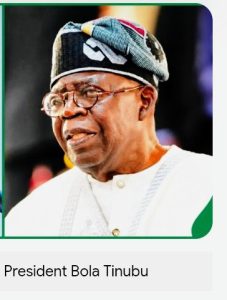
The Council described as shocking the President’s failure to condemn the growing wave of political violence, noting that, through his spokesman, Mr. Bayo Onanuga, the Presidency had instead chosen to caution opposition parties while shielding those allegedly responsible for violence within the ruling APC.
“President Tinubu cannot claim to desire peace when his own words provide cover for violence.
“‘All Is Fair in Politics’ is not the language of a Head of State. It is the language of political desperation and an open licence for thuggery, ballot snatching, intimidation and bloodshed.
“From Edo to Cross River, Gombe to Lagos, and Kebbi to Kaduna, Nigerians have witnessed attacks on opposition gatherings, destruction of campaign materials and the brutalisation of innocent supporters, allegedly by APC-sponsored thugs.
“Yet, Mr. President has not considered it necessary to call his governors and party members to order.
“Instead, the Presidency has resorted to diversionary tactics, blaming victims and preaching restraint to the opposition while members of the ruling party are accused of unleashing violence across the country,” the statement said.
The ADC-PCC challenged President Tinubu to explain why his condemnation of political violence appears directed at the opposition rather than members of his own party.
It asked: “Why has Mr. President refused to condemn APC governors who openly threaten opposition supporters? Why has he remained silent over public incitement by officials of his party? Why is his anger always directed at the opposition and never at those within his own political fold?”
The Council maintained that the ADC remains committed to peaceful, issue-based political engagement, insisting that its campaign is focused on addressing the country’s pressing challenges, including hunger, insecurity, unemployment, corruption and what it described as the failures of the Tinubu administration.
It accused the APC of resorting to violence because it had little to offer Nigerians in terms of credible solutions to the country’s problems.
Consequently, the ADC-PCC demanded that President Tinubu immediately and publicly withdraw his “All Is Fair in Politics” remark, condemn and call to order APC governors and party officials accused of inciting violence, and direct security agencies to protect all Nigerians impartially rather than allow them to become instruments of intimidation and oppression against opposition parties.
” Nigeria belongs to all of us. No political ambition is worth the blood of any Nigerian.
“If former President Goodluck Jonathan could make that profound declaration in 2015, President Tinubu has no excuse not to say so and demonstrate the sincerity of his commitment to peace in 2026.
“The ADC will not be intimidated. We will continue to campaign peacefully, and in 2027, Nigerians will have the opportunity to vote for competence, integrity and a new beginning,” the statement added.




-
News5 days ago
IGP Disu decorates 29 senior police officers with new ranks….charges them on professionalism, integrity,others
-
News4 days ago
Airstrikes kill 40 ISWAP terrorists in Borno
-
News4 days ago
We finally received CTC Of Lifu’s Judgement, without Atiku, Other Candidates Names Mentioned—Senator Melaye
-
News4 days ago
2026 U-17 WWC: Tinubu rewards each Flamingos player with ₦100m
-
News5 days ago
How Federal High Court Chief judge is beign blackmailed with EFCC, CCB- ADC Campaign Council
-
News2 days ago
Crowd Shouts ‘Bamayi’ at Tinubu, pelt convoy in Abuja
-
News5 days ago
Oil price fall: We ‘ll take appropriate action against marketers, petrol stations over unfair practices- FCCPC
-
News5 days ago
Nigerian Businessman Hands IGP Disu 7 Days Tọ Probe Police Officers Over Alleged Release Of Recovered N600m Rolls-Royce To Suspects