

News
After INEC ,Election Tribunal Confirms Tinubu Duly Elected President


After the declaration of the All Progressives Congress APC candidate in the February 25 Presidential election, Ahmed Bola Tinubu as President elect, the Presidential Election Petition Tribunal, yesterday, further endorsed the election of Bola Tinubu as the President of Nigeria
PEPC said it is satisfied that he was duly elected by a majority of the lawful votes and that the petitions against him lacked merit and were liable to be dismissed.
The court further held that the candidate of the Peoples Democratic Party (PDP), Atiku Abubakar and his Labour Party counterpart, Peter Obi, failed to prove allegations of substantial non-compliance, amongst others, against Tinubu, during the February 25, presidential election.
The ruling, which lasted over 12 hours and delivered by Justice Haruna Tsammani, however, addressed five fundamental issues in the various petitions, which have become the takeaways from the ruling.
They are that Abuja has effectively become Nigeria’s 37th state, and did not require the hitherto constitutional 25% votes in a presidential run; that INEC was not under any compulsion to use BVAS; that the electronic transmission of results was equally at the discretion of INEC; that Tinubu’s $460,000 forfeiture was not criminal in anyway and lastly, that the candidacy of the president was fit and proper.
According to the tribunal, which cleared the air on the controversial 25% of votes accruable to winner in Abuja, the Federal capital territory, said it was not a requirement for the declaration of result, adding also that the Independent National Electoral Commission (INEC) was not under any legal compulsion to transmit results electronically.
The tribunal, which addressed both the pre and election matters, argued that the issue of the $460,000, allegedly forfeited by Tinubu to the United States government following his alleged involvement in drug dealings was not a criminal forfeiture.
A five-member panel of the court affirmed Tinubu’s election shortly after it dismissed the three separate petitions filed by Atiku, Obi and the Allied People’s Movement (APM).
The panel led by Justice Haruna Tsammani held that the case of the three petitioners lacked merit and liable for dismissal.
“I affirmed the return of Bola Tinubu as duly elected as President of the Federal Republic of Nigeria,” Tsammani announced at the end of over 12 hours delivery of judgments in the three separate petitions.
The panel, in the unanimous judgment, held that the petitioners all failed to prove allegations of irregularities, malpractices, corrupt practices, substantial non-compliance amongst others.
Specifically, the three petitioners had sought the nullification of Tinubu’s election on the grounds that INEC did not comply with the guidelines for the conduct of the 2023 polls as it concerned electronic transmission of election results real time from the polling units unto INEC’s Results Viewing (IReV) portals.
They further submitted that Tinubu ought to be disqualified from the polls on account of the double/multiple nomination of his then vice-president nominee; alleged forfeiture of the sum of $460,000 to a United States District Court for alleged complicity in drug related offences, and his academic records as well as alleged citizenship of Guinea.
The tribunal, against these backgrounds, held that the petitioners failed to establish beyond reasonable doubts claims of substantial non-compliance, irregularities, corrupt practices amongst others.
Specifically, the tribunal held that neither Atiku nor Obi was able to prove alleged incidents of over voting, manipulation of results amongst others.
Addressing Obi’s Petitions…
In the petition by Obi, the five-member panel stated that the petitioners failed to prove that Tinubu was found guilty of any offence involving any act of dishonesty, adding that evidence before the court showed that the forfeiture order against Tinubu was in a civil and not criminal matter.
Tsammani, though, agreed with the respondents that Tinubu was neither arraigned nor convicted in the US over any alleged crime to warrant his disqualification, he pointed out that documents tendered by the respondents confirmed that Tinubu was given a clean bill of health upon an enquiry from Nigeria.
Further faulting the petition, the tribunal held that Section 269(1&2), provided that such documents must be given under the hand of a Police official and must be accompanied with a certificate showing that the police officer has powers to sign such documents.
It however, pointed out that even if Tinubu were convicted for the alleged offence, for him to be disqualified from the 2023 election, the purported conviction must take place within 10 years of the election.
Unfortunately, the forfeiture order was made nearly three decades ago.
It went on to dismiss claim by Obi and LP that the election that produced Tinubu did not comply with the Electoral Act, 2022, on grounds that results of the election were not transmitted real time to the INEC’s Results Viewing (IReV) portals.
According to the judgment, there was nowhere in the Electoral Act, that stated election must be electronically transmitted for collation.
While pointing out that Sections 14&18 of the Electoral Act provided for the use of the Bi-modal Verification Accreditation System (BVAS) for the purpose of accreditation of voters, Tsammani emphasised that the “IReV is not a collation system.”
In interpreting the use of BVAS and the INEC IreV portal, the court said INEC was not mandated to use BVAS to upload election results to the IReV and that INEC could not be compelled to transmit election results electronically because it was not captured in the 2022 Electoral Act.
The court said only INEC had the right to decide what channels to use in uploading election results.
“By the provision of Section 52 and Section 65 of the Electoral Act, INEC is at liberty to prescribe the manner in which results can be transmitted. INEC cannot be compelled to electronically transmit results,” the tribunal held.
The court also held that the petitioners failed to prove that the glitches faced in uploading election results was deliberate to distort election results as alleged.
The court admitted that there were technical glitches in uploading results, but concluded that the petitioners failed to prove the exact polling units where election results were not uploaded electronically.
Ruling on preliminary objection, the court dismissed some of the evidence byObi, on the grounds that they were tendered outside of the 21 days required by law.
It said most of the evidence submitted by Obi were late and could not be joined to his petitions and were therefore struck out accordingly.
Having struck out the evidence of the affected witnesses, Tsammani went ahead to expunged their testimonies from the records of the court.
In the Petition By Atiku…
Addressing the petition by Atiku, the tribunal held that for any election to be nullified, there must be proof of substantial non-compliance, corrupt practices and other irregularities.
It observed that while the petitioners failed to give particulars of malpractices in their petition, the evidence of the few witnesses called could not be relied upon, having not witnessed alleged acts of irregularities or corrupt practices.
Atiku had called only 27 witnesses to prove his allegations of irregularities, and corrupt practices amongst others.
But it was the position of the court that the 27 witnesses called were inadequate, considering the fact that elections took place in over 176,000 polling units across the country, to which the petitioners claimed their agents monitored.
The tribunal observed that rather than call the polling units agents, who witnessed the alleged irregularities and corrupt practices, the petitioners called collation agents whose evidence were at best “hearsay”.
On the issue of electronic transmission, the panel reiterated its earlier position that the Electoral Act did not make provisions for electronic transmission of election results, adding that IReV was not a part of the collation process.
Again, on the issue of qualification, the court held that the petitioners did not plead facts in the qualification and disqualification of Tinubu, hence the issue was discountenanced by the court.
The tribunal also took time to address issues relating to Tinubu’s alleged citizenship of Guinea, academic records, and forfeiture of the sum of $460,000 to the US.
Atiku had in his reply to Tinubu, submitted that he was constitutionally disabled from contesting for the office of President of Federal Republic of Nigeria because he forfeited the sum of $460,000 in a compromise agreement for narcotics related crime (proceeds of crime) in the United States District Court, Northern District of Illinois Eastern Division.
He claimed, in addition, that Tinubu failed to disclose in his form EC9 that he held dual citizenship of Nigeria and Guinea, having voluntarily acquired the citizenship of the Republic of Guinea.
But, the tribunal maintained that Atiku and PDP could not smuggle new issues not pleaded in their petition on the grounds of non-qualification.
However, earlier, the tribunal had struck out several paragraphs relied upon by Atiku and PDP in seeking the nullification of Tinubu’s election.
Besides, several exhibits including witnesses’ statements tendered to establish allegations of irregularities, malpractices against the February 25 presidential election were rejected and discontenanced by the tribunal.
It was the position of the court that several facts fundamentally required to support the petition were not provided by Atiku.
Atiku was said to have failed and neglected to name places where ballot boxes were snatched, the ways and manners the BVAS machine were manipulated and names of polling boots where alleged malpractices took place, among other allegations.
The petitioners, who claimed to have polled the majority of lawful votes was said to have failed to state in clear terms, the total lawful votes he claimed to have scored.
The court held that, while Atiku alleged that Tinubu did not score the majority of lawful votes, he refused to make the perceived lawful votes known in his petition to the Tribunal.
Similarly, the tribunal stated that the former vice-president made grievous allegations against Kogi State governor, Yahaya Bello and Chairman of Olamaboro Local Government of Kogi, Friday Adejoh, but neglected to join them as respondents in the petition.
It was the position of the tribunal that failure to join the governor, who was accused of electoral fraud was fatal to the petition, because the governor was denied opportunity to defend himself as required by law.
The tribunal, in another breath, dismissed the allegations of over-voting all over Nigeria by the petitioner, adding that such pleadings ran foul of the law because the specific places where the alleged over-voting took place were not mentioned.
Earlier, while dismissing the petition by APM, the tribunal agreed with the respondents that the petition was incompetent, lacking in merit, and an abuse of court processes on the grounds that the case was a pre-election matter.
The tribunal stated that the case of the petitioner having been a pre-election matter ought to be filed at the Federal High Court, not before the tribunal.
It added that even if the tribunal had powers to hear the case, it had already become statute barred, having not been filed within 14 days as prescribed by law.
According to the tribunal, its findings showed that the case of the APM was premised on the alleged unlawful nomination and sponsorship of the Vice-President, Kashim Shettima, which ought to be a pre-election matter.
Tsammani observed that the issue of qualification and disqualification of a candidate was a constitutional matter, adding that the issue of nomination did not flow from the grounds of disqualification as provided for in the Constitution.
In further holding that the suit was incompetent, the tribunal agreed with the respondents that the petitioner lacked the necessary locus standi to file the case in the first place, since it did not participate in the primary election of the APC.
Meanwhile, delivering judgment in the main petition, the panel held that the petitioner failed to prove that Tinubu breached Section 35 of the Electoral Act, 2022, when he nominated Shettima as his Vice, adding that it was the president’s prerogative to choose his running mate.
It pointed out that Shettima did not knowingly allowed himself to be nominated in more than one constituency, and as such, the case of the petitioner was faulty because Shettima never obtained any nomination form for the position of vice-president and did not contest any primary election for the position.
In addition, the court held that the issue of alleged double nomination has been dealt with by the Supreme Court, and as the final court in the land, no other court could adjudicate in it.
“The petitioner failed to prove that Tinubu was not qualified to contest the February 25 presidential election on the grounds of double nomination,” the court held.
The PEPC, has however, affirmed the underlisted:
- Abuja now effectively 37th state, 25% votes not required
- BVAS dumped
- Electronic transmission of results discretionary
- Tinubu’s $460,000 forfeiture not criminal
- President’s candidacy fit and proper
x
After the declaration of the All Progressives Congress APC candidate in the February 25 Presidential election, Ahmed Bola Tinubu as President elect, the Presidential Election Petition Tribunal, yesterday, further endorsed the election of Bola Tinubu as the President of Nigeria
PEPC said it is satisfied that he was duly elected by a majority of the lawful votes and that the petitions against him lacked merit and were liable to be dismissed.
The court further held that the candidate of the Peoples Democratic Party (PDP), Atiku Abubakar and his Labour Party counterpart, Peter Obi, failed to prove allegations of substantial non-compliance, amongst others, against Tinubu, during the February 25, presidential election.
The ruling, which lasted over 12 hours and delivered by Justice Haruna Tsammani, however, addressed five fundamental issues in the various petitions, which have become the takeaways from the ruling.
They are that Abuja has effectively become Nigeria’s 37th state, and did not require the hitherto constitutional 25% votes in a presidential run; that INEC was not under any compulsion to use BVAS; that the electronic transmission of results was equally at the discretion of INEC; that Tinubu’s $460,000 forfeiture was not criminal in anyway and lastly, that the candidacy of the president was fit and proper.
According to the tribunal, which cleared the air on the controversial 25% of votes accruable to winner in Abuja, the Federal capital territory, said it was not a requirement for the declaration of result, adding also that the Independent National Electoral Commission (INEC) was not under any legal compulsion to transmit results electronically.
The tribunal, which addressed both the pre and election matters, argued that the issue of the $460,000, allegedly forfeited by Tinubu to the United States government following his alleged involvement in drug dealings was not a criminal forfeiture.
A five-member panel of the court affirmed Tinubu’s election shortly after it dismissed the three separate petitions filed by Atiku, Obi and the Allied People’s Movement (APM).
The panel led by Justice Haruna Tsammani held that the case of the three petitioners lacked merit and liable for dismissal.
“I affirmed the return of Bola Tinubu as duly elected as President of the Federal Republic of Nigeria,” Tsammani announced at the end of over 12 hours delivery of judgments in the three separate petitions.
The panel, in the unanimous judgment, held that the petitioners all failed to prove allegations of irregularities, malpractices, corrupt practices, substantial non-compliance amongst others.
Specifically, the three petitioners had sought the nullification of Tinubu’s election on the grounds that INEC did not comply with the guidelines for the conduct of the 2023 polls as it concerned electronic transmission of election results real time from the polling units unto INEC’s Results Viewing (IReV) portals.
They further submitted that Tinubu ought to be disqualified from the polls on account of the double/multiple nomination of his then vice-president nominee; alleged forfeiture of the sum of $460,000 to a United States District Court for alleged complicity in drug related offences, and his academic records as well as alleged citizenship of Guinea.
The tribunal, against these backgrounds, held that the petitioners failed to establish beyond reasonable doubts claims of substantial non-compliance, irregularities, corrupt practices amongst others.
Specifically, the tribunal held that neither Atiku nor Obi was able to prove alleged incidents of over voting, manipulation of results amongst others.
Addressing Obi’s Petitions…
In the petition by Obi, the five-member panel stated that the petitioners failed to prove that Tinubu was found guilty of any offence involving any act of dishonesty, adding that evidence before the court showed that the forfeiture order against Tinubu was in a civil and not criminal matter.
Tsammani, though, agreed with the respondents that Tinubu was neither arraigned nor convicted in the US over any alleged crime to warrant his disqualification, he pointed out that documents tendered by the respondents confirmed that Tinubu was given a clean bill of health upon an enquiry from Nigeria.
Further faulting the petition, the tribunal held that Section 269(1&2), provided that such documents must be given under the hand of a Police official and must be accompanied with a certificate showing that the police officer has powers to sign such documents.
It however, pointed out that even if Tinubu were convicted for the alleged offence, for him to be disqualified from the 2023 election, the purported conviction must take place within 10 years of the election.
Unfortunately, the forfeiture order was made nearly three decades ago.
It went on to dismiss claim by Obi and LP that the election that produced Tinubu did not comply with the Electoral Act, 2022, on grounds that results of the election were not transmitted real time to the INEC’s Results Viewing (IReV) portals.
According to the judgment, there was nowhere in the Electoral Act, that stated election must be electronically transmitted for collation.
While pointing out that Sections 14&18 of the Electoral Act provided for the use of the Bi-modal Verification Accreditation System (BVAS) for the purpose of accreditation of voters, Tsammani emphasised that the “IReV is not a collation system.”
In interpreting the use of BVAS and the INEC IreV portal, the court said INEC was not mandated to use BVAS to upload election results to the IReV and that INEC could not be compelled to transmit election results electronically because it was not captured in the 2022 Electoral Act.
The court said only INEC had the right to decide what channels to use in uploading election results.
“By the provision of Section 52 and Section 65 of the Electoral Act, INEC is at liberty to prescribe the manner in which results can be transmitted. INEC cannot be compelled to electronically transmit results,” the tribunal held.
The court also held that the petitioners failed to prove that the glitches faced in uploading election results was deliberate to distort election results as alleged.
The court admitted that there were technical glitches in uploading results, but concluded that the petitioners failed to prove the exact polling units where election results were not uploaded electronically.
Ruling on preliminary objection, the court dismissed some of the evidence byObi, on the grounds that they were tendered outside of the 21 days required by law.
It said most of the evidence submitted by Obi were late and could not be joined to his petitions and were therefore struck out accordingly.
Having struck out the evidence of the affected witnesses, Tsammani went ahead to expunged their testimonies from the records of the court.
In the Petition By Atiku…
Addressing the petition by Atiku, the tribunal held that for any election to be nullified, there must be proof of substantial non-compliance, corrupt practices and other irregularities.
It observed that while the petitioners failed to give particulars of malpractices in their petition, the evidence of the few witnesses called could not be relied upon, having not witnessed alleged acts of irregularities or corrupt practices.
Atiku had called only 27 witnesses to prove his allegations of irregularities, and corrupt practices amongst others.
But it was the position of the court that the 27 witnesses called were inadequate, considering the fact that elections took place in over 176,000 polling units across the country, to which the petitioners claimed their agents monitored.
The tribunal observed that rather than call the polling units agents, who witnessed the alleged irregularities and corrupt practices, the petitioners called collation agents whose evidence were at best “hearsay”.
On the issue of electronic transmission, the panel reiterated its earlier position that the Electoral Act did not make provisions for electronic transmission of election results, adding that IReV was not a part of the collation process.
Again, on the issue of qualification, the court held that the petitioners did not plead facts in the qualification and disqualification of Tinubu, hence the issue was discountenanced by the court.
The tribunal also took time to address issues relating to Tinubu’s alleged citizenship of Guinea, academic records, and forfeiture of the sum of $460,000 to the US.
Atiku had in his reply to Tinubu, submitted that he was constitutionally disabled from contesting for the office of President of Federal Republic of Nigeria because he forfeited the sum of $460,000 in a compromise agreement for narcotics related crime (proceeds of crime) in the United States District Court, Northern District of Illinois Eastern Division.
He claimed, in addition, that Tinubu failed to disclose in his form EC9 that he held dual citizenship of Nigeria and Guinea, having voluntarily acquired the citizenship of the Republic of Guinea.
But, the tribunal maintained that Atiku and PDP could not smuggle new issues not pleaded in their petition on the grounds of non-qualification.
However, earlier, the tribunal had struck out several paragraphs relied upon by Atiku and PDP in seeking the nullification of Tinubu’s election.
Besides, several exhibits including witnesses’ statements tendered to establish allegations of irregularities, malpractices against the February 25 presidential election were rejected and discontenanced by the tribunal.
It was the position of the court that several facts fundamentally required to support the petition were not provided by Atiku.
Atiku was said to have failed and neglected to name places where ballot boxes were snatched, the ways and manners the BVAS machine were manipulated and names of polling boots where alleged malpractices took place, among other allegations.
The petitioners, who claimed to have polled the majority of lawful votes was said to have failed to state in clear terms, the total lawful votes he claimed to have scored.
The court held that, while Atiku alleged that Tinubu did not score the majority of lawful votes, he refused to make the perceived lawful votes known in his petition to the Tribunal.
Similarly, the tribunal stated that the former vice-president made grievous allegations against Kogi State governor, Yahaya Bello and Chairman of Olamaboro Local Government of Kogi, Friday Adejoh, but neglected to join them as respondents in the petition.
It was the position of the tribunal that failure to join the governor, who was accused of electoral fraud was fatal to the petition, because the governor was denied opportunity to defend himself as required by law.
The tribunal, in another breath, dismissed the allegations of over-voting all over Nigeria by the petitioner, adding that such pleadings ran foul of the law because the specific places where the alleged over-voting took place were not mentioned.
Earlier, while dismissing the petition by APM, the tribunal agreed with the respondents that the petition was incompetent, lacking in merit, and an abuse of court processes on the grounds that the case was a pre-election matter.
The tribunal stated that the case of the petitioner having been a pre-election matter ought to be filed at the Federal High Court, not before the tribunal.
It added that even if the tribunal had powers to hear the case, it had already become statute barred, having not been filed within 14 days as prescribed by law.
According to the tribunal, its findings showed that the case of the APM was premised on the alleged unlawful nomination and sponsorship of the Vice-President, Kashim Shettima, which ought to be a pre-election matter.
Tsammani observed that the issue of qualification and disqualification of a candidate was a constitutional matter, adding that the issue of nomination did not flow from the grounds of disqualification as provided for in the Constitution.
In further holding that the suit was incompetent, the tribunal agreed with the respondents that the petitioner lacked the necessary locus standi to file the case in the first place, since it did not participate in the primary election of the APC.
Meanwhile, delivering judgment in the main petition, the panel held that the petitioner failed to prove that Tinubu breached Section 35 of the Electoral Act, 2022, when he nominated Shettima as his Vice, adding that it was the president’s prerogative to choose his running mate.
It pointed out that Shettima did not knowingly allowed himself to be nominated in more than one constituency, and as such, the case of the petitioner was faulty because Shettima never obtained any nomination form for the position of vice-president and did not contest any primary election for the position.
In addition, the court held that the issue of alleged double nomination has been dealt with by the Supreme Court, and as the final court in the land, no other court could adjudicate in it.
“The petitioner failed to prove that Tinubu was not qualified to contest the February 25 presidential election on the grounds of double nomination,” the court held.
The PEPC, has however, affirmed the underlisted:
- Abuja now effectively 37th state, 25% votes not required
- BVAS dumped
- Electronic transmission of results discretionary
- Tinubu’s $460,000 forfeiture not criminal
- President’s candidacy fit and proper
The United States government has insisted that Nigeria should retain its Country of Particular Concern, CPC, designation, saying the country has not done enough to protect Christians from attacks.
Assistant Secretary of State for African Affairs, Frank Garcia, made this statement on Thursday during a congressional hearing on violence in Nigeria.
Garcia was responding to questions from US Congressman Riley Moore, who asked about the government’s efforts to dismantle militia strongholds and kidnapping camps in the Middle Belt, particularly in Benue and Plateau states.
Moore also raised concerns over the exclusion of the states from the forest guard initiative and delays in deploying 1,000 approved guards to Plateau.
“Before you answer that, we cannot take this CPC designation off of this country. They have not done enough,” Moore said.
Garcia acknowledged the lack of progress, but said Nigeria was taking steps to address the concerns, although they had yet to produce results.
He said the country’s security capacity was still being developed and that deployments were not happening fast enough.
“Unfortunately, the violence has not stopped,” Garcia added, citing continued attacks in Kaduna and Plateau states.
He said the US had provided police training and equipment, expanded intelligence sharing and worked with Nigerian financial institutions to disrupt terrorist financing.
Garcia added that Washington would continue diplomatic engagements and security cooperation to protect vulnerable communities and ensure accountability.
However, the Nigerian government has consistently rejected claims of a “Christian genocide” or targeted religious persecution, maintaining that insecurity affects Nigerians of all faiths.


Liquefied Petroleum Gas, commonly known as cooking gas, has risen significantly, forcing Nigerians to spend more to purchase the product.
The increase comes as depot owners and retailers raised their prices over the past two days.
StockGap increased its depot price by N25 to N1,440 per kilogram. Nigerian Independent Petroleum Company Limited, NIPCO, Mobil (now 11 Plc) and Ardova, on the other hand, sold the product at N1,400 and N1,390 per kilogram, respectively.
Similarly, LPG retail outlets, including Raniol, Juda Oil and Nigerian National Petroleum Company Limited, NNPC, outlets in Abuja and its environs, now dispense cooking gas at between N1,550 and N1,600 per kilogram, up from N1,400 and N1,500.
Micro-LPG dealers sell the product for between N1,700 and N1,800 per kilogram, depending on the location in Abuja.
Earlier, NIPCO’s spokesperson, Taofeek Lawal, had exclusively told DAILY POST that LPG prices could increase further between November and January next year.
The latest price increase means that Nigerians who previously spent N17,500 to refill a 12.5kg cylinder at N1,400 per kilogram will now pay N20,000 at the new rate of N1,600 per kilogram, representing an additional N2,500.
News
2027: Tinubu Must Withdraw ‘All Is Fair in Politics’ Remark, Embrace Peaceful Coexistence — ADC-PCC
The African Democratic Congress Presidential Campaign Council (ADC-PCC) has called on President Bola Ahmed Tinubu to publicly retract his controversial “All Is Fair in Politics” remark, warning that such rhetoric fuels political division, emboldens thugs and poses a grave threat to the nation’s peace and stability.
The ADC-PCC also expressed concern over what it described as the President’s disturbing silence on the conduct of some APC governors and party chieftains who have openly made inflammatory statements and allegedly encouraged political violence.
In a statement signed by its Director of Media and Publicity, Kola Ologbondiyan, the ADC-PCC urged President Tinubu to rise above partisan interests and demonstrate the statesmanship expected of a national leader, citing former President Goodluck Jonathan’s unequivocal declaration that no presidential ambition was worth the blood of any Nigerian.
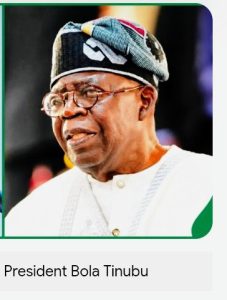
The Council described as shocking the President’s failure to condemn the growing wave of political violence, noting that, through his spokesman, Mr. Bayo Onanuga, the Presidency had instead chosen to caution opposition parties while shielding those allegedly responsible for violence within the ruling APC.
“President Tinubu cannot claim to desire peace when his own words provide cover for violence.
“‘All Is Fair in Politics’ is not the language of a Head of State. It is the language of political desperation and an open licence for thuggery, ballot snatching, intimidation and bloodshed.
“From Edo to Cross River, Gombe to Lagos, and Kebbi to Kaduna, Nigerians have witnessed attacks on opposition gatherings, destruction of campaign materials and the brutalisation of innocent supporters, allegedly by APC-sponsored thugs.
“Yet, Mr. President has not considered it necessary to call his governors and party members to order.
“Instead, the Presidency has resorted to diversionary tactics, blaming victims and preaching restraint to the opposition while members of the ruling party are accused of unleashing violence across the country,” the statement said.
The ADC-PCC challenged President Tinubu to explain why his condemnation of political violence appears directed at the opposition rather than members of his own party.
It asked: “Why has Mr. President refused to condemn APC governors who openly threaten opposition supporters? Why has he remained silent over public incitement by officials of his party? Why is his anger always directed at the opposition and never at those within his own political fold?”
The Council maintained that the ADC remains committed to peaceful, issue-based political engagement, insisting that its campaign is focused on addressing the country’s pressing challenges, including hunger, insecurity, unemployment, corruption and what it described as the failures of the Tinubu administration.
It accused the APC of resorting to violence because it had little to offer Nigerians in terms of credible solutions to the country’s problems.
Consequently, the ADC-PCC demanded that President Tinubu immediately and publicly withdraw his “All Is Fair in Politics” remark, condemn and call to order APC governors and party officials accused of inciting violence, and direct security agencies to protect all Nigerians impartially rather than allow them to become instruments of intimidation and oppression against opposition parties.
” Nigeria belongs to all of us. No political ambition is worth the blood of any Nigerian.
“If former President Goodluck Jonathan could make that profound declaration in 2015, President Tinubu has no excuse not to say so and demonstrate the sincerity of his commitment to peace in 2026.
“The ADC will not be intimidated. We will continue to campaign peacefully, and in 2027, Nigerians will have the opportunity to vote for competence, integrity and a new beginning,” the statement added.





-
News5 days ago
IGP Disu decorates 29 senior police officers with new ranks….charges them on professionalism, integrity,others
-
News4 days ago
Airstrikes kill 40 ISWAP terrorists in Borno
-
News4 days ago
We finally received CTC Of Lifu’s Judgement, without Atiku, Other Candidates Names Mentioned—Senator Melaye
-
News4 days ago
2026 U-17 WWC: Tinubu rewards each Flamingos player with ₦100m
-
News5 days ago
How Federal High Court Chief judge is beign blackmailed with EFCC, CCB- ADC Campaign Council
-
News2 days ago
Crowd Shouts ‘Bamayi’ at Tinubu, pelt convoy in Abuja
-
News5 days ago
Oil slump opens door to cheaper petrol for Nigerians …as Brent hits lowest since August
-
News5 days ago
2027: ADC accuses Federal High Court of withholding David Mark sack judgment