

News
Adieu, the Lion: Tribute to Ghali Na’Abba

By Hon. Rimamnde Shawulu Kwewum


The news of the demise of the Hon Ghali Umar Na’Abba early on Wednesday was devastating. He, his family members and close friends had hoped and prayed hard for healing. No matter how death comes, I have always thought, however expected, no matter the circumstances, it leaves behind pains.
He was born on September 27, 1958, in Tudun Wada quarters, Municipal Local Government Area, Kano State. He was born into a family steeped in politics, power and business.
Na’Abba started his education at the Jakara Primary School, Kano after which he proceeded to Rumfa College, Kano and graduated in 1974.
He studied for his Advanced Levels at the College of Arts and Science (CASS), Kano, from where he proceeded to the Ahmadu Bello University (ABU), Zaria to study political science.
Na’Abba was exposed to radical political views early as a child through his father who was an active member of the Northern Elements Progressives Union (NEPU).
He lived in the same area as Mallam Aminu Kano, the unflappable leader of the radical NEPU and who surrounded himself with books that the young Na’Abba used to take home to read. That was how he got exposed to radical political literature.
Na’Abba graduated from the Ahmadu Bello University in 1979 when Nigeria’s Second Republic was ushered in. His exposure to politics started in 1978 when political parties were being formed preparatory to military handover to civilian rule in 1979.
Na’Abba joined the Peoples Redemption Party (PRP) while still in his final year in the university.
The late Alhaji Bashir Tofa, his mother’s brother was a member of the National Party of Nigeria (NPN). His uncle’s pull was too strong and the young Ghalib left the PRP and joined the NPN, though more as a supporter.
His sojourn in partisan politics started in 1993, when he joined the National Republican Convention (NRC) to assist his uncle, Alhaji Bashir Tofa, who was the party’s presidential candidate during the Gen. Ibrahim Babangida transition programme, and worked mainly in his constituency – Kano Municipal Area.
The NRC defeated the Social Democratic Party (SDP) in his constituency during the presidential election but lost in the state which voted for SDP’s Moshood Abiola.
He made many friends and this helped him a lot when he decided to contest for the House of Representatives in 1999.
Some members of the People’s Democratic Party (PDP) had approached him to contest for the House of Representatives to represent Kano Municipal federal constituency.
He was later elected Speaker of the House a few months after the house was inaugurated and following the resignation of Buhari Salisu, who was removed for lying about his date of birth and for certificate forgery. Na’Abba was unanimously elected as Buhari’s successor, even though most members of the house did not even know him as the house was just settling down. “I did not campaign to be speaker; I did not tell anybody that I wanted to be speaker. It was my colleagues who decided that I should lead them and that was what happened. Eventually I was the only person to be nominated for the position,” he said in an interview with AmazingTimes before his death.
I was introduced to him early in 2000 by the Hon. Adams Chigwa Jagaba Adams. The meeting took place in the official residence of the Speaker, House of Representatives. After a few minutes’ interaction, he asked me to join him as his legislative aide. Reluctantly, I had to abandon my position in Jos, where Governor Joshua Dariye had appointed me a member of the Interim Management Committee of the Plateau State publishing company. I was living my dream of reviving the Standard newspapers with the clearly spelt out objective of returning the newspaper to its lost glory. Jonathan Ishaku the Chairman of the committee had committed to me the task of running both the editorial and circulation departments. My surrogate uncle, Dr Bala Takaya was visibly upset that I had to leave such an assignment in Jos for Abuja. I came under the tremendous pressure of Hon. Jagaba to move to Abuja to become a legislative aide. If I remember correctly, I think Hon Jagaba got to Jos where his family was residing and insisted on driving me to Abuja himself where I resumed immediately. As a matter of fact, Rt Hon Ghali Umar Na’Abba was surprised that I had not resumed earlier.
We had no offices and usually crowded into the tiny office of the Chief of Staff, Haruna Ginsau, now a retired ambassador. I became the secretary of the meetings of the principal staff of the speaker. It was there I came face to face with office politics and discovered how naïve and unschooled I was. One of the things I learnt working in the Office of the Speaker then was that you could fly as high as your imagination and proactiveness. In the office of the Speaker, the principal officers came from nearly all parts of the country. Sebastian Agbinda, his classmate from Zaria as Special Adviser Special Duties; Chief Odiri, for Edo Economic Affairs; Hon Ezuiche Ubani, Abia, Media; Dr Wachi Anwar, Kano, Political Affairs; Ambassador Victor Udoyen, Akwa Ibom, Foreign Affairs and myself, Taraba State, Legislative Affairs.
As his legislative liaison, I was expected to review committee reports, among other responsibilities. Of course, at its infancy the committee reports had no format or standard. In one case, after more than a week tour, a committee turned into a two-page report detailing the names of members who traveled places and the dates of the trip. Many more got back to give verbal briefings.
One sore point at that time was the role of the legislative aides. Apart from the presiding officers’ aides who were in the pay roll of the National Assembly, legislative aides of the other members had their salaries paid into the accounts of their bosses at whose pleasure they served. I recall that once, Haruna Ginsau, the Chief of Staff, was asked to rise with the Clerk of the House to provide the functions of the legislative aides. A list of don’ts, numbering up to 19 or so was brought back with only one yes for Legislative Aides. For the bureaucracy, legislative aides were an unnecessary package, who had no place in the scheme of things.
Ghali Umar Na’Abba and Senator Pius Ayim, after the inauguration of the National Assembly Service Commission, began the process of integrating legislative aides into the National Assembly. He was a leader who allowed talent flourish. He was very receptive to ideas and would let those who bring out ideas to test them out. Several chairmen of committees who preferred ideas were busy conducting legislative affairs that included local and foreign travels. Naturally, those who did not have such ideas felt that Ghali had favorites. At one point when the criticisms, including falsehood, were so loud, we decided to arrange an interaction between him and the general public. It was a live internet chat anchored by Malam Ayuba Adamu who was administering a lively Yahoo group. Hundreds of Nigerians around the world hooked up; the Nigerian Television Authority, I think, recorded and cured the interactions. Arguably it was the first time a Nigerian leader had such a live interaction with bandwidth that was provided by Sonny Odogwu’s Siotel.
Ghali was eager to learn and copy best practices. He sent the Committee on health to Uganda to understudy the regulatory environment that made Uganda a success in combating HIV/AIDS. As an outcome of the tour of Uganda, a bill on the Establishment of Nigerian Commission on HIV/AIDS, sponsored by him and some members, was proposed. The bill was however stepped down for the executive bill on the establishment of the NACA. He also sponsored a bill to establish a commission to champion ICT development and training. This was also modelled after the Indian example, which saw to the development of ICT as a major foreign exchange generating sector in India, a similar executive bill resulted in the creation of the NITDA. Towards the end of his tenure, he sponsored series of bills under the Infrastructural Development bill Initiative.
He was soft spoken but tough within. At least nine different attempts were made to remove him from office. All plots failed, including the plot in which members of the House were induced with five hundred thousand naira each to sign an impeachment notice. Some members refused and at least two of them collected the five hundred thousand naira and handed to Hon Adams Jagaba, Chairman of the House on Ethics and Privileges. The following morning, the money was brought into the chambers of the House during plenary as evidence of an attempt to remove the Speaker.
“I couldn’t have survived the impeachments without those patriotic members. I thank my deputy, Chibudom Nwuche and all the principal officers, who stood behind me”, Na’Abba had said in an interview with AmazingTimes. (www.amazingtimesng.com)
The national outrage at the mega discovery of bribe to remove the Speaker brought some calm to the legislative. Before then, there had been the face-off between the National Assembly and the Executive over the bill to create the Niger Delta Development Commission. The bill was vetoed by President Olusegun Obasanjo over the percentage of the oil revenue that would go to the commission. The National Assembly voted to override the Presidential Veto. That was the first and last time the National Assembly (or any state House of Assembly) has been able to override a veto by the executive at any level – presidential or state.
He effectively managed the political and regional diversity in the house by carrying all the various groups along. He ran an open-door policy and ensured that appointments of chairmen of committees were all inclusive. He knew every member by name and members who thought he did not know then were soon surprised when he called them by name
He was an advocate of the independence of the legislature and he championed this with passion. This struggle for the independence of the legislature always put him at odds with the executive which did not like the idea of an independent legislature.
Then came the 2003 elections. His efforts to get back to the House were thwarted, though he successfully clinched the PDP ticket. On election day, PDP officials were out to ensure that the APP candidate won the election and his eventful sojourn in the House of Representatives lasted only four years. Voters were induced with 0ne thousand Naira each to vote against him.
As a man of strong convictions who would not kowtow to anyone, or for whatever reason, he did not succeed in getting any other prominent political position. In 2011, against the prevailing sentiments in some Northern states, he supported. President Goodluck Ebele Jonathan openly. When the post-election violence broke out, he was targeted. His house in Kano was burnt down and I am not so sure that it has been rebuilt in full. In Abuja, he moved from one rented House to another until he died. A few weeks before his death we spoke and he was still himself, down but not out!
Adieu, the lion!
Hon Kwewum, Member, HoR (2015-2023), a journalist, who worked with the Rt Hon Ghali Umar Na’Abba as a Legislative Aide (2000-2003) lives in Abuja.
The United States government has insisted that Nigeria should retain its Country of Particular Concern, CPC, designation, saying the country has not done enough to protect Christians from attacks.
Assistant Secretary of State for African Affairs, Frank Garcia, made this statement on Thursday during a congressional hearing on violence in Nigeria.
Garcia was responding to questions from US Congressman Riley Moore, who asked about the government’s efforts to dismantle militia strongholds and kidnapping camps in the Middle Belt, particularly in Benue and Plateau states.
Moore also raised concerns over the exclusion of the states from the forest guard initiative and delays in deploying 1,000 approved guards to Plateau.
“Before you answer that, we cannot take this CPC designation off of this country. They have not done enough,” Moore said.
Garcia acknowledged the lack of progress, but said Nigeria was taking steps to address the concerns, although they had yet to produce results.
He said the country’s security capacity was still being developed and that deployments were not happening fast enough.
“Unfortunately, the violence has not stopped,” Garcia added, citing continued attacks in Kaduna and Plateau states.
He said the US had provided police training and equipment, expanded intelligence sharing and worked with Nigerian financial institutions to disrupt terrorist financing.
Garcia added that Washington would continue diplomatic engagements and security cooperation to protect vulnerable communities and ensure accountability.
However, the Nigerian government has consistently rejected claims of a “Christian genocide” or targeted religious persecution, maintaining that insecurity affects Nigerians of all faiths.


Liquefied Petroleum Gas, commonly known as cooking gas, has risen significantly, forcing Nigerians to spend more to purchase the product.
The increase comes as depot owners and retailers raised their prices over the past two days.
StockGap increased its depot price by N25 to N1,440 per kilogram. Nigerian Independent Petroleum Company Limited, NIPCO, Mobil (now 11 Plc) and Ardova, on the other hand, sold the product at N1,400 and N1,390 per kilogram, respectively.
Similarly, LPG retail outlets, including Raniol, Juda Oil and Nigerian National Petroleum Company Limited, NNPC, outlets in Abuja and its environs, now dispense cooking gas at between N1,550 and N1,600 per kilogram, up from N1,400 and N1,500.
Micro-LPG dealers sell the product for between N1,700 and N1,800 per kilogram, depending on the location in Abuja.
Earlier, NIPCO’s spokesperson, Taofeek Lawal, had exclusively told DAILY POST that LPG prices could increase further between November and January next year.
The latest price increase means that Nigerians who previously spent N17,500 to refill a 12.5kg cylinder at N1,400 per kilogram will now pay N20,000 at the new rate of N1,600 per kilogram, representing an additional N2,500.
News
2027: Tinubu Must Withdraw ‘All Is Fair in Politics’ Remark, Embrace Peaceful Coexistence — ADC-PCC
The African Democratic Congress Presidential Campaign Council (ADC-PCC) has called on President Bola Ahmed Tinubu to publicly retract his controversial “All Is Fair in Politics” remark, warning that such rhetoric fuels political division, emboldens thugs and poses a grave threat to the nation’s peace and stability.
The ADC-PCC also expressed concern over what it described as the President’s disturbing silence on the conduct of some APC governors and party chieftains who have openly made inflammatory statements and allegedly encouraged political violence.
In a statement signed by its Director of Media and Publicity, Kola Ologbondiyan, the ADC-PCC urged President Tinubu to rise above partisan interests and demonstrate the statesmanship expected of a national leader, citing former President Goodluck Jonathan’s unequivocal declaration that no presidential ambition was worth the blood of any Nigerian.
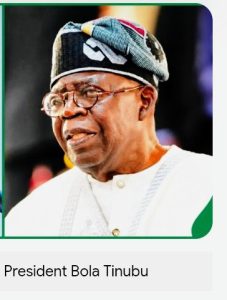
The Council described as shocking the President’s failure to condemn the growing wave of political violence, noting that, through his spokesman, Mr. Bayo Onanuga, the Presidency had instead chosen to caution opposition parties while shielding those allegedly responsible for violence within the ruling APC.
“President Tinubu cannot claim to desire peace when his own words provide cover for violence.
“‘All Is Fair in Politics’ is not the language of a Head of State. It is the language of political desperation and an open licence for thuggery, ballot snatching, intimidation and bloodshed.
“From Edo to Cross River, Gombe to Lagos, and Kebbi to Kaduna, Nigerians have witnessed attacks on opposition gatherings, destruction of campaign materials and the brutalisation of innocent supporters, allegedly by APC-sponsored thugs.
“Yet, Mr. President has not considered it necessary to call his governors and party members to order.
“Instead, the Presidency has resorted to diversionary tactics, blaming victims and preaching restraint to the opposition while members of the ruling party are accused of unleashing violence across the country,” the statement said.
The ADC-PCC challenged President Tinubu to explain why his condemnation of political violence appears directed at the opposition rather than members of his own party.
It asked: “Why has Mr. President refused to condemn APC governors who openly threaten opposition supporters? Why has he remained silent over public incitement by officials of his party? Why is his anger always directed at the opposition and never at those within his own political fold?”
The Council maintained that the ADC remains committed to peaceful, issue-based political engagement, insisting that its campaign is focused on addressing the country’s pressing challenges, including hunger, insecurity, unemployment, corruption and what it described as the failures of the Tinubu administration.
It accused the APC of resorting to violence because it had little to offer Nigerians in terms of credible solutions to the country’s problems.
Consequently, the ADC-PCC demanded that President Tinubu immediately and publicly withdraw his “All Is Fair in Politics” remark, condemn and call to order APC governors and party officials accused of inciting violence, and direct security agencies to protect all Nigerians impartially rather than allow them to become instruments of intimidation and oppression against opposition parties.
” Nigeria belongs to all of us. No political ambition is worth the blood of any Nigerian.
“If former President Goodluck Jonathan could make that profound declaration in 2015, President Tinubu has no excuse not to say so and demonstrate the sincerity of his commitment to peace in 2026.
“The ADC will not be intimidated. We will continue to campaign peacefully, and in 2027, Nigerians will have the opportunity to vote for competence, integrity and a new beginning,” the statement added.





-
News5 days ago
IGP Disu decorates 29 senior police officers with new ranks….charges them on professionalism, integrity,others
-
News4 days ago
Airstrikes kill 40 ISWAP terrorists in Borno
-
News4 days ago
We finally received CTC Of Lifu’s Judgement, without Atiku, Other Candidates Names Mentioned—Senator Melaye
-
News4 days ago
2026 U-17 WWC: Tinubu rewards each Flamingos player with ₦100m
-
News5 days ago
How Federal High Court Chief judge is beign blackmailed with EFCC, CCB- ADC Campaign Council
-
News2 days ago
Crowd Shouts ‘Bamayi’ at Tinubu, pelt convoy in Abuja
-
News5 days ago
Oil price fall: We ‘ll take appropriate action against marketers, petrol stations over unfair practices- FCCPC
-
News5 days ago
Nigerian Businessman Hands IGP Disu 7 Days Tọ Probe Police Officers Over Alleged Release Of Recovered N600m Rolls-Royce To Suspects