
News
CBN, NNPCL Sign MOU to Strengthen Macroeconomic Stability, Energy Financing


CBN Gov, Cardoso
Two Nigerian critical organisations, the Central Bank of Nigeria (CBN) and the Nigerian National Petroleum Company Limited (NNPCL) have signed a landmark Memorandum of Understanding (MoU) to provide enduring macroeconomic stability and sustainable prosperity for Nigerians.
Speaking at the signing of the MoU between the two institutions at the Bank’s Headquarters in Abuja on Wednesday, November 18, 2026, the Governor of the CBN, Mr Olayemi Cardoso, said that formalising the Bank’s partnership with the NNPCL will strengthen macroeconomic management, improve foreign exchange flows and support Nigeria’s long-term economic stability.
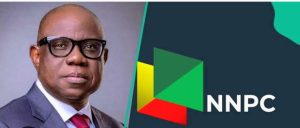
NNPCL,CEO Ojulari
Mr Cardoso described the agreement as a significant milestone in their long-standing relationship. He said the MoU would provide a more structured framework for collaboration, given both institutions’ critical roles in supporting fiscal revenues, external reserves, foreign exchange inflows and Nigeria’s broader economic performance.
He stressed that efficient management and settlement of oil and gas proceeds, predictable foreign exchange inflows and closer institutional coordination were particularly important for maintaining monetary stability during periods of global and domestic volatility.
He further explained that the MoU would deepen cooperation on the monetisation of oil and gas assets, energy financing and liquidity support, and leverage the CBN’s convening role to attract global financial institutions and develop financing structures to unlock Nigeria’s vast natural gas resources.
He identified additional areas for collaboration, including payment automation, integration of the CBN and NNPCL treasury systems, regulatory alignment, compliance and risk management, cybersecurity and operational resilience, and knowledge sharing and capacity development.
According to him, regular engagement through joint steering and working committees would enable both institutions to coordinate their activities more effectively, monitor implementation, and pursue shared objectives, while positioning Nigeria’s energy assets for greater global competitiveness.
Mr Cardoso emphasised that the MoU did not create a new relationship but formalised years of cooperation, noting that both institutions had already been engaging regularly on issues of mutual economic importance.
He commended the Group Chief Executive Officer of NNPCL and his team for the progress made in addressing the challenges inherited by the company, recalling his earlier engagements with NNPCL leadership and expressing optimism about the team’s discipline and commitment.
Cardoso said the decision to formalise the partnership had evolved naturally from sustained collaboration, rather than being a ceremonial exercise. He stressed that stronger cooperation among key economic institutions would reinforce economic stability, strengthen investor confidence and provide a firmer foundation for sustainable growth.
He reaffirmed the CBN’s commitment to sound monetary policy, macroeconomic stability, financial system resilience and the long-term prosperity of Nigerians.
In his address, the Group Chief Executive Officer of NNPC Limited, Mr Bayo Ojulari, described the MoU as a strategic framework to align Nigeria’s energy and financial sectors to support economic growth and stability.
He acknowledged the CBN Governor’s guidance during the early, challenging period of his tenure, which he said helped him navigate the transition and stabilise NNPCL.
He said the critical role of oil and gas in Nigeria’s foreign exchange earnings underscored the close link between the energy sector and the financial system.
He added that NNPCL’s transition into a commercially driven company under the Petroleum Industry Act had increased the need for a structured and transparent relationship with the CBN.
According to him, the MoU would strengthen export proceeds and foreign exchange flows, align NNPCL’s operations with national monetary and energy objectives, and deepen energy financing and hydrocarbon monetisation, including enabling the company to leverage its balance sheet to raise capital.
He added that joint governance structures and measurable performance indicators would ensure effective implementation and contribute to financial stability and broader economic benefits for Nigerians.

Earlier in her welcome address, the Deputy Governor, Operations, at the Central Bank of Nigeria (CBN), Ms. Emem Usoro, said the signing of the MoU was a significant step towards deepening the long-standing partnership between the two institutions, establishing a structured framework for cooperation in international trade and foreign exchange flows, energy financing and hydrocarbon monetisation, and regulatory alignment and risk management.
Noting that Nigeria’s gross external reserves had risen above $55 billion in recent times, supported by higher oil production and sustained diaspora remittances, she expressed confidence that the partnership would strengthen export earnings and foreign exchange flows, bolster the country’s reserves and resilience to external shocks, and ultimately deliver tangible economic benefits for Nigeria.
Also speaking at the event, the Group Chief Finance Officer of NNPC Limited, Mr Adedapo Segun, described the collaboration as a defining step towards replacing ad hoc engagements between NNPC Limited and the CBN with a structured, transparent and accountable partnership.
He said the partnership would focus on strengthening external reserves and investor confidence, supporting naira stability and de-dollarisation through closer alignment with CBN policy, and deepening payment systems, technology adoption and digital innovation.
He added that closer cooperation would support efforts to increase crude oil production from about 1.8 million to 3 million barrels per day and to unlock Nigeria’s gas resources, while agreed working groups, timelines and accountability mechanisms would ensure effective implementation and contribute to long-term economic stability.
The highlight of the event was the official signing of the MoU by the CBN Governor and the Group Chief Executive Officer of NNPC Limited. The signing was witnessed and administered by the CBN Director, Corporate Secretariat, and the Secretary to the Board, Mrs. Rashida Monguno, and by the General Counsel and Company Secretary of NNPC Limited, Mrs. Adesua Dozie.
…..mandates CNA tọ transmit Bill tọ Mr President
Senators have demanded a clear legal framework to coordinate Federal and State Police, warning that without it the new decentralised policing system could trigger jurisdictional clashes and political abuse.
The call dominated debate as the Senate resolved to transmit the State Police Bill, otherwise known as the Sixth Alteration Bill, 2026, to President Bola Tinubu for assent after approval by the National Assembly and all 36 State Houses of Assembly.
Leading the debate, the Senate Leader, Senator Opeyemi Bamidele, said both chambers passed the amendment in June and July 2026 with the required two-thirds majority, while all 36 State Houses of Assembly subsequently approved it in line with Section 9 of the 1999 Constitution.
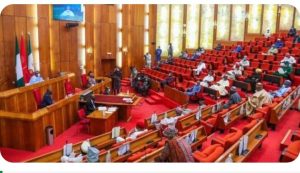
The Senate thereafter mandated the Clerk to the National Assembly to transmit the bill to the President for assent.
Senators, however, insisted that constitutional approval alone was not enough, stressing that the National Assembly must urgently enact a National Policing Bill to define how Federal and State Police will operate side by side.
Senator Adams Oshiomhole (Edo North) led the push for safeguards, acknowledging long-standing fears that governors could deploy state police to intimidate opponents and persecute perceived enemies.
Drawing from his experience as a former governor, Oshiomhole admitted he had once shared those fears.
He argued, however, that the risk of abuse should not be used to deny Nigeria the benefits of decentralised policing at a time kidnapping and violent crimes were worsening.
The lawmaker said the centralised structure had failed despite massive recruitment into the Police and military, given Nigeria’s size, population and the sophistication of criminal gangs.
He, therefore, proposed legislation that would spell out the respective responsibilities of Federal and State Police, establish clear areas of jurisdiction and prevent unnecessary clashes between the formations.
According to him, such a framework would regulate operations, ensure effective coordination and stop the two levels of policing from working at cross-purposes.
Senator Ekong Samson (Akwa Ibom South) backed the call, describing state police as a bold step for democracy but warning that its success would depend on strong checks.
Samson said concerns about governors abusing State Police were genuine and should not be dismissed.
He maintained that Nigeria needed a courageous and independent judiciary capable of checking abuse of power, protecting citizens’ rights and ensuring state police authorities operate within the law.
Without effective judicial oversight, he warned, the country might not derive maximum benefit from the new arrangement.
Other senators said decentralisation would bring security closer to the people, strengthen intelligence gathering and enable states to respond faster to local threats.
The Deputy Senate President, Senator Barau Jibrin, who chairs the Senate Committee on Constitution Review, said the new policing arrangement would complement rather than replace existing federal institutions.
He noted that successive administrations attempted State Police but failed to secure the required political and constitutional consensus.
The Senate approved two prayers: to transmit the Sixth Alteration Bill, 2026 to President Tinubu for assent, and to appreciate the President and urge him to forward the proposed National Policing Bill to provide the operational framework.
The Senate President, Senator Godswill Akpabio, clarified that the constitutional amendment already provides for an Act of the National Assembly to establish modalities for State Police and regulate their relationship with the Federal Police.
He said the proposed legislation would address jurisdictional conflicts, operational procedures, coordination and possible abuses raised by Oshiomhole and Samson, describing the 36 out of 36 endorsement by State Houses of Assembly as an extraordinary national consensus and a historic achievement of the 10th National Assembly.
The Senate yesterday Wednesday passed two landmark bills to boost research, innovation and postgraduate medical education in Nigeria.
The bills are the National Research and Innovation Development Fund Establishment Bill, 2026, and the National Postgraduate Medical College Act Amendment Bill, 2026.
This followed the consideration of reports on the two bills by the Senate Committee on Tertiary Institutions and TETFund, presented by its chairman, Senator Mohammed Dandutse (Katsina South) during plenary.
Dandutse said the first bill seeks to create a sustainable funding mechanism for research, development and innovation across the country.
He explained that it also provides for the establishment of the National Council on Research and Innovation.
According to him, the Council will provide strategic direction, policy oversight and supervision for the nation’s research agenda.
Dandutse said the proposed fund will support research institutions and provide a dedicated framework for tackling Nigeria’s development challenges.
He added that the fund and the council would work together to strengthen the country’s research, scientific, technological and innovation capabilities.
On the second bill, Dandutse said the amendment seeks to strengthen the institutional and academic functions of the National Postgraduate Medical College.
He explained that it will empower the college to establish academic programmes and award Doctor of Philosophy degrees in specialised medical disciplines.
The disciplines include clinical medicine, dentistry, basic medical sciences, pharmacology and other related fields.
Dandutse said the amendment will also empower the college’s Senate to develop, administer and supervise the doctoral programmes.
He stressed that the programmes will be subject to accreditation and regulation by the National Universities Commission (NUC) to ensure compliance with academic standards.
He said the amendment will strengthen advanced medical education, clinical research and the development of specialised medical expertise in Nigeria.
The Senate considered both bills clause by clause at the Committee of the Whole and adopted their provisions, and were thereafter read for the third time and passed.
A fire outbreak yesterday Wednesday destroyed a students’ hostel popularly known as Aso Rock at Usmanu Danfodiyo University, Sokoto (UDUS), leaving several students without personal belongings and accommodation.
The incident occurred at about 1pm on November 18, 2026, at the hostel located in the Gidan Yaro area, behind the university stadium.
According to accounts from residents in the neighbourhood, the fire reportedly started on an adjoining farmland where a farmer was burning dried agricultural stalks and other farm waste.
The farmer allegedly set the farm residues on fire in an open area about 80 to 100 centimetres from the hostel, before the flames spread towards the building and eventually engulfed it.
A witness said he had earlier warned the farmer against setting the farm waste ablaze so close to the hostel, cautioning that the fire could spread to the building and neighbouring properties.
However, the warning was allegedly ignored.
The witness raised the alarm when the flames began spreading, prompting residents to contact the fire service.
Firefighters arrived at the scene about 20 minutes after the fire had engulfed the building.
Although the hostel accommodated students of UDUS, no occupants were reportedly inside when the incident occurred, as some students were attending lectures while others had yet to return for academic activities.
However, a student, who was temporarily staying in the hostel with a friend while arranging his own accommodation, was also affected.
The student was reportedly attending classes when the fire broke out, leaving his belongings, including academic credentials and other personal documents, inside the building.
Several properties, including clothes, electronic devices, academic materials and other valuables, were destroyed in the inferno.
The incident has left affected students facing the challenge of replacing their belongings and finding alternative accommodation.
The fire has also raised concerns over the practice of open burning of agricultural waste close to residential buildings, particularly in areas where students and other residents live.




-
News4 days ago
Ogata wife, Juliana Bello, confesses role in late Husband’s death- Police
-
News4 days ago
2027: Atiku storms Yobe despite ADC judgment, draws massive crowd
-
News3 days ago
Uni Abuja Staff, Students Protest Over Alleged Land Grabbing By Wike
-
News4 days ago
Insulate traditional Institutions from partisan politics – Oba Ladoja
-
News4 days ago
Show your evidence, Akpabio dares Amaechi over NDDC 50% cut claim
-
News3 days ago
President not stoned at Abuja mosque- aide counters claim
-
News3 days ago
State Police : Good to go, set for Tinubu’s assent…….as 36 Sub- National Govts approve Bill
-
News2 days ago
Contrary Spirits: Fountain of Life Church removes Jimmy Odukoya as senior pastor