

News
Senate Presidency: Why Tinubu Matters, By Sufuyan Ojeifo


Olusegun Aremu Okikiolakan Obasanjo, a retired Army General and former Head of State of the Federal Republic of Nigeria, had won the February 27, 1999, presidential poll on the platform of the Peoples Democratic Party (PDP) at the expense of a former Minister of Finance and ex Secretary to the Government of the Federation (SGF), Chief Olu Falae, who ran on a joint Alliance for Democracy-All Peoples Party (AD-APP) ticket to become the democratically elected president of Nigeria. As soon as Obasanjo won the poll, he took charge of the levers of power, influencing and determining the direction of the emergent government and the concomitant politicking that would define the shape and texture of governance.
Obasanjo had a clear idea of what he wanted. He predetermined the outcomes of the contests for the positions of presiding officers of the National Assembly because he was interested in who became the Senate President and the Speaker of the House of Representatives. The choice of the senate president was particularly much more engaging than that of the speaker. Dr Chuba Okadigbo had emerged the natural choice of senators-elect of the ruling PDP for the position of senate president. In fact, in the pre-consultative meetings ahead of the inauguration of the National Assembly on June 3, 1999, the flamboyant politician from Oyi in Anambra State had been endorsed at the historic Agura Hotels, Abuja, meeting by the 66 senators-elect of the PDP as their candidate for the senate presidency.
Okadigbo looked good to clinch the seat. But Obasanjo had a different plan which he was determined to push through. He wanted a candidate who was not as independent-minded as Okadigbo; and, against the run of play, he propped up Evan(s) Enwerem , aka “mature”, from Imo State as his pick for the position. The retired general threw everything into the mix because the emergence of Enwerem instead of Okadigbo mattered more to him than any other consideration. The number three position in the country was a big deal and whoever stepped in must be loyal and subservient to him. Obasanjo moved into the camp of the opposition AD-APP senators and effectively cornered all 43 senators-elect. That was the first strategic step he took and thereafter moved into the PDP caucus in the senate to deplete their numbers.
By the time the dust of the hotly contested race settled on June 3, 1999, on the floor of the Senate, the tide had turned against Okadigbo who had appeared surefooted that he was going to emerge as the senate president. Obasanjo had deployed intimidating presidential powers of patronage in the Senate to reverse the pre-election calculations and configuration in favour of Enwerem who received 66 votes (43 votes from the AD-APP caucus and 23 from the 66-member PDP caucus, whose endorsement Okadigbo had secured before the inauguration of the Senate) on the floor of the Senate as against Okadigbo’s 43 votes to emerge as the senate president.
The emergence of Enwerem unsettled not only the Senate but also the Fourth National Assembly because Obasanjo had replicated the same stunt that he pulled in the Senate in the House of Representatives where he had successfully pushed through the candidature of Salisu Buhari as Speaker. Obasanjo ensured that the senate president and the speaker were his men although both Enwerem and Buhari lost their seats some months later due to perjury. While the losses caused a permanent seismic shift in the House of Representatives where an independent-minded Ghali Umar Na’Abba emerged as Buhari’s successor and successfully finished his course, it was a game of the musical chair in the Senate as three senate presidents were turned over between 1999 and 2003, namely Enwerem, Okadigbo who succeeded him (Enwerem) and Anyim Pius Anyim who succeeded Okadigbo when he (Okadigbo) was removed by a coalition of opposition senators funded by Obasanjo’s presidency.
I recall that Anyim who succeeded Okadigbo had enjoyed the backing of senators with strong link with the Presidency, but at a certain intersection after stepping in the saddle, he freed himself from the apron string of the superintendent of executive power in Aso Rock to define his eon and trajectory. Although, I cannot specifically implicate the point of departure in the romance between Obasanjo’s presidency and Anyim’s senate presidency, one thing that remains a fact of history was that due to the strain in relationship, Anyim (an Ebonyi State senator) decided not to seek re-election to the Senate. He bowed out with the fourth senate. Obasanjo had thus moved into the fifth national assembly to influence the emergence of Adolphus Wabara as Senate President, who unfortunate lost his seat to some high-octane conspiracy by some southeast senators who were in bed with Obasanjo over the plot for possible tenure extension (third term agenda for Obasanjo). Wabara was reasonably suspected to be interested in running for the presidency of Nigeria after his senate presidency. He was implicated in a N50-million-bribe-for budget scandal for which Obasanjo, as president, made a national broadcast aired live on some television and radio stations.
But unfortunately for Obasanjo, the man who succeeded Wabara, Senator Ken Nnamani, was an independent-minded character who espoused and expounded the imperativeness of legislative due process in the conduct of senate business especially the senate consideration of the proposed bill for tenure elongation (third term agenda) under the Obasanjo presidency. Nnamani presided over the death of the proposed tenure elongation (third term) which Obasanjo was looking forward to profiting from. Nnamani, like Anyim in 2003, decided not to seek re-election in 2007 because Obasanjo, who was smarting from the death of the third term agenda, was not going to allow him to return.
In the House of Representatives, Obasanjo had in place Aminu Masari (the incumbent katsina governor) as speaker from 2003 to 2007. In 2007, as Obasanjo was egressing Aso Rock, he had facilitated the emergence of David Mark as senate president and Patricia Etteh as Speaker. Whereas, Mark, a retired army general, was able to secure his senate presidency for two terms with the magnitude of his legislative legerdemain, Etteh lost her speakership less than a year into office and was succeeded by Dimeji Bankole.
I have provided the historical context supra in the race to the senate presidency (and speakership) to situate and explicate the huge influence that presidents who are interested in those who partner them as senate president(s) and speaker(s) can deploy in the Legislature to tilt the balance of leaderships in their favour. The late President Umaru Yar’Adua, initially in the shadows of Obasanjo inherited those Obasanjo facilitated their emergence; President Goodluck Jonathan maintained the status quo in the senate with David Mark in 2011. He could not weigh in to reinforce support for the PDP anointed candidate, Mulikat Adeola, to emerge as speaker. She was defeated by Aminu Waziri Tambuwal in a grand conspiratorial alliance that fed on the support of opposition members in the House.
Fast forward to 2023. President-elect, Bola Ahmed Tinubu matters in the ongoing scramble for the National Assembly presiding officers’ positions. Precedents of presidential interest in the fostering of synergy with trusted loyalists or party faithful abound in historical contexts. Only President Muhammadu Buhari appeared then to be half-hearted about insisting on producing his men as senate president and speaker. Recall the 2015 saga that saw Bukola Saraki and Yakubu Dogara emerge as senate president and speaker respectively. Both were not the anointed or endorsed candidates of the party. Ahmad Lawan and Femi Gbajabiamiala were the APC’s candidates for the senate presidency and speakership respectively. But because Buhari perhaps related with the need to insist with the head and not with the heart, elements within the party, acting proactively and quickly with opposition elements in the National Assembly, upset the arrangement by the party to produce Saraki and Dogara.
I recall how in the eleventh-hour, Tinubu, as leader of the party, reached out to the late Chief Tony Anenih to help him lobby PDP senate caucus to support Ahmad Lawan when he (Tinubu) received credible feelers that Saraki had struck a deal with the PDP caucus to produce Saraki-Ike Ekweremadu ticket. I had the privilege of discussing with Anenih in his Asokoro home, when that call by Tinubu came through. I heard Anenih say, “Bola, how are you? You remember me today.” After some silence to hear Tinubu out, I heard Anenih respond: “It is too late. Tomorrow is the election. The meeting to run with Ekweremadu held in my house.’ Anenih after the call told me it was Bola Tinubu and hinted me about his request.
That move by Tinubu speaks to his strategic nature and mobilizational prowess. He demonstrated that in a monumental dimension in his presidency enterprise. Such disposition ramifies his politics, and it is not going to be lacking this time round in the search for a senate president that he believes is reliable enough to synergise with him for his mandate deliverables. And this is why Tinubu matters in the ongoing frenzy over the presiding officers’ race. His endorsement is being sought. The party ‘s National Working Committee (NWC) last week could not settle the issue of zoning and announced it was going to consult with Tinubu as the president-elect to get his buy-in because at the end of the day, the buck stops with him as the President and Leader of the party. This, indeed, is why Tinubu matters.
Tinubu knows what he wants and how to get it. It may be convenient for some of those jostling for positions to drop his name; that is part of politics. Whereas, ordinarily, it is out of place to openly canvass support for any candidate in deference to the autonomy of the Legislature, Tinubu is, without a doubt, interested in who becomes the senate president and who becomes the speaker. He has his head and heart in the enterprise. Although credible feelers have since resolved the possible zoning of the senate president’s position in favour of the South-South, what perhaps remains tentative and is liable to change is the candidate for the number three position: will it be Godswill Akpabio or Adams Oshiomhole who have consistently been mentioned in sundry reviews? Again, this is where Tinubu matters.
It is in the place of the president-elect to decide who he thinks has the capacity, the mental and intellectual discipline, shared principles and values, historically deep political connection, and most importantly, reliability and loyalty to him over the years in the critical choice of who the cap fits. These and other allied considerations should resolve Tinubu’s quiet support for either Akpabio or Oshiomhole. Once that resolution is achieved, Tinubu knows what to do to covertly push through his preferred candidate. This, indeed, is why the Jagaban Borgu matters in this entire rat race.
▪︎Mr Ojeifo contributed this piece from Abuja via ojwonderngr@yahoo.com
The United States government has insisted that Nigeria should retain its Country of Particular Concern, CPC, designation, saying the country has not done enough to protect Christians from attacks.
Assistant Secretary of State for African Affairs, Frank Garcia, made this statement on Thursday during a congressional hearing on violence in Nigeria.
Garcia was responding to questions from US Congressman Riley Moore, who asked about the government’s efforts to dismantle militia strongholds and kidnapping camps in the Middle Belt, particularly in Benue and Plateau states.
Moore also raised concerns over the exclusion of the states from the forest guard initiative and delays in deploying 1,000 approved guards to Plateau.
“Before you answer that, we cannot take this CPC designation off of this country. They have not done enough,” Moore said.
Garcia acknowledged the lack of progress, but said Nigeria was taking steps to address the concerns, although they had yet to produce results.
He said the country’s security capacity was still being developed and that deployments were not happening fast enough.
“Unfortunately, the violence has not stopped,” Garcia added, citing continued attacks in Kaduna and Plateau states.
He said the US had provided police training and equipment, expanded intelligence sharing and worked with Nigerian financial institutions to disrupt terrorist financing.
Garcia added that Washington would continue diplomatic engagements and security cooperation to protect vulnerable communities and ensure accountability.
However, the Nigerian government has consistently rejected claims of a “Christian genocide” or targeted religious persecution, maintaining that insecurity affects Nigerians of all faiths.


Liquefied Petroleum Gas, commonly known as cooking gas, has risen significantly, forcing Nigerians to spend more to purchase the product.
The increase comes as depot owners and retailers raised their prices over the past two days.
StockGap increased its depot price by N25 to N1,440 per kilogram. Nigerian Independent Petroleum Company Limited, NIPCO, Mobil (now 11 Plc) and Ardova, on the other hand, sold the product at N1,400 and N1,390 per kilogram, respectively.
Similarly, LPG retail outlets, including Raniol, Juda Oil and Nigerian National Petroleum Company Limited, NNPC, outlets in Abuja and its environs, now dispense cooking gas at between N1,550 and N1,600 per kilogram, up from N1,400 and N1,500.
Micro-LPG dealers sell the product for between N1,700 and N1,800 per kilogram, depending on the location in Abuja.
Earlier, NIPCO’s spokesperson, Taofeek Lawal, had exclusively told DAILY POST that LPG prices could increase further between November and January next year.
The latest price increase means that Nigerians who previously spent N17,500 to refill a 12.5kg cylinder at N1,400 per kilogram will now pay N20,000 at the new rate of N1,600 per kilogram, representing an additional N2,500.
News
2027: Tinubu Must Withdraw ‘All Is Fair in Politics’ Remark, Embrace Peaceful Coexistence — ADC-PCC
The African Democratic Congress Presidential Campaign Council (ADC-PCC) has called on President Bola Ahmed Tinubu to publicly retract his controversial “All Is Fair in Politics” remark, warning that such rhetoric fuels political division, emboldens thugs and poses a grave threat to the nation’s peace and stability.
The ADC-PCC also expressed concern over what it described as the President’s disturbing silence on the conduct of some APC governors and party chieftains who have openly made inflammatory statements and allegedly encouraged political violence.
In a statement signed by its Director of Media and Publicity, Kola Ologbondiyan, the ADC-PCC urged President Tinubu to rise above partisan interests and demonstrate the statesmanship expected of a national leader, citing former President Goodluck Jonathan’s unequivocal declaration that no presidential ambition was worth the blood of any Nigerian.
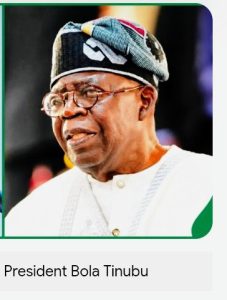
The Council described as shocking the President’s failure to condemn the growing wave of political violence, noting that, through his spokesman, Mr. Bayo Onanuga, the Presidency had instead chosen to caution opposition parties while shielding those allegedly responsible for violence within the ruling APC.
“President Tinubu cannot claim to desire peace when his own words provide cover for violence.
“‘All Is Fair in Politics’ is not the language of a Head of State. It is the language of political desperation and an open licence for thuggery, ballot snatching, intimidation and bloodshed.
“From Edo to Cross River, Gombe to Lagos, and Kebbi to Kaduna, Nigerians have witnessed attacks on opposition gatherings, destruction of campaign materials and the brutalisation of innocent supporters, allegedly by APC-sponsored thugs.
“Yet, Mr. President has not considered it necessary to call his governors and party members to order.
“Instead, the Presidency has resorted to diversionary tactics, blaming victims and preaching restraint to the opposition while members of the ruling party are accused of unleashing violence across the country,” the statement said.
The ADC-PCC challenged President Tinubu to explain why his condemnation of political violence appears directed at the opposition rather than members of his own party.
It asked: “Why has Mr. President refused to condemn APC governors who openly threaten opposition supporters? Why has he remained silent over public incitement by officials of his party? Why is his anger always directed at the opposition and never at those within his own political fold?”
The Council maintained that the ADC remains committed to peaceful, issue-based political engagement, insisting that its campaign is focused on addressing the country’s pressing challenges, including hunger, insecurity, unemployment, corruption and what it described as the failures of the Tinubu administration.
It accused the APC of resorting to violence because it had little to offer Nigerians in terms of credible solutions to the country’s problems.
Consequently, the ADC-PCC demanded that President Tinubu immediately and publicly withdraw his “All Is Fair in Politics” remark, condemn and call to order APC governors and party officials accused of inciting violence, and direct security agencies to protect all Nigerians impartially rather than allow them to become instruments of intimidation and oppression against opposition parties.
” Nigeria belongs to all of us. No political ambition is worth the blood of any Nigerian.
“If former President Goodluck Jonathan could make that profound declaration in 2015, President Tinubu has no excuse not to say so and demonstrate the sincerity of his commitment to peace in 2026.
“The ADC will not be intimidated. We will continue to campaign peacefully, and in 2027, Nigerians will have the opportunity to vote for competence, integrity and a new beginning,” the statement added.





-
News5 days ago
IGP Disu decorates 29 senior police officers with new ranks….charges them on professionalism, integrity,others
-
News4 days ago
Airstrikes kill 40 ISWAP terrorists in Borno
-
News4 days ago
We finally received CTC Of Lifu’s Judgement, without Atiku, Other Candidates Names Mentioned—Senator Melaye
-
News4 days ago
2026 U-17 WWC: Tinubu rewards each Flamingos player with ₦100m
-
News5 days ago
How Federal High Court Chief judge is beign blackmailed with EFCC, CCB- ADC Campaign Council
-
News2 days ago
Crowd Shouts ‘Bamayi’ at Tinubu, pelt convoy in Abuja
-
News5 days ago
Oil slump opens door to cheaper petrol for Nigerians …as Brent hits lowest since August
-
News5 days ago
2027: ADC accuses Federal High Court of withholding David Mark sack judgment