

News
*OPINIONS:


*House of Assembly *Election** : Edo is Now or Never
There comes a time in the life of a people when the collective good become sacrosant and resonates with the majority, over and above the selfish interest of the few oppressors.
This scenario aptly captures the prevailing mood of the average Edo man and woman – both at home and in the diaspora – as the electorate brace up to excercise their civic responsibility in Saturday’s legislative election into the State House of Assembly.
For the infamous ‘lions and tigers’ with their infantile godfather, it’s been no longer business as usual for the past seven years, since the inception of the Obaseki-led administration, ably supported by his loyal Deputy, Rt. Hon. Comrade Philip Shaibu.
No doubt, the State House of Assembly election provides an ample opportunity for well-meaning Edo people and residents to expressly pass a vote of confidence on Governor Godwin Nogheghase Obaseki, by casting their votes for all PDP candidates at the polls.
It’s instructive to note that the collective interest of our dear state supersedes the whims and caprices of a few cabal, whose notoriety in feasting on our commonwealth is known to all and sundry.
Edo State is now or never. We rather win it or lose it forever. We must stand firm and strong with Obaseki in taking back our dear state from the political masquerades, who are bent on reversing the monumental strides of the present administration.
More than ever before, we are uanimous in our resolve never to go back to Egypt.
Going forward, Edo people, particularly civil and public servants, recommit to stand on the progressive mandate of Obaseki and the visionary ideals of the 24 PDP House of Assembly candidates.
Come, Saturday, 18th March, 2023, let’s keep a date with history, by contributing our patriotic quota towards Making Edo Great Again, MEGA.
Austin Otas-Osegbe
( CA , E.GC , IMCT-JOOPSA)
View Point:
Rigging Claims Don’t Add Up
BY MAHMUD JEGA
March 6, 2023*
A member of the British House of Lords, when told that money is difficult to come by these days, said he is nearly 90 years old but cannot remember any time in the past when money was easy to get. I have been watching Nigerian elections since 1979 and I cannot remember a time when those who lost the election did not allege rigging and intimidation. For a time, there was hope that President Goodluck Jonathan’s 2015 concession phone call could become the norm in Nigeria. It now looks like it was a one-off event. Instead, it was Godsday Orubebe’s 2015 attempt to storm INEC’s National Collation Centre that has endured, with Dino Melaye attempting a poor carbon copy in 2023.
The young men and women who are saying on social media that the 2023 election was full of rigging and intimidation, have no personal knowledge of the golden age of rigging and intimidation in Nigerian elections. In this election I saw no reports in the media of thugs snatching ballot boxes and stuffing them. I saw no reports of security agents cordoning off whole polling stations while ballot boxes were being stuffed. There was no story of soldiers scattering voters in any place. Where is the mother of all rigging, when Supreme Court ruled in 1983 that UPN’s Michael Ajasin got 1.2million votes, NPN’s Akin Omoboriowo got 500,000 votes but the returning officer added 1 behind the figure and it became N1.5million?
This year, the President did not declare the election a do or die. I saw no story of armed hooded security agents descending on a state, as in Ekiti in 2014. There was no story of an opposition governor’s plane denied landing rights at any airport. In 2023, we didn’t have a Police Commissioner Mbu denying an opposition party governor entry into his own Government House. Pray, where in Nigeria in 2023 did we have Police Commissioner Tahir Jidda denying Dr. Nnamdi Azikiwe entry into Maiduguri and firing tear gas at Zik, even though Borno State Governor Muhammadu Goni stood beside him? Even the party primaries of last year lacked drama, because we saw nothing like the Babalawo who tried to enter the UPN state congress in Ibadan in 1983 with a live tortoise strapped to his waist.
Another youngster wrote on social media that “this generation of Nigerian politicians do not know how to concede, unlike the older generation.” Sorry sir, they actually copied it from the older generation. In 1979, as soon as election results started trickling in, we saw GNPP leader Waziri Ibrahim dashing around to see UPN leader Chief Awolowo and NPP leader Dr. Azikiwe. The three of them, minus PRP leader Aminu Kano who refused to join, appeared together before pressmen, rejected the election results and alleged rigging, even though it was an election conducted by a military government, not like now when APC controls the Federal Government [at least, it used to]. The scene was re-enacted last week when PDP and LP running mates held a joint press conference and tried to present a common front, a case of locking the stables after the horses have bolted.
Anyone who trusts such emergency political alliances has another thing coming. In 1979 the opposition parties presented us with a common front up until the Supreme Court upheld the election result. To our utmost surprise, just before Inauguration on October 1, 1979, NPN and NPP announced an accord where they shared legislative and executive posts between them. NPP got Deputy Senate President, House Speaker and several Cabinet posts, including Zik’s running mate Prof Ishaya Audu who became Foreign Minister, Mrs. Janet Akinrinade of Oyo and Paul Unongo of Benue. Who knows now if someone is negotiating under the table?
Our local and social media activists who are trying very hard to impress foreign election observers and the Western press by citing scattered incidents of election day problems knowing that White people are sticklers for procedure. They insist on correct procedure even if it produces an undesirable outcome. We Africans, who are wiser, usually walk back from the answer to the question. Our politicians’ measure of the credibility of an election is if they win, not whether or not the procedure was followed. If they don’t win, then the election is not credible.
The general African attitude to elections is that the outcome justifies the process. The credible outcome, in African eyes, is usually when the incumbent ruler or party is defeated. Hence, to most Africans, the best elections ever held in Africa were when Morgan Tsvangirai’s party defeated Robert Mugabe’s; when Adama Barrow defeated Yahaya Jammeh in Gambia; when Mohammed Morsi triumphed in Egypt against Hosni Mubarak’s premier; when Jerry Rawlings’ party was defeated in Ghana; when Macky Sall defeated Abdoulaye Wade in Senegal; when Wade himself earlier defeated Abdou Diouf; when Alassane Ouattara defeated Laurent Gbagbo in Ivory Coast; and more recently, when William Ruto triumphed in Kenya despite outgoing President Uhuru Kenyatta’s support for Raila Odinga.
African style, let us walk backwards from the result to the credibility question. First, the voter turnout. There were 87 million voters with PVCs in 2023 election but only 24 million voted, or 27%. Now, the starting point of rigging elections is to take advantage of the number of registered voters. Why leave 63 million blank names on the register if you really desire to rig up results? There is no doubt that the technological innovations adopted over the years greatly helped to clean up our elections. Up until 2007, those absent voters will simply have their votes cast for them by a coalition of party agents, election officials and security officers.
The winner of this election, Asiwaju Bola Tinubu, got only 37% of the vote, down from the 56% that Buhari got in 2019. Now, while 2019 was a two-horse race between the APC and PDP candidates, 2023 was at least a four-horse race between APC, PDP, LP and NNPP candidates. It was the first time since 2007 that we had more than two major candidates in a presidential election and the first time since 1983 that we had up to four major candidates in such a race.
The top four candidates in this election got 37%, 29%, 25% and 6% respectively. This compares closely with 1979 when Shagari got 34%, Awo got 29%, Zik got 16%, Aminu Kano got 10.28 and Waziri Ibrahim got 10%. The top three runners up in this race got a combined 60% of the vote. That is impressive, but then, they only have themselves to blame that they did not present a united front before the election. They only tried to present a united front to contest the results. It is a case of locking the stables after the horses have bolted. Would they have made 60% of the vote if they had united behind a single candidate? Nobody will ever know the answer for certain.
Tinubu’s party went into this election controlling the Federal and 21 state governments. In the event, he won only 12 states outright. PDP’s Atiku Abubakar also won 12 states, LP’s Peter Obi won 12 states outright [FCT included] while NNPP’s Kwankwaso won outright in one state. So how did Tinubu win the race? Simple. The number of states that a candidate wins outright is important. Equally important is the number of states in which he came second. Also very important is, if he came second with only a narrow margin in most of them.
Tinubu won 12 states outright [Zamfara, Jigawa, Borno, Niger, Kwara, Kogi, Benue, Ekiti, Oyo, Ogun, Ondo and Rivers]. He came second in 19 states [Kebbi, Sokoto, Kaduna, Katsina, Kano, Gombe, Bauchi, Yobe, Taraba, Nasarawa, Plateau, Adamawa, Osun, Lagos, Cross River, Akwa Ibom, Edo, Imo and Ebonyi]. In many cases the margins of loss were very small, only 3,000 votes in Sokoto, 12,000 in Katsina and equally narrow margins in Osun and Lagos. Very important, Tinubu came second to Kwankwaso in Kano, second to Atiku in most of the states the latter won and second to Obi in Lagos, Ebonyi, Imo and Edo.
This was exactly how Alhaji Shehu Shagari won the presidency in 1979. He won outright in nine states out of 19 [Sokoto, Kaduna, Niger, Bauchi, Gongola, Benue, Kwara, Rivers and Cross River.] He won in Kaduna and Gongola even though his party lost the governorship elections there two weeks earlier, what in those days was called “the bandwagon effect.” Of the remaining ten states in Nigeria at the time, Shagari came second in 9 [Oyo, Ogun, Ondo, Bendel, Anambra, Imo, Borno, Plateau and Kano]. Shagari came third only in Lagos, after Awo and Zik. Like Shagari, like Tinubu; you are victorious if your party is either first or second in almost every state.
Allegations that APC rigged the election also falls flat because it lost the biggest states, namely Lagos, Kaduna, Kano and Katsina, even though all of them have APC state governors, all of whom are staunchly loyal to Tinubu. In terms of vote banks, what is Imo, Edo or Adamawa to these states? Why should anyone go rigging elections in some small states when he could rig up figures in the biggest ones and win by a large margin? If they could help it, why should ten APC governors, APC National Chairman and Director General of the APC campaign suffer the embarrassment of failing to deliver their states? Why should Tinubu himself suffer the embarrassment of failing to win outright in Lagos, long alleged to be his political fiefdom?
Allegations that APC rigged these polls do not hold the water of logic. But those making them still have the chance to prove them at the election tribunals. Ajasin managed to prove rigging even in the olden days of analogue collation. It is easier to do so in this age of electronic collation, if indeed rigging took place.
The United States government has insisted that Nigeria should retain its Country of Particular Concern, CPC, designation, saying the country has not done enough to protect Christians from attacks.
Assistant Secretary of State for African Affairs, Frank Garcia, made this statement on Thursday during a congressional hearing on violence in Nigeria.
Garcia was responding to questions from US Congressman Riley Moore, who asked about the government’s efforts to dismantle militia strongholds and kidnapping camps in the Middle Belt, particularly in Benue and Plateau states.
Moore also raised concerns over the exclusion of the states from the forest guard initiative and delays in deploying 1,000 approved guards to Plateau.
“Before you answer that, we cannot take this CPC designation off of this country. They have not done enough,” Moore said.
Garcia acknowledged the lack of progress, but said Nigeria was taking steps to address the concerns, although they had yet to produce results.
He said the country’s security capacity was still being developed and that deployments were not happening fast enough.
“Unfortunately, the violence has not stopped,” Garcia added, citing continued attacks in Kaduna and Plateau states.
He said the US had provided police training and equipment, expanded intelligence sharing and worked with Nigerian financial institutions to disrupt terrorist financing.
Garcia added that Washington would continue diplomatic engagements and security cooperation to protect vulnerable communities and ensure accountability.
However, the Nigerian government has consistently rejected claims of a “Christian genocide” or targeted religious persecution, maintaining that insecurity affects Nigerians of all faiths.

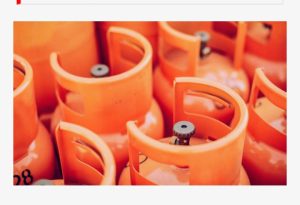
Liquefied Petroleum Gas, commonly known as cooking gas, has risen significantly, forcing Nigerians to spend more to purchase the product.
The increase comes as depot owners and retailers raised their prices over the past two days.
StockGap increased its depot price by N25 to N1,440 per kilogram. Nigerian Independent Petroleum Company Limited, NIPCO, Mobil (now 11 Plc) and Ardova, on the other hand, sold the product at N1,400 and N1,390 per kilogram, respectively.
Similarly, LPG retail outlets, including Raniol, Juda Oil and Nigerian National Petroleum Company Limited, NNPC, outlets in Abuja and its environs, now dispense cooking gas at between N1,550 and N1,600 per kilogram, up from N1,400 and N1,500.
Micro-LPG dealers sell the product for between N1,700 and N1,800 per kilogram, depending on the location in Abuja.
Earlier, NIPCO’s spokesperson, Taofeek Lawal, had exclusively told DAILY POST that LPG prices could increase further between November and January next year.
The latest price increase means that Nigerians who previously spent N17,500 to refill a 12.5kg cylinder at N1,400 per kilogram will now pay N20,000 at the new rate of N1,600 per kilogram, representing an additional N2,500.
News
2027: Tinubu Must Withdraw ‘All Is Fair in Politics’ Remark, Embrace Peaceful Coexistence — ADC-PCC
The African Democratic Congress Presidential Campaign Council (ADC-PCC) has called on President Bola Ahmed Tinubu to publicly retract his controversial “All Is Fair in Politics” remark, warning that such rhetoric fuels political division, emboldens thugs and poses a grave threat to the nation’s peace and stability.
The ADC-PCC also expressed concern over what it described as the President’s disturbing silence on the conduct of some APC governors and party chieftains who have openly made inflammatory statements and allegedly encouraged political violence.
In a statement signed by its Director of Media and Publicity, Kola Ologbondiyan, the ADC-PCC urged President Tinubu to rise above partisan interests and demonstrate the statesmanship expected of a national leader, citing former President Goodluck Jonathan’s unequivocal declaration that no presidential ambition was worth the blood of any Nigerian.
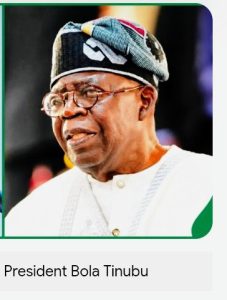
The Council described as shocking the President’s failure to condemn the growing wave of political violence, noting that, through his spokesman, Mr. Bayo Onanuga, the Presidency had instead chosen to caution opposition parties while shielding those allegedly responsible for violence within the ruling APC.
“President Tinubu cannot claim to desire peace when his own words provide cover for violence.
“‘All Is Fair in Politics’ is not the language of a Head of State. It is the language of political desperation and an open licence for thuggery, ballot snatching, intimidation and bloodshed.
“From Edo to Cross River, Gombe to Lagos, and Kebbi to Kaduna, Nigerians have witnessed attacks on opposition gatherings, destruction of campaign materials and the brutalisation of innocent supporters, allegedly by APC-sponsored thugs.
“Yet, Mr. President has not considered it necessary to call his governors and party members to order.
“Instead, the Presidency has resorted to diversionary tactics, blaming victims and preaching restraint to the opposition while members of the ruling party are accused of unleashing violence across the country,” the statement said.
The ADC-PCC challenged President Tinubu to explain why his condemnation of political violence appears directed at the opposition rather than members of his own party.
It asked: “Why has Mr. President refused to condemn APC governors who openly threaten opposition supporters? Why has he remained silent over public incitement by officials of his party? Why is his anger always directed at the opposition and never at those within his own political fold?”
The Council maintained that the ADC remains committed to peaceful, issue-based political engagement, insisting that its campaign is focused on addressing the country’s pressing challenges, including hunger, insecurity, unemployment, corruption and what it described as the failures of the Tinubu administration.
It accused the APC of resorting to violence because it had little to offer Nigerians in terms of credible solutions to the country’s problems.
Consequently, the ADC-PCC demanded that President Tinubu immediately and publicly withdraw his “All Is Fair in Politics” remark, condemn and call to order APC governors and party officials accused of inciting violence, and direct security agencies to protect all Nigerians impartially rather than allow them to become instruments of intimidation and oppression against opposition parties.
” Nigeria belongs to all of us. No political ambition is worth the blood of any Nigerian.
“If former President Goodluck Jonathan could make that profound declaration in 2015, President Tinubu has no excuse not to say so and demonstrate the sincerity of his commitment to peace in 2026.
“The ADC will not be intimidated. We will continue to campaign peacefully, and in 2027, Nigerians will have the opportunity to vote for competence, integrity and a new beginning,” the statement added.




-
News5 days ago
IGP Disu decorates 29 senior police officers with new ranks….charges them on professionalism, integrity,others
-
News4 days ago
Airstrikes kill 40 ISWAP terrorists in Borno
-
News4 days ago
We finally received CTC Of Lifu’s Judgement, without Atiku, Other Candidates Names Mentioned—Senator Melaye
-
News4 days ago
2026 U-17 WWC: Tinubu rewards each Flamingos player with ₦100m
-
News5 days ago
How Federal High Court Chief judge is beign blackmailed with EFCC, CCB- ADC Campaign Council
-
News2 days ago
Crowd Shouts ‘Bamayi’ at Tinubu, pelt convoy in Abuja
-
News5 days ago
Oil slump opens door to cheaper petrol for Nigerians …as Brent hits lowest since August
-
News5 days ago
Oil price fall: We ‘ll take appropriate action against marketers, petrol stations over unfair practices- FCCPC