

News
THE SPEECH


AN ADDRESS BY COMRADE ABDUL-AZEEZ SULEIMAN, SPOKESPERSON, COALITION OF NORTHERN GROUPS (CNG) AT A SENSITIZATION LECTURE ON DRUG ABUSE AND PROLIFERATION OF DANGEROUS SUBSTANCES AMONG THE YOUTH ORGANIZED BY THE ZARIA LG STUDENTS ASSOCIATION
15th January, 2023
[PROTOCOLS]
Let me thank all of you who are present at this meeting for honouring me with the privilege to speak at this forum which holds the promise of keeping our youth focused and disciplined as we face a fresh round of general elections.
The presence of so many young people here today, is a testament to the serious and indeed, critical dimension that drug and substance abuse has taken in Nigeria, more especially in the North of the country.
The fact that this meeting is taking place today with our esteemed and distinguished leaders and major stakeholders attending testifies to the general commitment to ridding our society of this grave menace.
OVERVIEW
At the risk of overstating the case, I can unhesitatingly assert that the drug situation in the North is one of the most serious social and security challenges facing Nigeria today.
The fact that the problem is insidious and not readily apparent is the more reason why it should be seen as an existential matter that needs to be addressed and tackled robustly and defeated once for all.
No nation can aspire to greatness or seek to remain secure and safe when its youth and the productive segments of society are left to indulge in self-destructive practices like drug and substance abuse.
National challenges such as the one we are faced with should not be treated with levity and condescension. Neither should they be seen as affecting only one region or state or, for that matter, one ethnic group or the other. On the contrary, such challenges are cross-national issues that affect every one of us regardless of where we live or come from.
For this reason, the drug problem must be confronted collectively with the entire will and resolve of the nation behind the effort. Failure to do so will indubitably mean that every effort made in isolation will defeat all our endeavours, and render our task the more difficult and futile.
Every one of us must therefore, become a stakeholder and a committed actor in this struggle to free our society and our country of this hazardous and debilitating problem.
All of us, young and old, men and women, leaders and the led, politicians and civil servants, businessmen and women, teachers and students, and people from all walks of life, must get involved in this struggle to eradicate this singular menace from our midst.
Addressing a complex issue like drug addiction and substance abuse requires a multifaceted approach that takes into account temperamental and attitudinal considerations.
The sociology of addiction is a phenomenon that requires close and careful study, as well as engagement from the victims’ points of view.
The issue is made even more difficult by the intersecting factors that cross the boundaries of age, class, gender, religion, ethnic identity and other artificial and natural classifications, thereby enfolding in its grip both adolescents and young people, males and females, rich and poor and the different categories of society.
This multiple and cross-cutting attribute of the problem makes it a grave and complex matter that cannot be addressed by traditional means alone. Law enforcement and juridical actions important as they are, may not suffice in addressing the issue on a long-term basis. More would need to be done in terms of anticipatory legislative enactments that would not only address the problem as it currently stands, but also make allowances for the evolution of the challenge and its future dynamics.
The immediate and remote causes of drug and substance abuse in our societies must be determined from a wide range of carefully conducted studies and sensitively calibrated interventions that underscore the gravity and scope of the problem.
Factors such as the breakdown of family systems especially the loosening of parental control and oversight, rapid and uncontrolled urbanization, the breakdown of our educational system from the primary to the tertiary levels, and general neglect of the youth to their own devices without guidance or mentoring, have all conspired to compound and exacerbate the problem that we are facing today.
The roles of important actors must also be delineated and reinforced by other measures like public awareness and general sensitization of target groups like adolescents, youth and women who are among the most vulnerable.
Meaningful roles for traditional rulers and religious leaders must be found and supported by governmental control, oversight and sanction for infringement of extant rules and regulations.
In this regard, the roles also of the NDLEA, NAFDAC and the Nigeria Police are crucial in determining the parameters of official action and responses to the threats posed by unbridled availability and abuse of drugs and substances. It is especially important and indeed critical, that the NDLEA and other Federal and State agencies are adequately funded and equipped to meet the challenges that they are supposed to combat and eradicate.
The strengthening of institutional capacity for fighting any social problem is a national security issue that must also be seen within the ambit of the general well-being of the country and its peace and tranquillity. Abandoning such a serious issue to the wanton vagaries of chance or opportunity is to assign not only this generation but succeeding generations to grave danger and uncertainty.
As we live in a political dispensation that has law and order and democracy as its underpinning principles, the threat of drug and substance abuse to the maturing of our system of government and effective civic participation in electoral processes cannot be over emphasised.
Indeed, apart from the sporadic armed conflicts that occur now and then in different parts of the country, the drug problem is the simmering tinderbox that is awaiting to explode if care is not taken, that would engulf our societies and destroy our families.
The maxim that says prevention is better than cure should be assiduously applied to this situation. Widespread unemployment, lack of a future for the youth, increasing poverty and a growing sense of frustration and alienation compounded in some situations by illiteracy, have become the most disturbing indicators of the downward slide of the economic fortunes of the North and our country today.
Problems are there to be solved or ameliorated and never to be shied away from. We must therefore, solve this challenge quickly as a matter of the most urgent consideration.
PREVIOUS EFFORT
Let me recall that in recognition of the enormity of the challenge before us, and the urgency of the situation, our Coalition of Northern Groups (CNG) took the initiative intimate Professor Ango Abdullahi, convener of the Northern Elders Forum (NEF), to inaugurate a Technical Committee on Drug Abuse and Proliferation of Dangerous Substances in Northern Nigeria, in Kaduna, on Saturday, 18th November, 2017.
The Committee was tasked with the responsibility of addressing a number of issues as part of its terms of reference, and to submit its report in one month from the date of inauguration.
Among its terms of reference, the Committee was to find the remote and immediate reasons that have led to the escalation of the drug problem in the North. Its other tasks include providing a baseline study to ascertain the extent of the situation to serve as a reference to measure effectiveness of actions taken to curb it.
The Committee was also asked to examine the factors that currently exacerbate the problem as well as identify the channels used for the importation of processed or unprocessed materials for the illegal production of the substances including domestic manufacturing locations, illegal distribution channels and other user-access routes. I also tasked the Committee to suggest practical measures for detection, apprehension and permanent neutralization of the identified illegal industries and supply chains wherever they could be found.
The committee was also expected to define the roles expected of the various government institutions in the country including the executive and legislative arms of government and make suggestions for possible legislative and structural reforms.
Furthermore, it is expected that the exercise will define the roles expected of traditional and religious leaders and civil society organizations in addressing the problem.
On a wider scale, we endeavored to specify the roles expected of the general public in monitoring, exposing and ensuring action against defaulters. This also included putting together a list of definitive and effective measures for reformation, rehabilitation and re-assimilation of victims in all locations.
This can only be done by articulating a workable framework for advocacy to effectively reach and interact with victims, vulnerable groups and other likely soft targets. Formulating various forms of public engagement, mobilization and mass sensitization would therefore, be critical to this effort.
I am gratified to state here that the members of the Committee responded patriotically to our call and demonstrated genuine resolve by undertaking this difficult but important assignment with diligence and dedication. Already, a working paper has been produced which served as the basis for the exercise, and we expect the final report to be submitted in due course.
CONCLUSION
I call upon our governments both State and Federal, to borrow a leaf from practices that have proven to be effective in other countries. Studies abound about the drug problem and how other nations have overcome it or are busy addressing it. Likewise, we must develop strategies for engagement and sharing of best practices with global and regional institutions such as the World Health Organization (WHO), the United Nations Office on Drugs and Crime (UNODC), the World Bank (WB), the African Union (AU), the African Development Bank (AfDB) etc, to support our various national initiatives towards eradicating the problem.
I also wish to suggest that we should develop close collaboration with our neighbouring countries to work in tandem with them to address this challenge which we face in common.
Finally, I should like to call on the Federal Ministry of Health and all other relevant Ministries, Departments and Agencies to develop policy frameworks and devote part of their budgetary allocations to address the problem of drug and substance abuse in all parts of the country and especially the North.
Thank you and God bless.

The United States government has insisted that Nigeria should retain its Country of Particular Concern, CPC, designation, saying the country has not done enough to protect Christians from attacks.
Assistant Secretary of State for African Affairs, Frank Garcia, made this statement on Thursday during a congressional hearing on violence in Nigeria.
Garcia was responding to questions from US Congressman Riley Moore, who asked about the government’s efforts to dismantle militia strongholds and kidnapping camps in the Middle Belt, particularly in Benue and Plateau states.
Moore also raised concerns over the exclusion of the states from the forest guard initiative and delays in deploying 1,000 approved guards to Plateau.
“Before you answer that, we cannot take this CPC designation off of this country. They have not done enough,” Moore said.
Garcia acknowledged the lack of progress, but said Nigeria was taking steps to address the concerns, although they had yet to produce results.
He said the country’s security capacity was still being developed and that deployments were not happening fast enough.
“Unfortunately, the violence has not stopped,” Garcia added, citing continued attacks in Kaduna and Plateau states.
He said the US had provided police training and equipment, expanded intelligence sharing and worked with Nigerian financial institutions to disrupt terrorist financing.
Garcia added that Washington would continue diplomatic engagements and security cooperation to protect vulnerable communities and ensure accountability.
However, the Nigerian government has consistently rejected claims of a “Christian genocide” or targeted religious persecution, maintaining that insecurity affects Nigerians of all faiths.


Liquefied Petroleum Gas, commonly known as cooking gas, has risen significantly, forcing Nigerians to spend more to purchase the product.
The increase comes as depot owners and retailers raised their prices over the past two days.
StockGap increased its depot price by N25 to N1,440 per kilogram. Nigerian Independent Petroleum Company Limited, NIPCO, Mobil (now 11 Plc) and Ardova, on the other hand, sold the product at N1,400 and N1,390 per kilogram, respectively.
Similarly, LPG retail outlets, including Raniol, Juda Oil and Nigerian National Petroleum Company Limited, NNPC, outlets in Abuja and its environs, now dispense cooking gas at between N1,550 and N1,600 per kilogram, up from N1,400 and N1,500.
Micro-LPG dealers sell the product for between N1,700 and N1,800 per kilogram, depending on the location in Abuja.
Earlier, NIPCO’s spokesperson, Taofeek Lawal, had exclusively told DAILY POST that LPG prices could increase further between November and January next year.
The latest price increase means that Nigerians who previously spent N17,500 to refill a 12.5kg cylinder at N1,400 per kilogram will now pay N20,000 at the new rate of N1,600 per kilogram, representing an additional N2,500.
News
2027: Tinubu Must Withdraw ‘All Is Fair in Politics’ Remark, Embrace Peaceful Coexistence — ADC-PCC
The African Democratic Congress Presidential Campaign Council (ADC-PCC) has called on President Bola Ahmed Tinubu to publicly retract his controversial “All Is Fair in Politics” remark, warning that such rhetoric fuels political division, emboldens thugs and poses a grave threat to the nation’s peace and stability.
The ADC-PCC also expressed concern over what it described as the President’s disturbing silence on the conduct of some APC governors and party chieftains who have openly made inflammatory statements and allegedly encouraged political violence.
In a statement signed by its Director of Media and Publicity, Kola Ologbondiyan, the ADC-PCC urged President Tinubu to rise above partisan interests and demonstrate the statesmanship expected of a national leader, citing former President Goodluck Jonathan’s unequivocal declaration that no presidential ambition was worth the blood of any Nigerian.
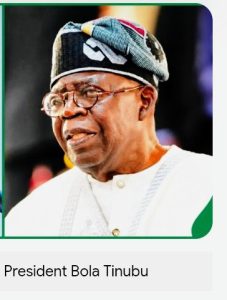
The Council described as shocking the President’s failure to condemn the growing wave of political violence, noting that, through his spokesman, Mr. Bayo Onanuga, the Presidency had instead chosen to caution opposition parties while shielding those allegedly responsible for violence within the ruling APC.
“President Tinubu cannot claim to desire peace when his own words provide cover for violence.
“‘All Is Fair in Politics’ is not the language of a Head of State. It is the language of political desperation and an open licence for thuggery, ballot snatching, intimidation and bloodshed.
“From Edo to Cross River, Gombe to Lagos, and Kebbi to Kaduna, Nigerians have witnessed attacks on opposition gatherings, destruction of campaign materials and the brutalisation of innocent supporters, allegedly by APC-sponsored thugs.
“Yet, Mr. President has not considered it necessary to call his governors and party members to order.
“Instead, the Presidency has resorted to diversionary tactics, blaming victims and preaching restraint to the opposition while members of the ruling party are accused of unleashing violence across the country,” the statement said.
The ADC-PCC challenged President Tinubu to explain why his condemnation of political violence appears directed at the opposition rather than members of his own party.
It asked: “Why has Mr. President refused to condemn APC governors who openly threaten opposition supporters? Why has he remained silent over public incitement by officials of his party? Why is his anger always directed at the opposition and never at those within his own political fold?”
The Council maintained that the ADC remains committed to peaceful, issue-based political engagement, insisting that its campaign is focused on addressing the country’s pressing challenges, including hunger, insecurity, unemployment, corruption and what it described as the failures of the Tinubu administration.
It accused the APC of resorting to violence because it had little to offer Nigerians in terms of credible solutions to the country’s problems.
Consequently, the ADC-PCC demanded that President Tinubu immediately and publicly withdraw his “All Is Fair in Politics” remark, condemn and call to order APC governors and party officials accused of inciting violence, and direct security agencies to protect all Nigerians impartially rather than allow them to become instruments of intimidation and oppression against opposition parties.
” Nigeria belongs to all of us. No political ambition is worth the blood of any Nigerian.
“If former President Goodluck Jonathan could make that profound declaration in 2015, President Tinubu has no excuse not to say so and demonstrate the sincerity of his commitment to peace in 2026.
“The ADC will not be intimidated. We will continue to campaign peacefully, and in 2027, Nigerians will have the opportunity to vote for competence, integrity and a new beginning,” the statement added.





-
News5 days ago
IGP Disu decorates 29 senior police officers with new ranks….charges them on professionalism, integrity,others
-
News4 days ago
Airstrikes kill 40 ISWAP terrorists in Borno
-
News4 days ago
We finally received CTC Of Lifu’s Judgement, without Atiku, Other Candidates Names Mentioned—Senator Melaye
-
News4 days ago
2026 U-17 WWC: Tinubu rewards each Flamingos player with ₦100m
-
News5 days ago
How Federal High Court Chief judge is beign blackmailed with EFCC, CCB- ADC Campaign Council
-
News2 days ago
Crowd Shouts ‘Bamayi’ at Tinubu, pelt convoy in Abuja
-
News5 days ago
Oil slump opens door to cheaper petrol for Nigerians …as Brent hits lowest since August
-
News4 days ago
2027: APC sacks kindergarteen Campaign Spokespersons…..Yari, Alake, Idris, now to speak for council