

News
Furthering The Poverty Conversation: By Prince Clem Ikanade Agba


Consequent to the launch of the Multidimensional Poverty Index (MPI) report produced by the National Bureau of Statistics (NBS) on Thursday, November 17, 2022, some observers criticised the federal government based on one of the fndings in the report, which was that 133 million Nigerians were found to be multidimensionally poor.
The impression being created by critics, on those who are yet to see or digest the nitty-gritty of the report, was that the administration of President Muhammadu Buhari, which had promised to lift 100m Nigerians out of poverty in ten years, had thrown 133 million Nigerians, out of an estimated population of 211 million, into poverty. I would like to believe this impression is borne out of ignorance rather than mischief, and it is incumbent on us not to allow ignorance to pass without clarifcation, especially in this period of cynicism and partisan frenzy.
Based on the World Data Lab Poverty Model, with a poverty threshold of $1.90, the World Poverty Clock calculates that in Nigeria, people living in extreme poverty in monetary terms are 69.9 million, that is 32 per cent of the estimated population of 211 million used for its projections. That is to say that there are roughly about 63.1 million people that are not poor in terms of money but, in terms of other amenities, can be considered poor/deprived. An example of this can be a child whose primary carer earns N137,430 annually (based on the 2019 poverty line) but lives in a community that deprives him/her of proper primary education, primary healthcare, sanitisation, adequate nutrition and a conducive housing environment.
As Minister of State in the Ministry of Finance, Budget and National Planning, I have taken up the gauntlet thrown down by critics to offer clarifcations in a bid to sustain a robust conversation around the Multidimensional Poverty Index tool, which had been deployed in over 100 countries to measure poverty and had defned poverty as the overlapping combination of deprivations that people could face in several areas of their lives, believing that we would all better understand the issues involved and put our hands on the deck to confront them head-on.
I pointed out that the MPI, a new tool with which to measure poverty in the country, was markedly different from the select focus on monetary poverty measurement. Contrary to
sentiments that the report by an agency of this administration indicted the administration, the MPI only clarifed the various dimensions of poverty and its attendant deprivations. It is furthermore in line with the Federal Government’s commitment to be transparent and data-driven and primarily provide data free of interference or manipulation.
While I do not wish to repeat myself as what I said on that occasion are recorded facts, I wish to restate and reiterate the fact that the Multidimensional Poverty Index Survey results, as published by the National Bureau of Statistics, make it clear that poverty in Nigeria is mainly a rural phenomenon, with approximately 106 million (72% ) of the 133 million multidimensionally poor, residing in the rural areas.
With the significant contributory factors to multidimensional poverty being health and education issues, I simply pointed out that the neglect of the rural areas by those responsible for it is a significant factor as to why multidimensional poverty still persists today at its current levels, despite the support the Federal Government provides through social investment programmes and development policies.
The sub-nationals cannot evade this responsibility as the mandate for rural affairs fall within their ambit. It is expected that they take these empirical results, which have been provided at the senatorial district level for the frst time, and apply them in addressing the issues on ground in their respective states. I encourage the sub-national governments to take time to look at the indicators measured in the MPI to see where and how the responsibilities of addressing those indicators fall within their political and constitutional responsibilities.
Poverty is a state or condition in which a person or community lacks the financial resources and essentials for a minimum standard of living. Poverty means that the income level from employment is so low that basic human needs can’t be met.
Poverty-stricken people and families might go without proper housing, clean water, healthy food, and medical attention.
Each nation has its criteria for determining the poverty line and counting how many people live in poverty. Calculating a poverty index lets the government know how well it meets the nation’s needs.
As a nation, we have focused primarily on monetary poverty in the past, which looks solely at an income threshold by which it is believed people will be able to meet their needs.
However, various regional socio-economic conditions mean that people have varying access to the essentials needed to achieve a minimum standard of living. For this reason, the country, for the frst time, is instituting the Multidimensional Poverty Index to better understand the various forms of poverty and deprivations.
Where the Monetary poverty index looks at individuals living on less than $1.9 dollars a day, the MPI takes monetary poverty and other factors (access to primary health, basic education, nutrition, sanitation, water, etc.) into account to determine the ability of individuals to achieve a minimum acceptable standard of living. Therefore, comparing monetary and multidimensional poverty indexes is akin to comparing apples and oranges; they are both fruit but of a completely different makeup.
The importance of the MPI is that it gives us a more nuanced view of the country’s socio-economic challenges and dives into a deeper geographical look. This enables us, for instance, to understand disparities in states on a senatorial district level and will help the federal, state and local governments tailor their policies, programmes and project implementation objectives more accurately to the unique needs of its people.
The parameters looked at in calculating the MPI are:
● Primary Health
○ Nutrition
○ Food insecurity
○ Time to healthcare
● Basic Education
○ School Attendance
○ Years of Schooling
○ School Lag
● Living Standards
○ Access to Potable Water
○ Water Reliability
○ Sanitation
○ Housing Materials
○ Cooking Fuel
○ Assets (Land, etc.)
● Work & Shocks
○ Unemployment
○ Underemployment
○ Security Shock
From looking at the main contributory factors influencing multidimensional policy, we can see that the non “glossy” things such as adequately run primary and secondary schools (proper facilities, teachers and funding), well-equipped, staffed and maintained primary health centres, drinkable pipe borne water, good waste management (pickup and disposal) and friendly local business policies (removing excessive permits and levies) have the most impact on reducing poverty in all forms.
These also consequently have the highest impact on growth. Primary and Secondary healthcare and basic education, for example, are exclusively under the remit of Local and State Governments. Water Boards and their service delivery are exclusively under the State governments, the same goes for land ownership as well as business levies and permits charged in the various localities.
Building a good network of rural roads across agro corridors will improve access to markets while reducing post-harvest losses (currently estimated at 60%). This will signifcantly impact the rural agrarian economy and industries and reduce food infation in urban areas.
Strengthening service delivery across the various contributing parameters is the easiest way to roll back the numbers. This will entail Local Government reforms in the various states
Having untangled some of the fndings of the MPI report, I wish to clarify that while I had held the sub-national governments accountable for their role in the poverty levels in the country, my opinion was not a blanket one. For the record, I cannot paint all governors with a brush of negligence in implementing poverty-reduction programmes in the rural areas of their respective states.
I have cited and commended what the Lagos State Governor, Mr Babajide Sanwo-Olu and Kebbi State Governor, Mr Atiku Bagudu were doing with the LAKE rice and the Ebonyi Governor, Mr David Umahi’s contribution to help address the question of food security in the country. At the same time, I joined issues with the Akwa-Ibom State Governor, Mr Udom Emmanuel, on his position on the increasing price of rice and what he was doing or had done as governor to make the price of rice go down.
Moreover, some governors, like Professor Babagana Umara Zulum, Mallam Nasir Ahmad El-Rufai and Barrister Nyesom Wike, have built roads, bridges and other iconic social infrastructural facilities, such as hospitals and schools, both in the rural and urban areas of their State. That they were not singled out at the State House media engagement does not include them in my classifcation of governors who had not embarked on projects that positively impacted the people, especially in the rural areas. Ondo state, in particular, must be given recognition as they have the lowest incidence of multidimensional poverty (27.2%) in the entire country.
I reiterate my position that States are not adequately playing their complementary role in promoting sectors directly under their purview, like primary health, basic education, water, rural roads and infrastructure. They should prudently manage their resources and spread them to the rural area that impacts directly and positively on the majority of the people as well as improves their living standard so that the desire by the Federal Government to lift
100 million Nigerians from poverty in 10 years can be collaboratively and collectively realized for the beneft of the nation.
It is pertinent to know that statistical information is the bedrock of successful policy at all levels of government. The MPI is neither a half-witted document with a political undertone nor that which seeks to shift blame. As an intellectual document, if there is a need for a rejoinder, the critics should go to the feld and conduct research. However, in doing this, it is essential to note that the 36 States Bureau of Statistics participated in the production of the subject MP Index.
I believe that the Federal Government’s policies, plans and programs will work better and be more impactful if the sub-nationals understand that development is bottom-up. Then they can begin to redirect their spending to people-oriented and community-impacting projects.
The Federal Government will continue supporting states that are committed to tackling these binding issues.
The Government of President Muhammadu Buhari will remain committed to its primary responsibilities of good policy initiatives and robust developmental programs. The Federal Government’s support for small and medium-scale businesses, in line with the National Development Plan, has facilitated economic growth for eight consecutive quarters since the Covid-19-induced recession, growing by 2.25% in the third quarter of 2022.
Below is the summary MPI Data by State and Senatorial District:
Prince Clem Ikanade Agba, Minister of State Budget and National Planning, Federal Ministry_ of Finance, Budget and National Planning, Abuja.

The United States government has insisted that Nigeria should retain its Country of Particular Concern, CPC, designation, saying the country has not done enough to protect Christians from attacks.
Assistant Secretary of State for African Affairs, Frank Garcia, made this statement on Thursday during a congressional hearing on violence in Nigeria.
Garcia was responding to questions from US Congressman Riley Moore, who asked about the government’s efforts to dismantle militia strongholds and kidnapping camps in the Middle Belt, particularly in Benue and Plateau states.
Moore also raised concerns over the exclusion of the states from the forest guard initiative and delays in deploying 1,000 approved guards to Plateau.
“Before you answer that, we cannot take this CPC designation off of this country. They have not done enough,” Moore said.
Garcia acknowledged the lack of progress, but said Nigeria was taking steps to address the concerns, although they had yet to produce results.
He said the country’s security capacity was still being developed and that deployments were not happening fast enough.
“Unfortunately, the violence has not stopped,” Garcia added, citing continued attacks in Kaduna and Plateau states.
He said the US had provided police training and equipment, expanded intelligence sharing and worked with Nigerian financial institutions to disrupt terrorist financing.
Garcia added that Washington would continue diplomatic engagements and security cooperation to protect vulnerable communities and ensure accountability.
However, the Nigerian government has consistently rejected claims of a “Christian genocide” or targeted religious persecution, maintaining that insecurity affects Nigerians of all faiths.


Liquefied Petroleum Gas, commonly known as cooking gas, has risen significantly, forcing Nigerians to spend more to purchase the product.
The increase comes as depot owners and retailers raised their prices over the past two days.
StockGap increased its depot price by N25 to N1,440 per kilogram. Nigerian Independent Petroleum Company Limited, NIPCO, Mobil (now 11 Plc) and Ardova, on the other hand, sold the product at N1,400 and N1,390 per kilogram, respectively.
Similarly, LPG retail outlets, including Raniol, Juda Oil and Nigerian National Petroleum Company Limited, NNPC, outlets in Abuja and its environs, now dispense cooking gas at between N1,550 and N1,600 per kilogram, up from N1,400 and N1,500.
Micro-LPG dealers sell the product for between N1,700 and N1,800 per kilogram, depending on the location in Abuja.
Earlier, NIPCO’s spokesperson, Taofeek Lawal, had exclusively told DAILY POST that LPG prices could increase further between November and January next year.
The latest price increase means that Nigerians who previously spent N17,500 to refill a 12.5kg cylinder at N1,400 per kilogram will now pay N20,000 at the new rate of N1,600 per kilogram, representing an additional N2,500.
News
2027: Tinubu Must Withdraw ‘All Is Fair in Politics’ Remark, Embrace Peaceful Coexistence — ADC-PCC

The African Democratic Congress Presidential Campaign Council (ADC-PCC) has called on President Bola Ahmed Tinubu to publicly retract his controversial “All Is Fair in Politics” remark, warning that such rhetoric fuels political division, emboldens thugs and poses a grave threat to the nation’s peace and stability.
The ADC-PCC also expressed concern over what it described as the President’s disturbing silence on the conduct of some APC governors and party chieftains who have openly made inflammatory statements and allegedly encouraged political violence.
In a statement signed by its Director of Media and Publicity, Kola Ologbondiyan, the ADC-PCC urged President Tinubu to rise above partisan interests and demonstrate the statesmanship expected of a national leader, citing former President Goodluck Jonathan’s unequivocal declaration that no presidential ambition was worth the blood of any Nigerian.
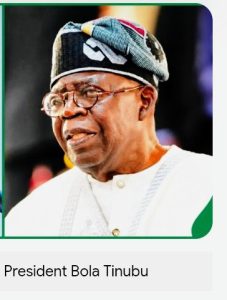
The Council described as shocking the President’s failure to condemn the growing wave of political violence, noting that, through his spokesman, Mr. Bayo Onanuga, the Presidency had instead chosen to caution opposition parties while shielding those allegedly responsible for violence within the ruling APC.
“President Tinubu cannot claim to desire peace when his own words provide cover for violence.
“‘All Is Fair in Politics’ is not the language of a Head of State. It is the language of political desperation and an open licence for thuggery, ballot snatching, intimidation and bloodshed.
“From Edo to Cross River, Gombe to Lagos, and Kebbi to Kaduna, Nigerians have witnessed attacks on opposition gatherings, destruction of campaign materials and the brutalisation of innocent supporters, allegedly by APC-sponsored thugs.
“Yet, Mr. President has not considered it necessary to call his governors and party members to order.
“Instead, the Presidency has resorted to diversionary tactics, blaming victims and preaching restraint to the opposition while members of the ruling party are accused of unleashing violence across the country,” the statement said.
The ADC-PCC challenged President Tinubu to explain why his condemnation of political violence appears directed at the opposition rather than members of his own party.
It asked: “Why has Mr. President refused to condemn APC governors who openly threaten opposition supporters? Why has he remained silent over public incitement by officials of his party? Why is his anger always directed at the opposition and never at those within his own political fold?”
The Council maintained that the ADC remains committed to peaceful, issue-based political engagement, insisting that its campaign is focused on addressing the country’s pressing challenges, including hunger, insecurity, unemployment, corruption and what it described as the failures of the Tinubu administration.
It accused the APC of resorting to violence because it had little to offer Nigerians in terms of credible solutions to the country’s problems.
Consequently, the ADC-PCC demanded that President Tinubu immediately and publicly withdraw his “All Is Fair in Politics” remark, condemn and call to order APC governors and party officials accused of inciting violence, and direct security agencies to protect all Nigerians impartially rather than allow them to become instruments of intimidation and oppression against opposition parties.
” Nigeria belongs to all of us. No political ambition is worth the blood of any Nigerian.
“If former President Goodluck Jonathan could make that profound declaration in 2015, President Tinubu has no excuse not to say so and demonstrate the sincerity of his commitment to peace in 2026.
“The ADC will not be intimidated. We will continue to campaign peacefully, and in 2027, Nigerians will have the opportunity to vote for competence, integrity and a new beginning,” the statement added.




-
News5 days ago
IGP Disu decorates 29 senior police officers with new ranks….charges them on professionalism, integrity,others
-
News4 days ago
Airstrikes kill 40 ISWAP terrorists in Borno
-
News4 days ago
We finally received CTC Of Lifu’s Judgement, without Atiku, Other Candidates Names Mentioned—Senator Melaye
-
News4 days ago
2026 U-17 WWC: Tinubu rewards each Flamingos player with ₦100m
-
News5 days ago
How Federal High Court Chief judge is beign blackmailed with EFCC, CCB- ADC Campaign Council
-
News2 days ago
Crowd Shouts ‘Bamayi’ at Tinubu, pelt convoy in Abuja
-
News5 days ago
Oil slump opens door to cheaper petrol for Nigerians …as Brent hits lowest since August
-
News5 days ago
Oil price fall: We ‘ll take appropriate action against marketers, petrol stations over unfair practices- FCCPC