

News
How We Raised Crude Oil Production from 900,000mbpd to 1.6mbpd- NNPC


•Clarifies 70% illegal refineries deactivated
•Reveals Nigeria was losing 21m barrels monthly, $1.9bn before recovery
•Says Nigerians will be shocked to know those behind oil theft when exposed
•Declares suspected oil thefts undergoing prosecution
•Blames current fuel scarcity on distribution hiccups
The Nigerian National Petroleum Company (NNPC) Limited yesterday reaffirmed that with the return of Forcados and partial restoration of the Trans Niger Pipeline (TNP), Nigeria’s oil production had hit 1.6 million barrels per day (mbpd).
NNPC explained how the national oil company was able to ramp up crude oil production, which had fallen significantly, with the collaboration of the security agencies, regulators, oil producing communities, and other stakeholders.
Speaking on Arise News Channel, THISDAY’s broadcast arm, Chief Upstream Investment Officer of the NNPC Upstream Investment Management Services (NUIMS), Bala Wunti, also clarified the much-reported 700,000 barrels per day losses incurred by the national oil firm.
Wunti explained that based on all the calculations, Nigeria was losing, on the average, over 700,000 barrels per day. He explained that in hydrocarbons accounting, the figure included engineering losses, oil theft, as well as what would have been produced due to shutdowns, which he described as opportunity losses.
Before the recent recovery, he stated that Nigeria was losing about 21 million barrels per month and up to $1.9 billion every 30 days.
“If you take an average oil price of $90, that will translate to somewhere in the neighbourhood of $1.9 billion losses that we suffered,” he said.
Wunti stated that at least 68 vessels had been impounded since the renewed fight against crude oil theft, saying some of the culprits are being prosecuted by the appropriate authorities.
He said the collaboration between the security agencies, local community contractors, and NNPC led to the return of Forcados, while Brass and Bonny, which were shut down due to force majeure, were expected to begin operation soon.
He pointed out that while the Trans Niger Pipeline (TNP) was yet to fully return, it had now been partially restored, leading to the increase in reported production figures.
“Forcados is back, Bonny will soon be back,” he assured.
Before now, Wunti stated that the industry was using technology sub-optimally, which made it very difficult to have an end-to-end visibility of NNPC’s infrastructure.
Wunti stated that there was currently about 350,000 bpd to 400,000 bpd augmentation to the volume being produced hitherto, adding that Nigeria drills about 1.6 million bpd currently.
According to him, NNPC now has the capability to see its assets fully from end-to-end, and about 70 per cent of identified illegal refineries have been deactivated.
“It is just mind-boggling what we have discovered and we could see the level of sophistication where illegal connections were put on our trunk lines,” he stated, describing it as a very complex situation.
He stated that there were several layers of security protecting the country’s oil infrastructure, explaining that every level is now monitored by other levels to check underhand dealings.
The reduction in production had cut the contribution of foreign exchange earnings from crude oil export from 90 per cent, when production was high, to 78.5 per cent as of the third quarter of 2022, THISDAY learnt.
As crude theft increased, the federal government and some private security groups, including Tantita Securities Service, owned by Government Ekpemupolo, also known as Tompolo, Pipeline Infrastructure Nigeria Limited (PINL), and Maton Engineering Limited, were contracted by the government.
Wunti stated, “The new security architecture relies on technology. What it does is to bring together the security and intelligence agencies on one table, the regulators on the other, and then bring in the community into the other angle and without the community, we can’t achieve that.
“Today, we are able to detect and we able to respond. The success that we recorded is essential because of this improved security situation. We are now almost at an average of 350,000 to 400,000 bpd increase. At a certain level we recorded up to 450,000 bpd increase.
“That is why you can see we are now from 1.1 million bpd daily to about 1.59 million bpd as at this morning (yesterday). So, these are some of the things that we are able to record based on the new security architecture.”
He assured that the collective resolve of private and government securities would lead to further improvement in crude oil production, which would, in turn, reflect in foreign exchange earnings by the country.
According to him currently, about 638 illegal refineries, out of 763, have been destroyed, even as the security architecture is being institutionalised.
Wunti said, “We have incapacitated almost about 70 per cent of what we have identified and we will keep identifying some of them. It is mind-boggling what we discovered even as operators and every one of us saw the kind of sophistication, where illegal connections are put on every major trunk line, including direct export lines on Forcados.
“It couldn’t have been possible without the collective resolve of the private security guards anchored by the communities. We have short to medium and long term visibility. I can tell you we have succeeded to an extent to stop this menace.
“The question now is how to stop its growth. That is why we introduced checking the checker. What that means is that we have four layers of visibility.”
Wunti also said persons arrested in connection with the criminal oil theft and bunkering activities were currently being prosecuted. He said in due course, their identities would be disclosed to the surprise of Nigerians.
He said, “And the new security architecture was anchored on basically on rectangular architecture layered on technology. It brings together the security and intelligence agency at one angle, the regulators at another angle, the operators at another angle, and then brings in what was almost zero – the community – into the other angle, and without the community you can’t achieve that.
“That is just the innovation and we layered it on a technology – Command and Control Centre. I’m glad this media house has visited that Command and Control Centre. Today, we have end-to-end visibility, we are able to detect, we are able to deter and we are able to respond.
“We are still making a lot of improvement and that’s what you call the 3DR: we first detect, we deactivate, and we destroy and then we remove.”
Wunti blamed the current fuel scarcity in the country on hiccups around the product distribution system, saying supply is not the reason for the disruption in the value chain. He explained that the task of making any product available rested on 4As – making available, affordable, accessible, and in an acceptable format.
He added that guaranteeing security of products rested on the supply, distribution and retail, pointing out that the challenge in Nigeria has always been more around distribution than supply.
He said there was about two billion litres of petrol in stock, saying the volume would only make impact on the people if all of it were sent to filling stations.
Wunti explained, “Needless to say, 60 to 65 per cent of the country source their product from Lagos. At the last count, we only have 35,000 trucks. That 35,000 crisscross this country. They go to Maiduguri, Sokoto, Calabar and the rate at which they make their turnaround has changed significantly from one week to 10 days. Now, they hardly do once in a month. That brought about several constraints.
“We all know what the problem was in the last supply disruption. Around Apapa axis, there was a blockage. No truck loaded can leave and that created a problem. If you stay one day without delivering product to Lagos, you need a minimum of one week to supply at higher rate to address that.
“If you waste two days, it will take you almost three weeks to close the gap and if you waste three days, it will take you one month. That is the problem.
“Even as at today, we have about two billion litres. That two billion litres are supposed to be in our stock, in our depots, either NNPC or other private depots. What constitutes this two billion litres is what you have in the marine and what you have in the stock, in the depots. But your ability to take this two billion litres to the stations is where the problem lies.”
He, however, assured that all the stakeholders were working round the clock to ensure the issue was resolved, adding that Nigerians would have enough fuel to serve them during the yuletide.
*NMDPRA Blames Nationwide Fuel Scarcity on Logistics Constraints, Others
Meanwhile, the Nigerian Midstream and Downstream Petroleum Regulatory Authority (NMDPRA) has blamed the current nation-wide fuel scarcity on multiple factors, including logistic constraints arising from the offloading of petroleum products from Mother vessels into Daughter vessels rather than direct discharge to tanks. Chief Executive Officer of NMDPRA, Mr. Farouk Ahmed, stated this yesterday, when he made an unscheduled inspection visit to some petroleum products coastal depots at Apapa, Lagos, to monitor supply and distribution situations at the depots.
Some of the depots he visited included TotalEnergies, NIPCO, Mobil, Conoil, and Honeywell.
Ahmed assured Nigerians of hitch-free supply of petrol during the yuletide season and beyond, noting that there is more than enough stock onshore and in depots across the country to meet the country’s need.
He said NNPC had imported adequate petrol and had enough stock on shuttle vessels coming into depots across the country, urging Nigerians to be calm as the queues in filling stations would be a thing of the past in no distant time.
“As you can see, the depots we have visited so far, they have been very active loading their trucks and unloading them massively and almost the lowest load out depot we visited was the one that says they are doing between 70-120 trucks per day,” he added.
Responding to a question about punitive measures against marketers selling above the official pump price, Ahmed said the authority was yet to ascertain if the allegations were true.
He stated, “Of course, we have information that they are selling above official price, but the record that we saw in terms of actual records in their finances, showed that that they are selling at official price.
“But the allegation is that they sell above official price and then, they have different ways of collecting additional profits which is just an allegation, which we will need to really confirm before we take any action. But we are looking at that and we are on top of the situation.”
Speaking also, Managing Director and Chief Executive Officer of NIPCO Plc, Mr. Suresh Kumar, said the company’s opening stock was about 28 million litres as of the time of the agency’s visit, stressing that unlike last week, the stock situation has drastically improved.
Kumar said, “I can say that last week, supply was a bit challenged. As at today, even the number of ships at Apapa has increased. We have like three ships in Jetty now and we are expecting two more to come.
“So in the days to come, we feel that this 28 million stock will be improved to like 50 to 55 million litres. We have been doing five million litres per day and we expect this trend to continue for the next one week.”
On his part, Managing Director, 11 Plc (formerly Mobil Nigeria Plc), Mr. Tunji Oyebanji, opined that to address the fuel scarcity in the country, marketers should load more at a period when the demand for petroleum products was high until every consumer was satisfied.
He said, “The panic buying is being aggravated whenever there is scarcity in the country. We have to load more because anyone who used to buy little is now buying more because of the fuel scarcity situation. We have to load more till we have calmness.”

The United States government has insisted that Nigeria should retain its Country of Particular Concern, CPC, designation, saying the country has not done enough to protect Christians from attacks.
Assistant Secretary of State for African Affairs, Frank Garcia, made this statement on Thursday during a congressional hearing on violence in Nigeria.
Garcia was responding to questions from US Congressman Riley Moore, who asked about the government’s efforts to dismantle militia strongholds and kidnapping camps in the Middle Belt, particularly in Benue and Plateau states.
Moore also raised concerns over the exclusion of the states from the forest guard initiative and delays in deploying 1,000 approved guards to Plateau.
“Before you answer that, we cannot take this CPC designation off of this country. They have not done enough,” Moore said.
Garcia acknowledged the lack of progress, but said Nigeria was taking steps to address the concerns, although they had yet to produce results.
He said the country’s security capacity was still being developed and that deployments were not happening fast enough.
“Unfortunately, the violence has not stopped,” Garcia added, citing continued attacks in Kaduna and Plateau states.
He said the US had provided police training and equipment, expanded intelligence sharing and worked with Nigerian financial institutions to disrupt terrorist financing.
Garcia added that Washington would continue diplomatic engagements and security cooperation to protect vulnerable communities and ensure accountability.
However, the Nigerian government has consistently rejected claims of a “Christian genocide” or targeted religious persecution, maintaining that insecurity affects Nigerians of all faiths.

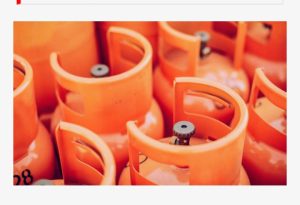
Liquefied Petroleum Gas, commonly known as cooking gas, has risen significantly, forcing Nigerians to spend more to purchase the product.
The increase comes as depot owners and retailers raised their prices over the past two days.
StockGap increased its depot price by N25 to N1,440 per kilogram. Nigerian Independent Petroleum Company Limited, NIPCO, Mobil (now 11 Plc) and Ardova, on the other hand, sold the product at N1,400 and N1,390 per kilogram, respectively.
Similarly, LPG retail outlets, including Raniol, Juda Oil and Nigerian National Petroleum Company Limited, NNPC, outlets in Abuja and its environs, now dispense cooking gas at between N1,550 and N1,600 per kilogram, up from N1,400 and N1,500.
Micro-LPG dealers sell the product for between N1,700 and N1,800 per kilogram, depending on the location in Abuja.
Earlier, NIPCO’s spokesperson, Taofeek Lawal, had exclusively told DAILY POST that LPG prices could increase further between November and January next year.
The latest price increase means that Nigerians who previously spent N17,500 to refill a 12.5kg cylinder at N1,400 per kilogram will now pay N20,000 at the new rate of N1,600 per kilogram, representing an additional N2,500.
News
2027: Tinubu Must Withdraw ‘All Is Fair in Politics’ Remark, Embrace Peaceful Coexistence — ADC-PCC
The African Democratic Congress Presidential Campaign Council (ADC-PCC) has called on President Bola Ahmed Tinubu to publicly retract his controversial “All Is Fair in Politics” remark, warning that such rhetoric fuels political division, emboldens thugs and poses a grave threat to the nation’s peace and stability.
The ADC-PCC also expressed concern over what it described as the President’s disturbing silence on the conduct of some APC governors and party chieftains who have openly made inflammatory statements and allegedly encouraged political violence.
In a statement signed by its Director of Media and Publicity, Kola Ologbondiyan, the ADC-PCC urged President Tinubu to rise above partisan interests and demonstrate the statesmanship expected of a national leader, citing former President Goodluck Jonathan’s unequivocal declaration that no presidential ambition was worth the blood of any Nigerian.
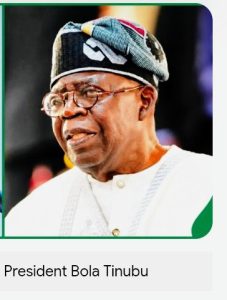
The Council described as shocking the President’s failure to condemn the growing wave of political violence, noting that, through his spokesman, Mr. Bayo Onanuga, the Presidency had instead chosen to caution opposition parties while shielding those allegedly responsible for violence within the ruling APC.
“President Tinubu cannot claim to desire peace when his own words provide cover for violence.
“‘All Is Fair in Politics’ is not the language of a Head of State. It is the language of political desperation and an open licence for thuggery, ballot snatching, intimidation and bloodshed.
“From Edo to Cross River, Gombe to Lagos, and Kebbi to Kaduna, Nigerians have witnessed attacks on opposition gatherings, destruction of campaign materials and the brutalisation of innocent supporters, allegedly by APC-sponsored thugs.
“Yet, Mr. President has not considered it necessary to call his governors and party members to order.
“Instead, the Presidency has resorted to diversionary tactics, blaming victims and preaching restraint to the opposition while members of the ruling party are accused of unleashing violence across the country,” the statement said.
The ADC-PCC challenged President Tinubu to explain why his condemnation of political violence appears directed at the opposition rather than members of his own party.
It asked: “Why has Mr. President refused to condemn APC governors who openly threaten opposition supporters? Why has he remained silent over public incitement by officials of his party? Why is his anger always directed at the opposition and never at those within his own political fold?”
The Council maintained that the ADC remains committed to peaceful, issue-based political engagement, insisting that its campaign is focused on addressing the country’s pressing challenges, including hunger, insecurity, unemployment, corruption and what it described as the failures of the Tinubu administration.
It accused the APC of resorting to violence because it had little to offer Nigerians in terms of credible solutions to the country’s problems.
Consequently, the ADC-PCC demanded that President Tinubu immediately and publicly withdraw his “All Is Fair in Politics” remark, condemn and call to order APC governors and party officials accused of inciting violence, and direct security agencies to protect all Nigerians impartially rather than allow them to become instruments of intimidation and oppression against opposition parties.
” Nigeria belongs to all of us. No political ambition is worth the blood of any Nigerian.
“If former President Goodluck Jonathan could make that profound declaration in 2015, President Tinubu has no excuse not to say so and demonstrate the sincerity of his commitment to peace in 2026.
“The ADC will not be intimidated. We will continue to campaign peacefully, and in 2027, Nigerians will have the opportunity to vote for competence, integrity and a new beginning,” the statement added.





-
News5 days ago
IGP Disu decorates 29 senior police officers with new ranks….charges them on professionalism, integrity,others
-
News4 days ago
Airstrikes kill 40 ISWAP terrorists in Borno
-
News4 days ago
We finally received CTC Of Lifu’s Judgement, without Atiku, Other Candidates Names Mentioned—Senator Melaye
-
News4 days ago
2026 U-17 WWC: Tinubu rewards each Flamingos player with ₦100m
-
News5 days ago
How Federal High Court Chief judge is beign blackmailed with EFCC, CCB- ADC Campaign Council
-
News2 days ago
Crowd Shouts ‘Bamayi’ at Tinubu, pelt convoy in Abuja
-
News5 days ago
Oil slump opens door to cheaper petrol for Nigerians …as Brent hits lowest since August
-
News5 days ago
2027: ADC accuses Federal High Court of withholding David Mark sack judgment