Opinion
MPI: Buhari’s Government Did Not Throw 133m Nigerians Into Poverty; Report A Call For Sub-Nationals To Be Accountable To Citizens- By Prince Clem Ikanade Agba


It is Peter Drucker- the management guru, that is often quoted to have said: “you can’t manage what you can’t measure.” But I wish to follow up with an addition that is as relevant and critical, which is: “if you can’t measure it, you can’t improve it”. These quotes are important premises for this discourse.
On Thursday 17 November, 2022, the Federal Government of Nigeria launched a new tool for measuring poverty in Nigeria, which found that 63% of people – 133 million Nigerians out of an estimated population of 211 million – are multidimensionally poor. This new tool: Multidimensional Poverty Index (MPI), has been deployed in over 100 countries and defines poverty as the overlapping combination of deprivations that people can face in several areas of their lives. This is markedly different from the narrow focus on only monetary poverty measurement.
In fact, it is not only the hitherto narrow focus on monetary poverty measurement that the MPI has exposed, it has also exposed how largely unaccountable subnational governments have been in the management of public finance.
What have been the contributions of State and Local Governments to poverty alleviation? It is patently unfair to leave the Federal Government alone to take on the task of poverty alleviation in the country.
For instance, if you want to invest in agriculture, you need land and this land belongs to the States. Unfortunately, the states are not investing in their rural areas. They spend money in urban areas, borrowing, for instance, to build airports and other unnecessary projects, and competing with one another in constructing flyovers in their capitals. These funds should have been invested on building solid rural roads, especially in the agro-corridors to cut down on post-harvest losses currently put at 60 percent of total yields. Enhancing the food supply chain from rural to urban areas will ensure food availability and security as well as help to address the problem of inflation.
It is important to note that while the recently launched Nigeria Multidimensional Poverty Index- MPI (2022) provides a new perspective on poverty, it complements rather than replaces monetary poverty data. Likewise, it does not measure the same households in its sample as Nigeria’s monetary poverty line, but through its 15 indicators grouped under four dimensions of health, education, living standards, and work and shocks, it sheds further light on the lived experience and nature of poverty for Nigerian households.
● Monetary versus MPI, which is better?
While their results differ, both provide a holistic insight into the poverty status of the country.
The proportion of the estimated 211 population in Nigeria who are multidimensionally poor is higher at 63% (133 million) than the proportion of the population (40.1%) living below Nigeria’s poverty line of Naira 137,430 per person per year, based on the 2018/19 Nigeria Living Standards Survey (NLSS), by the National Bureau of Statistics (NBS).
Notwithstanding the 2018 lower monetary poverty figures, monetary poverty status of Nigeria remains lower as of today. Based on the World Data Lab poverty model, with a poverty threshold of $1.90, the World Poverty Clock calculates that in Nigeria, people living in extreme poverty in monetary terms are 69.9million; that is, 32% of the estimated population of 215 million used for its projections.
These figures are important to highlight in the first place in order to lay the foundation for the facts stated below:
Nigeria is NOT the poverty capital of the world- not in multidimensional terms or in monetary values.
According to the World Bank, currently, the top 10 countries with the highest monetary poverty rates in the world are: South Sudan – 82.30%; Equatorial Guinea – 76.80%; Madagascar – 70.70%; Guinea-Bissau – 69.30%; Eritrea – 69.00%; Sao Tome and Principe – 66.70%; Burundi – 64.90%; Democratic Republic of the Congo – 63.90%; Central African Republic – 62.00%; and Guatemala – 59.30%.
Meanwhile, according to the Global MPI conducted in 111 countries and released in September 2022 by UNDP and the Oxford Poverty Human Development Initiative (OPHI), India has by far the largest number of poor people worldwide at 22.8 crore. The global MPI is an internationally comparable index computed by OPHI and the UNDP on multidimensional poverty, using data available across the 100+ countries being studied.
The Nigeria Multidimensional Poverty Index- MPI (2022) was conducted in the 109 Senatorial districts across the 36 States, including the Federal Capital Territory (FCT). As detailed in the report, the highest contributor to the 133 million poor people is from those living in rural areas; that is, within local government areas and at ward levels. The result breakdown shows nationally that 132.92 approximately 133 million persons are poor; rural areas contribute a total of 105.98 million to this figure; with urban areas contributing 26.94 million. These rural areas contributing the most to the country’s poverty status are outside of the Federal Government’s obligations but sit squarely within the jurisdiction and legal responsibilities of sub-national government, that is, State Governors and local government chairmen and councilors. The surveys conducted were at Primary Healthcare Centres (PHCs) for the MPI Health dimension; and in primary schools- for the Education dimension. PHCs and primary schools are the responsibilities of the sub-national government.
The Federal Government has now with the deployment of the MPI measurement tool and these findings placed in the hands of State Governors, LGA Councilors, the Legislature, Private sector, and other key stakeholders, a policy tool to help address the overlapping, multi-sectoral deprivations that people face. It is only when the sub-national government collaborates with the Federal and adopt this data-driven and evidence-based approach to governance that we can truly and positively change the trajectory of poverty in our country.
His Excellency, President Muhammadu Buhari remains unwavering in his commitment at eradicating extreme poverty in all its forms; hence, beyond the deployment of the MPI survey, the Federal government has begun using the results as a policy tool. The 2023 budgeting process aligned resource allocations with the findings of the Nigeria MPI (2022) results. Dimensions with highest contribution to deprivations were prioritised in the 2023 budget: security, education, health, infrastructure and related social development and poverty-reduction activities. These sectors identified as “dimensions” in the MPI, are the top five priority sectors in the 2023 national budget, accounting for N8.074 trillion of the total N20.5 trillion national budget.
The MPI is not just a measurement tool, but one that helps with behavioural and perception change. Nigerians need to understand that because an individual earns a daily income above $1.90, that is, NGN850, that this does not automatically mean the individual is not poor. This is the crux of the perception change that the MPI brings to fore and seeks to change. For example, in Bayelsa- currently the second poorest State after Sokoto, the proportion of multidimensionally poor children under 5 is above 50% in all States but greater than 95% in Bayelsa. This means that even though, a household may earn above the daily income of NGN850 or NGN135,415 per annum per capita, if a child within this household is deprived in child indicators such as in nutrition, school attendance, child engagement and across the 15 MPI indicators, such household and child are identified as multidimensionally poor.
This new understanding of poverty beckons on ordinary Nigerians to demand for accountability in government, especially at sub-national levels where poverty is most prevalent. This kind of attitudinal change also requires changes in the choice architecture of who we vote into elective positions. When social and economic investment decisions are not based on data evidence such as the MPI provides, we will continue to perpetuate the circle of poverty, given the current approach where State Governors continue to invest and compete in borrowings to build monuments like airports and flyovers even when data provide evidence to the contrary. Rather, resources should be channeled towards lowering the deprivations in the health sector, for instance, by investing in the State Health Insurance Scheme to enable for inclusive health coverage or investing in the efficiency and effectiveness of primary health care centres (PHCs) of which barely 20% of the 30,000 in the country was functional.
The results are quite revealing, and it reiterates the call for judgment in choosing the right leadership especially when one considers the poverty dynamics between the current ruling party’s (APC) States versus those of the major opposition party (PDP). It is significant to highlight that, for instance, Kano and Kogi- northern APC governed States, are the least poor in the North. Recall that 65%, that is 86 million of the 133 million Nigerians that are MPI poor, are from the North. Meanwhile even though the South-West contributes the lowest number of MPI poor, that is, 16.27 million persons, Oyo State- a PDP ruled State is one of the poorest in the region. The two States with the lowest deprivations across all the dimensions are Lagos (29.4%) and Ondo (the least poor nationally; 27.2%), are APC governed States. In Oyo State, about a half of its 7.8 million (48.7%) population are MPI poor. In terms of the interlinkages between poverty and natural resources, it is troubling to note that in spite being an oil producing State and one of the top 5 States with the highest FAAC allocations, Bayelsa, a PDP State with less than 3 million people is the second poorest State in the Federation; much worse off than Kano (21st in poverty ranking), which has a population of approximately 16 million persons.
Poverty in Nigeria traditionally has been measured using the monetary approach. This approach analyses the consumption and expenditure of a household to estimate their living standards. The last Monetary Poverty estimate as reported by the National Bureau of Statistics, was 40.1 percent for 2019, pre-Covid. The 2022 Multidimensional Poverty Index Survey results as published by the same agency uses a completely different method in assessing the Poverty status of an individual or household. Unlike the monetary measurement, it uses deprivations in basic amenities as a means of assessing poverty. Globally, where both measures have been used, the multidimensional measure more often records a higher level since it considers a range of issues in arriving at a conclusion of a person’s living standard. As clearly stated in the 2022 Multidimensional Poverty Index Survey report published by the National Bureau of Statistics, this survey is the first standalone MPI Survey to be conducted in Nigeria with this level of disaggregation. It also indicates that poverty is predominantly a rural phenomenon, particularly when considering the dimensions driving Poverty in each State, which vary from State to State. This survey exercise was commissioned with the intent of using it as a diagnostic and policy-making tool to address issues of poverty, as it clearly spells out the areas, which government at all levels can work on to improve the living standards of citizens.
An intrinsic value of the multidimensional poverty measurement is the localisation of the incidence and intensity of poverty. The 2022 Nigeria MPI survey findings are a direct reflection of the failure of local and State governments to provide opportunities for citizens to participate in economic activities, and basic social amenities that are within the remits of States and Local governments.
Given the above, the idea, therefore, that the Federal government has thrown 133m people into poverty after committing to lift 100m people out of poverty in 10 years, is false and misleading. Nonetheless, the Federal Government remains unflinching in its efforts to address the root causes of the multiple deprivations Nigerians face especially at sub-national levels and will continue to expand its social protection and poverty reduction strategies into States, to deliver on its commitment to lift millions out of extreme poverty.
● Prince Agba is Minister of State for Finance, Budget and National Planning and supervises the National Bureau of Statistics (NBS).
#


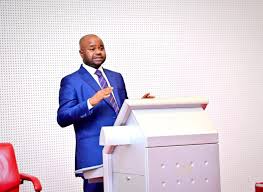
The Oyo Stakeholders Forum (OSF) has identified the current Chairman of the Federal Inland Revenue Service (FIRS), Dr. Sir Zacch Adedeji as the only aspirant with the vision and capacity to transform the state ahead of the 2027 governorship election.
The stakeholders revealed that they are pleased and satisfied with the exploits of Adedeji as FIRS which the achievement is ostensibly clear even for the blind to see, hence the call for him to transform Oyo state in 2027.
The Forum also pointed out that, “under Dr. Adedeji’s leadership at FIRS, Nigeria has witnessed a revolution in its tax administration system. His commitment to leveraging technology, implementing strategic reforms, and fostering public trust in the tax process has resulted in unprecedented revenue growth for the nation.”
The development was made known during a press conference addressed by the coordinator of the forum, Elder Jelili Akande, on Tuesday in Abuja.
OSF called on the people of Oyo to look forward to electing Adedeji as governor in 2027, while underscoring the need for his achievements at FIRS currently to be brought to bear in the governance of Oyo state.
Adding that Oyo state stands to benefit from Adedeji’s experience and exposure in the area of: replicating achievements at FIRS in Oyo; Modernizing Oyo state’s tax system; People-centered approach to revenue generation; Harnessing Oyo’s economic potential, and infrastructural development.
“The Oyo Stakeholders Forum firmly believes that Dr. Sir Zaach Adedeji possesses the vision, experience, and determination to transform Oyo State’s revenue system and drive sustainable development. His track record at FIRS is a testament to his ability to deliver results, and his commitment to transparency and accountability is exactly what Oyo State needs at this critical time.
“As we look forward to the 2027 elections, we urge all Oyo residents to support this vision of a prosperous, self-reliant state. Together, we can build an Oyo State where every resident shares in the benefits of economic growth and development,” Akande stated.
Part of the statement read:
“As Oyo State prepares for the 2027 gubernatorial elections, Dr. Adedeji’s vision for transforming the state’s revenue system comes as a beacon of hope. Oyo State, with its rich resources and industrious population, is brimming with untapped potential. However, the state’s heavy reliance on federal allocations has hindered its ability to achieve sustainable development.
Dr. Adedeji’s expertise in revenue generation offers a pathway to change this narrative and position Oyo State as a model of economic self-sufficiency and progress.
ACHIEVEMENTS AT FIRS: A TEMPLATE FOR OYO STATE
DR. ADEDEJI’S tenure at FIRS has been marked by strategic reforms that have improved efficiency and transparency. Key among these achievements is the introduction of a digital tax filing system, which has streamlined tax processes and minimized leakages. This technological transformation has made compliance easier for businesses and individuals alike, leading to a significant increase in tax revenues.
Additionally, Dr. Adedeji championed public-private partnerships to create awareness about tax compliance, ensuring that more businesses became part of the formal economy. His efforts have not only widened the tax net but have also restored public confidence in how tax revenues are utilized. Such achievements demonstrate his ability to create sustainable solutions that benefit both the government and citizens—a template he plans to replicate in Oyo State.
MODERNIZING OYO STATE’S TAX SYSTEM
As Governor, Dr. Adedeji plans to modernize Oyo State’s tax administration system, making it more inclusive, transparent, and technology-driven. His strategy will involve the deployment of innovative tools to identify untapped revenue streams, expand the tax base, and ensure that every taxable entity contributes fairly to the state’s development.
Central to this transformation will be a shift from the traditional reliance on federal allocations to a robust internally generated revenue (IGR) framework. By leveraging data analytics and automation, Dr. Adedeji aims to reduce leakages, improve compliance, and make the tax process seamless for individuals and businesses alike.
A PEOPLE-CENTERED APPROACH TO REVENUE GENERATION
Dr. Adedeji’s approach to revenue generation is rooted in his belief that governance should serve the people. As such, he is committed to ensuring that every kobo generated is accounted for and channeled into projects that directly impact the lives of Oyo residents. This includes investments in critical areas such as education, healthcare, infrastructure, and job creation.
His administration will prioritize transparency by implementing a system where taxpayers can easily track how their contributions are utilized. This level of accountability will not only boost public trust but also encourage voluntary compliance.
HARNESSING OYO’S ECONOMIC POTENTIAL
Oyo State is endowed with vast resources and opportunities. From its thriving agricultural sector to its emerging industrial hubs, the state has the potential to become an economic powerhouse. Dr. Adedeji’s vision includes harnessing these resources by creating an enabling environment for businesses to thrive.
His plans include offering tax incentives to attract local and foreign investments, particularly in key sectors such as agribusiness, manufacturing, and technology. By doing so, he aims to create jobs, boost productivity, and ultimately increase the state’s revenue.
THE PATH TO INFRASTRUCTURAL DEVELOPMENT
The increase in IGR under Dr. Adedeji’s leadership will translate into tangible benefits for the people of Oyo State. With more funds at the state’s disposal, his administration will focus on the development of critical infrastructure such as roads, schools, hospitals, and water supply systems. These projects will not only improve the quality of life for residents but also enhance the state’s attractiveness to investors.
A CALL FOR ACTION
The Oyo Stakeholders Forum firmly believes that Dr. Sir Zacch Adedeji possesses the vision, experience, and determination to transform Oyo State’s revenue system and drive sustainable development. His track record at FIRS is a testament to his ability to deliver results, and his commitment to transparency and accountability is exactly what Oyo State needs at this critical time.
As we look forward to the 2027 elections, we urge all Oyo residents to support this vision of a prosperous, self-reliant state. Together, we can build an Oyo State where every resident shares in the benefits of economic growth and development.”
We live in interesting times much in fulfillment of the great Chinese adage!. Interesting because of the elastic capacity of political spin doctors to connect totally unrelated political dots to fit into predetermined mindsets.
Barely three years ago, the usually combustible atmosphere in Benue State was inflamed by contrived controversies over the siting of a Federal Polytechnic in Wannune, in Tarka Local Government Area of Benue State.
According to trending narratives then , the Polytechnic was originally sited in Adikpo in Kwande Local Government Area in the Zone A axis of the State.
The Adikpo school was birthed by Senator Barnabas Gemade who was representing the zone at that time.
According to the purveyors of the story , the polytechnic has been moved to Wannune in Zone B due to the machinations of Senator Gabriel Suswam the immediate past Senator representing Benue North East in the National Assembly and the secretary to the government of the Federation, Senator George Akume who had worked independently to vanquish the achievements of Senator Gemade by erasing one of his star accomplishments as Senator.
Now that the governor of BenueState, Hyacinth Alia, has revealed those behind the relocation of the polytechnic from Kwande to Tarka Local Government would the kwande people apologise to sen. Suswam for falsely accusing him over what he knew nothing about?
The governor confirmed that the removal of the Federal Polytechnic Adikpo to Wannune in Tarkaa, was done by some powerful Abuja politicians who did it in collaboration with officials of the Federal ministry of education then.
If you recall, some sponsored pens took turns to write press articles in national dailies, and social media platforms and cluster WhatsApp groups accusing the former governor and Senator of not protecting their interest, over something that decided by members of then Buhari Federal cabinet.
Unfortunately, no matter how much Senator Suswam, tried to explain, the people of kwande refused to listen to reason, their elites whom we thought would do diligent investigations and explain things to their people back home were in the forefront the attacks on Suswam.
But thankfully, Governor Alia has cleared the air on the true state of things and we thank him immensely for it, and we hope that next time before you accuse public officials on any matter, you will do your research properly or we will continue to throw away and losing good representation, both at home and at the National level.
The storyline then was that Suswam, wanted the state owned College of Education in Katsina Ala to be taken over by the Federal Government while Akume will rather have a polytechnic sited in his ancestral village of Wannune.

The rumour mills then had no doubt been fed by conspiracy theories laden with negative political innuendo, portraying Senator Gabriel Torwua Suswam, of engaging in a selfish game of musical chairs but, the truth behind the relocation of the polytechnic has been unravel by the governor himself.
Very few people then had taken a step backwards to undertake a dispassionate assessment of the state of things. Most people seem consumed by the sentiments of the discussion rather than the facts.
As of three years ago, logic on its head to insinuate that Senator Gabriel Suswam, being a seasoned political player will endorse the “ relocation “ of an institution from a highly populated part of his senatorial district to a place outside of it when he was on the ballot for the 2023 presidential poll was idiotic. That will amount to political suicide.
Secondly, while it is true that the senate in 2017 approved a Bill by Senator Gemade to site a Polytechnic in Adikpo, the same bill was never concurred to in the House of Representatives , neither was it gazetted by the President but,now the issue is in the public domain.
In any case, Senator Suswam has never had a hand in the Adikpo project because he wasn’t in the senate when the bill was presented with the confirmation of the governor today, while addressing the good people of kwande/ Ushongo on a thank you visit in Adikpo.
As a matter of fact, he was in DSS detention when that bill was passed!. To therefore impute that he is part of a design to rob his zone of such a project is mischievous and uncharitable .
As a proud member of the Tiv community, it is incumbent on him to celebrate such a great feat as bringing a federal institution to any part of Tivland giving the consequential chain of development it will bring to the area.
It was strange to observe that the zeal for political victories whether real or pyrrhic outweigh concrete issues of development in Benue state. Rather than pull resources together to celebrate rare privileges such as this, some actors will rather expand the fault lines in the state and paint others black in order for them to take center stage. This is politics of self abnegation, a case of cutting your nose to spite your face.

By Sulaiman Abdul
Before Nasir Ahmed El-Rufai became governor, Kaduna State enjoyed a sense of peace and unity among its various communities. The people had learned to live together, respecting each other’s rights and boundaries.
Kaduna State has a long history of peaceful coexistence among its various communities, from the highlands of Makarfi to the plains of Kagoro. The farmers and herdsmen lived side by side, sharing the land and its treasures. While disputes over land have occurred in the past, the communities have managed to live together and prosper, showcasing their ability to accommodate differences and maintain harmony.
However, during El-Rufai’s tenure as governor, the state faced increased conflicts and tensions among different groups. During Elrufa’s tenure, longstanding misunderstandings that were ordinarily resolved at the community level were manipulated and escalated into violent conflicts fueled by tribal and religious jealousies. These conflicts have resulted in heavy loss of lives and valuable resources, creating a climate of fear and unrest in the state.
One of the main issues that has been exacerbated under Elrufai’s leadership is the age-old clash between herdsmen and farmers. This conflict, which has been a recurring problem for centuries, has escalated into deadly confrontations resulting in loss of lives and destruction of property.
The current state of killings and unrest in the region cannot be viewed as isolated incidents, but rather as part of a larger agenda of misgovernance that has divided communities along ethnic and religious lines. Elrufai’s administration has exploited internal weaknesses and cleavages in society, perpetuating a cycle of violence and discord.
El-Rufai’s eight-year tenure was marked by division, weakness, and confusion within the state. His policies exploited ethnic and religious differences, leading to a grand misgovernance that fueled the current spate of killings and unrest. It is clear that Kaduna State needs a more inclusive and proactive approach to address the challenges it faces and restore the peace and unity that once defined the state.
Allegations of human rights abuses, unguarded public utterances, and a flood of petitions have characterized the political career of Nasir El-Rufai, particularly during his eight-year tenure as the governor of Kaduna State. These issues have raised significant concerns both within Nigeria and internationally, highlighting the controversial nature of his leadership style and decision-making.
One of the key issues surrounding El-Rufai’s tenure is the broad and specific allegations of human rights abuses. Perhaps the most prominent case is the killing of over 300 followers of the Shiite leader, Ibraheem El-Zakzaky, in Zaria, Kaduna State, in 2015. Instead of holding the military accountable for the massacre, the El-Rufai-led government chose to prosecute El-Zakzaky and his wife, leading to a lengthy and controversial legal process that ultimately ended in dismissal by the Kaduna State High Court in July 2021. This case has brought El-Rufai under intense scrutiny from both domestic and international human rights bodies, with investigations ongoing at the International Criminal Court and the United Nations.
Furthermore, El-Rufai’s tenure was marked by arbitrary arrests of political enemies, seizure of properties, and wanton demolition of perceived opponents’ properties. Reports of extrajudicial killings and the use of force and intimidation to suppress protests have further tarnished his human rights record. Some court cases against him have alleged embezzlement of public funds and abuse of trust, involving cronies, allies, and family members for corrupt purposes during his time as head of the Bureau of Public Enterprises, Minister of the Federal Capital Territory, and governor of Kaduna State.
In addition to human rights abuses, El-Rufai’s unguarded public utterances have also generated controversy and backlash. He has made divisive statements that inflamed mistrust among citizens, particularly between Muslims and Christians in Kaduna State. His comment about Muslims ruling Kaduna for a long period while doing justice to Christians was widely criticized for its potential to stoke religious and ethnic tensions, leading to bloody clashes. The derogatory remarks he made towards political adversaries and respected groups like the Northern Elders Forum have further solidified his reputation for making inflammatory comments.
Moreover, a flood of petitions and legal challenges have followed El-Rufai throughout his political career. His nomination as a ministerial candidate attracted widespread rejections and petitions, leading to protests during the screening exercise at the National Assembly. Several pending cases in Nigerian and international courts, including the ECOWAS and the ICC, highlight the extent of the legal challenges facing El-Rufai. Allegations of genocide, crimes against humanity, and corruption have been leveled against him, reflecting the depths of public distrust and dissatisfaction with his leadership.
The tenure of Governor Elrufai in Kaduna State will be remembered as a dark period in the history of the state. The administration, characterized by a lack of transparency, accountability, and empathy, left a trail of suffering and despair in its wake. As Elrufai’s eight-year reign came to an end, the people of Kaduna State were left grappling with the harsh realities of hunger, inflation, job losses, and a deteriorating healthcare system.
The 2023 elections marked a turning point for the state, as voters overwhelmingly chose a new vision for the future. Senator Uba Sani emerged as the people’s choice to lead Kaduna State out of its current predicament and towards a brighter tomorrow. The jubilations that followed the election were not just about a change in leadership, but about the hope and possibility of a better future for all residents of the state.
Governor Uba Sani faces a daunting task ahead, as he must navigate the challenges left behind by his predecessor and chart a new course for the state. It is imperative that he surround himself with a team of competent and compassionate individuals who share his vision for a prosperous and united Kaduna State. The mention of leaders like Honorable Sani Mohammed Shaaban, with his impeccable credentials and commitment to the welfare of the people, highlights the importance of selecting the right individuals to support the governor in his quest for positive change.
Shaaban is a passionate believer in the organic links between generations, particularly when it comes to mentorship in northern Nigeria. At a very young age, he had the privilege of being exposed to political masters such as Ibrahim Tahir, Umaru Dikko, Joseph Tarka, and Aminu Kano. These individuals are living history and embodiments of all the exemplary qualities that young Northerners should strive to achieve.
Mentorship is a crucial aspect of personal and professional growth, and Shaaban understands the importance of learning from those who have come before him. The political masters he was fortunate enough to be mentored by not only imparted knowledge and wisdom but also instilled in him a sense of responsibility and dedication to serving his community and country.
Ibrahim Tahir, Umaru Dikko, Joseph Tarka, and Aminu Kano are all respected figures in northern Nigeria, known for their leadership, integrity, and commitment to social change. Shaaban sees them as role models and strives to follow in their footsteps by upholding the values they stood for.
In a society where traditional values and customs play a significant role, mentorship from esteemed individuals like Ibrahim Tahir, Umaru Dikko, Joseph Tarka, and Aminu Kano is invaluable. These mentors not only provide guidance and support but also serve as a living example of what can be achieved through hard work, dedication, and a commitment to serving others.
Shaaban’s belief in the organic links between generations is a testament to the power of mentorship and the importance of learning from those who have come before us. Thanks to the guidance and guardianship he received from northern political masters, Shaaban is well-equipped to carry on their legacy and make a positive impact in his community and beyond.
Umaru Dikko, known for his iron will and determination, inspired many with his unwavering commitment to his principles. Shaaban has been Dikko’s close tutelage since his school days in the United Kingdom and shares this steadfastness and commitment to his goals, demonstrating a resilience that mirrors that of Dikko.
Dr. Ibrahim Tahir, with his political sagacity, paved the way for future leaders like Shaaban whom he guided and mentored rigorously in the days of the second republic National Party of Nigeria (NPN). His intellect and foresight in navigating the complexities of Nigerian politics set a standard for Shaaban. As such, Shaaban exemplifies a similar level of acumen and strategic thinking in his own political endeavors.
Aminu Kano, a political maverick dedicated to social justice, has influenced Shaaban in his quest for a fair and equitable society. Shaaban’s dedication to the people and his passion for uplifting the marginalized echo the ideals that Kano championed during his lifetime.
Tarka, renowned for his courage and boldness, serves as a role model for Shaaban with whom he served as the national youth leader of the NPN. Shaaban’s fearless approach to tackling tough issues reflects the same courage that Tarka exhibited during his political career.
Shehu Shagari’s impetus and vision for a prosperous Nigeria continue to inspire leaders like Shaaban. Shaaban shares Shagari’s commitment to national unity and economic development, striving to build a better future for all Nigerians.
It is difficult in this age and time for any political in Kaduna State to compare with Shaaban who carries the legacy of these esteemed leaders with grace and determination.
His leadership, sacrifice, and dedication to the common people make him an invaluable asset to any government seeking to improve the lives of its citizens and to the North generally. In a diverse state like Kaduna, leaders like Shaaban who have enjoyed such rare opportunity for training by masters of the northern power play are crucial in bridging divides and fostering unity among all communities.
Shaaban’s inspiring presence and untiring efforts to serve the interests of the people of Kaduna State should be appreciated by all. Governor Uba Sani must heed the calls of the people for competent and compassionate individuals like Shaaban to support him in his mission to transform Kaduna State.
With leaders like Sani Shaaban by his side, Governor Uba Sani can guide the state towards prosperity and unity. The people of Kaduna deserve a government that works for their benefit and well-being, and with Shaaban’s leadership, a brighter tomorrow is possible for all residents of the state. It is time for a new era of governance that prioritizes the well-being and prosperity of all.
Abdul writes from Kaduna (0806 549 3479)


-
News5 days ago
IGP Disu decorates 29 senior police officers with new ranks….charges them on professionalism, integrity,others
-
News4 days ago
Airstrikes kill 40 ISWAP terrorists in Borno
-
News4 days ago
We finally received CTC Of Lifu’s Judgement, without Atiku, Other Candidates Names Mentioned—Senator Melaye
-
News4 days ago
2026 U-17 WWC: Tinubu rewards each Flamingos player with ₦100m
-
News5 days ago
How Federal High Court Chief judge is beign blackmailed with EFCC, CCB- ADC Campaign Council
-
News2 days ago
Crowd Shouts ‘Bamayi’ at Tinubu, pelt convoy in Abuja
-
News5 days ago
Oil slump opens door to cheaper petrol for Nigerians …as Brent hits lowest since August
-
News5 days ago
Nigerian Businessman Hands IGP Disu 7 Days Tọ Probe Police Officers Over Alleged Release Of Recovered N600m Rolls-Royce To Suspects