
News
Nigerians Reject Pay- Per View TV Billing

.. Not Favourable For Market Economy , MultiChoice, Others
Major stakeholders in the broadcast and cable television sector spoke the minds of Nigerians at a public hearing organised by the Senate, rejecting a pay -per- view- TV billing
For instance a Major cable television firm, MultiChoice Nigeria rejected the proposed pay-per-view for television, saying that the free market economy is not favourable to the proposal.
Similarly, many stakeholders in the broadcast communication industry, said the pay-per-view is not in the interest of consumers, adding that it will further hurt the economy.
They spoke at the public hearing on “Pay-TV Hikes And Demand for Pay-per-view subscription model,” organised by the Senate Adhoc Committee chaired by the Deputy Chief Whip of the upper legislative chamber, Senator Aliyu Sabi Abdullahi.
According to the Chief Executive Officer, Multichoice Nigeria, John Ugbe, the company had been operating with license for past 27 years, adding that the free market economy is not favourable to pay-per-view.
Ugbe, who said they operate within that framework of the business environment in Nigeria, said pay TV operators, just like others should have the freedom to determine their prices.
“Pay television services compete with other services for subscribers’ disposable income, including existing broadcasting services (public, commercial free-to-air and other pay television services), and other entertainment services, such as YouTube, Facebook, cinemas, video rental outlets and DVD retailers.
“The demand for pay television services fluctuates and is very sensitive to the price a subscriber has to pay and affordability factors. For example, demand may be higher during December when subscribers have more discretionary income or are willing to spend more on entertainment and lower during other periods in the year, i.e we see subscribers switching off the service in January when children go back to school and school fees have to be paid. This places constant pressure on MultiChoice to always be price-sensitive.
“If the subscription fees are either too high or too low, the pay television service will fail. If the subscription fees are too high, the subscribers will unsubscribe, or will not subscribe in the first place, and the business will be unable to gain the critical mass necessary for its survival. Similarly, if the subscription fees are too low, the business will be unable to cover its expenses and will inevitably insolvent.
“In determining subscription fees, MultiChoice takes into account many factors, including inflation, increasing input costs, ever escalating costs of technical upgrades, the impact on subscribers and the exchange rate fluctuations.
“The costs of satellite pay television are massive, ongoing and increase, rather than decrease, with time. Due to the current adverse economic situation, some of these factors which we discuss in detail below have over the years negatively impacted our cost of doing business and have put us under very challenging conditions, ” Ugbe said adding that MultiChoice has made immense contributions to Nigeria’s GDP from FY2014/15 to FY 2020/21.
“The aggregate economic impact over the past five years is estimated to sum to around $2.5bn. By March 2021, it had rolled out the GOtv network across all six geo-political zones of Nigeria, providing coverage to close to 5 million Nigerians.
“With a total of 81 transmission sites, the cumulative spend on transmitter sites alone amounts to N25 billion, 69% of which was spent locally. MultiChoice has provided decoder subsidies to its customers worth N32 billion over the last 5 year period. It has further supported the government’s efforts in educating the public about digital migration and has run a digital migration themed marketing campaign across the country,” he added.
Also speaking, former NBC DG, Emeka Mba said a pay per view (PPV) is not the same, and is very different from pay as you go (PAYG).
“The PPV model allows a subscriber to watch some special one off events, usually of the high-ticket variety in sports and entertainment, by paying for such events in addition to having an active subscription. Pay-As-You-Go accommodates a metered mode of service, where consumers are billed only for the service they consume and not for a fixed period.
“The desire by this Committee to adopt PPV is further challenged by the nonexistence of any technology that can detect and or determine the viewers are tuned in per time. Once it is impossible to have this knowledge, billings based on “per view” become difficult if not almost impossible,” he said.
Making his presentation, the CEO of Billsbox Services, Dr Monday Michaels Ashibogwu, said the assumptions around PPV being better are incorrect and are underpinned by a misunderstanding of the model.
“The simple definition of PPV is a system under which a viewer is required to pay a certain fee for viewing special programmes such as live events or sports. The programme is broadcast at the same time to everyone subscribing to PPV service. Examples of content available on PPV include big-ticket boxing, WWE, UFC
“Pay-Per-View (PPV) means the viewer pays for only what is watched at a fixed broadcast time. The addition of PPV to a package grants viewers access to programmes on a pay per view basis. In fact, this means that viewers purchase individual programmes they desire to watch on a specific PPV channel. The payment is specifically for a programme, show or event.
“Most prominent of PPV offerings are sporting events such as WWE, boxing UFC and other live event shows. That the programmes are broadcast live means that they run on at a fixed time and are not subject to the control of the television package owner, who is more or less a vendor. PPV is essentially a pay as you use feature that is added on, upon payment for specific content, to a pay television package. It is a stand-alone, ” he said.
“While it is commendable that the Senate cares about consumers, there must also be empathy and care for businesses. It will do the country no good for foreign investors to get the feeling that an arm of the Nigerian government is an adversary of investors. It is our hope that your investigation will throw light to the market realities, regulatory framework and international best practice, “Ashibogwu added.
The Coordinator, Nigerian Viewers Collective, Mr Anthony Iyare, said Nigeria must desist from inflicting further pains on the economy via strangulating their operations.
“We are aware that inflation in the country is now over 20 per cent, the highest in 17 years. The content which they offer is bought in dollars and there has been a geometric drop in the value of the naira to the dollar. Government itself has increased the prices for almost all its services.
“The prices of services and consumer goods, including household ones, have risen astronomically and continue to do so in the last three years. Local and international economics dynamics are responsible.
“Pay TV service providers are not insulated from economic vagaries. Even the government, part of which the esteemed committee is, has raised the pump price of fuel. Diesel and aviation fuel prices have shot up beyond belief.
“The broadcast sector, which includes Pay TV companies, was ignored when palliative measures given to other sectors at the time COVID-19 came to shred finances. For them to remain in business and to continue to maintain the same standards or improve on such, requires them to charge rates that reflect economic realities. Pay TV service providers are victims as much as their subscribers or customers,” he added.
The ad hoc committee chairman, Sen Aliyu Sabi Abdullahi said they don’t want to undermine the freedom of the Pay-Tv, but that in a span of six years, there tariff has increased up to 55 percent.
“We need to have price regulation. Price increases need to be regulated. NBC from all intent and purpose are the problem of the country when it comes to pay TV, ” Sabi said.
He said for NBC to have made a presentation in a paper without their letterhead and not signed by the DG of the agency.
Senate President, Dr. Ahmad Lawan who was represented by the Senate Leader, Abdullahi Ibrahim Gobir, said Nigerians will always go for services that are good and affordable.
#
The United States government has insisted that Nigeria should retain its Country of Particular Concern, CPC, designation, saying the country has not done enough to protect Christians from attacks.
Assistant Secretary of State for African Affairs, Frank Garcia, made this statement on Thursday during a congressional hearing on violence in Nigeria.
Garcia was responding to questions from US Congressman Riley Moore, who asked about the government’s efforts to dismantle militia strongholds and kidnapping camps in the Middle Belt, particularly in Benue and Plateau states.
Moore also raised concerns over the exclusion of the states from the forest guard initiative and delays in deploying 1,000 approved guards to Plateau.
“Before you answer that, we cannot take this CPC designation off of this country. They have not done enough,” Moore said.
Garcia acknowledged the lack of progress, but said Nigeria was taking steps to address the concerns, although they had yet to produce results.
He said the country’s security capacity was still being developed and that deployments were not happening fast enough.
“Unfortunately, the violence has not stopped,” Garcia added, citing continued attacks in Kaduna and Plateau states.
He said the US had provided police training and equipment, expanded intelligence sharing and worked with Nigerian financial institutions to disrupt terrorist financing.
Garcia added that Washington would continue diplomatic engagements and security cooperation to protect vulnerable communities and ensure accountability.
However, the Nigerian government has consistently rejected claims of a “Christian genocide” or targeted religious persecution, maintaining that insecurity affects Nigerians of all faiths.

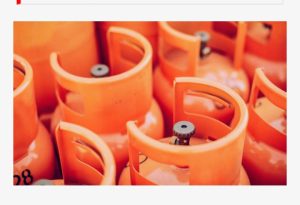
Liquefied Petroleum Gas, commonly known as cooking gas, has risen significantly, forcing Nigerians to spend more to purchase the product.
The increase comes as depot owners and retailers raised their prices over the past two days.
StockGap increased its depot price by N25 to N1,440 per kilogram. Nigerian Independent Petroleum Company Limited, NIPCO, Mobil (now 11 Plc) and Ardova, on the other hand, sold the product at N1,400 and N1,390 per kilogram, respectively.
Similarly, LPG retail outlets, including Raniol, Juda Oil and Nigerian National Petroleum Company Limited, NNPC, outlets in Abuja and its environs, now dispense cooking gas at between N1,550 and N1,600 per kilogram, up from N1,400 and N1,500.
Micro-LPG dealers sell the product for between N1,700 and N1,800 per kilogram, depending on the location in Abuja.
Earlier, NIPCO’s spokesperson, Taofeek Lawal, had exclusively told DAILY POST that LPG prices could increase further between November and January next year.
The latest price increase means that Nigerians who previously spent N17,500 to refill a 12.5kg cylinder at N1,400 per kilogram will now pay N20,000 at the new rate of N1,600 per kilogram, representing an additional N2,500.
News
2027: Tinubu Must Withdraw ‘All Is Fair in Politics’ Remark, Embrace Peaceful Coexistence — ADC-PCC
The African Democratic Congress Presidential Campaign Council (ADC-PCC) has called on President Bola Ahmed Tinubu to publicly retract his controversial “All Is Fair in Politics” remark, warning that such rhetoric fuels political division, emboldens thugs and poses a grave threat to the nation’s peace and stability.
The ADC-PCC also expressed concern over what it described as the President’s disturbing silence on the conduct of some APC governors and party chieftains who have openly made inflammatory statements and allegedly encouraged political violence.
In a statement signed by its Director of Media and Publicity, Kola Ologbondiyan, the ADC-PCC urged President Tinubu to rise above partisan interests and demonstrate the statesmanship expected of a national leader, citing former President Goodluck Jonathan’s unequivocal declaration that no presidential ambition was worth the blood of any Nigerian.
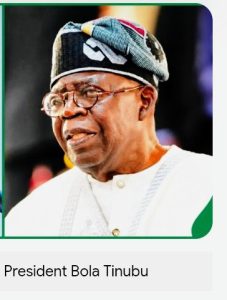
The Council described as shocking the President’s failure to condemn the growing wave of political violence, noting that, through his spokesman, Mr. Bayo Onanuga, the Presidency had instead chosen to caution opposition parties while shielding those allegedly responsible for violence within the ruling APC.
“President Tinubu cannot claim to desire peace when his own words provide cover for violence.
“‘All Is Fair in Politics’ is not the language of a Head of State. It is the language of political desperation and an open licence for thuggery, ballot snatching, intimidation and bloodshed.
“From Edo to Cross River, Gombe to Lagos, and Kebbi to Kaduna, Nigerians have witnessed attacks on opposition gatherings, destruction of campaign materials and the brutalisation of innocent supporters, allegedly by APC-sponsored thugs.
“Yet, Mr. President has not considered it necessary to call his governors and party members to order.
“Instead, the Presidency has resorted to diversionary tactics, blaming victims and preaching restraint to the opposition while members of the ruling party are accused of unleashing violence across the country,” the statement said.
The ADC-PCC challenged President Tinubu to explain why his condemnation of political violence appears directed at the opposition rather than members of his own party.
It asked: “Why has Mr. President refused to condemn APC governors who openly threaten opposition supporters? Why has he remained silent over public incitement by officials of his party? Why is his anger always directed at the opposition and never at those within his own political fold?”
The Council maintained that the ADC remains committed to peaceful, issue-based political engagement, insisting that its campaign is focused on addressing the country’s pressing challenges, including hunger, insecurity, unemployment, corruption and what it described as the failures of the Tinubu administration.
It accused the APC of resorting to violence because it had little to offer Nigerians in terms of credible solutions to the country’s problems.
Consequently, the ADC-PCC demanded that President Tinubu immediately and publicly withdraw his “All Is Fair in Politics” remark, condemn and call to order APC governors and party officials accused of inciting violence, and direct security agencies to protect all Nigerians impartially rather than allow them to become instruments of intimidation and oppression against opposition parties.
” Nigeria belongs to all of us. No political ambition is worth the blood of any Nigerian.
“If former President Goodluck Jonathan could make that profound declaration in 2015, President Tinubu has no excuse not to say so and demonstrate the sincerity of his commitment to peace in 2026.
“The ADC will not be intimidated. We will continue to campaign peacefully, and in 2027, Nigerians will have the opportunity to vote for competence, integrity and a new beginning,” the statement added.




-
News5 days ago
IGP Disu decorates 29 senior police officers with new ranks….charges them on professionalism, integrity,others
-
News4 days ago
Airstrikes kill 40 ISWAP terrorists in Borno
-
News4 days ago
We finally received CTC Of Lifu’s Judgement, without Atiku, Other Candidates Names Mentioned—Senator Melaye
-
News4 days ago
2026 U-17 WWC: Tinubu rewards each Flamingos player with ₦100m
-
News5 days ago
How Federal High Court Chief judge is beign blackmailed with EFCC, CCB- ADC Campaign Council
-
News2 days ago
Crowd Shouts ‘Bamayi’ at Tinubu, pelt convoy in Abuja
-
News5 days ago
Oil slump opens door to cheaper petrol for Nigerians …as Brent hits lowest since August
-
News5 days ago
Oil price fall: We ‘ll take appropriate action against marketers, petrol stations over unfair practices- FCCPC