

News
OPINION: What You Should Know About The Law: Supreme Court Reaffirms Ban on Cash Payments for Land ,Vehicle Purchases in Nigeria

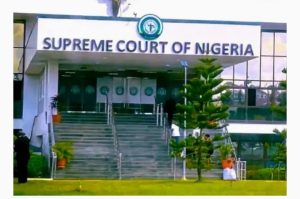
The Supreme Court of Nigeria has reportedly reaffirmed the prohibition of physical cash payments for the purchase or acquisition of landed properties, motor vehicles and securities, reminding Nigerians that such transactions must be conducted through recognised banking channels.
The decision, reportedly delivered on March 6, 2026, in the case of Mahmoud Aliyu v. Federal Republic of Nigeria, with suit number SC/CR/286/2025 and citation (2026) LPELR-83493(SC), concerns the interpretation and enforcement of Section 22 of the Foreign Exchange (Monitoring and Miscellaneous Provisions) Act.

Car for sale
According to the details of the case, the Supreme Court dismissed an appeal filed by Mahmoud Aliyu and upheld his conviction for accepting physical cash in connection with the sale of a landed property.
What Happened?
The case arose from the sale of a three-bedroom apartment at Lugbe Housing Estate in Abuja.
The purchaser reportedly paid US$10,000 and ₦600,000 in physical cash, which Aliyu acknowledged receiving.
He was subsequently prosecuted for accepting cash payment in connection with the property transaction.
During the legal proceedings, Aliyu reportedly argued that he was acting as an agent for the actual owner of the property. However, the Supreme Court dismissed his appeal and upheld his conviction.
What Does Nigerian Law Say?
Section 22(1) of the Foreign Exchange (Monitoring and Miscellaneous Provisions) Act prohibits making or accepting cash payments, whether in Naira or foreign currency, for the purchase or acquisition of:
Landed properties.
Stocks, shares and other securities.
Motor cars and other vehicles of any description.
Section 22(2) provides for payments through bank transfers or cheques drawn on banks in Nigeria.
This means the restriction is not limited to land and houses. Vehicle purchases and transactions involving securities are also covered by the provision.
Can Buyers and Sellers Both Be Prosecuted?
The law prohibits both making and accepting cash payments for the specified transactions.
Consequently, buyers who physically pay cash and sellers who receive such payments may face criminal liability, depending on the circumstances and evidence in each case.
The fact that someone claims to have acted as an agent does not automatically exempt that person from liability for personally accepting a prohibited payment.
What Should Nigerians Do?
Anyone planning to buy or sell land, houses or motor vehicles should take the following precautions:
1. Make payments through bank transfers.
2. Alternatively, use cheques drawn on banks in Nigeria.
3. Keep evidence of all financial transactions.
4. Ensure payment acknowledgements and sale agreements properly document the transaction.
5. Avoid receiving or making physical cash payments for transactions covered by the law.
Important Clarification
The reported Supreme Court decision does not introduce a new prohibition. The restriction already exists under Section 22 of the Foreign Exchange (Monitoring and Miscellaneous Provisions) Act.
Rather, the judgment reportedly reinforces the need for Nigerians to comply with the existing legal provision.
Nigerians, members of the public, property developers, estate agents, car dealers and prospective buyers , are therefore advised to familiarise themselves with the law and ensure that their transactions comply with applicable legal requirements.
House for sale
A High Court of the Federal Capital Territory, Abuja, has ordered the freezing of $100 million (about N135.58 billion) allegedly held by the Nigerian Governors’ Forum over a dispute arising from the Paris Club refunds and outstanding legal and consultancy fees.
Justice O.C. Agbaza granted the interim Mareva injunction on November 19, following an ex parte application by a lawyer, Dr Ted Iseghohi-Edwards, against the Incorporated Trustees of the NGF and 29 commercial banks.
In the copy of the CTC order sighted by The PUNCH on Tuesday, the claimant is seeking to recover the money pursuant to an indemnity allegedly issued by the NGF on December 20, 2018, under an arrangement in which the Federal Government paid $100m to the forum as a stakeholder pending the determination of its liability for professional fees.
The 29 banks joined in the suit as respondents include Access Bank, Alpha Morgan Bank, Ecobank Nigeria, Fidelity Bank, First Bank, Sterling Bank, United Bank for Africa, Unity Bank, Zenith Bank, Jaiz Bank, Guaranty Trust Bank, Keystone Bank, Stanbic IBTC, Standard Chartered Bank and Wema Bank.
Others are Union Bank, First City Monument Bank, Lotus Bank, Parallex Bank, Polaris Bank, Globus Bank, SunTrust Bank, Citibank Nigeria, Nova Bank, Optimus Bank, Premium Trust Bank, Signature Bank, Tatum Bank and Titan Trust Bank.
In the enrolled order, the judge restrained the NGF, its servants, agents, representatives and anyone acting on its behalf from withdrawing, transferring, dissipating, concealing, disposing of or otherwise dealing with the funds.
The order also restrained the 29 banks from releasing, transferring, converting, withdrawing, paying out or otherwise dealing with any funds standing to the credit of the NGF in their custody, up to the aggregate sum of $100m or its naira equivalent of N135,580,360,000.
The enrolled order stated, “An order of Interim Mareva Injunction restraining the 1st Defendant/Respondent, whether by themselves, their servants, agents, privies, representatives or any person acting on its instructions or behalf from withdrawing, transferring, dissipating, concealing, disposing of, encumbering or otherwise dealing with any funds up the sum of US$100,000,000.00 (One Hundred Million United State Dollars) or its Naira equivalent being the sum of ₦135,580,360,000.00 (One Hundred and Thirty-Five Billion, Five Hundred and Eighty Million, Three Hundred and Sixty Thousand Naira), calculated at the prevailing exchange rate of the United States Dollars to the Nigerian Naira as published by the Central Bank of Nigeria on 17 November 2026, or any part thereof.
“Being funds representing the subject of the Claimant/Applicant’s claim upon the indemnity dated 20 December 2018 to the extent that those funds are held by or on behalf of the 1st Defendant/Respondent within the jurisdiction of this court pending the hearing and determination of the Motion on Notice for Interlocutory Injunction or further order of this Honourable Court.
“An order of interim Mareva Injunction restraining the 2nd – 30th Respondents, whether by themselves, their directors, officers, servants, agents, privies or representatives, upon service of the order and to the extent that any of them holds funds described in prayer 1 in an account from releasing, paying, transferring, withdrawing, converting, dissipating or otherwise dealing with any funds standing to the credit of the 1st Defendant in the name of the 1st Defendant/Respondent, from permitting any withdrawal, transfer, conversion, payment, disbursement, application, utilisation or other dealing with those funds, subject to the same duration and single aggregate limit.”
Justice Agbaza further directed the banks to disclose, within 48 hours of being served with the order, whether the NGF maintained accounts containing the disputed funds.
The banks are also required to identify such accounts, their currencies, available balances and the amounts preserved pursuant to the order.
The judge directed the claimant to promptly serve the originating process, supporting affidavit, written address, motion on notice and enrolled order on the respondents.
The claimant’s case is that the money belongs to him under the indemnity issued by the NGF, which reportedly undertook to pay him the $100m if the FG was found liable for the outstanding professional fees.
Iseghohi-Edwards, who carries on business under the name and style of Edwards and Partners Law Firm, claimed to have been retained by the Incorporated Trustees of the Association of Local Governments of Nigeria to represent the 774 Local Government councils in matters relating to the London and Paris Club refunds.
He subsequently instituted suit No. FHC/ABJ/CS/856/2016 against the FG over outstanding legal and consultancy fees arising from the transactions.
According to his court filings, the Federal High Court delivered judgment on February 16, 2018, establishing the government’s indebtedness of $318m.
He said the FG subsequently made a part-payment of $159m through Promissory Notes.
The claimant contended that the judgment satisfied the condition contained in the NGF’s indemnity, thereby making the $100m payable directly to him.
He further alleged that despite formally demanding payment from the NGF in a letter dated October 8, 2026, the forum failed to honour its undertaking.
Consequently, he approached the FCT High Court to preserve the disputed funds pending the determination of his substantive claim.
In seeking the interim injunction, Iseghohi-Edwards expressed apprehension that the NGF could transfer, disburse or dissipate the funds, thereby frustrating the enforcement of any eventual judgment in his favour.
He also told the court that he could not independently identify the specific bank accounts holding the money without judicial intervention.
The claimant argued that the injunction was necessary to preserve the subject matter of the dispute and prevent the proceedings from becoming futile.
He maintained that the restriction was limited to a single aggregate sum of $100m across the NGF and all participating banks.
The application was brought pursuant to Orders 30(3) and 32(1) of the High Court of the Federal Capital Territory Civil Procedure Rules and the court’s inherent jurisdiction.
In granting the application, Justice Agbaza ordered that the restrictions on the banks would remain in force pending the hearing and determination of the claimant’s motion on notice for an interlocutory injunction or further order of the court.
The judge also directed the banks to file affidavits disclosing whether they held accounts belonging to the NGF containing the disputed funds.
The order further required the banks to identify the accounts, the relevant currency, the balances at the time of service and the amounts preserved, subject to any confidentiality directions the court might make.
The case was adjourned until December 1, 2026, for the hearing of the motion on notice.
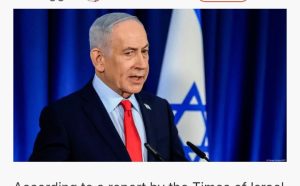
Netanyahu
Israeli Prime Minister Benjamin Netanyahu and Defence Minister Israel Katz have confirmed that the Israel Defense Forces killed Naim Abu Nahal, the latest head of Hamas’s internal security apparatus, in a strike in Gaza City.
In a joint statement, the two officials said the operation had taken place shortly before their announcement. They also pointed out that Abu Nahal had assumed the position after his predecessor was captured by Israeli forces during an operation three months earlier.
“The IDF has just eliminated Naim Abu Nahal, head of Hamas’s internal security apparatus, after his predecessor in the position was captured by our forces in a daring operation three months ago,” Netanyahu and Katz said.
They praised the military and the Shin Bet domestic security agency for carrying out the operation, warning that Israel would continue pursuing those it considers responsible for attacks against the country.
According to the Israeli military, Hamas’s internal security apparatus operates clandestinely and is responsible for protecting senior figures within the organisation. Its duties reportedly include maintaining communications between top officials, arranging their meetings and moving them between emergency locations.
The military has also said the unit prepares intelligence assessments to support Hamas leadership in making decisions and coordinating attacks against Israel.
Opera news
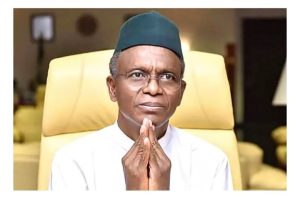
A Former Kaduna State Governor, Nasir El-Rufai, has denied intercepting telephone conversations or asking anyone to do so of the National Security Adviser, Nuhu Ribadu.
Testifying in his ongoing phone-tapping case at the Federal High Court, Abuja, as evidence- in- chief, El-Rufai told the court that he had never owned equipment used to intercept telephone calls and had no technical knowledge of how to do so.
Led in evidence by his lawyer, Paul Erokoro, a Senior Advocate of Nigeria (SAN), the former governor also denied having access to the NSA’s communication networks or devices.
He maintained that his comments during an interview on a National Television in February were “political rhetoric” and not an admission that he had intercepted Mr Ribadu’s telephone.
“I used ‘we’ to refer to opposition politicians. When I said ‘tapped’, it was an embellishment intended to make the government feel the pain we are feeling. It was rhetorical and exaggerated. My objective was to engage in political retort and linguistic flourish,” he told the court.
The case followed an interview El-Rufai granted Arise Television’s Prime Time programme on 13 February 2026, a day after security operatives attempted to arrest him at the Nnamdi Azikiwe International Airport, Abuja, on his return from Cairo, Egypt.
Although the operatives seized his international passport, they did not arrest him.
During the interview, El-Rufai accused Mr Ribadu of ordering the attempted arrest.
He said he knew about the directive because they had listened to a telephone conversation in which the NSA instructed security operatives to arrest him.




-
News2 days ago
2027:TNN set to mobilize 43.8million registered membership -voters for polls ….to register political party
-
News2 days ago
HOPE RISES FOR NATIONAL ASSEMBLY RETIREES
-
News2 days ago
First Casualties Confirmed In Iran’s Strikes On US Bases
-
News2 days ago
Tinubu warns police against intimidating Nigerians…….. Says no uniform gives them such right
-
News2 days ago
‘Tinubu Must Go’ Protest Breaks Out At Maitama INEC HQ
-
News2 days ago
NCC Challenges Africa To Target $2 Trillion Tech-Driven Economy….. …….asks Continent to stop thinking small.
-
News2 days ago
Julius Berger equips 366 Abuja artisans with modern skills, tools
-
News2 days ago
Tourist Accuses Emir Of Daura Of Sexual Assault in His Palace