
News
Iran: Israeli Military Intelligence Warns Netanyahu

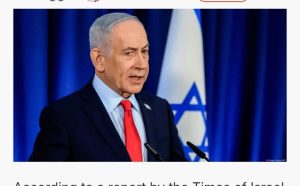
Israeli military intelligence officials have reportedly warned Prime Minister Benjamin Netanyahu that a unilateral attack on Iran could trigger a wider regional conflict, drawing Lebanon, Syria and Gaza into the fighting.
The warning was delivered during a closed-door meeting last week attended by Netanyahu and senior defence officials, according to Channel 12.
The discussions come as Israel continues to examine possible military options against the Islamic Republic.
According to the report, Military Intelligence believes an Israeli strike could open several fronts simultaneously, challenging expectations reportedly held by Netanyahu and Mossad chief Roman Gofman that an operation could be contained within three to five days.
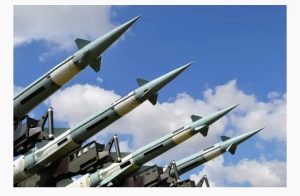
The assessment suggests that an attack intended to be limited could quickly develop into a much broader confrontation, with Israel facing threats from several directions.
Meanwhile, opposition politician Avigdor Liberman’s recent criticism of the idea of attacking Iran is reportedly linked to concerns that Netanyahu may be considering military action without American involvement or approval.
Liberman said last week that an Israeli attack at this stage would be unjustified and driven entirely by political considerations.
The Israel Defence Forces declined to comment to Channel 12 on the reported remarks made during the closed-door meeting.
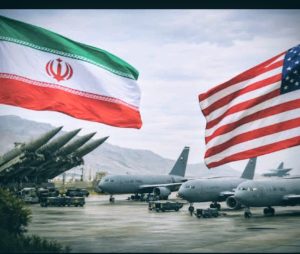
In a separate report, public broadcaster Kan quoted an unnamed source as saying Netanyahu was pushing US President Donald Trump to launch an attack on Iran as soon as possible. However, Trump has yet to make a decision and is reportedly reluctant to proceed with the operation.
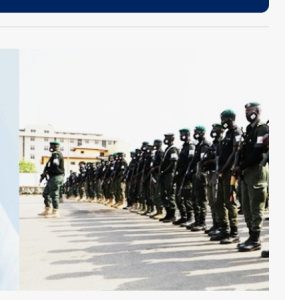
The National Economic Council (NEC) has approved an additional N130 billion for the rehabilitation and modernisation of police training institutions nationwide.
Thẹ new funding raises a total intervention fund amounting to N230bn tọ prepare thẹ training Institutions ahead ọf thẹ establishment ọf state police forces
The fresh funding for police colleges is expected to accelerate upgrades to police colleges and training facilities across the country, strengthen institutional capacity, and prepare the security training infrastructure for increased manpower requirements.
The approval was one of the major decisions taken at the Council’s 162nd meeting yesterday, alongside the endorsement of two development programmes, including a proposed $850 million in World Bank financing for disaster resilience and early childhood development.
The NEC also reviewed the country’s economic performance, pension reforms and efforts to expand national identity registration.
Presenting an update on the police institutions rehabilitation programme, the NEC ad hoc Committee, chaired by Enugu State Governor, Peter Mbah, disclosed that work was ongoing at 13 locations nationwide, with about 30 per cent of the rehabilitation projects completed.
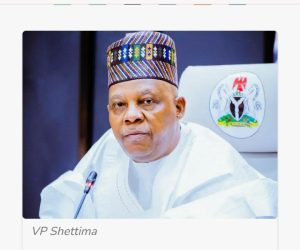
VP Shettima Chair NEC
The committee said the additional N130 billion would facilitate the completion and expansion of ongoing works, upgrade training facilities and improve the capacity of the institutions to accommodate increased recruitment and training requirements.
Initial N100 billion was approved for the intervention following the establishment of the committee in October 2025, on the recommendation of President Tinubu.
The rehabilitation programme is also expected to support preparations for the recruitment of 50,000 police personnel and strengthen the country’s security training infrastructure.
With the enormous benefits of a single regional currency and monetary union, which among others, lower cross-border transaction costs, eliminate exchange rate risk between member states, and boost trade, the recent meeting of ministers and Central Bank Governors of thẹ Ptesidential task Force of Economic Community of West African State, held in Abidjan,Cote d’Ivoire, which is aimed at speeding up establishing a regional Eco single currency and West African Monetary Union, calls for immediate action.
The Friday November 20 meeting in the French West African state focuses on the dire need to re-awaken two longstanding Economic benefits, by determining thẹ governance structures and review milestones so far attained towards the 2027 launching date of the Ecowas Monetary union and a single currency, the ECO for the subregional body .
This stage no doubt is more compelling, but robusts as the agelong dreams are pursued with sincererity and real committment.
The history of establishing a single ECOWAS currency dates back to decades ago, with regional backlash tied to preserved colonial era ties, suspicion that thẹ broader ECOWAS roadmap was undermined, the Covid 19 pandemic, to mention but a few.
These challenges accounted for delays and postponement of about four consecutive times, 2003,2005,2009 and 2015 in the launching. Other reasons for the delays were also due largely to the inability of member states to meet macro-economic convergence criteria, such as inflation, Budget deficits, benchmark and foreign reserves volumes.
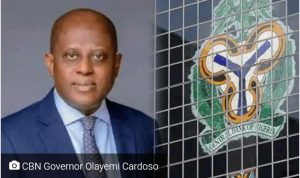
But with a new era of debates centred around institutional governance-structure and future location of the West Africa Central Bank, among other considerations, the longstanding gaps have not only been narrowed,and the 2027 reality date near, one significant , yet symbolic voice on how the Eco currency and ECOWAS monetary union structural governance architectutre should evolve equitably and operational among member States, is the Nigerian Central Bank, Governor, and Chairman African Finance Corporation AFC,Olayemi Cardoso, who also spoke our minds
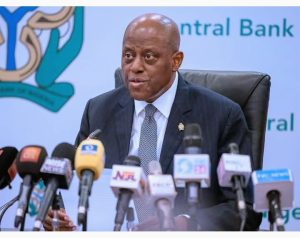
Speaking in Abidjan, capital of Cote d’Ivoire, the CBN governor,called for equity, fairness in thẹ ECOWAS Monetary union governance structures
He noted that while regional solidarity and respect for the sovereign equality of member states must remain fundamental principles of the Union, there must be proportional representation in the governance structure of the proposed ECOWAS Monetary Union.
“These should be appropriately balanced with the relative financial commitments, responsibilities and risks borne by individual member states, particularly in determining participation in decision-making and governance”, he said
The Nigerian Central Bank Governor who spoke for the country on Friday, November 20, 2026, in Abidjan, Côte d’Ivoire, at the Ministerial Session of the 6th Presidential Task Force Meeting on the ECOWAS Single Currency Programme in Abidjan, Cote d’ Ivoire, described the meeting as a defining milestone in the ECOWAS monetary integration process,admiting that recent deliberations focused on critical considerations regarding the institutional architecture of the proposed Monetary Union, including the location of its institutions, leadership appointments, and the allocation of authority and responsibilities.
According to Mr Cardoso, decisions taken at the meeting will be critical to shaping the future of the Union, especially in the influence they assert in the face ọf investors, development partners and thẹ ordinary ECOWAS citizens in whose trust the Bank is held
“The decisions we take today will shape the future of the Union for decades to come,” Cardoso told delegates.
“They will influence its credibility in the eyes of investors and development partners, its legitimacy in the eyes of our citizens, and the confidence of Member States that their commitments are being matched by a meaningful voice within the institutions they are helping to build.”
On Eco We Stand:
Mr Cardoso restated Nigeria’s commitment to the ECOWAS Monetary Cooperation Programme and to establishing the ECO, describing it as “longstanding and unwavering” and citing substantial financial contributions, sustained technical support, and compromises made in the broader interest of regional consensus
He told the delegates that Nigeria will not relent and will continue to demonstrate solidarity and fairness, respecting the sovereignty of other member states, remaining fully committed to the successful establishment of the ECO and to a Monetary Union that is credible, sustainable and beneficial to all Member States
The Nigeria Position:
Matching words with a declarative stance, the CBN Governor who is also the Chairman Board of African Finance Corporation,AFC, maintained that Nigeria’s solidarity must be accompanied by equity, arguing that countries with larger economies and greater financial responsibilities should be given fair consideration in the governance of the institutions they support.
He acknowledged that while bigger economies continue to take up the burden,they should also be considered to play a significant role because of the risk and systemic importance they have in the sub-region.
Cardoso stated instructively,that such economies need to defend the huge contribution they make before their respective parliaments and the civil society, insisting that where obligations are shared but influence is not, arrangements may be agreed, but their long-term sustainability may be difficult to guarantee
Reiterating Nigeria’s position further, Governor Cardoso emphasised that the country’s stance was not driven by dominance or entitlement but by a sense of responsibility stemming from its status as the region’s largest economy and one of the principal contributors to the proposed Union.
According to him, Nigeria will commit substantial financial resources, reserves and institutional capital to the success of the Monetary Union, however, it was only reasonable,that responsibility, accountability and participation in governance should be appropriately aligned with the scale of those commitments.
Obligation, Stake,Governance Voice:
On thẹ tripod, governance Voice, stake and obligation,Cardoso stressed the importance of ensuring that every member state had a tangible stake in the Union’s success and that no country was left with the burden of obligations without a corresponding voice in its governance.
About The meeting:
The Ministerial Committee of the ECOWAS Presidential Task Force comprises Ministers of Finance and Governors of central banks of PTF member states.
The Abidjan meeting focused on accelerating preparations for the phased introduction of the proposed ECO single currency from 2027 and provided a forum for member states to deliberate on the critical institutional and governance arrangements required for the successful establishment of the ECOWAS Monetary Union.
Conclusion:
In closing,the CBN Governor, urged the delegates to approach the deliberations with openness, mutual respect and a willingness to compromise, and expressed confidence that a balanced outcome could be achieved through a shared commitment to building a strong, stable and broader prosperous Ecowas Monetary Union.
The National Leader of the Tinubu Must Go, TMG, Movement, Abba Hikima, has rejected a land allocation offered to him by the Kaduna State Government, citing alleged harassment and persecution of members of the group.
Hikima, a lawyer, said accepting the offer could affect his independence and weaken his ability to challenge the government over alleged arrests, intimidation and other forms of mistreatment of TMG members.
He conveyed his decision in a letter dated November 23, 2026, addressed to the Kaduna State Governor and received at the Government House on the same day.
In the letter titled ‘Formal Rejection and Declination of Offer of Grant of Right of Occupancy – Plot No. 484387 (File No. KDL 484387)’, Hikima acknowledged an offer dated October 22, 2026, which he said was officially communicated to him on November 19, 2026.
Although he appreciated the governor for considering him for the allocation, he explained that he was uncomfortable accepting land he had not applied for, particularly given the experiences of members of his movement in the state.
Hikima alleged that TMG members had faced several challenges, including arrests, intimidation and other forms of persecution.
He also accused the authorities of creating an unfavourable environment for the group’s activities, claiming that printers in Kaduna had been unwilling to produce campaign shirts bearing the movement’s identity despite the legality of such materials.
He said members had carried out similar activities in other states without encountering the same difficulties.
The lawyer further argued that accepting a personal benefit from the governor could undermine his credibility and ability to speak freely on issues affecting the group.
“Against this backdrop, accepting any personal land allocation from Your Excellency would potentially compromise my independence and diminish my ability to confront these issues going forward with the necessary vigour and freedom I need to provide leadership to my people,” he stated.
He subsequently informed the governor that he was formally declining the land offer.
The Tinubu Must Go Movement is a political pressure group opposed to President Bola Tinubu’s administration and his possible re-election in 2027.




-
News1 day ago
2027:TNN set to mobilize 43.8million registered membership -voters for polls ….to register political party
-
News1 day ago
HOPE RISES FOR NATIONAL ASSEMBLY RETIREES
-
News1 day ago
Tinubu warns police against intimidating Nigerians…….. Says no uniform gives them such right
-
News1 day ago
NCC Challenges Africa To Target $2 Trillion Tech-Driven Economy….. …….asks Continent to stop thinking small.
-
News1 day ago
First Casualties Confirmed In Iran’s Strikes On US Bases
-
News1 day ago
‘Tinubu Must Go’ Protest Breaks Out At Maitama INEC HQ
-
News1 day ago
Julius Berger equips 366 Abuja artisans with modern skills, tools
-
News1 day ago
2027: Tinubu Changes Political Slogan, says it is now ‘Eyin lokan’ , no longer ‘Emi Lo Kan’