

News
2027 budget: FG gives MDAs September 18 deadline

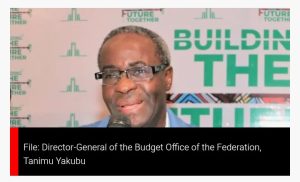
The Federal Government plans to submit the 2027 budget proposal to the National Assembly in September, in an attempt to advance the budget cycle amid persistent implementation challenges and overlapping fiscal years.
The plan is contained in the Federal Government of Nigeria 2027 Personnel Costs Budget Call Circular dated September 4, 2026 and signed by the Director-General of the Budget Office of the Federation, Tanimu Yakubu.
The document, obtained by The PUNCH on Sunday from the website of the Budget Office of the Federation, provides guidelines for ministries, departments and agencies preparing and submitting their personnel cost proposals for the 2027 fiscal year.
The Budget Office disclosed that the draft 2027-2029 Medium-Term Expenditure Framework and Fiscal Strategy Paper had been concluded since July to facilitate the early presentation of the spending plan.
“As you are aware, the 2027-2029 draft Medium-Term Expenditure Framework and Fiscal Strategy Paper was concluded by July 2026 in line with the Fiscal Responsibility Act 2007 to facilitate the submission of 2027 Budget to the National Assembly by September 2026,” the Budget Office said.
Although the circular did not provide a specific presentation date, the timetable indicates that the government intends to send the spending plan to lawmakers about three months before the beginning of the 2027 fiscal year.
Nigeria’s budgets have faced persistent implementation challenges, with overlapping fiscal cycles becoming a recurring feature since 2024.
The Federal Government earlier partly blamed budget underperformance on conflicting macroeconomic projections by agencies responsible for fiscal and monetary policy, prompting the Economic Management Team to establish a committee to harmonise key assumptions used for budgeting and economic planning.
Following findings from a joint budget retreat and technical validation workshop, the government said differences in projections for crude oil prices and production, exchange rates, inflation and non-oil revenues had created inconsistencies in budget planning and contributed to actual fiscal outcomes falling short of expectations.
The Minister of Finance and Coordinating Minister of the Economy, Taiwo Oyedele, said harmonising the assumptions should reduce discrepancies between budget expectations and actual economic outcomes.
Ahead of the September target, the Budget Office has fixed 4pm on Friday, September 18, 2026, as the deadline for MDAs to submit hard and soft copies of their 2027 personnel budget proposals and accompanying information.
The circular also introduced a new requirement compelling MDAs to submit the laws establishing them alongside their budget proposals, following the controversy over the inclusion of a fake agency in the 2026 budget.
The Budget Office said, “To further strengthen the budget preparation process and mitigate against any entry of unestablished agencies in the FGN Budget, it has become compulsory for MDAs to submit budget proposals along with their respective Establishment Acts as failure to do so, may lead to rejection.”
The directive follows the fake agency scandal involving the Presidential Foreign Intervention Promotion Council, which was allocated about N1.3bn in the 2026 budget despite questions about its legal existence.
The House of Representatives launched an investigation into the matter and moved to verify agencies contained in recent federal budgets against the laws establishing them.
The controversy also prompted President Bola Tinubu to order a forensic investigation into government processes and internal controls surrounding the inclusion of questionable agencies in the budget.
The Independent Corrupt Practices and Other Related Offences Commission subsequently uncovered two additional fake government agencies linked to Adeniyi Adeyemi, the self-proclaimed Director-General of the PFIPC, as investigations into the alleged fraud deepened.
While briefing State House correspondents after presenting the commission’s interim investigation report to Tinubu at the Presidential Villa, Abuja, ICPC Chairman, Dr Musa Aliyu, said investigators established that Adeyemi was never appointed by the Federal Government.
The commission also found that the PFIPC had no legal backing, having neither been established by an Act of the National Assembly nor an executive order.
According to the interim findings, the appointment letter used by Adeyemi was forged, while the fake PFIPC unlawfully took over the offices and official instruments previously used by the defunct Presidential Economic Advisory Council.
The ICPC recommended the prosecution of Adeyemi, disciplinary action against public officials alleged to have aided the operation of the fake agency, and reforms to strengthen internal controls across government institutions.
According to the report, officials from the Office of the Secretary to the Government of the Federation, Office of the Head of the Civil Service of the Federation, Office of the Accountant-General of the Federation, Budget Office of the Federation and National Information Technology Development Agency were identified as collaborators in the scheme.
Aliyu also said the commission uncovered the National Brands Development and Made-in-Nigeria Special Project Office operating within the OSGF.
He said the office had been illegally allocated space within the OSGF premises, contrary to extant laws and without presidential authorisation.
The ICPC identified George Buchi Nwabueze as its promoter and said he operated under several variations of his name, including George Nathan, George Nathan Nwabueze, Honourable George Buchi Nwabueze, Prince George Buchi Nwabueze and George Nwabueze.
The commission also said there were suspected collaborators within the OSGF.
Following the briefing, Tinubu ordered the immediate arrest of Nwabueze and the suspension of three permanent secretaries, M.S. Danjuma, Nadungu Gagare and Richard P. Pheelangwah.
Amnesty International earlier described the development as a reflection of weaknesses in Nigeria’s governance institutions and called for an independent panel of inquiry to establish what transpired.
Speaking with The PUNCH, the Country Director of Amnesty International Nigeria, Isa Sanusi, said the controversy showed how deeply institutional weaknesses had affected governance in the country.
“The incident of the fake government agency is an indictment of the Nigerian government. It is a practical indication of the rampant corruption within and around government agencies. The fact that such a scam can happen is an indication of how weak government institutions are,” Sanusi said.
Beyond requiring MDAs to prove their legal existence, the Budget Office introduced tighter controls over personnel expenditure, recruitment and payroll management for the 2027 fiscal year.
It warned MDAs against making salary and allowance provisions for people who are not legitimate Federal Government employees.
“MDAs should note that payment of salaries and allowances are for legitimate employees of the FGN only. Any unauthorised payments from the personnel costs budget will attract appropriate sanctions,” the circular stated.
MDAs were consequently directed to validate their payrolls against information obtained from the Integrated Personnel and Payroll Information System and the Government Integrated Financial Management Information System.
The circular said no personnel cost provision would be made in the 2027 budget for any serving Federal Government employee who is not captured on IPPIS or enrolled on GIFMIS, unless specifically exempted by the appropriate authority.
MDAs must also use only salary structures and allowances approved by the National Salaries, Incomes and Wages Commission and verify the grade levels and steps of their employees, including provisions for annual increments.
The government also barred MDAs from budgeting for anticipated promotions. Only promotions already approved and in effect are to be reflected in the 2027 personnel budget.
According to the circular, provisions for promotions taking effect during 2027 will instead be made centrally under the Payment for Promotion and Salary Arrears in the Service-Wide Vote.
It further directed MDAs to retain newly promoted officers on their budgeted grade levels and steps throughout the year once the personnel budget has been finalised, with promotions during 2027 to be reflected when preparing the 2028 personnel budget.
Similarly, the salary pay point of an officer transferred or posted after the conclusion of the 2027 personnel budget will remain with the MDA where the employee’s personnel cost was originally provided until the 2028 budget is prepared.
For new recruitment, MDAs must provide supporting documents, including financial clearance, letters of first appointment and relevant recruitment waivers or clearances.
The Budget Office warned that it would not entertain claims for salary shortfalls or payroll lock-outs resulting from unauthorised recruitment.
Consultants, contract staff, youth corps members, industrial attaches, outsourced service providers and legionnaires are also prohibited from being included in MDA nominal rolls because they are not permanent or pensionable Federal Government employees.
Non-executive board members are similarly excluded, with their allowances and fees to be provided under the overhead costs of the respective MDAs.
Allowances for youth corps members will be provided centrally under the budget of the National Youth Service Corps, while MDAs may only pay additional allowances to corps members from their overhead provisions.
Additional controls were introduced for the health and education sectors, particularly over outsourced workers, interns and consultants.
“The staff of outsourced service providers must not be included in the nominal roll. Inclusion of staff of outsourced service providers in MDAs payroll will henceforth be regarded as willful fraudulent action, and shall be reported to relevant authorities accordingly,” the circular warned.
The Budget Office also prohibited the multiple capture of the same consultant or lecturer on the nominal rolls of different federal health and educational institutions.
Where duplication is discovered, the individual will be removed from the payrolls of institutions other than the person’s primary place of employment.
Federal health institutions were instructed to comply with approved ceilings and quotas for interns and honorary consultants, while registration or licence numbers of interns must be provided for authentication before they can be admitted into the budget.
The recruitment, deployment, administration and budgetary provisions for house officers and nursing interns will also be handled centrally by the Medical and Dental Council of Nigeria and the Nursing and Midwifery Council of Nigeria, respectively.
Hospitals that directly recruit or post house officers and nursing interns without recourse to the councils will be liable for unauthorised recruitment, with sanctions to be applied to the chief medical director or medical director.
The circular also introduced measures to improve personnel expenditure monitoring.
The Budget Office said it would deploy a centralised Personnel Cost Monitoring Dashboard linked to IPPIS and GIFMIS, enabling MDAs to compare actual expenditure with budget provisions in real time.
Requests for salary and promotion arrears will be processed quarterly by a standing committee domiciled in the Budget Office, while a Payroll Discrepancy Resolution Committee will meet monthly to address differences between information submitted by MDAs and records on IPPIS and GIFMIS.
MDAs were also directed to constitute joint human resources and budget personnel cost teams to improve coordination between staffing decisions and budget submissions.
The circular requires all MDAs to submit their third-quarter personnel budget performance review reports by September 30, 2026, to guide future personnel planning.
It also instructed them to make provisions for nutrition-related projects and programmes as well as Early Childhood Development programmes, while monitoring actual personnel costs throughout the implementation of the 2027 budget and reporting discrepancies to the Budget Office.
Ministers or chief executives and accounting officers are also required to initial every page of the hard copies of their 2027 personnel budget proposals and additional information templates and certify the accuracy of the information submitted.

The United States government has insisted that Nigeria should retain its Country of Particular Concern, CPC, designation, saying the country has not done enough to protect Christians from attacks.
Assistant Secretary of State for African Affairs, Frank Garcia, made this statement on Thursday during a congressional hearing on violence in Nigeria.
Garcia was responding to questions from US Congressman Riley Moore, who asked about the government’s efforts to dismantle militia strongholds and kidnapping camps in the Middle Belt, particularly in Benue and Plateau states.
Moore also raised concerns over the exclusion of the states from the forest guard initiative and delays in deploying 1,000 approved guards to Plateau.
“Before you answer that, we cannot take this CPC designation off of this country. They have not done enough,” Moore said.
Garcia acknowledged the lack of progress, but said Nigeria was taking steps to address the concerns, although they had yet to produce results.
He said the country’s security capacity was still being developed and that deployments were not happening fast enough.
“Unfortunately, the violence has not stopped,” Garcia added, citing continued attacks in Kaduna and Plateau states.
He said the US had provided police training and equipment, expanded intelligence sharing and worked with Nigerian financial institutions to disrupt terrorist financing.
Garcia added that Washington would continue diplomatic engagements and security cooperation to protect vulnerable communities and ensure accountability.
However, the Nigerian government has consistently rejected claims of a “Christian genocide” or targeted religious persecution, maintaining that insecurity affects Nigerians of all faiths.


Liquefied Petroleum Gas, commonly known as cooking gas, has risen significantly, forcing Nigerians to spend more to purchase the product.
The increase comes as depot owners and retailers raised their prices over the past two days.
StockGap increased its depot price by N25 to N1,440 per kilogram. Nigerian Independent Petroleum Company Limited, NIPCO, Mobil (now 11 Plc) and Ardova, on the other hand, sold the product at N1,400 and N1,390 per kilogram, respectively.
Similarly, LPG retail outlets, including Raniol, Juda Oil and Nigerian National Petroleum Company Limited, NNPC, outlets in Abuja and its environs, now dispense cooking gas at between N1,550 and N1,600 per kilogram, up from N1,400 and N1,500.
Micro-LPG dealers sell the product for between N1,700 and N1,800 per kilogram, depending on the location in Abuja.
Earlier, NIPCO’s spokesperson, Taofeek Lawal, had exclusively told DAILY POST that LPG prices could increase further between November and January next year.
The latest price increase means that Nigerians who previously spent N17,500 to refill a 12.5kg cylinder at N1,400 per kilogram will now pay N20,000 at the new rate of N1,600 per kilogram, representing an additional N2,500.
News
2027: Tinubu Must Withdraw ‘All Is Fair in Politics’ Remark, Embrace Peaceful Coexistence — ADC-PCC
The African Democratic Congress Presidential Campaign Council (ADC-PCC) has called on President Bola Ahmed Tinubu to publicly retract his controversial “All Is Fair in Politics” remark, warning that such rhetoric fuels political division, emboldens thugs and poses a grave threat to the nation’s peace and stability.
The ADC-PCC also expressed concern over what it described as the President’s disturbing silence on the conduct of some APC governors and party chieftains who have openly made inflammatory statements and allegedly encouraged political violence.
In a statement signed by its Director of Media and Publicity, Kola Ologbondiyan, the ADC-PCC urged President Tinubu to rise above partisan interests and demonstrate the statesmanship expected of a national leader, citing former President Goodluck Jonathan’s unequivocal declaration that no presidential ambition was worth the blood of any Nigerian.

The Council described as shocking the President’s failure to condemn the growing wave of political violence, noting that, through his spokesman, Mr. Bayo Onanuga, the Presidency had instead chosen to caution opposition parties while shielding those allegedly responsible for violence within the ruling APC.
“President Tinubu cannot claim to desire peace when his own words provide cover for violence.
“‘All Is Fair in Politics’ is not the language of a Head of State. It is the language of political desperation and an open licence for thuggery, ballot snatching, intimidation and bloodshed.
“From Edo to Cross River, Gombe to Lagos, and Kebbi to Kaduna, Nigerians have witnessed attacks on opposition gatherings, destruction of campaign materials and the brutalisation of innocent supporters, allegedly by APC-sponsored thugs.
“Yet, Mr. President has not considered it necessary to call his governors and party members to order.
“Instead, the Presidency has resorted to diversionary tactics, blaming victims and preaching restraint to the opposition while members of the ruling party are accused of unleashing violence across the country,” the statement said.
The ADC-PCC challenged President Tinubu to explain why his condemnation of political violence appears directed at the opposition rather than members of his own party.
It asked: “Why has Mr. President refused to condemn APC governors who openly threaten opposition supporters? Why has he remained silent over public incitement by officials of his party? Why is his anger always directed at the opposition and never at those within his own political fold?”
The Council maintained that the ADC remains committed to peaceful, issue-based political engagement, insisting that its campaign is focused on addressing the country’s pressing challenges, including hunger, insecurity, unemployment, corruption and what it described as the failures of the Tinubu administration.
It accused the APC of resorting to violence because it had little to offer Nigerians in terms of credible solutions to the country’s problems.
Consequently, the ADC-PCC demanded that President Tinubu immediately and publicly withdraw his “All Is Fair in Politics” remark, condemn and call to order APC governors and party officials accused of inciting violence, and direct security agencies to protect all Nigerians impartially rather than allow them to become instruments of intimidation and oppression against opposition parties.
” Nigeria belongs to all of us. No political ambition is worth the blood of any Nigerian.
“If former President Goodluck Jonathan could make that profound declaration in 2015, President Tinubu has no excuse not to say so and demonstrate the sincerity of his commitment to peace in 2026.
“The ADC will not be intimidated. We will continue to campaign peacefully, and in 2027, Nigerians will have the opportunity to vote for competence, integrity and a new beginning,” the statement added.




-
News5 days ago
IGP Disu decorates 29 senior police officers with new ranks….charges them on professionalism, integrity,others
-
News4 days ago
Airstrikes kill 40 ISWAP terrorists in Borno
-
News4 days ago
We finally received CTC Of Lifu’s Judgement, without Atiku, Other Candidates Names Mentioned—Senator Melaye
-
News4 days ago
2026 U-17 WWC: Tinubu rewards each Flamingos player with ₦100m
-
News5 days ago
How Federal High Court Chief judge is beign blackmailed with EFCC, CCB- ADC Campaign Council
-
News2 days ago
Crowd Shouts ‘Bamayi’ at Tinubu, pelt convoy in Abuja
-
News5 days ago
Oil slump opens door to cheaper petrol for Nigerians …as Brent hits lowest since August
-
News4 days ago
2027: APC sacks kindergarteen Campaign Spokespersons…..Yari, Alake, Idris, now to speak for council