
News
2026 Luminary Soirée: Julius Berger, Lagos State outline path to $1 Trillion economy through long-term value creation

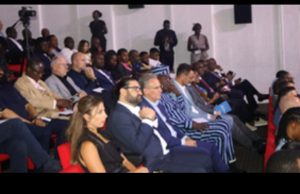
Infrastructure, investment and public-private collaboration took centre stage at the 2026 Julius Berger Luminary Soirée as Julius Berger Nigeria Plc and Lagos State Government articulated a shared vision for unlocking value in Africa’s second-largest city economy, and positioning Lagos on the path to becoming a trillion-dollar economy by 2052.
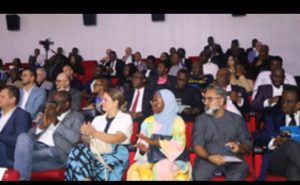
Hosted at the Alliance Française de Lagos, Mike Adenuga Centre, Ikoyi, the annual gathering brought together leading developers, architects, consultants, financiers, investors, policymakers and business leaders for discussions on the theme, The Lagos Proposition: Unlocking value in a city in transformation.
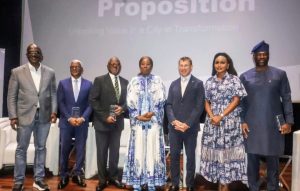
In his opening address, the Managing Director of Julius Berger Nigeria Plc, Engr. Dr Peer Lubasch, described the Luminary Soirée as a platform that facilitates meaningful dialogue amongst individuals and organisations shaping the future of Nigeria’s economy and built environment.
According to him, the theme encapsulated the opportunities and responsibilities that came with Lagos’ rapid growth.
“We chose the word proposition deliberately because transforming potential into tangible value requires intention, strategy and execution. Potential alone does not build a city; execution does,” Lubasch said.
He noted that Lagos remains one of Africa’s most important urban economies, with a growing population, growing housing demand, and significant infrastructure requirements, presenting both challenges and opportunities.
The Julius Berger chief executive observed that the city’s development was no longer confined to traditional commercial centres but was increasingly extending along the Lekki-Epe corridor, the Lagos-Ibadan axis, and emerging growth locations across the state.
“The question is no longer whether Lagos will grow, but where growth is concentrated, how it can be sustained, and whether what is being built today will stand the test of time,” he said.
Drawing on Julius Berger’s more than 60 years of operations in Nigeria, Lubasch highlighted the company’s contribution to national development by delivering major roads, bridges, airports, industrial facilities, and landmark buildings.
He said the company’s strength was not only in construction, but in its integrated approach to project delivery that combined engineering, logistics, procurement, manufacturing, specialist building solutions and facility management.
According to him, this integrated capability enabled Julius Berger to manage projects from conception to operation while maintaining a single chain of accountability.
Lubasch further challenged the perception that infrastructure projects should be measured solely on their upfront cost, arguing instead that total lifetime value should be considered.
“Many people say Julius Berger is expensive. But when you look at the lifecycle of an asset, you find that asset value is preserved. Our philosophy is not to optimise for the day of handover but to optimise for the lifetime of the asset,” Lubasch said
He explained that higher upfront investment in quality engineering and construction often translated into lower maintenance costs, less downtime, greater durability, and stronger long-term asset value.
Delivering the keynote address, the Lagos State Commissioner for Commerce, Cooperatives, Trade and Investment, Mrs Folashade Ambrose-Medebem, described Julius Berger as an integral part of Nigeria’s development story and natural partner in Lagos’ transformation agenda.
She told participants that transformation occurs at the intersection of vision, leadership, infrastructure, investment and execution.
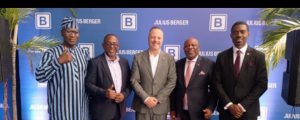
“Julius Berger brings decades of engineering excellence and the capacity to turn bold ideas into tangible infrastructure, while Lagos State brings scale, ambition, enterprise, talent, and an extraordinary pipeline of opportunity,” she said.
According to the commissioner, the true Lagos proposition was contained in what became possible when the right capital, infrastructure and leadership converged at Africa’s most dynamic commercial centre.
Ambrose-Medebem disclosed that Lagos currently has a Gross Domestic Product valued at about $260 billion on a purchasing power parity basis, making it the second-largest city economy in Africa, while accounting for more than 30 per cent of Nigeria’s economic output.
She said Lagos’ long-term vision was anchored on the Lagos State Development Plan 2052, a 30-year strategy built around economic growth, human development, modern infrastructure, and effective governance.
The plan, she noted, had 447 initiatives across 21 strategic sectors and aimed to grow Lagos into an economy worth between $800 billion and $1 trillion, by 2052, adding, complementing this vision was the Lagos State Industrial Policy 2025-2030, designed to strengthen manufacturing, support small businesses, improve infrastructure, and promote innovation.
The commissioner revealed that Lagos attracted N50 billion in investments over the past year, through a combination of domestic and foreign direct investment initiatives.
She cited the establishment of Twinings Ovaltine Nigeria’s first African production facility in Lagos, as one example of growing investor confidence in the state.
Ambrose-Medebem also pointed to Lagos’ emergence as Nigeria’s top-ranked state in ease-of-doing-business reforms, saying it reflected deliberate efforts to create a more competitive business environment.
Infrastructure, she stressed, remained at the heart of the state’s economic agenda, saying that projects such as the Lekki Deep Sea Port, Lagos Free Zone, Blue and Red Rail Lines, and emerging industrial corridors, were helping reposition Lagos as a regional hub for trade, logistics, manufacturing and investment.
She further disclosed that the state’s 2026 budget allocated N1.467 trillion to infrastructure, describing the expenditure as a clear demonstration of government’s commitment to growth.
Addressing housing, the commissioner said Lagos currently had a deficit of about 3.4 million housing units, requiring more than 227,000 new homes annually, and about N6 trillion in yearly investment to bridge the gap.
“No government anywhere in the world can solve a six-trillion-naira annual housing challenge alone,” the commissioner retorted even as she called for stronger collaboration between government and private sector stakeholders, stressing that the future of Lagos was dependent on co-created solutions rather than government action alone.
She concluded by inviting investors and businesses to partner with the state in delivering its long-term vision, saying, we have published our plan to 2052, we have our industrial policy to 2030 and we have committed substantial resources to infrastructure. What we ask in return is the capacity, discipline and commitment to build at the speed the plan demands.”
A major highlight of the evening was a panel discussion moderated by Ayo Mairo-Ese, featuring Yomi Ademola, Chairman of Alaro City and Rendeavour; Kunle Adebajo, CEO of Arup Nigeria; and Odunayo Ojo, CEO of UPDC PLC.
The discussion which had the who’s who in Lagos built environment sector in attendance, explored infrastructure development, housing delivery, industrialisation and investment opportunities, reinforcing a central message shared throughout the evening that Lagos’ future value will ultimately be determined by the quality of execution, partnerships, and long-term thinking that bring ambitions to life
The United States government has insisted that Nigeria should retain its Country of Particular Concern, CPC, designation, saying the country has not done enough to protect Christians from attacks.
Assistant Secretary of State for African Affairs, Frank Garcia, made this statement on Thursday during a congressional hearing on violence in Nigeria.
Garcia was responding to questions from US Congressman Riley Moore, who asked about the government’s efforts to dismantle militia strongholds and kidnapping camps in the Middle Belt, particularly in Benue and Plateau states.
Moore also raised concerns over the exclusion of the states from the forest guard initiative and delays in deploying 1,000 approved guards to Plateau.
“Before you answer that, we cannot take this CPC designation off of this country. They have not done enough,” Moore said.
Garcia acknowledged the lack of progress, but said Nigeria was taking steps to address the concerns, although they had yet to produce results.
He said the country’s security capacity was still being developed and that deployments were not happening fast enough.
“Unfortunately, the violence has not stopped,” Garcia added, citing continued attacks in Kaduna and Plateau states.
He said the US had provided police training and equipment, expanded intelligence sharing and worked with Nigerian financial institutions to disrupt terrorist financing.
Garcia added that Washington would continue diplomatic engagements and security cooperation to protect vulnerable communities and ensure accountability.
However, the Nigerian government has consistently rejected claims of a “Christian genocide” or targeted religious persecution, maintaining that insecurity affects Nigerians of all faiths.

Liquefied Petroleum Gas, commonly known as cooking gas, has risen significantly, forcing Nigerians to spend more to purchase the product.
The increase comes as depot owners and retailers raised their prices over the past two days.
StockGap increased its depot price by N25 to N1,440 per kilogram. Nigerian Independent Petroleum Company Limited, NIPCO, Mobil (now 11 Plc) and Ardova, on the other hand, sold the product at N1,400 and N1,390 per kilogram, respectively.
Similarly, LPG retail outlets, including Raniol, Juda Oil and Nigerian National Petroleum Company Limited, NNPC, outlets in Abuja and its environs, now dispense cooking gas at between N1,550 and N1,600 per kilogram, up from N1,400 and N1,500.
Micro-LPG dealers sell the product for between N1,700 and N1,800 per kilogram, depending on the location in Abuja.
Earlier, NIPCO’s spokesperson, Taofeek Lawal, had exclusively told DAILY POST that LPG prices could increase further between November and January next year.
The latest price increase means that Nigerians who previously spent N17,500 to refill a 12.5kg cylinder at N1,400 per kilogram will now pay N20,000 at the new rate of N1,600 per kilogram, representing an additional N2,500.
News
2027: Tinubu Must Withdraw ‘All Is Fair in Politics’ Remark, Embrace Peaceful Coexistence — ADC-PCC
The African Democratic Congress Presidential Campaign Council (ADC-PCC) has called on President Bola Ahmed Tinubu to publicly retract his controversial “All Is Fair in Politics” remark, warning that such rhetoric fuels political division, emboldens thugs and poses a grave threat to the nation’s peace and stability.
The ADC-PCC also expressed concern over what it described as the President’s disturbing silence on the conduct of some APC governors and party chieftains who have openly made inflammatory statements and allegedly encouraged political violence.
In a statement signed by its Director of Media and Publicity, Kola Ologbondiyan, the ADC-PCC urged President Tinubu to rise above partisan interests and demonstrate the statesmanship expected of a national leader, citing former President Goodluck Jonathan’s unequivocal declaration that no presidential ambition was worth the blood of any Nigerian.
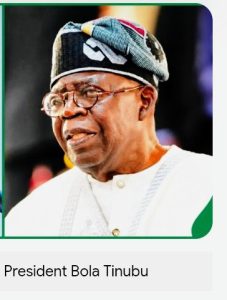
The Council described as shocking the President’s failure to condemn the growing wave of political violence, noting that, through his spokesman, Mr. Bayo Onanuga, the Presidency had instead chosen to caution opposition parties while shielding those allegedly responsible for violence within the ruling APC.
“President Tinubu cannot claim to desire peace when his own words provide cover for violence.
“‘All Is Fair in Politics’ is not the language of a Head of State. It is the language of political desperation and an open licence for thuggery, ballot snatching, intimidation and bloodshed.
“From Edo to Cross River, Gombe to Lagos, and Kebbi to Kaduna, Nigerians have witnessed attacks on opposition gatherings, destruction of campaign materials and the brutalisation of innocent supporters, allegedly by APC-sponsored thugs.
“Yet, Mr. President has not considered it necessary to call his governors and party members to order.
“Instead, the Presidency has resorted to diversionary tactics, blaming victims and preaching restraint to the opposition while members of the ruling party are accused of unleashing violence across the country,” the statement said.
The ADC-PCC challenged President Tinubu to explain why his condemnation of political violence appears directed at the opposition rather than members of his own party.
It asked: “Why has Mr. President refused to condemn APC governors who openly threaten opposition supporters? Why has he remained silent over public incitement by officials of his party? Why is his anger always directed at the opposition and never at those within his own political fold?”
The Council maintained that the ADC remains committed to peaceful, issue-based political engagement, insisting that its campaign is focused on addressing the country’s pressing challenges, including hunger, insecurity, unemployment, corruption and what it described as the failures of the Tinubu administration.
It accused the APC of resorting to violence because it had little to offer Nigerians in terms of credible solutions to the country’s problems.
Consequently, the ADC-PCC demanded that President Tinubu immediately and publicly withdraw his “All Is Fair in Politics” remark, condemn and call to order APC governors and party officials accused of inciting violence, and direct security agencies to protect all Nigerians impartially rather than allow them to become instruments of intimidation and oppression against opposition parties.
” Nigeria belongs to all of us. No political ambition is worth the blood of any Nigerian.
“If former President Goodluck Jonathan could make that profound declaration in 2015, President Tinubu has no excuse not to say so and demonstrate the sincerity of his commitment to peace in 2026.
“The ADC will not be intimidated. We will continue to campaign peacefully, and in 2027, Nigerians will have the opportunity to vote for competence, integrity and a new beginning,” the statement added.


-
News5 days ago
IGP Disu decorates 29 senior police officers with new ranks….charges them on professionalism, integrity,others
-
News4 days ago
Airstrikes kill 40 ISWAP terrorists in Borno
-
News4 days ago
We finally received CTC Of Lifu’s Judgement, without Atiku, Other Candidates Names Mentioned—Senator Melaye
-
News4 days ago
2026 U-17 WWC: Tinubu rewards each Flamingos player with ₦100m
-
News5 days ago
How Federal High Court Chief judge is beign blackmailed with EFCC, CCB- ADC Campaign Council
-
News2 days ago
Crowd Shouts ‘Bamayi’ at Tinubu, pelt convoy in Abuja
-
News5 days ago
Oil slump opens door to cheaper petrol for Nigerians …as Brent hits lowest since August
-
News4 days ago
2027: APC sacks kindergarteen Campaign Spokespersons…..Yari, Alake, Idris, now to speak for council