

News
Presidential election: Tinubu, Obi, others sign peace pact as 2027 campaign begins today August 19


Political parties and presidential and National Assembly candidates on Tuesday signed the first National Peace Accord on issue-based campaigns ahead of the 2027 general elections, pledging to shun violence, hate speech, misinformation, personal attacks and other conduct capable of undermining the electoral process.
The accord was signed in Abuja at a ceremony organised by the National Peace Committee in partnership with The Kukah Centre, barely 24 hours before the statutory commencement of public campaigns and rallies for the elections.
The event brought together the Chairman of the Independent National Electoral Commission, Prof Joash Amupitan; political party leaders; presidential candidates; National Assembly candidates; the Inspector-General of Police, Olatunji Disu, and representatives of the diplomatic community, among other stakeholders.
Those who signed the accord included President Bola Tinubu, represented by the Secretary to the Government of the Federation, Senator George Akume; the Nigeria Democratic Congress presidential candidate, Peter Obi; the Social Democratic Party candidate, Adewole Adebayo and his African Action Congress counterpart, Omoyele Sowore.
Other participants were the National Chairman of the All Progressives Congress, Prof Nentawe Yilwatda; the presidential candidates of the Peoples Redemption Party, and Labour Party, Donald Duke, Chibuzor Okereke, the Deputy President of the Senate, Barau Jibrin; the PRP National Chairman, Hakeem Baba-Ahmed; federal and state lawmakers, party leaders and other candidates.
The event also featured goodwill messages from diplomatic representatives, including the European Union Ambassador to Nigeria, Gautier Mignot, and the Ambassador of Switzerland to Nigeria, Patrick Egloff.
However, some major political actors, including former Vice-President Atiku Abubakar and Oyo State Governor Seyi Makinde, were absent from the ceremony. Atiku is the presidential candidate of the African Democratic Congress, while Makinde is the presidential candidate of the Allied Peoples’ Movement.
The Chairman of the National Peace Committee, former Head of State, General Abdulsalami Abubakar (retd.), was represented by a former Chief of Defence Staff, General Martin Agwai (retd.).
The ceremony was held against the backdrop of growing political activities ahead of the 2027 elections, with the economy, insecurity, unemployment, poverty, infrastructure deficits and the credibility of the electoral process expected to dominate the campaigns.
According to INEC’s revised timetable, the presidential and National Assembly elections will hold on January 16, 2027, while the governorship and State House of Assembly elections are scheduled for February 6, 2027.
Speaking through Akume, President Tinubu urged political parties and candidates to place national interest above personal and partisan ambitions, warning that the struggle for political power must not become a do-or-die affair.
He also cautioned political actors against exploiting ethnic and religious sentiments to mobilise voters, insisting that the 2027 campaign should be based on competing ideas, policies and programmes.
“Signing this peace accord is a solemn pledge to the Nigerian people that we, as leaders, will put the nation’s interests above personal or partisan ambitions,” Tinubu said.
The President acknowledged that political campaigns naturally generate disagreements and intense competition, but insisted that such disagreements should not threaten national unity.
“It is natural during campaigns to disagree as opponents and advocate competing governing missions for our country. We may exchange occasional political jabs, but as members of the same household, the same national family, we must never resort to divisive and primordial sentiments of ethnicity or religion as tools for seeking power,” he stated.
Tinubu urged the candidates to concentrate on the issues affecting Nigerians and offer competing solutions to the country’s challenges.
“Let us campaign on superior ideas. Let us debate issues and promote the best policies to expand opportunities for our people,” he admonished his opponents.
The President said the APC remained committed to the provisions of the accord and would reject violence, hate speech, misinformation, incitement and digital manipulation.
“Our party rejects violence, hate speech, the spread of misinformation, including through artificial intelligence, and all forms of incitement, especially via social media.
“We are committed to peaceful, transparent elections that will strengthen political stability, social harmony, economic progress, and our nation’s prosperity. I encourage other political parties and political actors to do the same.’’
Tinubu also commended the National Peace Committee for sustaining its interventions in the electoral process since 2014, noting that the initiative had helped bring political actors together to publicly commit themselves to peaceful elections.
He said Nigeria had also recorded improvements in election management, particularly through the adoption of technology by INEC.
The President cited the Permanent Voter Cards, the Bimodal Voter Accreditation System and electronic accreditation processes as measures that had strengthened confidence in the electoral system.
He also referred to recent off-cycle governorship elections in Anambra, Ekiti and Osun States as evidence of improvements in electoral administration and voter participation.
Campaigns not wars
The INEC chairman, Amupitan, described the signing ceremony as more than a symbolic gathering, saying it was an opportunity for political actors to define the ethical boundaries of the 2027 contest before the campaigns officially commenced.
He said the timing of the accord was significant because Wednesday (today), marks the statutory commencement of public campaigns and rallies for the elections.
“Tomorrow, Wednesday, August 19, 2026, marks the statutory commencement of public campaigns and rallies for the 2027 general election.
“Before the first campaign flag is unfurled, before the first rally is staged, and before political rhetoric fills our public space, it is necessary that those who seek to lead this nation first gather to establish the ethical boundaries of their contest,” Amupitan said.
According to him, Nigerians were expecting political parties and candidates to use the campaign period to discuss the challenges confronting the country rather than engage in personal attacks and inflammatory rhetoric.
The INEC chairman said information gathered by the National Peace Committee’s Election Security Information Hub had shown an “alarming resurgence” of hate speech, toxic polarisation, coordinated misinformation and personality-driven political discourse.
He said the trend was particularly disturbing as Nigeria approached what was expected to be one of the most fiercely contested elections since the return to democratic rule in 1999.
Amupitan challenged the candidates to make the economy, national security, infrastructure, healthcare, education and social inclusion central to their campaigns.
He likened elections to a competition for public office rather than warfare.
“Electoral contests in a constitutional democracy are not total wars; they are competitive job interviews before the electorate. Nigerians do not want insults; they want solutions,” he said.
The INEC chairman also warned political parties and their supporters against premature declarations of victory and the circulation of unverified information on social media.
He said the growing use of artificial intelligence and digital platforms had created new challenges for electoral management, particularly through disinformation and foreign information manipulation and interference.
Amupitan challenged presidential candidates, party leaders and campaign organisations to ensure that their supporters and online teams complied with the spirit and provisions of the accord.
“Leadership attained at the expense of public peace, institutional integrity, or human life is a hollow victory,” he warned.
The INEC chairman assured political parties that the commission had no preferred candidate and would provide a level playing field for all contestants.
“For the Commission, our moral authority to demand decorum from political actors rests squarely on our own administrative and technological preparedness,” he said.
Amupitan disclosed that INEC was preparing to deploy approximately 1.4 million ad hoc personnel for the 2027 general elections across more than 176,000 polling units nationwide.
He said the commission was drawing lessons from recent off-cycle elections, including the governorship elections in Anambra, Ekiti and Osun states as well as the Federal Capital Territory Area Council election, to improve its preparations for 2027.
The INEC chairman, however, stressed that technology and administrative preparedness alone could not guarantee peaceful elections, insisting that the conduct of political parties, candidates and their supporters remained critical.
“We provide the pitch and the refereeing, but the quality of the game depends on the players,” he said.
He called on the political class to recognise that the credibility of the 2027 elections would depend not only on INEC’s conduct but also on the willingness of the candidates to accept democratic rules and respect the institutions responsible for administering the polls.
Abubakar said the National Peace Committee had facilitated 30 peace accords since 2015, comprising five national-level accords and 25 subnational agreements.
He added that the committee had also established faith-based peace structures in 23 states to complement its national peace-building efforts.
According to him, the issue-based peace accord was conceived in response to the increasing tendency of political campaigns to rely on sentiments, personal attacks and character assassination rather than manifestoes, policies and programmes.
Abubakar further noted that the accord was intended to encourage candidates and political parties to compete on ideas, debate opposing views respectfully, organise supporters peacefully, protect voters, respect electoral institutions and reject hate speech and misinformation.
He lamented the declining quality of political discourse in the country.
“Over the years, political campaigns and rallies have neglected the significance of party manifestos and programmes, and created a platform for political parties to resort to name-calling, personal insults, and character assassination,” he said.
He explained that the provisions of the accord were anchored on the Constitution, the Electoral Act and other relevant laws, stressing that the agreement was therefore more than a political declaration.
The former head of state also disclosed that the National Peace Committee had established the Election Security Information Hub to monitor electoral offences and security developments and provide early warning and evidence-based analysis to stakeholders.
He urged parties, candidates, campaign councils and spokespersons to use the campaign period to address issues of concern to Nigerians and avoid inflammatory statements.
Obi observed that politicians should not need a peace accord before conducting themselves responsibly.
The former Anambra State governor argued that anyone seeking high public office should demonstrate exemplary conduct even before being elected.
“We don’t even need to sign this. We’re seeking an office where we should be exemplary. You can’t answer ‘His Excellency’ without being an excellent person,” Obi said.
Asked whether he still had faith in the peace accord in view of reports of violence during the recent Osun governorship election, Obi said his participation was driven by his desire to change the system from within.
“Because I want to change the process, I have to go through it, so I have to believe in it,” he said.
Obi said the central issue was not what the agreement was called but whether candidates would allow their personal conduct to reflect the offices they sought.
“Whatever it is, whether we call it a justice accord or a peace accord, the personal conduct of the candidate must reflect the office he is seeking. His behaviour, his person, any day, any time, must reflect that office,” he added.
He urged the candidates to make their campaigns responsive to the problems confronting Nigerians.
“We must, for the sake of this country, ensure that our conduct reflects the office we’re seeking, our behaviour, and that we do the right things and campaign on issues that Nigerians are going through today,” Obi said.
Reacting to the deaths recorded during the recent Osun governorship election, Obi called for remembrance and accountability rather than political point-scoring.
“Let us not forget those who died in ensuring that the election in Osun was achieved the way it went. We should visit them.
“We should condole with their families, and we should remain prayerful and conduct ourselves in a way that, in our democracy, nobody needs to die for an election. It shouldn’t be. It is painful, and I wish it never happened again.”
Asked what concerned him most about the 2027 election, Obi said his primary worry was the integrity of the vote.
“I don’t have any fear, except to say that, please, for the sake of the children of Nigeria, can we have an election where people’s votes will count?” he asked.
On what sanction should be imposed on candidates or parties that violate the peace accord, Obi said the electorate should have the final say.
“The punishment is that Nigerians should not vote for them,” he said.
Sowore dismisses accord
The AAC candidate Sowore dismissed the peace accord as a ritual with little practical value.
Sowore said his participation should not be interpreted as an endorsement of the effectiveness of the process, arguing that previous accords had not prevented violence.
“I don’t have faith in it. I’m bringing faith to the system. Those are two different things,” he said.
He questioned the characterisation of the recent Osun governorship election as peaceful, alleging that about 50 people died in connection with the poll.
“How can you say, in good conscience, that an election that led to the death of 50 citizens of any country is a peaceful election?” Sowore asked.
He added, “We are here in an election that involves less than two million people in Osun State. Fifty people had to die as a result of that, and you are calling it a peaceful election.”
Sowore also criticised INEC’s handling of the electronic transmission and uploading of results from the Osun election.
“As we speak, INEC is yet to complete the upload of all the election results three days after,” he alleged. ‘’If we are going to have free and fair elections, you can’t have it halfway. You have to upload all the polling units into your portal timeously. It must be completed before you announce election results.”
The AAC candidate argued that the experience of Osun showed that signing a peace pact without effective sanctions could amount to little more than a ceremony.
“The people who signed the peace accord in Osun State killed 50 people after they signed the peace accord. So, if you meant anything at all, why would you sign the peace accord and then go and carry a gun after that and kill 50 people?
“What will you be expecting after signing today’s peace accord? We conclude the ritual and move on to campaigning,” Sowore said.
He described the accord as “a ritual of sorts” and an opportunity for Nigerians to see the candidates and assess their disposition towards peaceful elections.
Sowore called for what he described as a “justice accord”, which would provide enforceable consequences for candidates or political actors who breached the peace agreement.
He questioned why the deaths allegedly recorded during the Osun election had not generated stronger political accountability.
“I don’t know why nobody is talking about these 50 people that died in Osun State. It’s like we have just sacrificed them to the gods of politics, and we should all go home,” he said.
Sowore also criticised Osun State Governor Ademola Adeleke’s endorsement of Tinubu following his re-election, particularly the explanation that the endorsement was based on ethnic identity.
He nevertheless commended voters in Osun for turning out despite the violence, describing an estimated 40 per cent turnout as evidence of civic consciousness.
Police pledge neutrality
IG Disu, represented by the Deputy Inspector-General of Police in charge of Operations, Umar Shehu, pledged that the police would provide security for voters, candidates and other participants throughout the electoral process.
Shehu said the police were not interested in which candidate or political party won the election but in ensuring that eligible Nigerians exercise their franchise without intimidation.
“The Nigeria Police is not interested in who wins or loses but is interested and committed to a peaceful election where Nigerians of eligible age will exercise their franchise without fear,” he said.
The police leadership urged political parties and their supporters to cooperate with security agencies and avoid actions that could trigger violence before, during and after the elections.
IPAC urges restraint
The Chairman of the Inter-Party Advisory Council, Yusuf Dantalle, also appealed to political parties, candidates, campaign councils and spokespersons to respect the terms of the accord.
He urged political actors to avoid fake news, personal attacks, and insults, and instead promote tolerance, civility, and constructive political debate.
Courtesy punchonline
The United States government has insisted that Nigeria should retain its Country of Particular Concern, CPC, designation, saying the country has not done enough to protect Christians from attacks.
Assistant Secretary of State for African Affairs, Frank Garcia, made this statement on Thursday during a congressional hearing on violence in Nigeria.
Garcia was responding to questions from US Congressman Riley Moore, who asked about the government’s efforts to dismantle militia strongholds and kidnapping camps in the Middle Belt, particularly in Benue and Plateau states.
Moore also raised concerns over the exclusion of the states from the forest guard initiative and delays in deploying 1,000 approved guards to Plateau.
“Before you answer that, we cannot take this CPC designation off of this country. They have not done enough,” Moore said.
Garcia acknowledged the lack of progress, but said Nigeria was taking steps to address the concerns, although they had yet to produce results.
He said the country’s security capacity was still being developed and that deployments were not happening fast enough.
“Unfortunately, the violence has not stopped,” Garcia added, citing continued attacks in Kaduna and Plateau states.
He said the US had provided police training and equipment, expanded intelligence sharing and worked with Nigerian financial institutions to disrupt terrorist financing.
Garcia added that Washington would continue diplomatic engagements and security cooperation to protect vulnerable communities and ensure accountability.
However, the Nigerian government has consistently rejected claims of a “Christian genocide” or targeted religious persecution, maintaining that insecurity affects Nigerians of all faiths.


Liquefied Petroleum Gas, commonly known as cooking gas, has risen significantly, forcing Nigerians to spend more to purchase the product.
The increase comes as depot owners and retailers raised their prices over the past two days.
StockGap increased its depot price by N25 to N1,440 per kilogram. Nigerian Independent Petroleum Company Limited, NIPCO, Mobil (now 11 Plc) and Ardova, on the other hand, sold the product at N1,400 and N1,390 per kilogram, respectively.
Similarly, LPG retail outlets, including Raniol, Juda Oil and Nigerian National Petroleum Company Limited, NNPC, outlets in Abuja and its environs, now dispense cooking gas at between N1,550 and N1,600 per kilogram, up from N1,400 and N1,500.
Micro-LPG dealers sell the product for between N1,700 and N1,800 per kilogram, depending on the location in Abuja.
Earlier, NIPCO’s spokesperson, Taofeek Lawal, had exclusively told DAILY POST that LPG prices could increase further between November and January next year.
The latest price increase means that Nigerians who previously spent N17,500 to refill a 12.5kg cylinder at N1,400 per kilogram will now pay N20,000 at the new rate of N1,600 per kilogram, representing an additional N2,500.
News
2027: Tinubu Must Withdraw ‘All Is Fair in Politics’ Remark, Embrace Peaceful Coexistence — ADC-PCC
The African Democratic Congress Presidential Campaign Council (ADC-PCC) has called on President Bola Ahmed Tinubu to publicly retract his controversial “All Is Fair in Politics” remark, warning that such rhetoric fuels political division, emboldens thugs and poses a grave threat to the nation’s peace and stability.
The ADC-PCC also expressed concern over what it described as the President’s disturbing silence on the conduct of some APC governors and party chieftains who have openly made inflammatory statements and allegedly encouraged political violence.
In a statement signed by its Director of Media and Publicity, Kola Ologbondiyan, the ADC-PCC urged President Tinubu to rise above partisan interests and demonstrate the statesmanship expected of a national leader, citing former President Goodluck Jonathan’s unequivocal declaration that no presidential ambition was worth the blood of any Nigerian.
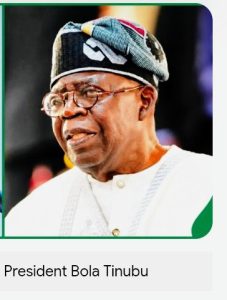
The Council described as shocking the President’s failure to condemn the growing wave of political violence, noting that, through his spokesman, Mr. Bayo Onanuga, the Presidency had instead chosen to caution opposition parties while shielding those allegedly responsible for violence within the ruling APC.
“President Tinubu cannot claim to desire peace when his own words provide cover for violence.
“‘All Is Fair in Politics’ is not the language of a Head of State. It is the language of political desperation and an open licence for thuggery, ballot snatching, intimidation and bloodshed.
“From Edo to Cross River, Gombe to Lagos, and Kebbi to Kaduna, Nigerians have witnessed attacks on opposition gatherings, destruction of campaign materials and the brutalisation of innocent supporters, allegedly by APC-sponsored thugs.
“Yet, Mr. President has not considered it necessary to call his governors and party members to order.
“Instead, the Presidency has resorted to diversionary tactics, blaming victims and preaching restraint to the opposition while members of the ruling party are accused of unleashing violence across the country,” the statement said.
The ADC-PCC challenged President Tinubu to explain why his condemnation of political violence appears directed at the opposition rather than members of his own party.
It asked: “Why has Mr. President refused to condemn APC governors who openly threaten opposition supporters? Why has he remained silent over public incitement by officials of his party? Why is his anger always directed at the opposition and never at those within his own political fold?”
The Council maintained that the ADC remains committed to peaceful, issue-based political engagement, insisting that its campaign is focused on addressing the country’s pressing challenges, including hunger, insecurity, unemployment, corruption and what it described as the failures of the Tinubu administration.
It accused the APC of resorting to violence because it had little to offer Nigerians in terms of credible solutions to the country’s problems.
Consequently, the ADC-PCC demanded that President Tinubu immediately and publicly withdraw his “All Is Fair in Politics” remark, condemn and call to order APC governors and party officials accused of inciting violence, and direct security agencies to protect all Nigerians impartially rather than allow them to become instruments of intimidation and oppression against opposition parties.
” Nigeria belongs to all of us. No political ambition is worth the blood of any Nigerian.
“If former President Goodluck Jonathan could make that profound declaration in 2015, President Tinubu has no excuse not to say so and demonstrate the sincerity of his commitment to peace in 2026.
“The ADC will not be intimidated. We will continue to campaign peacefully, and in 2027, Nigerians will have the opportunity to vote for competence, integrity and a new beginning,” the statement added.





-
News5 days ago
IGP Disu decorates 29 senior police officers with new ranks….charges them on professionalism, integrity,others
-
News4 days ago
Airstrikes kill 40 ISWAP terrorists in Borno
-
News4 days ago
We finally received CTC Of Lifu’s Judgement, without Atiku, Other Candidates Names Mentioned—Senator Melaye
-
News4 days ago
2026 U-17 WWC: Tinubu rewards each Flamingos player with ₦100m
-
News5 days ago
How Federal High Court Chief judge is beign blackmailed with EFCC, CCB- ADC Campaign Council
-
News2 days ago
Crowd Shouts ‘Bamayi’ at Tinubu, pelt convoy in Abuja
-
News5 days ago
Oil slump opens door to cheaper petrol for Nigerians …as Brent hits lowest since August
-
News5 days ago
Nigerian Businessman Hands IGP Disu 7 Days Tọ Probe Police Officers Over Alleged Release Of Recovered N600m Rolls-Royce To Suspects