

News
KEYNOTE ADDRESS AT THE OPENING CEREMONY OF THE 2026 NASS OPEN WEEK AND THE UNVEILING OF THE THIRD-YEAR LEGISLATIVE SCORECARD DELIVERED BY RT. HON. ABBAS TAJUDEEN, PhD, GCON, SPEAKER OF THE HOUSE OF REPRESENTATIVES NATIONAL ASSEMBLY COMPLEX, ABUJA, JULY 14, 2026

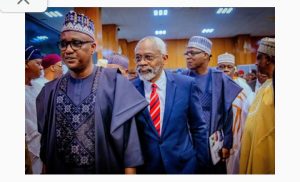
[Protocols]
Permit me to begin with a single figure: two thousand, seven hundred and forty-seven.
That is the number of bills the citizens of this Republic brought before this House in three legislative years. It is the highest such volume recorded since the return of democratic rule in 1999. Behind each of those bills stands a Nigerian who believed that the law could better their condition. This morning, I wish to account for how this House has honoured that trust.
It is my honour to welcome you to the 2026 Open Week of the National Assembly, and to the unveiling of the Third-Year Scorecard of the 10th House of Representatives. Our theme declares our purpose plainly: the advancement of transparency, inclusion, and reform.
I address three constituencies at once. To my colleagues, the Honourable Members, whose devotion has sustained this institution through many demanding sessions, I offer my gratitude. To our distinguished guests, our revered traditional rulers, our development partners, the diplomatic corps, civil society, the press, and the young citizens present, your attendance honours this House. And to the millions of Nigerians who follow these proceedings from their homes, markets, and places of work, this address is directed, above all, to you. This House belongs to you before it belongs to any of us.
Let me be plain about why we gather. Open Week was conceived not as an exercise in self-congratulation, but as an act of accountability. Openness is not a courtesy this House extends at its pleasure; it is an obligation it owes to those it serves. In opening these doors, we affirm one enduring principle: that the making of your laws is your concern, and that you are entitled to observe it, to interrogate it, and to help shape it. No other arm of government submits itself to public examination in this manner, and we do so not with reluctance, but with conviction.
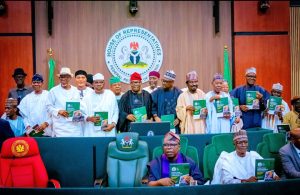
Before I speak of our record, candour obliges me to acknowledge a plain truth: we did not begin from nothing.
Governance is a continuum, a relay in which no single runner completes the course alone. This House was not born in 2023. Its story begins in 1960, and it has since passed through many able and dedicated hands. Today, therefore, I honour all who have presided over this Chamber before us, from the earliest Speakers of our Republic to those of recent memory. I acknowledge the former presiding officers present with us, among them Rt. Hon. Patricia Etteh, who made history as the first woman to lead this House, and I pay tribute to Rt. Hon. Femi Gbajabiamila, who now serves as Chief of Staff to the President. Much of what we celebrate this week grew from seeds that they sowed. Today, we are honoured to carry that work forward with pride.
You have just been presented with the full Scorecard. Permit me to draw out a few figures, for figures do not flatter.
The citizens of this nation submitted two thousand, seven hundred and forty-seven bills to this House. Of these, we passed three hundred and sixty-three, and seventy-two have already received presidential assent and become law. These are not lines upon a page; they are measurable and lasting change. These figures represent the highest for any Assembly since 1999.
One of those laws now offers our young people interest-free student loans, so that no Nigerian student is turned away from a lecture hall for want of means. Another has reformed how the nation raises and shares its revenue. Others have created commissions to carry development into every region of the Federation. The landmark statutes are only part of our work: more than 800 citizens have petitioned this House, and we have already brought hundreds of those matters to resolution. That, in my estimation, is this House at its most faithful.
Where we have served the nation well, the Scorecard records it. Where we have fallen short, it records that also. At our inauguration in 2023, we asked to be measured against our own promises, and we meant it.
This week is designed not as a lecture but as a national conversation, and at every table, a place has been reserved for you, the citizens. Later today, we will hold our first session with civil society to examine how faithfully we have carried out our oversight function. Tomorrow morning, we convene what may prove to be the most consequential security dialogue this Parliament has hosted on the question of State Policing. Tomorrow afternoon, we will consider how to bring more women and more people with disabilities into our public life. On the final day, we sit with the private sector and the business community to discuss the laws that create employment and attract investment, and we hand the floor to our young people to confront the corrosion of truth in an age of easy falsehood. Permit me a word on the matters that touch our citizens most directly.
President Bola Ahmed Tinubu, GCFR, asked this nation to accept a difficult but necessary course of reforms. His reforms were not just modest adjustments. They reached into the very foundations of our economy, into how it is financed, how our currency is valued, and how our common revenue is shared and invested in our people. Reforms of such magnitude demand much of a nation, and still more of the institutions charged with carrying them.
This is where the record of these three years becomes a record of partnership. Every policy of the Executive still had to become law, to pass through appropriation, and to withstand legislative scrutiny. That is the indispensable work this House has performed. We laid the legal foundation for the tax reforms that will render our revenue fairer for generations to come. We enacted budgets directing resources toward infrastructure, toward power, and toward the human capital upon which all else depends. We gave statutory force to the reform of student financing. The President furnished the vision; the National Assembly furnished the laws that render the vision enforceable. That is the true measure of legislative support, and it is worth far more than applause.
Nothing tests a government, or a parliament, so severely as the safety of the citizen. Let me speak plainly: our security forces are gaining ground, and we will not rest until every Nigerian is safe. Consider one event from only days ago that shows the courage of men and women who refuse to tire, retreat, or accept defeat.
In Oyo State, forty-four of our citizens, schoolchildren and their teachers, were seized from their classrooms and taken into the forests. For weeks, the nation held its breath. Then, through a joint operation of our armed forces, our police, our intelligence services, our civil defence corps, and the local hunters and vigilantes who know that terrain, all forty-four were restored to freedom. Some of the gallant officers who entered the forest to secure their release did not return, and to them this nation owes a debt that words can never fully discharge. That rescue was not the product of chance. It was the fruit of every appropriation this House has fought to place in the hands of those who protect our children.
Yet the deeper lesson of Oyo is that a nation of this magnitude cannot be policed in perpetuity from a single command in Abuja. On this question, this House has already acted. In the course of the constitutional reform ably led by our Deputy Speaker, this House passed a State Police Bill and placed the matter squarely before the nation. Tomorrow’s roundtable carries that work forward, in the open and before you.
I am, indeed, able to share a development that speaks to the seriousness with which this administration regards the safety of Nigerians. His Excellency the President has now transmitted to the National Assembly an Executive version of the State Police Bill, one that is more robust and more comprehensive than the version this House earlier passed. That Bill is the product of a dedicated committee inaugurated by the President and chaired by a distinguished former Speaker of this House, Rt. Hon. Femi Gbajabiamila. I commend both the President for the diligence and the personal commitment he has brought to this cause. Mr. President, this is leadership of the first order, and the nation is grateful for it. The House will therefore recall the version it earlier passed, and accord the Executive Bill the expedited consideration that a matter of this urgency deserves.
To the thoughtful citizens and to the Members who have observed that they are yet to see the draft Bills and who fear that this matter is being settled beyond public view, I offer this reassurance: nothing here is concealed. The Bill will pass through Public Hearing and open scrutiny. And I give this assurance to every Nigerian: the framework will carry robust safeguards. A state must satisfy clear and demanding standards and safeguards before it may be entrusted with a police service. There will be accountability, the protection of fundamental human rights, and firm boundaries between federal and state authority, so that no state police force may ever be reduced to the private instrument of a governor. We have seen how power conducts itself in the absence of restraint, and we have no intention of repeating that error. This roundtable is our invitation to examine the draft and to submit your memoranda before it becomes law. Your security is far too grave a matter to be designed behind closed doors.
Tomorrow afternoon, we turn to a different order of security, the security of belonging. It is an uncomfortable truth that women occupy fewer than one in twenty seats in this National Assembly, and that some of our State Houses of Assembly do not have a single woman among them. No nation ascends by consigning half of its talent to the margins. The Special Seats Bill is our considered answer, and it carries both the personal conviction of President Tinubu and the tireless advocacy of our First Lady, Her Excellency Senator Oluremi Tinubu, who honours us as National Champion for this cause.
A reasonable question has been raised: whether reserved seats would simply confer position upon a favoured few, without the discipline of an election. The answer we bring to this dialogue is the Electoral College model. The women who occupy these seats will be appointed by no one. They will be elected, by secret ballot conducted by the Independent National Electoral Commission, through a college of representatives whom the people themselves have already elected, from our councillors to our state legislators to the Members of this House and of the Senate. It is a genuine mandate, earned rather than granted, and it diminishes no existing seat. The measure is, by deliberate design, temporary, a bridge to be crossed and thereafter reviewed. I invite every Nigerian to test the proposition with us tomorrow and make their contributions.
Let me be candid and account for more than our successes. Many of the Bills introduced in the House do not advance more swiftly through their readings. Too often, the first legislative instinct is to establish yet another agency by statute, when sound lawmaking demands that we strengthen the mandate of the institutions we already have and reduce the cost of governance. We have noted this and are correcting it. Constructive criticism is critical to good lawmaking, and this House is open to input from the public.
Let me also correct one belief that harms our democracy. Some assume, in good faith, that when a President signs a Bill quickly, then the legislature is a rubber-stamp. That is not how the work is done. Swift assent is usually the reward of months of committee work, completed long before the cameras arrive. Even the Congress of the United States has, in urgent moments, passed sweeping legislation in a single day, and no serious observer called it surrender. Speed built on hard preparation is the mark of a Parliament that is working, not one that has stopped thinking.
My appeal to the citizen who observes us today is therefore a simple one: draw closer. Acquaint yourself with the true workings of your Parliament. Read a Bill before you pass judgement upon it. Submit your memoranda when we call for them. We take your submissions seriously and consider your input in amending laws. It is for this reason that our young people will gather this week to confront the scourge of disinformation and to lay claim to their voice ahead of 2027. A democracy is made strong not by those who applaud it from a distance, but by those who step forward and take part. Open Week is the hand this House extends. I ask you to take it.
An undertaking of this scale is never the achievement of one House alone. I record the gratitude of this House to our partners, from the National Assembly Library Trust Fund and the Policy and Legal Advocacy Centre to the Foreign, Commonwealth and Development Office, the European Union, YIAGA Africa, International IDEA, the Nigerian Economic Summit Group, and the Friedrich Ebert Stiftung. Your confidence in this institution is a trust we do not hold lightly.
I must also pay tribute to the Senate. Under the wise and steady leadership of the President of the Senate, His Excellency Distinguished Senator Godswill Akpabio, GCON, the Red Chamber has proved a true partner in every national task we have undertaken. His statesmanship, his warmth, and his instinct for consensus have rendered the labour of a bicameral legislature not merely possible, but genuinely fruitful. On behalf of this House, I salute him and every distinguished Senator, and I thank him for graciously consenting to declare this Open Week open.
I thank you for your kind attention. I welcome you, once more, to your National Assembly. And may God continue to keep and to bless the Federal Republic of Nigeria.

The United States government has insisted that Nigeria should retain its Country of Particular Concern, CPC, designation, saying the country has not done enough to protect Christians from attacks.
Assistant Secretary of State for African Affairs, Frank Garcia, made this statement on Thursday during a congressional hearing on violence in Nigeria.
Garcia was responding to questions from US Congressman Riley Moore, who asked about the government’s efforts to dismantle militia strongholds and kidnapping camps in the Middle Belt, particularly in Benue and Plateau states.
Moore also raised concerns over the exclusion of the states from the forest guard initiative and delays in deploying 1,000 approved guards to Plateau.
“Before you answer that, we cannot take this CPC designation off of this country. They have not done enough,” Moore said.
Garcia acknowledged the lack of progress, but said Nigeria was taking steps to address the concerns, although they had yet to produce results.
He said the country’s security capacity was still being developed and that deployments were not happening fast enough.
“Unfortunately, the violence has not stopped,” Garcia added, citing continued attacks in Kaduna and Plateau states.
He said the US had provided police training and equipment, expanded intelligence sharing and worked with Nigerian financial institutions to disrupt terrorist financing.
Garcia added that Washington would continue diplomatic engagements and security cooperation to protect vulnerable communities and ensure accountability.
However, the Nigerian government has consistently rejected claims of a “Christian genocide” or targeted religious persecution, maintaining that insecurity affects Nigerians of all faiths.


Liquefied Petroleum Gas, commonly known as cooking gas, has risen significantly, forcing Nigerians to spend more to purchase the product.
The increase comes as depot owners and retailers raised their prices over the past two days.
StockGap increased its depot price by N25 to N1,440 per kilogram. Nigerian Independent Petroleum Company Limited, NIPCO, Mobil (now 11 Plc) and Ardova, on the other hand, sold the product at N1,400 and N1,390 per kilogram, respectively.
Similarly, LPG retail outlets, including Raniol, Juda Oil and Nigerian National Petroleum Company Limited, NNPC, outlets in Abuja and its environs, now dispense cooking gas at between N1,550 and N1,600 per kilogram, up from N1,400 and N1,500.
Micro-LPG dealers sell the product for between N1,700 and N1,800 per kilogram, depending on the location in Abuja.
Earlier, NIPCO’s spokesperson, Taofeek Lawal, had exclusively told DAILY POST that LPG prices could increase further between November and January next year.
The latest price increase means that Nigerians who previously spent N17,500 to refill a 12.5kg cylinder at N1,400 per kilogram will now pay N20,000 at the new rate of N1,600 per kilogram, representing an additional N2,500.
News
2027: Tinubu Must Withdraw ‘All Is Fair in Politics’ Remark, Embrace Peaceful Coexistence — ADC-PCC
The African Democratic Congress Presidential Campaign Council (ADC-PCC) has called on President Bola Ahmed Tinubu to publicly retract his controversial “All Is Fair in Politics” remark, warning that such rhetoric fuels political division, emboldens thugs and poses a grave threat to the nation’s peace and stability.
The ADC-PCC also expressed concern over what it described as the President’s disturbing silence on the conduct of some APC governors and party chieftains who have openly made inflammatory statements and allegedly encouraged political violence.
In a statement signed by its Director of Media and Publicity, Kola Ologbondiyan, the ADC-PCC urged President Tinubu to rise above partisan interests and demonstrate the statesmanship expected of a national leader, citing former President Goodluck Jonathan’s unequivocal declaration that no presidential ambition was worth the blood of any Nigerian.
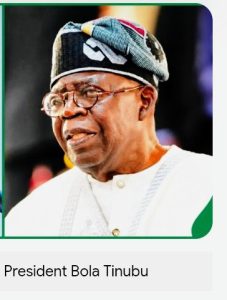
The Council described as shocking the President’s failure to condemn the growing wave of political violence, noting that, through his spokesman, Mr. Bayo Onanuga, the Presidency had instead chosen to caution opposition parties while shielding those allegedly responsible for violence within the ruling APC.
“President Tinubu cannot claim to desire peace when his own words provide cover for violence.
“‘All Is Fair in Politics’ is not the language of a Head of State. It is the language of political desperation and an open licence for thuggery, ballot snatching, intimidation and bloodshed.
“From Edo to Cross River, Gombe to Lagos, and Kebbi to Kaduna, Nigerians have witnessed attacks on opposition gatherings, destruction of campaign materials and the brutalisation of innocent supporters, allegedly by APC-sponsored thugs.
“Yet, Mr. President has not considered it necessary to call his governors and party members to order.
“Instead, the Presidency has resorted to diversionary tactics, blaming victims and preaching restraint to the opposition while members of the ruling party are accused of unleashing violence across the country,” the statement said.
The ADC-PCC challenged President Tinubu to explain why his condemnation of political violence appears directed at the opposition rather than members of his own party.
It asked: “Why has Mr. President refused to condemn APC governors who openly threaten opposition supporters? Why has he remained silent over public incitement by officials of his party? Why is his anger always directed at the opposition and never at those within his own political fold?”
The Council maintained that the ADC remains committed to peaceful, issue-based political engagement, insisting that its campaign is focused on addressing the country’s pressing challenges, including hunger, insecurity, unemployment, corruption and what it described as the failures of the Tinubu administration.
It accused the APC of resorting to violence because it had little to offer Nigerians in terms of credible solutions to the country’s problems.
Consequently, the ADC-PCC demanded that President Tinubu immediately and publicly withdraw his “All Is Fair in Politics” remark, condemn and call to order APC governors and party officials accused of inciting violence, and direct security agencies to protect all Nigerians impartially rather than allow them to become instruments of intimidation and oppression against opposition parties.
” Nigeria belongs to all of us. No political ambition is worth the blood of any Nigerian.
“If former President Goodluck Jonathan could make that profound declaration in 2015, President Tinubu has no excuse not to say so and demonstrate the sincerity of his commitment to peace in 2026.
“The ADC will not be intimidated. We will continue to campaign peacefully, and in 2027, Nigerians will have the opportunity to vote for competence, integrity and a new beginning,” the statement added.




-
News5 days ago
IGP Disu decorates 29 senior police officers with new ranks….charges them on professionalism, integrity,others
-
News4 days ago
Airstrikes kill 40 ISWAP terrorists in Borno
-
News4 days ago
We finally received CTC Of Lifu’s Judgement, without Atiku, Other Candidates Names Mentioned—Senator Melaye
-
News4 days ago
2026 U-17 WWC: Tinubu rewards each Flamingos player with ₦100m
-
News5 days ago
How Federal High Court Chief judge is beign blackmailed with EFCC, CCB- ADC Campaign Council
-
News2 days ago
Crowd Shouts ‘Bamayi’ at Tinubu, pelt convoy in Abuja
-
News5 days ago
Oil slump opens door to cheaper petrol for Nigerians …as Brent hits lowest since August
-
News5 days ago
Oil price fall: We ‘ll take appropriate action against marketers, petrol stations over unfair practices- FCCPC