

News
Xenophobia, South Africa, Nigeria and children of bad neighbours


By Tony Erha
Again, civil unrest has resumed in South Africa in April and May, 2026, as the country’s black youth population, kill and maim their African brothers, who are from countries like Nigeria, Ghana, Zimbabwe, Mozambique, Sudan and others. Property and businesses have been ruined through looting, physical damage and arson.
Another strange dimension to the deadly attacks is where South African women married to Nigerians and other immigrant Africans, have been attacked. The women had taken to the street protests in semi-nudity
This is not the first time the rampaging South African predominant black youth population had taken to the street, chanting dangerous slogans and armed with machetes, bottles, daggers, clubs, whips and other dangerous cudgels.
Since the beginning of the millennium, the violent protests, deaths and destructions had become a recurring decimal in the Nelson Mandela’s country.
In 2008, a major wave of violence resulted in at least 62 deaths and over 100,000 people displaced. In 2015, more attacks led to added deaths, bodily injuries and widespread looting of foreigner-owned shops. The incidents were said to have been sparked by economic hardship, unemployment and the impoverishment if the South African black majority that constitute about 85 of its headcount and the minority whites of a negligable population.
Apart from full-blown cases, there had been such isolated cases of attacks, deaths and destructions that are not recorded.For instance, in April 2004, following the death of Brenda Fassie, a 39 year old South African musical diva, some Nigerians were killed and others hunted in the country, as a result of the rumours that the cocaine overdose doctor said was the cause of her death, was supplied by some Nigerian hard drug agents.
Similarly in 2007, when Lucky Dube, a South African Reggae music sensation, was shot dead, Nigerian immigrants were hiding from pillagers, who avenged it on Nigerians, as his killers. His actual attackers, who were after all South Africans, later confessed to killing him because they taught he was a Nigeria, and they did not know who he was until after seeing the news reports. The trio of Sifiso Mhlanga, Mbuti Mabe, and Julius Gxowa, were later convicted and sentenced to life imprisonment.
South Africa’s recurring waves of xenophobic violence is often codenamed “Operation Dudula”. They are restless mobs that carry out mass deportation of undocumented migrants, stopping their access to healthcare, and raiding their businesses.
But,cl the country’s president, Cyril Ramaphosa, reluctantly condemned the atrocious acts, as he was also accused by Julius Malema, the fiery South African opposition politician, who further accused him of double standard. Malema added that President Ramaphosa with his ruling party, has no genuine interest in stopping the attacks and serve deterrence to the offenders, because they didn’t want to lose the mass votes from the teeming youth in the South Africa general elections, holding soon.
But, the word ‘Xenophobia’ got its origin from ancient Greece, the south European nation, like many notions and words now globally used. Xenophobia is a societal misnomer, which has plagued many countries of the world. Although it is a Greek originating coinage, Xenophobic practices didn’t originate in ancient Greece, but is a timeless blight associated with human origins. Its origin is hardly traced to a country.
Instructibly, Wikipedia, the online encyclopedia, explicitly describes Xenophobia as a compound word of Greek origin, that emanated from ‘xenos’ (race) and ‘phobia’ (fear). It is the fear or dislike of people who are perceived as being foreign or strange. It is an expression that is based on the perception that a conflict exists between a group-within and an out-group.
Wild xenophobic protests had been usual exchange in the past four decades, between Nigeria and Ghana, two rivalry West African countries, just as Ghanaians are currently carrying out such street protests against “surges of Nigerian migrants in their country”, with further accusation of “criminalities and economic domination by Nigerians”.
When each time, both countries carry out the xenophobic agitations, there are stereotype makeshift or handmade bags, with which expelled migrants cart away their belongings. To these days, the bags have become a derisive remark by both countries. In Nigeria, it is called “Ghana Must Go” and in Ghana “Nigeria Must Go”. No one seems to know the real origin of the bag.
Currently, Togo, a Francophone neighbour of Nigeria, is similarly protesting against the flood of Nigerian immigrants in their country.
In response to the South African violent attacks, Nigeria’s president, Bola Ahmed Tinubu, ordered his Minister for Foreign Affairs, Bianca Odumegwu-Ojukwu, for emergency response unit in South Africa. The Guardian of 7th May, 2026 quoted the minister as thus;
“I maintained that our government cannot stand by and watch the systematic harassment and humiliation of our nationals resident in SA as well as the extra-judicial killings of our people, and that the evacuation of our citizens who want to return home remains our government’s priority at this time.”
She furthered that the South African government expressed reservations for the recommended evacuation of Nigerians from the country, at their defence of exaggerated reportage of the same attacks, factually reported by some notable foreign media.
This was not the first time Nigeria was taking diplomatic option to the continuous attacks on Nigerians. In September 2019, violence also swept through parts of Johannesburg and Pretoria again. The South African police figures cited by Reuters, said 12 people were killed, and hundreds of businesses looted and destroyed. Nigeria evacuated more than 500 of its citizens from South Africa. There were diplomatic crisis across Africa, with Nigeria temporarily boycotting the World Economic Forum on Africa hosted in Cape Town.
In all, the xenophobic or anti-immigrant deaths, attacks and protests, whether in South Africa, Ghana, Togo etc., have derogatory slogans and wakeup messages passed to Nigerians and their government, that they go back and rebuild their country and stay there, not scramble to go and spoil other countries that were built through hard labour and honesty. They are also mocked to have attitude change, where they will no longer get involved in crimes and lawlessness, in foreign lands.
When we were growing up, our parents would warn us to keep long distance from the children of parents, who were known as bad neighbours. And do we treated them as lepers from whom one can’t share food, drinks or nearness.
It’s interesting having the Nigeria’s Senate and House of Reps, the lower and upper chambers of the country’s legislative bodies, condemning South Africa over the untold deaths and persecutions of their countrymen and women, in their sittings. As if they were truly concerned. Some notable of the members even called for the take-over of South African companies and other economic assets in the country.
In another instance, a clergy of a new-generation church, based in South Africa, wailed that his church’s efifices were razed down. All counted their losses, regretting how Nigeria was supportive of the same South African blacks, when Nigeria helped them fight Apartheid and gave them independence. Their regrets had been that there were a Pharoah and Egyptians who did not know Joseph and the Israelites, just as a Ramaphosa and black South Africa youth who don’t know Olusegun Obasanjo and Nigerians.
To our lawmakers who feign love for Nigerians in South Africa, how many of such cheap deaths of Nigerian have they cared to save in the hundreds of thousands of deaths being lost to terrorist, jihadist and criminal attacks going on in the country? What reliefs have they given to the victims of unbridled corruption they concreted and their milking of poor Nigerians, through ostentatious indulgence as lawmakers, who supposedly make life meaningful to their electors?
Can they be absolved from the executive recklessness, blackmarket Judicial practices and the criminalities that arrest the soul of the country? Are South African blacks to be entirely blamed, when the children of our bad parents besiege foreign lands to manifest the filial responsibility?
Have we forgotten so soon how a gun dwell and killing festival shifted from South Africa to somewhere in Nigeria, when families members were gruesomely murdered in their homes and churches, over sour cocaine deals, and gun battles which started in South Africa and concluded in Nigeria?
The United States government has insisted that Nigeria should retain its Country of Particular Concern, CPC, designation, saying the country has not done enough to protect Christians from attacks.
Assistant Secretary of State for African Affairs, Frank Garcia, made this statement on Thursday during a congressional hearing on violence in Nigeria.
Garcia was responding to questions from US Congressman Riley Moore, who asked about the government’s efforts to dismantle militia strongholds and kidnapping camps in the Middle Belt, particularly in Benue and Plateau states.
Moore also raised concerns over the exclusion of the states from the forest guard initiative and delays in deploying 1,000 approved guards to Plateau.
“Before you answer that, we cannot take this CPC designation off of this country. They have not done enough,” Moore said.
Garcia acknowledged the lack of progress, but said Nigeria was taking steps to address the concerns, although they had yet to produce results.
He said the country’s security capacity was still being developed and that deployments were not happening fast enough.
“Unfortunately, the violence has not stopped,” Garcia added, citing continued attacks in Kaduna and Plateau states.
He said the US had provided police training and equipment, expanded intelligence sharing and worked with Nigerian financial institutions to disrupt terrorist financing.
Garcia added that Washington would continue diplomatic engagements and security cooperation to protect vulnerable communities and ensure accountability.
However, the Nigerian government has consistently rejected claims of a “Christian genocide” or targeted religious persecution, maintaining that insecurity affects Nigerians of all faiths.


Liquefied Petroleum Gas, commonly known as cooking gas, has risen significantly, forcing Nigerians to spend more to purchase the product.
The increase comes as depot owners and retailers raised their prices over the past two days.
StockGap increased its depot price by N25 to N1,440 per kilogram. Nigerian Independent Petroleum Company Limited, NIPCO, Mobil (now 11 Plc) and Ardova, on the other hand, sold the product at N1,400 and N1,390 per kilogram, respectively.
Similarly, LPG retail outlets, including Raniol, Juda Oil and Nigerian National Petroleum Company Limited, NNPC, outlets in Abuja and its environs, now dispense cooking gas at between N1,550 and N1,600 per kilogram, up from N1,400 and N1,500.
Micro-LPG dealers sell the product for between N1,700 and N1,800 per kilogram, depending on the location in Abuja.
Earlier, NIPCO’s spokesperson, Taofeek Lawal, had exclusively told DAILY POST that LPG prices could increase further between November and January next year.
The latest price increase means that Nigerians who previously spent N17,500 to refill a 12.5kg cylinder at N1,400 per kilogram will now pay N20,000 at the new rate of N1,600 per kilogram, representing an additional N2,500.
News
2027: Tinubu Must Withdraw ‘All Is Fair in Politics’ Remark, Embrace Peaceful Coexistence — ADC-PCC
The African Democratic Congress Presidential Campaign Council (ADC-PCC) has called on President Bola Ahmed Tinubu to publicly retract his controversial “All Is Fair in Politics” remark, warning that such rhetoric fuels political division, emboldens thugs and poses a grave threat to the nation’s peace and stability.
The ADC-PCC also expressed concern over what it described as the President’s disturbing silence on the conduct of some APC governors and party chieftains who have openly made inflammatory statements and allegedly encouraged political violence.
In a statement signed by its Director of Media and Publicity, Kola Ologbondiyan, the ADC-PCC urged President Tinubu to rise above partisan interests and demonstrate the statesmanship expected of a national leader, citing former President Goodluck Jonathan’s unequivocal declaration that no presidential ambition was worth the blood of any Nigerian.
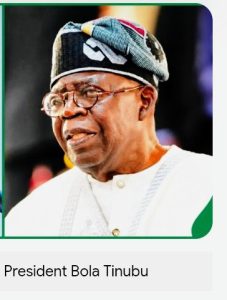
The Council described as shocking the President’s failure to condemn the growing wave of political violence, noting that, through his spokesman, Mr. Bayo Onanuga, the Presidency had instead chosen to caution opposition parties while shielding those allegedly responsible for violence within the ruling APC.
“President Tinubu cannot claim to desire peace when his own words provide cover for violence.
“‘All Is Fair in Politics’ is not the language of a Head of State. It is the language of political desperation and an open licence for thuggery, ballot snatching, intimidation and bloodshed.
“From Edo to Cross River, Gombe to Lagos, and Kebbi to Kaduna, Nigerians have witnessed attacks on opposition gatherings, destruction of campaign materials and the brutalisation of innocent supporters, allegedly by APC-sponsored thugs.
“Yet, Mr. President has not considered it necessary to call his governors and party members to order.
“Instead, the Presidency has resorted to diversionary tactics, blaming victims and preaching restraint to the opposition while members of the ruling party are accused of unleashing violence across the country,” the statement said.
The ADC-PCC challenged President Tinubu to explain why his condemnation of political violence appears directed at the opposition rather than members of his own party.
It asked: “Why has Mr. President refused to condemn APC governors who openly threaten opposition supporters? Why has he remained silent over public incitement by officials of his party? Why is his anger always directed at the opposition and never at those within his own political fold?”
The Council maintained that the ADC remains committed to peaceful, issue-based political engagement, insisting that its campaign is focused on addressing the country’s pressing challenges, including hunger, insecurity, unemployment, corruption and what it described as the failures of the Tinubu administration.
It accused the APC of resorting to violence because it had little to offer Nigerians in terms of credible solutions to the country’s problems.
Consequently, the ADC-PCC demanded that President Tinubu immediately and publicly withdraw his “All Is Fair in Politics” remark, condemn and call to order APC governors and party officials accused of inciting violence, and direct security agencies to protect all Nigerians impartially rather than allow them to become instruments of intimidation and oppression against opposition parties.
” Nigeria belongs to all of us. No political ambition is worth the blood of any Nigerian.
“If former President Goodluck Jonathan could make that profound declaration in 2015, President Tinubu has no excuse not to say so and demonstrate the sincerity of his commitment to peace in 2026.
“The ADC will not be intimidated. We will continue to campaign peacefully, and in 2027, Nigerians will have the opportunity to vote for competence, integrity and a new beginning,” the statement added.




-
News5 days ago
IGP Disu decorates 29 senior police officers with new ranks….charges them on professionalism, integrity,others
-
News4 days ago
Airstrikes kill 40 ISWAP terrorists in Borno
-
News4 days ago
We finally received CTC Of Lifu’s Judgement, without Atiku, Other Candidates Names Mentioned—Senator Melaye
-
News4 days ago
2026 U-17 WWC: Tinubu rewards each Flamingos player with ₦100m
-
News5 days ago
How Federal High Court Chief judge is beign blackmailed with EFCC, CCB- ADC Campaign Council
-
News5 days ago
Oil slump opens door to cheaper petrol for Nigerians …as Brent hits lowest since August
-
News2 days ago
Crowd Shouts ‘Bamayi’ at Tinubu, pelt convoy in Abuja
-
News5 days ago
Oil price fall: We ‘ll take appropriate action against marketers, petrol stations over unfair practices- FCCPC