

News
CONSTITUENCY PROJECTS: THE POLITICAL CASH COW MASQUERADING AS GRASSROOTS DEVELOPMENT

By Charles Edet Esq., FCR
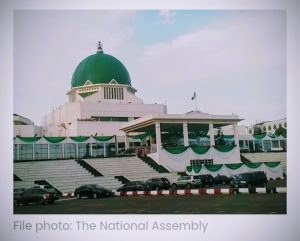
Across Nigeria, what should be a sacred instrument for grassroots transformation has degenerated into a sophisticated conduit for elite plunder, particularly by the National Assembly legislators in various Committees.
Constituency projects originally conceived to deliver targeted development to neglected communities have been hijacked and weaponised by political actors who now dispense public funds as though they were private benevolence.
The distortion is brazen. Legislators and political office holders secure multi-million and, in many cases, billion-naira allocations under the guise of “constituency intervention projects.” Yet, rather than translate into enduring infrastructure, roads, functional schools, healthcare systems, potable water, the funds are routinely diverted through opaque procurement processes, front companies, and inflated contracts. What eventually reaches the people are skeletal, substandard, or completely abandoned projects that collapse at the first test of time.
Even more disturbing is the emerging culture of political misrepresentation.Many of these actors now parade themselves alongside federal agencies, such as NDDC, UBEC, or the Ministry of Humanitarian Affairs, branding publicly funded interventions as personal achievements. They emboss their names on projects, distribute items with their images, and orchestrate media spectacles that project them as benefactors, when in reality, they are merely intermediaries managing taxpayers’ resources. This calculated deception erodes civic consciousness and distorts the fundamental principle that governance is a duty, not a charity.
Recent developments reinforce this troubling trajectory. Despite repeated federal pronouncements urging transparency and effective utilisation of allocations, the pattern remains unchanged. Constituency funds are increasingly channelled into short-lived palliatives, bags of rice, token cash distributions, motorcycles, or sewing machines designed for political optics rather than sustainable impact. These “empowerment programmes” rarely outlive a few weeks, offering no structural solution to unemployment, poverty, or infrastructural decay. It is a revolving door of dependency, carefully engineered to keep citizens perpetually beholden.
Investigative trends in 2024 and early 2025 further expose the scale of the rot. Several civic audits and budget tracking reports reveal that a significant percentage of constituency projects either do not exist on the ground or are grossly under-delivered relative to funds released. In some instances, projects are duplicated across budgets, executed only on paper, or rebranded year after year to justify fresh disbursements. This is not inefficiency, it is institutionalised economic sabotage.
The complicity does not end with politicians. Segments of the civil service, procurement units, and even oversight bodies have been enmeshed in this corrupt ecosystem, enabling the seamless diversion of public funds. The result is a systemic failure where accountability is diluted, and impunity thrives under bureaucratic cover.
The implications for national security and development are profound. Deprived communities, denied basic infrastructure and opportunities, become fertile grounds for unrest, criminality, and insurgency. When governance fails at the grassroots, the entire national architecture is imperilled. Poverty deepens, inequality widens, and public trust in democratic institutions continues its dangerous decline.
It must be unequivocally stated: constituency funds are not the personal largesse of politicians. They are statutory allocations drawn from the collective wealth of Nigerians, meant to deliver measurable, verifiable development. Any attempt to personalise or politicise these resources is a gross abuse of office and a betrayal of public trust.
The path forward demands decisive action. The Federal Government must institutionalise full disclosure of constituency project allocations, contractors, timelines, and outcomes that are accessible to the public in real time, with signboards stating clearly the government institutions that are executing the project and not the names of the Senator or House of Representatives member. Attracting a federal government project to a constituency is not a personal project.
Anti-corruption agencies must shift from reactive investigations to proactive monitoring, embedding forensic tracking mechanisms into project execution cycles. The judiciary must assert its authority in defining the legal boundaries of legislative involvement in project implementation, ensuring that appropriation does not translate into unlawful executive control.
Above all, citizens must awaken to their constitutional role as custodians of public accountability. Grassroots vigilance, community monitoring, and civic resistance against political deception are no longer optional, they are imperative.
Until constituency projects are reclaimed from the grip of profiteers, senators and House of Representatives members, and restored to their true purpose, grassroots development in Nigeria will remain a mirage as promised in budgets, advertised in headlines, but absent in reality.
Edet Charles: A Journalist, Security and Crime Reporter,
080-6888-5385
edetofpromart@gmail.com

The United States government has insisted that Nigeria should retain its Country of Particular Concern, CPC, designation, saying the country has not done enough to protect Christians from attacks.
Assistant Secretary of State for African Affairs, Frank Garcia, made this statement on Thursday during a congressional hearing on violence in Nigeria.
Garcia was responding to questions from US Congressman Riley Moore, who asked about the government’s efforts to dismantle militia strongholds and kidnapping camps in the Middle Belt, particularly in Benue and Plateau states.
Moore also raised concerns over the exclusion of the states from the forest guard initiative and delays in deploying 1,000 approved guards to Plateau.
“Before you answer that, we cannot take this CPC designation off of this country. They have not done enough,” Moore said.
Garcia acknowledged the lack of progress, but said Nigeria was taking steps to address the concerns, although they had yet to produce results.
He said the country’s security capacity was still being developed and that deployments were not happening fast enough.
“Unfortunately, the violence has not stopped,” Garcia added, citing continued attacks in Kaduna and Plateau states.
He said the US had provided police training and equipment, expanded intelligence sharing and worked with Nigerian financial institutions to disrupt terrorist financing.
Garcia added that Washington would continue diplomatic engagements and security cooperation to protect vulnerable communities and ensure accountability.
However, the Nigerian government has consistently rejected claims of a “Christian genocide” or targeted religious persecution, maintaining that insecurity affects Nigerians of all faiths.


Liquefied Petroleum Gas, commonly known as cooking gas, has risen significantly, forcing Nigerians to spend more to purchase the product.
The increase comes as depot owners and retailers raised their prices over the past two days.
StockGap increased its depot price by N25 to N1,440 per kilogram. Nigerian Independent Petroleum Company Limited, NIPCO, Mobil (now 11 Plc) and Ardova, on the other hand, sold the product at N1,400 and N1,390 per kilogram, respectively.
Similarly, LPG retail outlets, including Raniol, Juda Oil and Nigerian National Petroleum Company Limited, NNPC, outlets in Abuja and its environs, now dispense cooking gas at between N1,550 and N1,600 per kilogram, up from N1,400 and N1,500.
Micro-LPG dealers sell the product for between N1,700 and N1,800 per kilogram, depending on the location in Abuja.
Earlier, NIPCO’s spokesperson, Taofeek Lawal, had exclusively told DAILY POST that LPG prices could increase further between November and January next year.
The latest price increase means that Nigerians who previously spent N17,500 to refill a 12.5kg cylinder at N1,400 per kilogram will now pay N20,000 at the new rate of N1,600 per kilogram, representing an additional N2,500.
News
2027: Tinubu Must Withdraw ‘All Is Fair in Politics’ Remark, Embrace Peaceful Coexistence — ADC-PCC
The African Democratic Congress Presidential Campaign Council (ADC-PCC) has called on President Bola Ahmed Tinubu to publicly retract his controversial “All Is Fair in Politics” remark, warning that such rhetoric fuels political division, emboldens thugs and poses a grave threat to the nation’s peace and stability.
The ADC-PCC also expressed concern over what it described as the President’s disturbing silence on the conduct of some APC governors and party chieftains who have openly made inflammatory statements and allegedly encouraged political violence.
In a statement signed by its Director of Media and Publicity, Kola Ologbondiyan, the ADC-PCC urged President Tinubu to rise above partisan interests and demonstrate the statesmanship expected of a national leader, citing former President Goodluck Jonathan’s unequivocal declaration that no presidential ambition was worth the blood of any Nigerian.
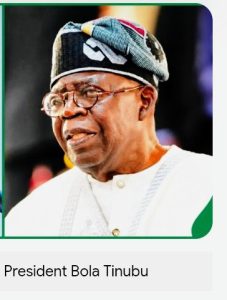
The Council described as shocking the President’s failure to condemn the growing wave of political violence, noting that, through his spokesman, Mr. Bayo Onanuga, the Presidency had instead chosen to caution opposition parties while shielding those allegedly responsible for violence within the ruling APC.
“President Tinubu cannot claim to desire peace when his own words provide cover for violence.
“‘All Is Fair in Politics’ is not the language of a Head of State. It is the language of political desperation and an open licence for thuggery, ballot snatching, intimidation and bloodshed.
“From Edo to Cross River, Gombe to Lagos, and Kebbi to Kaduna, Nigerians have witnessed attacks on opposition gatherings, destruction of campaign materials and the brutalisation of innocent supporters, allegedly by APC-sponsored thugs.
“Yet, Mr. President has not considered it necessary to call his governors and party members to order.
“Instead, the Presidency has resorted to diversionary tactics, blaming victims and preaching restraint to the opposition while members of the ruling party are accused of unleashing violence across the country,” the statement said.
The ADC-PCC challenged President Tinubu to explain why his condemnation of political violence appears directed at the opposition rather than members of his own party.
It asked: “Why has Mr. President refused to condemn APC governors who openly threaten opposition supporters? Why has he remained silent over public incitement by officials of his party? Why is his anger always directed at the opposition and never at those within his own political fold?”
The Council maintained that the ADC remains committed to peaceful, issue-based political engagement, insisting that its campaign is focused on addressing the country’s pressing challenges, including hunger, insecurity, unemployment, corruption and what it described as the failures of the Tinubu administration.
It accused the APC of resorting to violence because it had little to offer Nigerians in terms of credible solutions to the country’s problems.
Consequently, the ADC-PCC demanded that President Tinubu immediately and publicly withdraw his “All Is Fair in Politics” remark, condemn and call to order APC governors and party officials accused of inciting violence, and direct security agencies to protect all Nigerians impartially rather than allow them to become instruments of intimidation and oppression against opposition parties.
” Nigeria belongs to all of us. No political ambition is worth the blood of any Nigerian.
“If former President Goodluck Jonathan could make that profound declaration in 2015, President Tinubu has no excuse not to say so and demonstrate the sincerity of his commitment to peace in 2026.
“The ADC will not be intimidated. We will continue to campaign peacefully, and in 2027, Nigerians will have the opportunity to vote for competence, integrity and a new beginning,” the statement added.





-
News5 days ago
IGP Disu decorates 29 senior police officers with new ranks….charges them on professionalism, integrity,others
-
News4 days ago
Airstrikes kill 40 ISWAP terrorists in Borno
-
News4 days ago
We finally received CTC Of Lifu’s Judgement, without Atiku, Other Candidates Names Mentioned—Senator Melaye
-
News4 days ago
2026 U-17 WWC: Tinubu rewards each Flamingos player with ₦100m
-
News5 days ago
How Federal High Court Chief judge is beign blackmailed with EFCC, CCB- ADC Campaign Council
-
News2 days ago
Crowd Shouts ‘Bamayi’ at Tinubu, pelt convoy in Abuja
-
News5 days ago
Oil slump opens door to cheaper petrol for Nigerians …as Brent hits lowest since August
-
News5 days ago
2027: ADC accuses Federal High Court of withholding David Mark sack judgment