

News
A GOVERNOR’S BOLD COMMITMENT TO EDUCATIONAL INVESTMENT


By Dr. Patrick Akhere Ebojele
Globally, history has almost often provided humanity with the clearest verdict on leadership. Today in our state, Edo, and examining the education sector, that verdict is beginning to take shape, drawing a sharp distinction between a recent period of decline and a new phase of deliberate recovery driven by policy-backed investment.
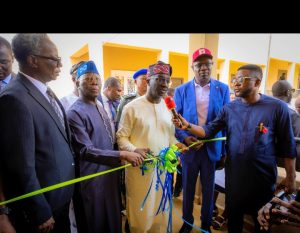
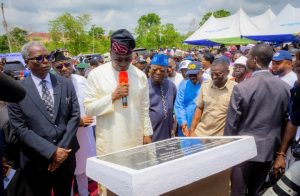
The date was April 6, 2026. Governor Monday Okpebholo stood before a cross-section of the academic community at Edo University, Iyamho (EUI), and made a statement that went beyond ceremony. He approved a ₦2 billion infrastructure grant for the institution and raised its monthly subvention from ₦100 million to ₦250 million. The decision was both symbolic and practical — a signal of intent, and a direct intervention aimed at improving teaching, research, and institutional capacity.
This move did not occur in isolation. It is a reflection of a broader framework under his administration’s education reform agenda, one that has focused on restoring financial stability, rebuilding institutional structures, and re-establishing confidence in public tertiary education across the state. The same one that caused him to be honored recently by a newspaper as the Best Governor in our country.
To appreciate the significance of these steps, it is necessary to examine the conditions that preceded them. Ambrose Alli University (AAU), Ekpoma, set up by a former civilian governor of defunct Bendel State, Professor Ambrose Alli, was once regarded as a leading state-owned institution in the country. But it entered a prolonged period of financial and administrative strain created by the the immediate past administration in the state. The reduction of its monthly subvention from ₦270 million to ₦41 million created a structural deficit that affected nearly every aspect of its operations. Academic programmes lost accreditation, staff morale declined under the weight of unpaid and irregular salaries, and students faced prolonged disruptions that undermined their academic progression.
The situation extended beyond funding constraints. Administrative decisions introduced during that period generated concern among stakeholders, particularly proposals that suggested a fragmentation of the university’s structure. Many viewed such moves as potentially weakening the coherence and legacy of the institution, at a time when consolidation and support were more urgently required.
The financial implications were severe. Salary arrears accumulated significantly, while basic institutional obligations became increasingly difficult to meet. The ripple effects were evident in stalled academic calendars, declining infrastructure, and a general erosion of confidence among both staff and students.
Edo University, Iyamho, though younger, faced its own set of challenges. The withdrawal of its ₦100 million monthly subvention placed the institution under pressure at a critical stage of its growth. Without consistent funding, maintaining standards and expanding capacity became increasingly difficult, raising concerns about sustainability.
Against this backdrop, the current administration’s interventions marked a decisive shift. This is the picture. Shortly after assuming office in late 2024, Governor Okpebholo moved to stabilise Ambrose Alli University by increasing its monthly subvention from ₦41 million to ₦500 million. This adjustment represented more than a financial correction; it was a strategic effort to halt institutional decline and create a foundation for recovery.
The immediate outcomes were measurable. Salary payments were regularised, easing long-standing tensions within the workforce. Academic staff who had previously been disengaged were reinstated, restoring critical human resources needed for teaching and research. Academic activities resumed with greater consistency, helping to re-establish a more predictable learning environment.
The administration also addressed long-pending issues affecting students, particularly in the medical college. Graduates who had waited years for professional induction were able to complete the process, clearing a backlog that had become emblematic of the institution’s earlier challenges.
Institutional reforms accompanied financial intervention. A new governing council was inaugurated to strengthen oversight and improve administrative efficiency. These changes were designed to ensure that increased funding translated into sustainable improvements, rather than temporary relief.
Further support came through external partnerships. A ₦1.2 billion grant secured from OPay provided additional assistance to indigent students, not only at AAU but across other tertiary institutions in the state. This expanded the scope of intervention, linking financial stability with access to education.
At Edo University, Iyamho, the government adopted a phased approach. The initial step was the restoration of the ₦100 million monthly subvention, re-establishing a baseline for operations. This was followed by the recent increase to ₦250 million, alongside targeted infrastructure investment. The ₦2 billion grant is expected to enhance facilities, support academic programmes, and position the institution for long-term growth.
Taken together, these measures indicate a consistent policy direction. The emphasis has been on restoring funding, strengthening governance, and creating conditions that allow institutions to function effectively. While challenges remain, the trajectory has shifted from contraction to expansion.
The contrast with previous conditions is evident in both data and experience. Where financial support once declined sharply, it has now been significantly increased. Where institutions struggled with basic obligations, there is now a gradual return to operational stability. These changes have begun to influence academic output, staff retention, and student experience.
Within the framework of the SHINE Agenda, education has been treated as a core pillar rather than a secondary concern. Budgetary allocations reflect this priority, with sustained commitments to funding that go beyond short-term interventions. The approach suggests a recognition that higher education plays a central role in economic development, human capital formation, and social mobility.
For students, the impact is visible in improved learning environments and more predictable academic calendars. For lecturers and administrative staff, regular salary payments and clearer institutional direction have contributed to a more stable working environment. For the state, the broader implication lies in the gradual rebuilding of confidence in public education.
Governor Okpebholo’s actions indicate a governance style that prioritises execution. Rather than relying on policy declarations alone, the administration has tied its objectives to measurable financial commitments and institutional reforms. This alignment between policy and funding has been a defining feature of the current phase.
The long-term sustainability of these gains will depend on consistency, oversight, and continued investment. Educational reform is inherently incremental, requiring sustained attention over multiple years. However, the current trajectory provides a foundation upon which further progress can be built.
Edo State’s tertiary institutions are emerging from a period of strain into one of cautious recovery. The process is ongoing, but the direction is increasingly clear. From financial intervention to structural reform, the focus has been on rebuilding systems that had previously come under pressure.
Governor Monday Okpebholo did not inherit a stable educational system. He assumed responsibility at a time when key institutions required urgent intervention. His response has been to prioritise funding, restore administrative order, and initiate a process of recovery anchored on investment in education.
The outcome of these efforts will continue to unfold over time. For now, the evidence points to a deliberate attempt to reposition public universities as functional, competitive, and sustainable institutions within Nigeria’s higher education landscape.
—
Dr. Patrick Akhere Ebojele, is the Chief Press Secretary to the Edo State Governor Senator Monday Okpebholo.

The United States government has insisted that Nigeria should retain its Country of Particular Concern, CPC, designation, saying the country has not done enough to protect Christians from attacks.
Assistant Secretary of State for African Affairs, Frank Garcia, made this statement on Thursday during a congressional hearing on violence in Nigeria.
Garcia was responding to questions from US Congressman Riley Moore, who asked about the government’s efforts to dismantle militia strongholds and kidnapping camps in the Middle Belt, particularly in Benue and Plateau states.
Moore also raised concerns over the exclusion of the states from the forest guard initiative and delays in deploying 1,000 approved guards to Plateau.
“Before you answer that, we cannot take this CPC designation off of this country. They have not done enough,” Moore said.
Garcia acknowledged the lack of progress, but said Nigeria was taking steps to address the concerns, although they had yet to produce results.
He said the country’s security capacity was still being developed and that deployments were not happening fast enough.
“Unfortunately, the violence has not stopped,” Garcia added, citing continued attacks in Kaduna and Plateau states.
He said the US had provided police training and equipment, expanded intelligence sharing and worked with Nigerian financial institutions to disrupt terrorist financing.
Garcia added that Washington would continue diplomatic engagements and security cooperation to protect vulnerable communities and ensure accountability.
However, the Nigerian government has consistently rejected claims of a “Christian genocide” or targeted religious persecution, maintaining that insecurity affects Nigerians of all faiths.


Liquefied Petroleum Gas, commonly known as cooking gas, has risen significantly, forcing Nigerians to spend more to purchase the product.
The increase comes as depot owners and retailers raised their prices over the past two days.
StockGap increased its depot price by N25 to N1,440 per kilogram. Nigerian Independent Petroleum Company Limited, NIPCO, Mobil (now 11 Plc) and Ardova, on the other hand, sold the product at N1,400 and N1,390 per kilogram, respectively.
Similarly, LPG retail outlets, including Raniol, Juda Oil and Nigerian National Petroleum Company Limited, NNPC, outlets in Abuja and its environs, now dispense cooking gas at between N1,550 and N1,600 per kilogram, up from N1,400 and N1,500.
Micro-LPG dealers sell the product for between N1,700 and N1,800 per kilogram, depending on the location in Abuja.
Earlier, NIPCO’s spokesperson, Taofeek Lawal, had exclusively told DAILY POST that LPG prices could increase further between November and January next year.
The latest price increase means that Nigerians who previously spent N17,500 to refill a 12.5kg cylinder at N1,400 per kilogram will now pay N20,000 at the new rate of N1,600 per kilogram, representing an additional N2,500.
News
2027: Tinubu Must Withdraw ‘All Is Fair in Politics’ Remark, Embrace Peaceful Coexistence — ADC-PCC
The African Democratic Congress Presidential Campaign Council (ADC-PCC) has called on President Bola Ahmed Tinubu to publicly retract his controversial “All Is Fair in Politics” remark, warning that such rhetoric fuels political division, emboldens thugs and poses a grave threat to the nation’s peace and stability.
The ADC-PCC also expressed concern over what it described as the President’s disturbing silence on the conduct of some APC governors and party chieftains who have openly made inflammatory statements and allegedly encouraged political violence.
In a statement signed by its Director of Media and Publicity, Kola Ologbondiyan, the ADC-PCC urged President Tinubu to rise above partisan interests and demonstrate the statesmanship expected of a national leader, citing former President Goodluck Jonathan’s unequivocal declaration that no presidential ambition was worth the blood of any Nigerian.
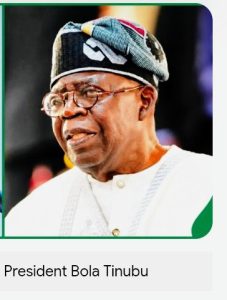
The Council described as shocking the President’s failure to condemn the growing wave of political violence, noting that, through his spokesman, Mr. Bayo Onanuga, the Presidency had instead chosen to caution opposition parties while shielding those allegedly responsible for violence within the ruling APC.
“President Tinubu cannot claim to desire peace when his own words provide cover for violence.
“‘All Is Fair in Politics’ is not the language of a Head of State. It is the language of political desperation and an open licence for thuggery, ballot snatching, intimidation and bloodshed.
“From Edo to Cross River, Gombe to Lagos, and Kebbi to Kaduna, Nigerians have witnessed attacks on opposition gatherings, destruction of campaign materials and the brutalisation of innocent supporters, allegedly by APC-sponsored thugs.
“Yet, Mr. President has not considered it necessary to call his governors and party members to order.
“Instead, the Presidency has resorted to diversionary tactics, blaming victims and preaching restraint to the opposition while members of the ruling party are accused of unleashing violence across the country,” the statement said.
The ADC-PCC challenged President Tinubu to explain why his condemnation of political violence appears directed at the opposition rather than members of his own party.
It asked: “Why has Mr. President refused to condemn APC governors who openly threaten opposition supporters? Why has he remained silent over public incitement by officials of his party? Why is his anger always directed at the opposition and never at those within his own political fold?”
The Council maintained that the ADC remains committed to peaceful, issue-based political engagement, insisting that its campaign is focused on addressing the country’s pressing challenges, including hunger, insecurity, unemployment, corruption and what it described as the failures of the Tinubu administration.
It accused the APC of resorting to violence because it had little to offer Nigerians in terms of credible solutions to the country’s problems.
Consequently, the ADC-PCC demanded that President Tinubu immediately and publicly withdraw his “All Is Fair in Politics” remark, condemn and call to order APC governors and party officials accused of inciting violence, and direct security agencies to protect all Nigerians impartially rather than allow them to become instruments of intimidation and oppression against opposition parties.
” Nigeria belongs to all of us. No political ambition is worth the blood of any Nigerian.
“If former President Goodluck Jonathan could make that profound declaration in 2015, President Tinubu has no excuse not to say so and demonstrate the sincerity of his commitment to peace in 2026.
“The ADC will not be intimidated. We will continue to campaign peacefully, and in 2027, Nigerians will have the opportunity to vote for competence, integrity and a new beginning,” the statement added.




-
News5 days ago
IGP Disu decorates 29 senior police officers with new ranks….charges them on professionalism, integrity,others
-
News4 days ago
Airstrikes kill 40 ISWAP terrorists in Borno
-
News4 days ago
We finally received CTC Of Lifu’s Judgement, without Atiku, Other Candidates Names Mentioned—Senator Melaye
-
News4 days ago
2026 U-17 WWC: Tinubu rewards each Flamingos player with ₦100m
-
News5 days ago
How Federal High Court Chief judge is beign blackmailed with EFCC, CCB- ADC Campaign Council
-
News2 days ago
Crowd Shouts ‘Bamayi’ at Tinubu, pelt convoy in Abuja
-
News5 days ago
Oil slump opens door to cheaper petrol for Nigerians …as Brent hits lowest since August
-
News4 days ago
ADC Crisis: Court Rejects Nafiu Bala’s Resignation Letter, Says It’s Fake