

News
Tenure Policy: Tinubu’s new envoys face hurdles……maybe rejected

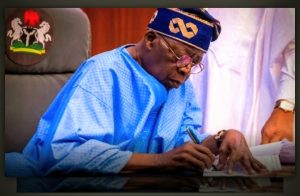
India and other yet-to-be disclosed countries have declined to accept some of President Bola Tinubu’s recently posted ambassadors-designate due to diplomatic policies that discourage receiving envoys from administrations with less than two years remaining in office, The PUNCH has gathered.
High-ranking officials in the Presidency and the foreign service disclosed on Tuesday that India, where career diplomat Ambassador Muhammad Dahiru has been designated to serve, maintains a standing policy against accepting ambassadors from governments with tenures of less than two years remaining.
Our correspondent gathered that the Asian giant is exercising its discretionary powers to turn down the Ministry of Foreign Affairs’ request to accept Dahiru’s posting.
The development confirms an earlier exclusive report by this newspaper in February 2026, in which sources revealed that storms were brewing for many of Tinubu’s ambassador-designates who faced the prospect of rejection by host countries due to time constraints on their tenure.
Three separate sources familiar with the matter, who spoke on condition of anonymity due to the sensitive nature of diplomatic negotiations, said the Federal Government was already receiving signals from New Delhi and possibly other capitals about their reluctance to grant agrément.

Agrément is the formal approval given by a receiving country to accept a diplomat designated by the sending country, and it is a prerequisite before an ambassador can assume duty.
“They don’t accept an ambassador from an administration that has less than two years in office. So they are giving us that body language already,” a Presidency official told our correspondent.
The source continued, “Some countries are reluctant to accept some people, not because of the individuals but because of time. They are already seeing the Tinubu government as an outgoing government.
“So their concern is that he has just one year left, so what if he doesn’t win the election? Another government may come and remove them. We also understand that some countries have this policy. Any ambassador from an administration that has less than a year or two in office will not get accepted. And one of such countries is India.”
A second source, a senior foreign service official, confirmed India’s position but expressed hope that Nigeria could leverage its relationship with New Delhi to secure an exception.
“I know India has that policy. If you are less than two years to the end of the tenure, there will be difficulties accepting an ambassador. Maybe we can leverage our relationship with them to scale through that.
“Of course, there are those among them who gauge political tides, and some may see that this government can win the next election. Perhaps they may see that the election may not be so competitive because virtually everybody has moved towards the APC. They may say the chances for APC’s victory are high. That is one of the arguments the government will push forward,” the official said.
The source emphasised that while India is the only country with a confirmed policy against short-tenure ambassadors, other nations may follow similar conventions.
“India is the only one I can confirm to you for now. The others will be based on their conventions and practices. But the one I know for sure now is India. We will have to do a lot of convincing because they have a standing rule,” the official stated.
A third official disclosed that while the Ministry of Foreign Affairs had secured funding for the mandatory induction course for ambassadors-designate, the timeline remains uncertain.
“On the training, we don’t know when for now. But the Foreign Ministry has the funds already to undertake the induction course,” the source said.
President Tinubu, on Friday, March 6, approved the postings of 65 ambassadors-designate and high commissioners to various countries and the United Nations, with Ambassador Dahiru assigned to serve in New Delhi.
Among the 65 nominees are former Aviation Minister Femi Fani-Kayode (Germany), presidential aide Reno Omokri (Mexico), former Katsina State Governor Lt Gen Abdulrahman Dambazzau (China), and Senator Jimoh Ibrahim (UN Permanent Representative).
The Ministry of Foreign Affairs has so far only received agrément from the United Kingdom for High Commissioner-designate Aminu Dalhatu and from France for Amb Ayodele Oke, leaving the fate of the remaining 63 envoys uncertain.
The Independent National Electoral Commission has scheduled the next presidential election for January 16, 2027. Tinubu’s first tenure is set to conclude in May that year.
In an earlier report, our correspondent had gathered that several countries may insist that ambassadors have a minimum tenured period of a year or two tied to the life of the sending country’s administration.
A highly-placed foreign service official had then disclosed, “The problem we have, which we are trying at the moment to see what we can do about, is that most countries, like India, will tell you that if an ambassador has less than one year or two, they may have issues.
“Usually, one year counts to the end of any current administration. So, that is where there might be a challenge. By the time they get the agrément, some of these ambassadors will have just a few months left.”
The official noted that some ambassadors may not commence their tours of duty until August 2026, which would leave them with barely nine months before the next election.
“Some people may not go before August because some countries will take their time to do background checks. When you send the name, sometimes they will respond, ‘Send someone else.’ And when you insist on asking why, they will give you their own report of their background checks. Or they may just ignore you for six months,” the official disclosed.
Under Article 4 of the 1961 Vienna Convention on Diplomatic Relations, receiving states must grant consent before any ambassador can be accredited.
In an interview with our correspondent, Nigeria’s former envoy to Singapore, Amb Ogbole Amedu-Ode, said receiving states were only being pragmatic by considering Nigeria’s political calendar before accepting an envoy.
“The underlying word here is pragmatism. Those receiving states are just being pragmatic if they take that view because the next round of general elections is in a year from now, in February and March.
“The question is now about an envoy from a president who is facing an election in a year. Elections, no matter how we think we understand them, can go either way.
“So, why receive letters of credence from a principal envoy from a President who has just one year and some months remaining for his first term in office? So, they may dilly-dally in issuing an agrément,” Amedu-Ode said.
He described the administration’s delay in nominating ambassadors as a mistake.
“The mistake has been made by the current administration already because they shouldn’t have waited two to three years into their term before nomination, screening, and deployment of heads of missions.”
However, Nigeria’s former envoy to Algeria, Mohammed Mabdul, had noted that friendly nations were unlikely to reject Nigerian nominees outright but drew a distinction between career and political appointees.
“The political appointees are the problem. Once received and accredited, they are usually expected to remain for two to three years. But with the next election in just a year now, there is the possibility that they may start returning to participate in campaigns. So, they may not make any serious impact with their posting,” Mabdul stated.
The diplomatic impasse may further delay Tinubu’s last-ditch efforts to restore full ambassadorial representation abroad 27 months after he recalled all 83 career and non-career ambassadors in September 2023 and left the country’s 109 missions without substantive heads.
Since assuming office, the Tinubu administration has strengthened ties with India.
The President visited India in September 2023 to attend the G20 Summit in New Delhi as a guest nation, where he met with Indian Prime Minister Narendra Modi to discuss bilateral cooperation in defence, agriculture, trade, and investment.
Just over a year later, in November 2024, Modi made his first visit to Nigeria in 17 years, the first by an Indian prime minister since 2007.
During the two-day visit, the leaders signed Memoranda of Understanding on cultural exchange, customs cooperation, and survey cooperation, and discussed expanding the India-Nigeria Strategic Partnership established in 2007.
Tinubu bestowed upon Modi Nigeria’s second-highest national honour, the Grand Commander of the Order of the Niger, making him only the second foreign dignitary after Queen Elizabeth II to receive the award.

The United States government has insisted that Nigeria should retain its Country of Particular Concern, CPC, designation, saying the country has not done enough to protect Christians from attacks.
Assistant Secretary of State for African Affairs, Frank Garcia, made this statement on Thursday during a congressional hearing on violence in Nigeria.
Garcia was responding to questions from US Congressman Riley Moore, who asked about the government’s efforts to dismantle militia strongholds and kidnapping camps in the Middle Belt, particularly in Benue and Plateau states.
Moore also raised concerns over the exclusion of the states from the forest guard initiative and delays in deploying 1,000 approved guards to Plateau.
“Before you answer that, we cannot take this CPC designation off of this country. They have not done enough,” Moore said.
Garcia acknowledged the lack of progress, but said Nigeria was taking steps to address the concerns, although they had yet to produce results.
He said the country’s security capacity was still being developed and that deployments were not happening fast enough.
“Unfortunately, the violence has not stopped,” Garcia added, citing continued attacks in Kaduna and Plateau states.
He said the US had provided police training and equipment, expanded intelligence sharing and worked with Nigerian financial institutions to disrupt terrorist financing.
Garcia added that Washington would continue diplomatic engagements and security cooperation to protect vulnerable communities and ensure accountability.
However, the Nigerian government has consistently rejected claims of a “Christian genocide” or targeted religious persecution, maintaining that insecurity affects Nigerians of all faiths.


Liquefied Petroleum Gas, commonly known as cooking gas, has risen significantly, forcing Nigerians to spend more to purchase the product.
The increase comes as depot owners and retailers raised their prices over the past two days.
StockGap increased its depot price by N25 to N1,440 per kilogram. Nigerian Independent Petroleum Company Limited, NIPCO, Mobil (now 11 Plc) and Ardova, on the other hand, sold the product at N1,400 and N1,390 per kilogram, respectively.
Similarly, LPG retail outlets, including Raniol, Juda Oil and Nigerian National Petroleum Company Limited, NNPC, outlets in Abuja and its environs, now dispense cooking gas at between N1,550 and N1,600 per kilogram, up from N1,400 and N1,500.
Micro-LPG dealers sell the product for between N1,700 and N1,800 per kilogram, depending on the location in Abuja.
Earlier, NIPCO’s spokesperson, Taofeek Lawal, had exclusively told DAILY POST that LPG prices could increase further between November and January next year.
The latest price increase means that Nigerians who previously spent N17,500 to refill a 12.5kg cylinder at N1,400 per kilogram will now pay N20,000 at the new rate of N1,600 per kilogram, representing an additional N2,500.
News
2027: Tinubu Must Withdraw ‘All Is Fair in Politics’ Remark, Embrace Peaceful Coexistence — ADC-PCC
The African Democratic Congress Presidential Campaign Council (ADC-PCC) has called on President Bola Ahmed Tinubu to publicly retract his controversial “All Is Fair in Politics” remark, warning that such rhetoric fuels political division, emboldens thugs and poses a grave threat to the nation’s peace and stability.
The ADC-PCC also expressed concern over what it described as the President’s disturbing silence on the conduct of some APC governors and party chieftains who have openly made inflammatory statements and allegedly encouraged political violence.
In a statement signed by its Director of Media and Publicity, Kola Ologbondiyan, the ADC-PCC urged President Tinubu to rise above partisan interests and demonstrate the statesmanship expected of a national leader, citing former President Goodluck Jonathan’s unequivocal declaration that no presidential ambition was worth the blood of any Nigerian.
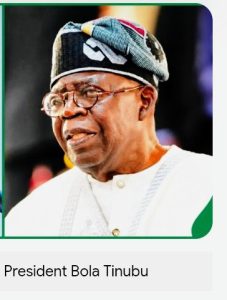
The Council described as shocking the President’s failure to condemn the growing wave of political violence, noting that, through his spokesman, Mr. Bayo Onanuga, the Presidency had instead chosen to caution opposition parties while shielding those allegedly responsible for violence within the ruling APC.
“President Tinubu cannot claim to desire peace when his own words provide cover for violence.
“‘All Is Fair in Politics’ is not the language of a Head of State. It is the language of political desperation and an open licence for thuggery, ballot snatching, intimidation and bloodshed.
“From Edo to Cross River, Gombe to Lagos, and Kebbi to Kaduna, Nigerians have witnessed attacks on opposition gatherings, destruction of campaign materials and the brutalisation of innocent supporters, allegedly by APC-sponsored thugs.
“Yet, Mr. President has not considered it necessary to call his governors and party members to order.
“Instead, the Presidency has resorted to diversionary tactics, blaming victims and preaching restraint to the opposition while members of the ruling party are accused of unleashing violence across the country,” the statement said.
The ADC-PCC challenged President Tinubu to explain why his condemnation of political violence appears directed at the opposition rather than members of his own party.
It asked: “Why has Mr. President refused to condemn APC governors who openly threaten opposition supporters? Why has he remained silent over public incitement by officials of his party? Why is his anger always directed at the opposition and never at those within his own political fold?”
The Council maintained that the ADC remains committed to peaceful, issue-based political engagement, insisting that its campaign is focused on addressing the country’s pressing challenges, including hunger, insecurity, unemployment, corruption and what it described as the failures of the Tinubu administration.
It accused the APC of resorting to violence because it had little to offer Nigerians in terms of credible solutions to the country’s problems.
Consequently, the ADC-PCC demanded that President Tinubu immediately and publicly withdraw his “All Is Fair in Politics” remark, condemn and call to order APC governors and party officials accused of inciting violence, and direct security agencies to protect all Nigerians impartially rather than allow them to become instruments of intimidation and oppression against opposition parties.
” Nigeria belongs to all of us. No political ambition is worth the blood of any Nigerian.
“If former President Goodluck Jonathan could make that profound declaration in 2015, President Tinubu has no excuse not to say so and demonstrate the sincerity of his commitment to peace in 2026.
“The ADC will not be intimidated. We will continue to campaign peacefully, and in 2027, Nigerians will have the opportunity to vote for competence, integrity and a new beginning,” the statement added.





-
News5 days ago
IGP Disu decorates 29 senior police officers with new ranks….charges them on professionalism, integrity,others
-
News4 days ago
Airstrikes kill 40 ISWAP terrorists in Borno
-
News4 days ago
We finally received CTC Of Lifu’s Judgement, without Atiku, Other Candidates Names Mentioned—Senator Melaye
-
News4 days ago
2026 U-17 WWC: Tinubu rewards each Flamingos player with ₦100m
-
News5 days ago
How Federal High Court Chief judge is beign blackmailed with EFCC, CCB- ADC Campaign Council
-
News2 days ago
Crowd Shouts ‘Bamayi’ at Tinubu, pelt convoy in Abuja
-
News5 days ago
Oil slump opens door to cheaper petrol for Nigerians …as Brent hits lowest since August
-
News5 days ago
Oil price fall: We ‘ll take appropriate action against marketers, petrol stations over unfair practices- FCCPC