
News
Tinubu’s Executive Order increases FG, states, LGs allocation by N15tn

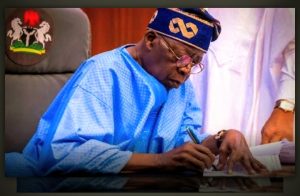
The federal, state, and local governments may receive additional revenue allocations of about N14.57tn following the recent Executive Order signed by President Bola Tinubu, directing that royalty oil, tax oil, profit oil, profit gas, and other revenues due to the Federation under production sharing, profit sharing, and risk service contracts be paid directly into the Federation Account
This is based on an analysis of revenue inflows in 2025, drawing on monthly earnings submitted to the Federation Account Allocation Committee and obtained by our correspondent in Abuja on Thursday.
Based on estimates from 2025 remittances to the Federation Allocation Accounts Committee, the Nigerian National Petroleum Company is projected remit about N906.91bn in management fees and frontier exploration funds, while oil and gas royalties totalling N7.55tn and gas flaring penalties of N611.42bn collected by the Nigerian Upstream Petroleum Regulatory Commission will now be remitted directly to the Federation Account.
The Nigeria Revenue Service will also lose the authority to collect Petroleum Profits Tax and Hydrocarbon Tax, which generated N4.905tn in 2025, while the Midstream and Downstream Gas Infrastructure Fund recorded N596.61bn in the same period, bringing the total affected revenue streams to about N14.57tn.
It was reported on Wednesday that the President signed the executive order directing that royalty oil, tax oil, profit oil, profit gas, and other revenues due to the Federation under production sharing, profit sharing, and risk service contracts be paid directly into the Federation Account.
The order also scrapped the 30 per cent Frontier Exploration Fund under the PIA and stopped the 30 per cent management fee on profit oil and profit gas retained by the Nigerian National Petroleum Company Limited. The order, which took effect from February 13, 2026, is aimed at safeguarding oil and gas revenues due to the Federation and improving remittances into the Federation Account.
According to details of the directive, the President invoked Section 5 of the Constitution of the Federal Republic of Nigeria (as amended), while the policy was anchored on Section 44(3), which vests ownership and control of all minerals, mineral oils, and natural gas in the Government of the Federation.
The PUNCH also gathered exclusively that the implementation of the directive commenced in January, and its impact is expected to reflect in the revenue allocations at the FAAC meeting scheduled for next week.
Since the implementation of the PIA in 2021, the Federation Account, shared by the federal, state, and local governments, received only 40 per cent of proceeds from Production Sharing Contracts. The remaining 60 per cent was retained by the NNPC, split between a 30 per cent Frontier Exploration Fund and a 30 per cent management fee.
Under the new directive, NNPC will no longer collect and manage the statutory 30 per cent Frontier Exploration Fund, a development expected to significantly alter the revenue landscape of the oil and gas sector.
The frontier exploration fund is designed to finance hydrocarbon exploration activities in Nigeria’s frontier basins, areas outside the traditional Niger Delta producing belt, where commercial discoveries have yet to be fully established. These include: the Chad Basin in the North-East, the Sokoto Basin in the North-West, the Bida Basin in North-Central Nigeria, the Benue Trough, and parts of the Dahomey basin.
Exploration in these locations is aimed at expanding Nigeria’s reserve base, reducing regional concentration of oil production, and enhancing long-term energy security. Activities typically involve seismic data acquisition, exploratory drilling, geological studies, and appraisal campaigns.
The fund was floated under the Petroleum Industry Act because frontier basins are generally high-risk and capital-intensive, and therefore would require sustained funding considered critical to maintaining exploration momentum.
In addition, the national oil company will no longer be entitled to the 30 per cent management fee on profit oil and profit gas revenues. The order further directed that all operators and contractors of oil and gas assets under Production Sharing Contracts must now pay Royalty Oil, Tax Oil, Profit Oil, Profit Gas, and any other government interest directly into the Federation Account.
The directive also suspended payments of gas flare penalties into the Midstream and Downstream Gas Infrastructure Fund, instructing the Nigerian Upstream Petroleum Regulatory Commission to remit all proceeds from penalties imposed on operators directly into the Federation Account.
It further directed that all expenditure from the Midstream and Downstream Gas Infrastructure Fund must now comply with extant public procurement laws and regulations. Tinubu said excessive deductions, overlapping funds, and structural distortions in the oil and gas sector have weakened remittances to the Federation Account, warning that the practice must end to protect national revenue.
In a post on his verified X handle, the President stated that for too long, revenues meant for federal, state, and local governments had been trapped in layers of charges and retention mechanisms, thereby slowing development across the country.
He said, “For too long, excessive deductions, overlapping funds, and structural distortions in the oil and gas sector have weakened remittances to the Federation Account. When revenues meant for federal, state, and local governments are trapped in layers of charges and retention mechanisms, development suffers. That must end.”
Tinubu emphasised that oil and gas revenues must serve Nigerians first, noting that the ongoing reforms in the sector are aimed at promoting fairness and fiscal responsibility. He added, “Oil and gas revenues must serve the Nigerian people first, and this reform is about fairness and fiscal responsibility.”
The President explained that as the government strengthens national security, invests in education, expands healthcare, stabilises the economy, and advances the country’s energy transition, every legitimate revenue due to the Federation must be protected.
According to him, NNPC will now operate strictly as a commercial enterprise in line with the law, stressing that the era of duplicative deductions and fragmented oversight in the sector is over. Tinubu also disclosed that his administration would undertake a comprehensive review of the Petroleum Industry Act to address structural and fiscal anomalies weakening national revenue.
He further announced the approval of an implementation committee to oversee and ensure effective and coordinated execution of the executive order on the matter.
The President said, “Nigeria can no longer afford leakage where there should be leadership. We are safeguarding the Federation Account. We are strengthening our budget. We are acting in the national interest.”
He reiterated that the reforms are part of his administration’s commitment to Nigerians, adding that the policy direction aligns with his “Nigeria First” promise.
Based on the latest Federation Allocation Accounts Committee revenue data for 2025, the reallocation could have far-reaching implications for government earnings and sector institutions.
While many Nigerians and energy experts have expressed concerns over the potential impact of the policy on the oil and gas industry, a review of potential revenue reallocation suggests that the NNPC may be the least affected among the key players.
Other relevant government agencies operating within the sector could bear a heavier burden, particularly in terms of revenue losses, operational adjustments, and institutional restructuring.
Findings indicated that NNPC may lose about N906.91bn in management fees and Frontier Exploration Fund deductions. Each of the funds accounted for N453.455bn in 2025. A breakdown showed that the N453.455bn realised for frontier exploration fell short of the N710.520bn budgeted for the year, leaving a deficit of N257.066bn.
The monthly trend reveals the volatility of the fund. In January, N31.77bn was deducted from the frontier line, when PSC profits came in at N105.91bn. The February deduction rose to N38.30bn from a profit of N127.67bn, representing a 20.6 per cent increase on the January inflow.
March provided the first big surge, with N61.49bn allocated to frontier exploration from profits of N204.96bn, a jump of 60.5 per cent on February’s figure. April, however, saw deductions ease back to N36.58bn as profits slid to N121.93bn, a 40.5 per cent drop compared with March.
In May, the fund received N38.8bn, only slightly higher than April’s contribution, reflecting profit of N129.33bn. June delivered the lowest allocation so far this year, just N6.83bn, after profits collapsed to N22.77bn. That represented an 82.4 per cent fall from May.
The flow recovered somewhat in July, with N25.34bn transferred into the fund from profits of N84.48bn. In August, the trend rose sharply to its highest level so far this year, as Profit Sharing Contract earnings surged to N263.13bn. This translated to N78.94bn remitted to the Frontier Exploration Fund, more than three times the July contribution and about twelve times the amount recorded in June.
The momentum was sustained in subsequent months. In September, PSC profit stood at N275.38bn, with N82.61bn deducted for frontier exploration. October recorded a sharp decline, as profit dropped to N36.82bn, while deductions amounted to N11.05bn.
In November, profit rebounded to N112.32bn, with N33.70bn transferred to the fund. However, by December, PSC earnings moderated again to N26.82bn, resulting in frontier exploration deductions of N8.05bn.
The same 30 per cent rule also applied to NNPC’s management fees, which mirrored the frontier deductions exactly. In January, NNPC booked N31.77bn; in February, N38.30bn; in March, N61.49bn; in April, N36.58bn; in May, N38.8bn; in June, N6.83bn; in July, N25.34bn; in August, N78.94bn; N82.614bn in September; N11.046bn in October; N33.695bn in November and N8.046bn in December.
The NUPRC is also expected to lose oversight of oil and gas royalty collections, a development that could significantly reduce its revenue from cost-of-collection fees, which are intended to fund its operational activities. Based on 2025 figures, the commission is projected to forgo approximately N7.55tn, while gas flaring penalties during the same period totaled N611.42bn.
Under the Petroleum Profits Tax, Hydrocarbon Tax, and other levies administered by the NRS, a total of N4.905tn was collected in 2025. This revenue will now be channelled directly to the Federation Account. The earnings, however, exclude company income tax on upstream activities and other revenue streams.
Similarly, the MDGIF, which was established to finance strategic gas infrastructure projects and improve domestic gas utilisation, recorded total collections of N596.61bn in 2025. With the recent directive, these funds will now be subject to the same public finance rules governing statutory allocations, signalling a shift in oversight.
Monthly inflows into the MDGIF in 2025 were highly variable: N35.07bn in January, N31.82bn in February, N52.99bn in March, N29.19bn in April, N41.27bn in May, N66.18bn in June, N50.98bn in July, N57.04bn in August, N66.32bn in September, N66.32bn in October, N59.42bn in November, and N46.90bn in December. The highest single-month collection of N66.32bn in both September and October accounted for about 11.1 per cent of the annual total each, while the lowest in April (N29.19bn) represented just under 4.9 per cent of the year’s total.
Cumulatively, these revenue streams would amount to a total of N14.72tn, although the actual inflows could rise or fall depending on fluctuations in crude oil production and exploration activities, which directly determine the amount of revenue generated.
The anticipated upsurge in oil and gas revenue remittances is expected to deliver a significant boost to sub-national earnings, providing state and local governments with much-needed fiscal resources. This inflow could sharply reduce budget deficits, easing financial pressures across the federation and enabling more consistent funding for critical infrastructure and social services.
Over the years, concerns have been raised by the Nigeria Extractive Industries Transparency Initiative and the National Assembly of Nigeria over revenue leakages, delayed remittances, and opaque deductions in the oil and gas sector.
With the new directive, Nigeria may be entering a new phase of fiscal discipline and transparency in its most critical revenue-generating industry.
The United States government has insisted that Nigeria should retain its Country of Particular Concern, CPC, designation, saying the country has not done enough to protect Christians from attacks.
Assistant Secretary of State for African Affairs, Frank Garcia, made this statement on Thursday during a congressional hearing on violence in Nigeria.
Garcia was responding to questions from US Congressman Riley Moore, who asked about the government’s efforts to dismantle militia strongholds and kidnapping camps in the Middle Belt, particularly in Benue and Plateau states.
Moore also raised concerns over the exclusion of the states from the forest guard initiative and delays in deploying 1,000 approved guards to Plateau.
“Before you answer that, we cannot take this CPC designation off of this country. They have not done enough,” Moore said.
Garcia acknowledged the lack of progress, but said Nigeria was taking steps to address the concerns, although they had yet to produce results.
He said the country’s security capacity was still being developed and that deployments were not happening fast enough.
“Unfortunately, the violence has not stopped,” Garcia added, citing continued attacks in Kaduna and Plateau states.
He said the US had provided police training and equipment, expanded intelligence sharing and worked with Nigerian financial institutions to disrupt terrorist financing.
Garcia added that Washington would continue diplomatic engagements and security cooperation to protect vulnerable communities and ensure accountability.
However, the Nigerian government has consistently rejected claims of a “Christian genocide” or targeted religious persecution, maintaining that insecurity affects Nigerians of all faiths.


Liquefied Petroleum Gas, commonly known as cooking gas, has risen significantly, forcing Nigerians to spend more to purchase the product.
The increase comes as depot owners and retailers raised their prices over the past two days.
StockGap increased its depot price by N25 to N1,440 per kilogram. Nigerian Independent Petroleum Company Limited, NIPCO, Mobil (now 11 Plc) and Ardova, on the other hand, sold the product at N1,400 and N1,390 per kilogram, respectively.
Similarly, LPG retail outlets, including Raniol, Juda Oil and Nigerian National Petroleum Company Limited, NNPC, outlets in Abuja and its environs, now dispense cooking gas at between N1,550 and N1,600 per kilogram, up from N1,400 and N1,500.
Micro-LPG dealers sell the product for between N1,700 and N1,800 per kilogram, depending on the location in Abuja.
Earlier, NIPCO’s spokesperson, Taofeek Lawal, had exclusively told DAILY POST that LPG prices could increase further between November and January next year.
The latest price increase means that Nigerians who previously spent N17,500 to refill a 12.5kg cylinder at N1,400 per kilogram will now pay N20,000 at the new rate of N1,600 per kilogram, representing an additional N2,500.
News
2027: Tinubu Must Withdraw ‘All Is Fair in Politics’ Remark, Embrace Peaceful Coexistence — ADC-PCC
The African Democratic Congress Presidential Campaign Council (ADC-PCC) has called on President Bola Ahmed Tinubu to publicly retract his controversial “All Is Fair in Politics” remark, warning that such rhetoric fuels political division, emboldens thugs and poses a grave threat to the nation’s peace and stability.
The ADC-PCC also expressed concern over what it described as the President’s disturbing silence on the conduct of some APC governors and party chieftains who have openly made inflammatory statements and allegedly encouraged political violence.
In a statement signed by its Director of Media and Publicity, Kola Ologbondiyan, the ADC-PCC urged President Tinubu to rise above partisan interests and demonstrate the statesmanship expected of a national leader, citing former President Goodluck Jonathan’s unequivocal declaration that no presidential ambition was worth the blood of any Nigerian.
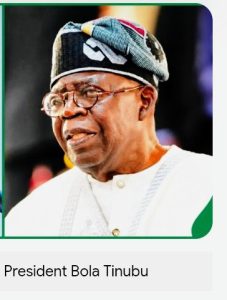
The Council described as shocking the President’s failure to condemn the growing wave of political violence, noting that, through his spokesman, Mr. Bayo Onanuga, the Presidency had instead chosen to caution opposition parties while shielding those allegedly responsible for violence within the ruling APC.
“President Tinubu cannot claim to desire peace when his own words provide cover for violence.
“‘All Is Fair in Politics’ is not the language of a Head of State. It is the language of political desperation and an open licence for thuggery, ballot snatching, intimidation and bloodshed.
“From Edo to Cross River, Gombe to Lagos, and Kebbi to Kaduna, Nigerians have witnessed attacks on opposition gatherings, destruction of campaign materials and the brutalisation of innocent supporters, allegedly by APC-sponsored thugs.
“Yet, Mr. President has not considered it necessary to call his governors and party members to order.
“Instead, the Presidency has resorted to diversionary tactics, blaming victims and preaching restraint to the opposition while members of the ruling party are accused of unleashing violence across the country,” the statement said.
The ADC-PCC challenged President Tinubu to explain why his condemnation of political violence appears directed at the opposition rather than members of his own party.
It asked: “Why has Mr. President refused to condemn APC governors who openly threaten opposition supporters? Why has he remained silent over public incitement by officials of his party? Why is his anger always directed at the opposition and never at those within his own political fold?”
The Council maintained that the ADC remains committed to peaceful, issue-based political engagement, insisting that its campaign is focused on addressing the country’s pressing challenges, including hunger, insecurity, unemployment, corruption and what it described as the failures of the Tinubu administration.
It accused the APC of resorting to violence because it had little to offer Nigerians in terms of credible solutions to the country’s problems.
Consequently, the ADC-PCC demanded that President Tinubu immediately and publicly withdraw his “All Is Fair in Politics” remark, condemn and call to order APC governors and party officials accused of inciting violence, and direct security agencies to protect all Nigerians impartially rather than allow them to become instruments of intimidation and oppression against opposition parties.
” Nigeria belongs to all of us. No political ambition is worth the blood of any Nigerian.
“If former President Goodluck Jonathan could make that profound declaration in 2015, President Tinubu has no excuse not to say so and demonstrate the sincerity of his commitment to peace in 2026.
“The ADC will not be intimidated. We will continue to campaign peacefully, and in 2027, Nigerians will have the opportunity to vote for competence, integrity and a new beginning,” the statement added.





-
News5 days ago
IGP Disu decorates 29 senior police officers with new ranks….charges them on professionalism, integrity,others
-
News4 days ago
Airstrikes kill 40 ISWAP terrorists in Borno
-
News4 days ago
We finally received CTC Of Lifu’s Judgement, without Atiku, Other Candidates Names Mentioned—Senator Melaye
-
News4 days ago
2026 U-17 WWC: Tinubu rewards each Flamingos player with ₦100m
-
News5 days ago
How Federal High Court Chief judge is beign blackmailed with EFCC, CCB- ADC Campaign Council
-
News2 days ago
Crowd Shouts ‘Bamayi’ at Tinubu, pelt convoy in Abuja
-
News5 days ago
Oil slump opens door to cheaper petrol for Nigerians …as Brent hits lowest since August
-
News4 days ago
2027: APC sacks kindergarteen Campaign Spokespersons…..Yari, Alake, Idris, now to speak for council